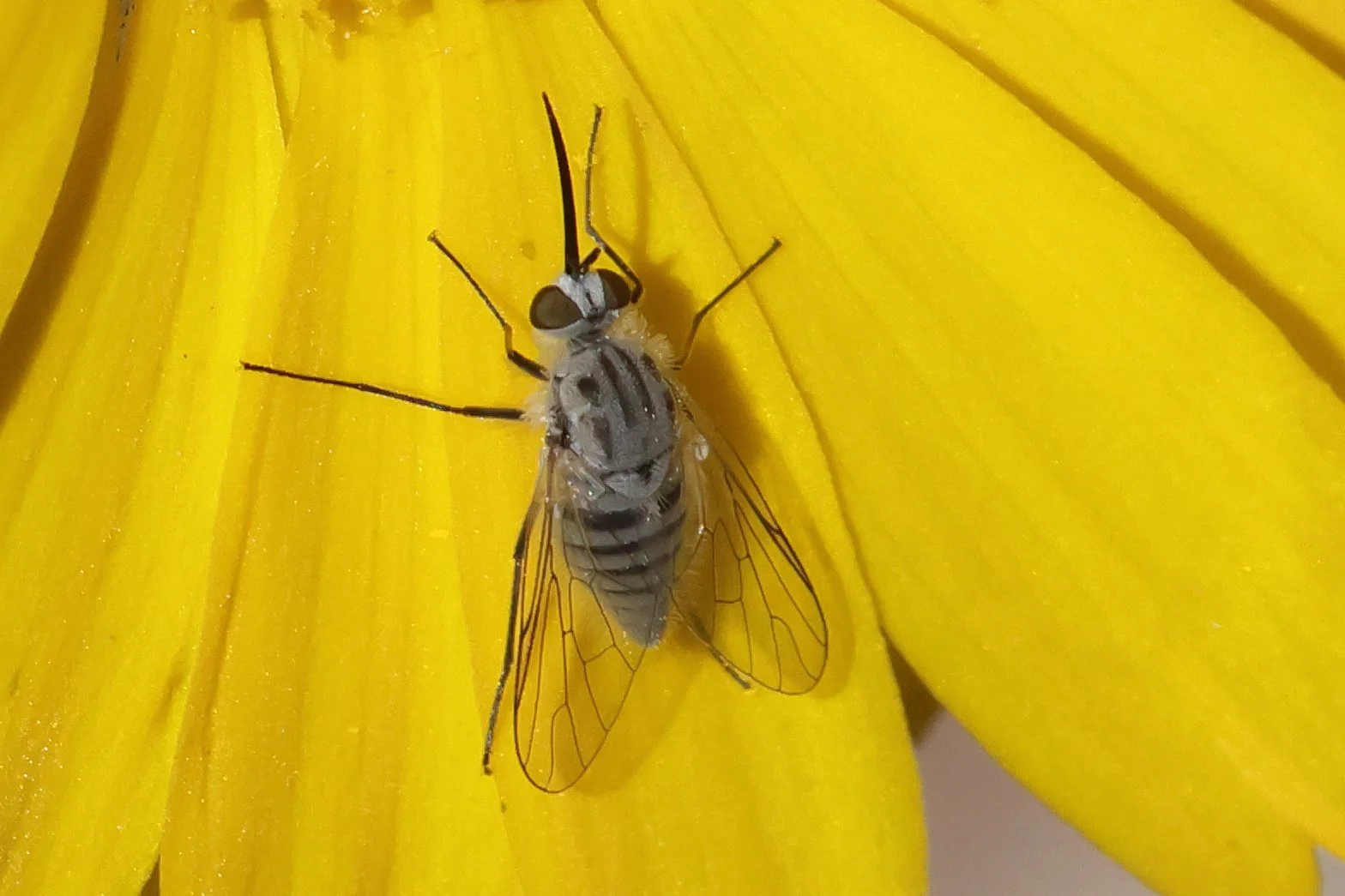
Bee Fly Subfamilies
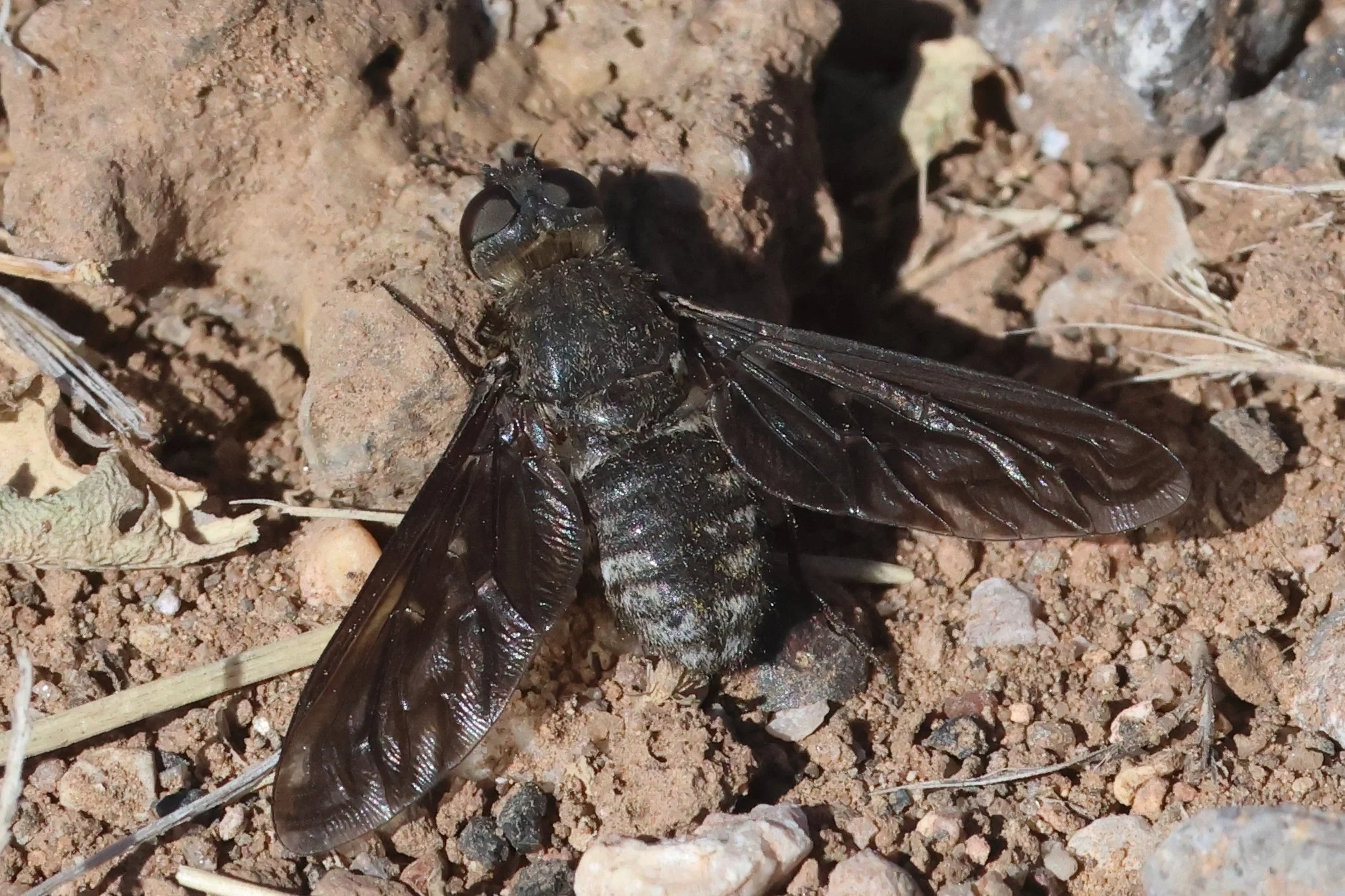
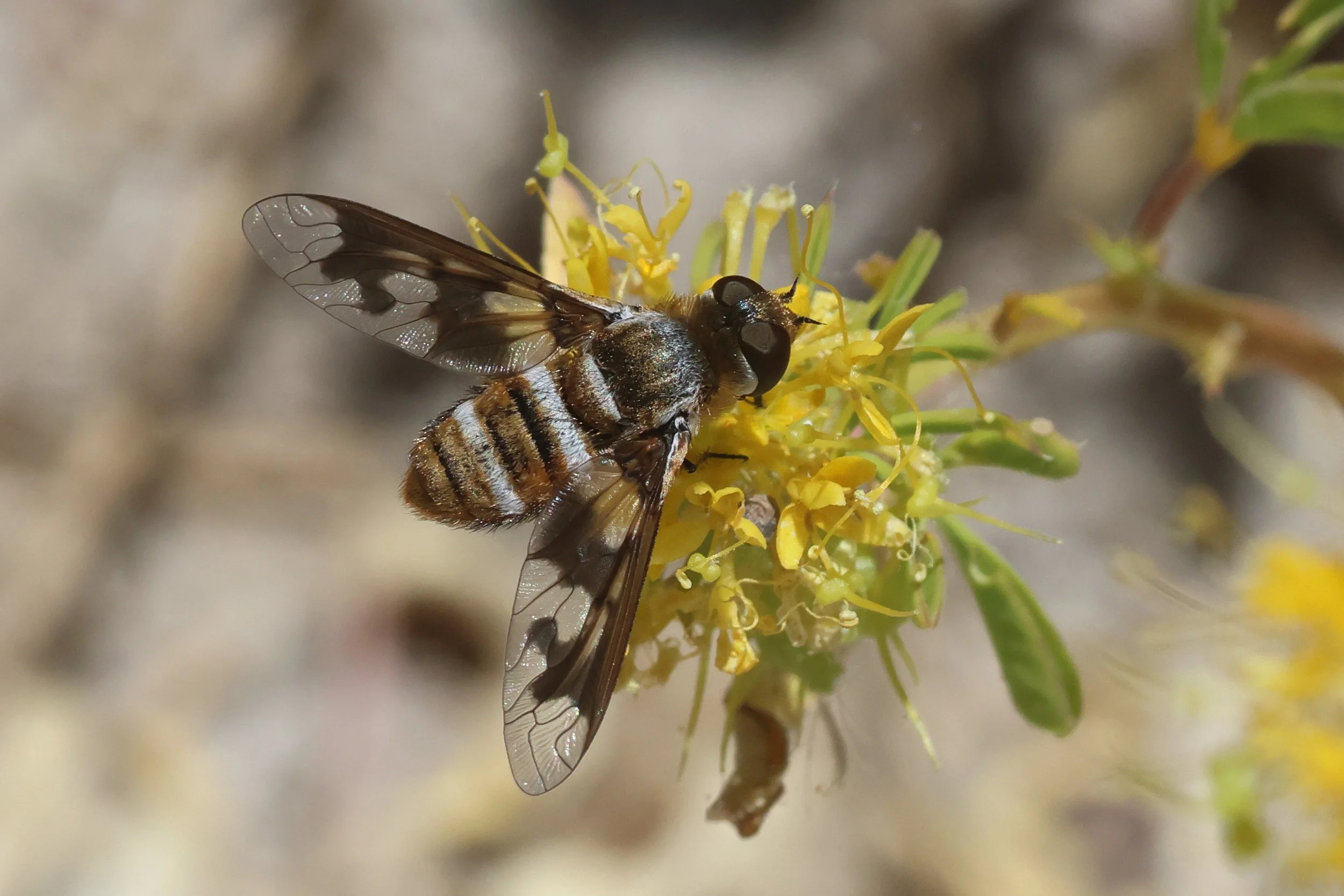
This subfamily includes predominantly medium-sized to very large species. Their size alone allows some of them to be familiar even to non-entomologists. They are mostly dull black, with submarginal veins that arise rectangularly. R2+3, most prominent of the submarginal veins, originates at or close to the anterior crossvein. Invariably, the hind margin of the eye is indented. Adults of some species perch on vertical surfaces and some species are not avid nectar feeders. The subfamily includes 5 Tribes: Anthracini, Aphoebantini, Exoprosopini, Villini, and Xeramoebini. These 5 Tribes harbor some of the most familiar regional genera as seen below.
Anthracini - Anthrax, Xenox
Aphoebantini - Aphoebantus, Epacmus, Eucessia
Exoprosopini - Exoprosopa, Nyia
Villini - Astrophanes, Chrysanthrax, Diochanthrax, Dipalta, Hemipenthes, Ins, Lepidanthrax, Neodiplocampta, Paradiplocampta, Paravilla, Poecilanthrax, Rhynchanthrax, Saltanthrax, Stonyx, Thyridanthrax, Villa
Xeramoebini - Desmatoneura
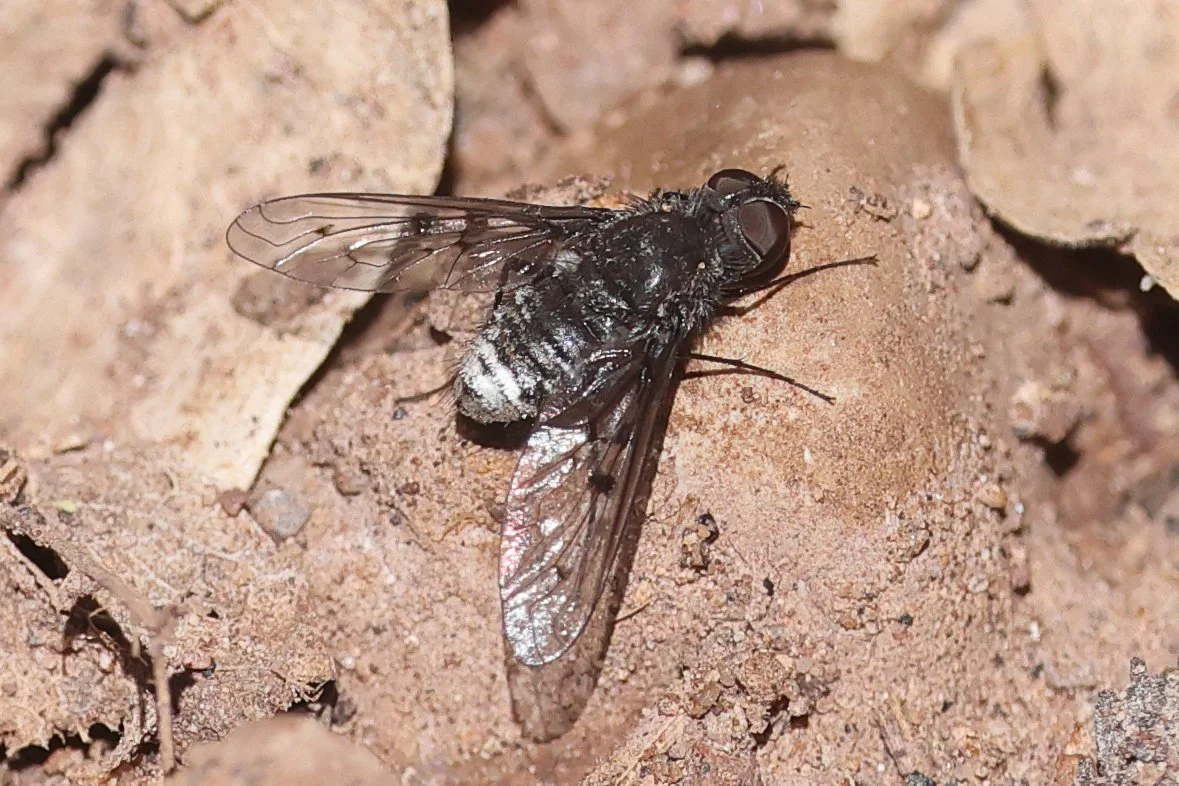
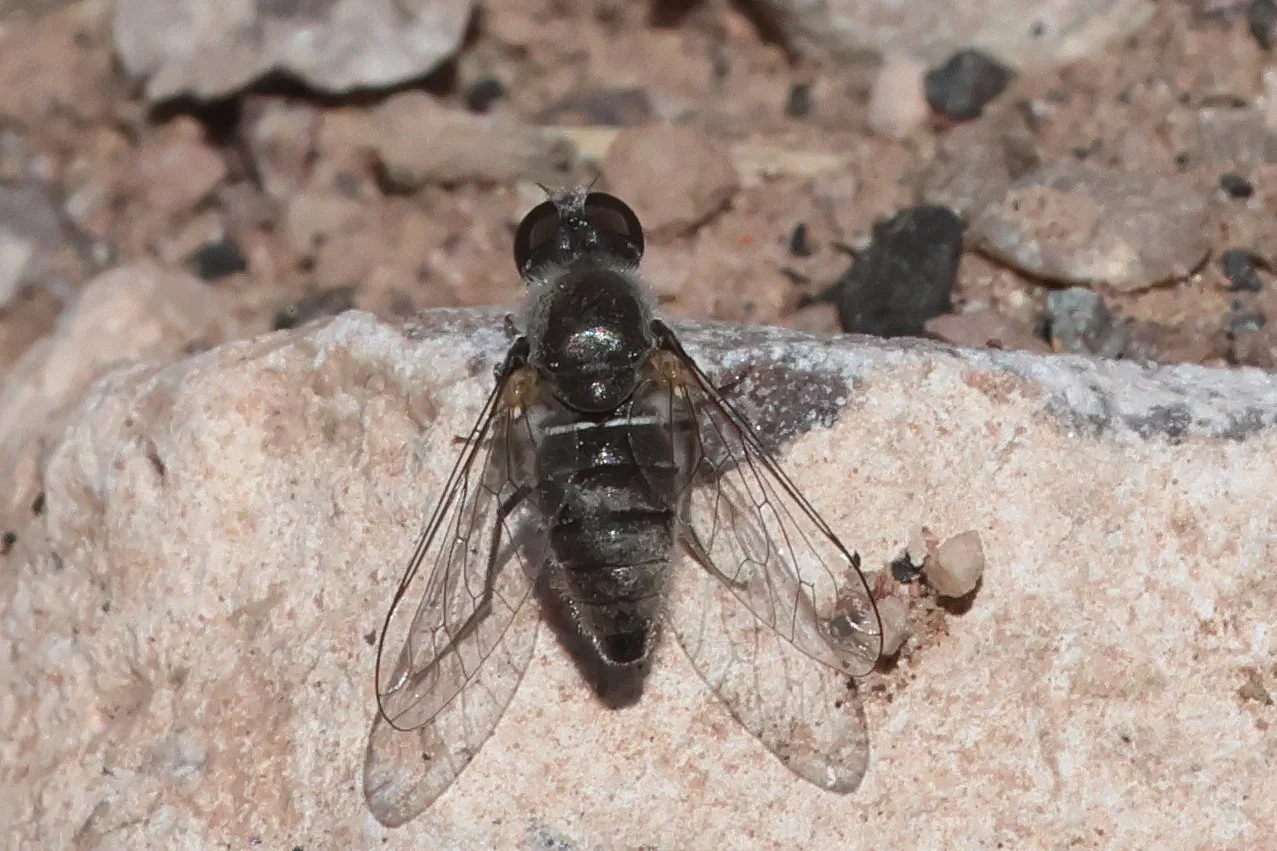
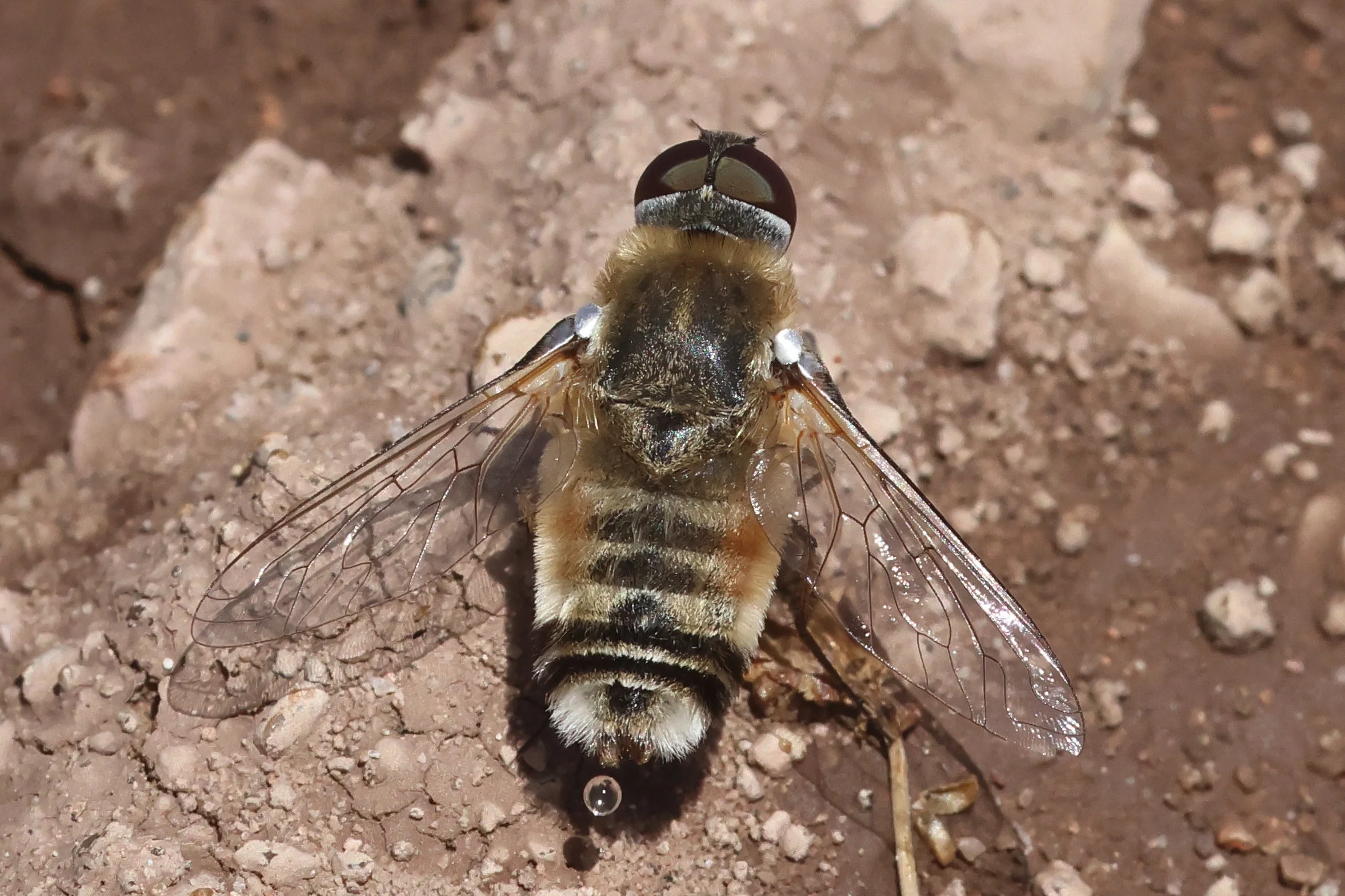
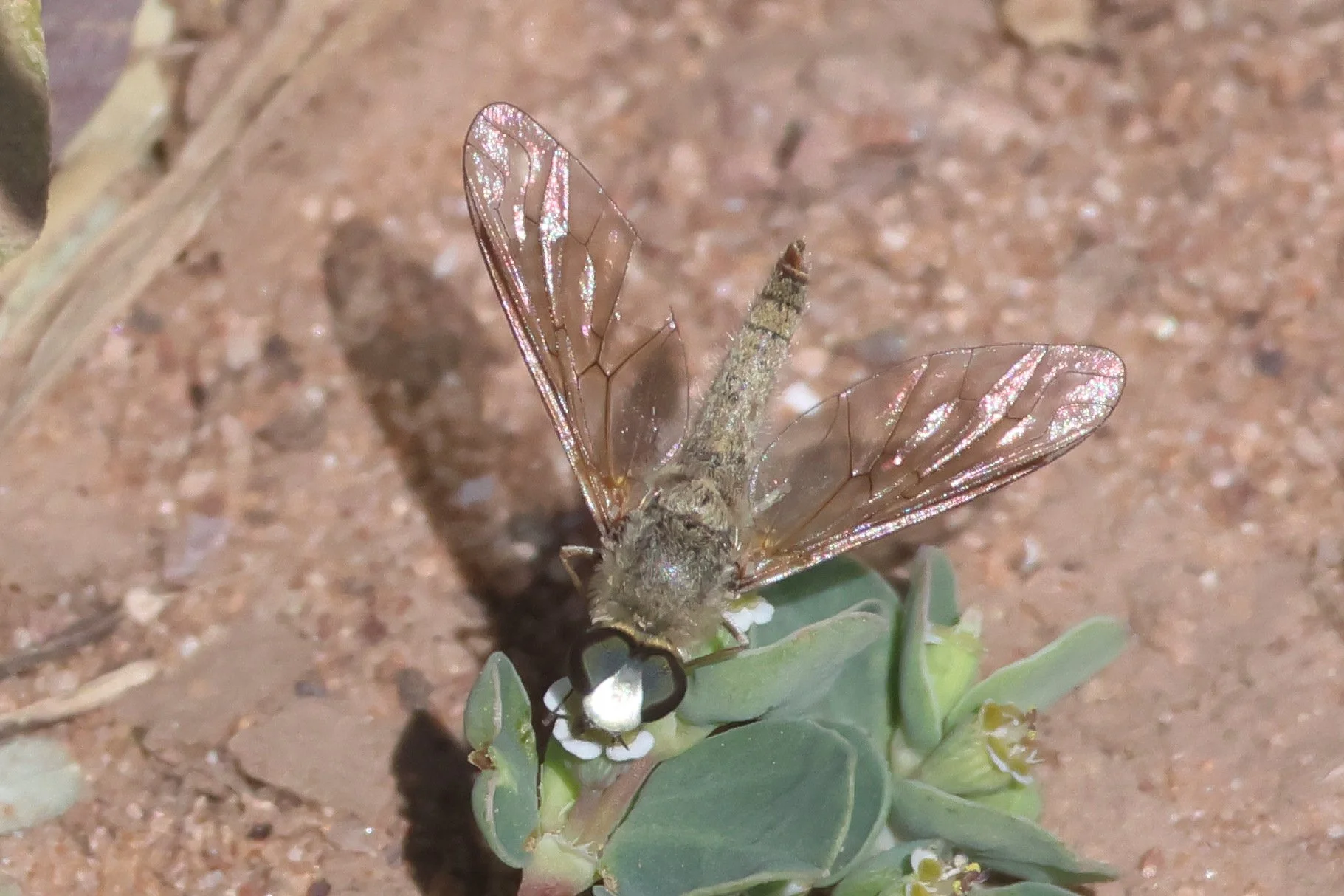
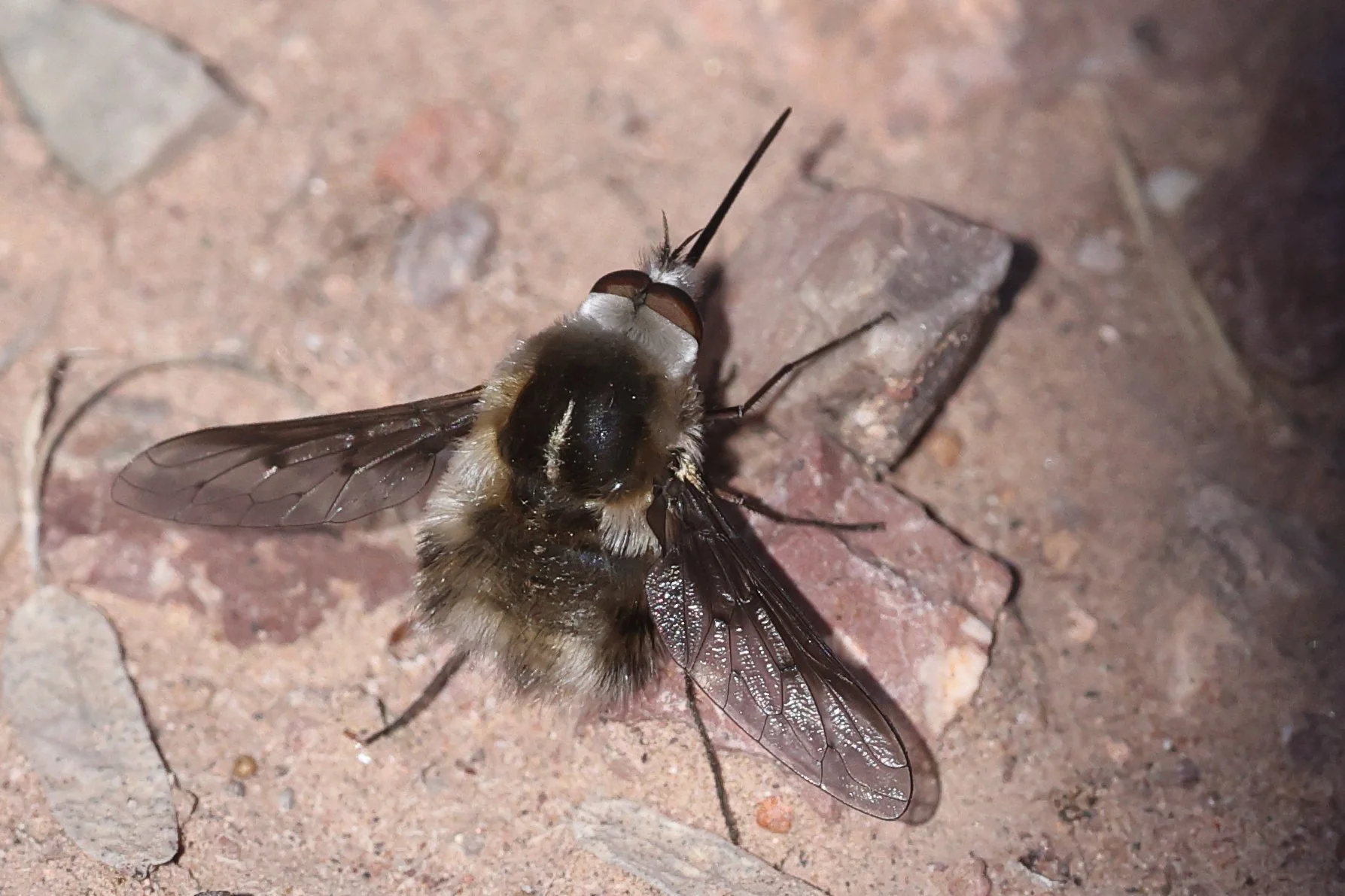
Worldwide in distribution, the species in this subfamily often have a slow flight, typically a long proboscis, and a short, rounded abdomen. They regularly hover while feeding. Adults have comparatively small heads with closely-set antennae and a smooth hind margin to the eyes. The palpi are single-segmented and the tibiae have bristles on the rear two pairs of legs. As immatures, members of most genera have been known to parasitize solitary bees. Within the subfamily, the 10 regional genera are subdivided into two Tribes:
Conophorini - Conophorus, Geminaria, Lordotus, Sparnopolius
Bombyliini - Anastoechus, Bombylius, Heterostylum, Parabombylius, Systoechus, Triploechus
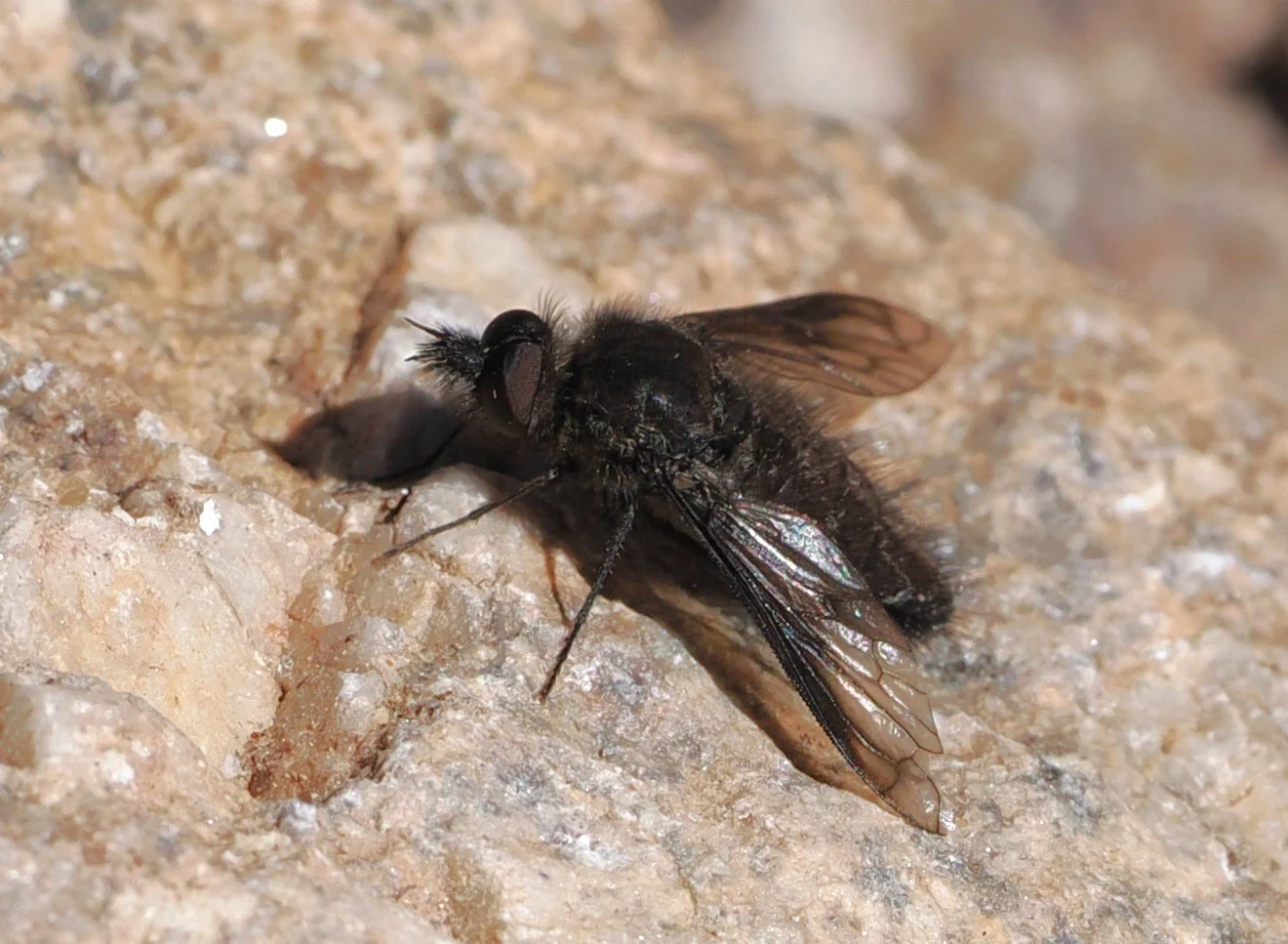
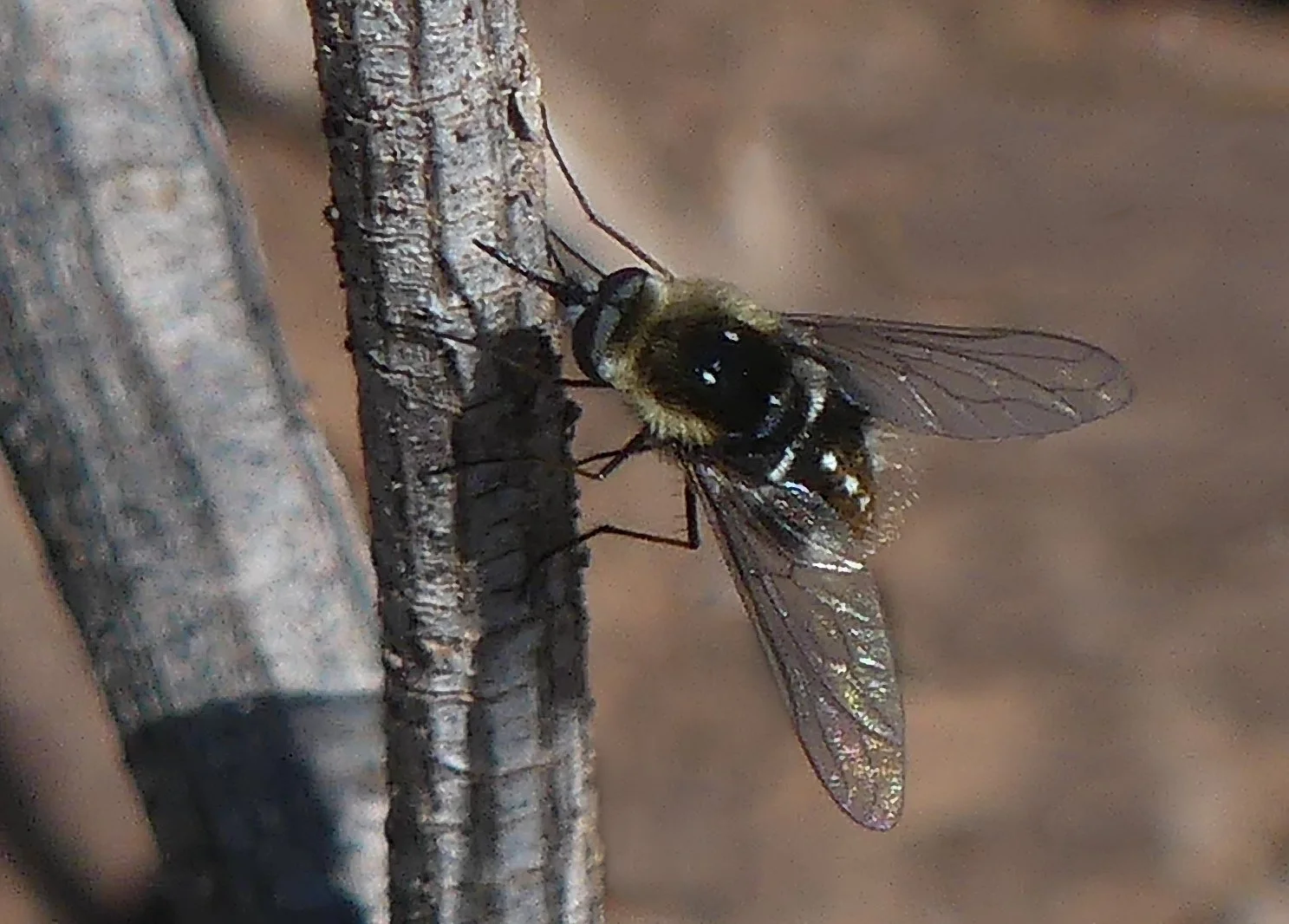
Members of this subfamily have a smooth hind margin on the eye, lack strong thoracic bristles, have a short and round abdomen, tibial bristles on the rear two pairs of legs, and show variably-spaced antennae. This is a diverse subfamily in much of the rest of the world, but in our area, only 1 genus is known.
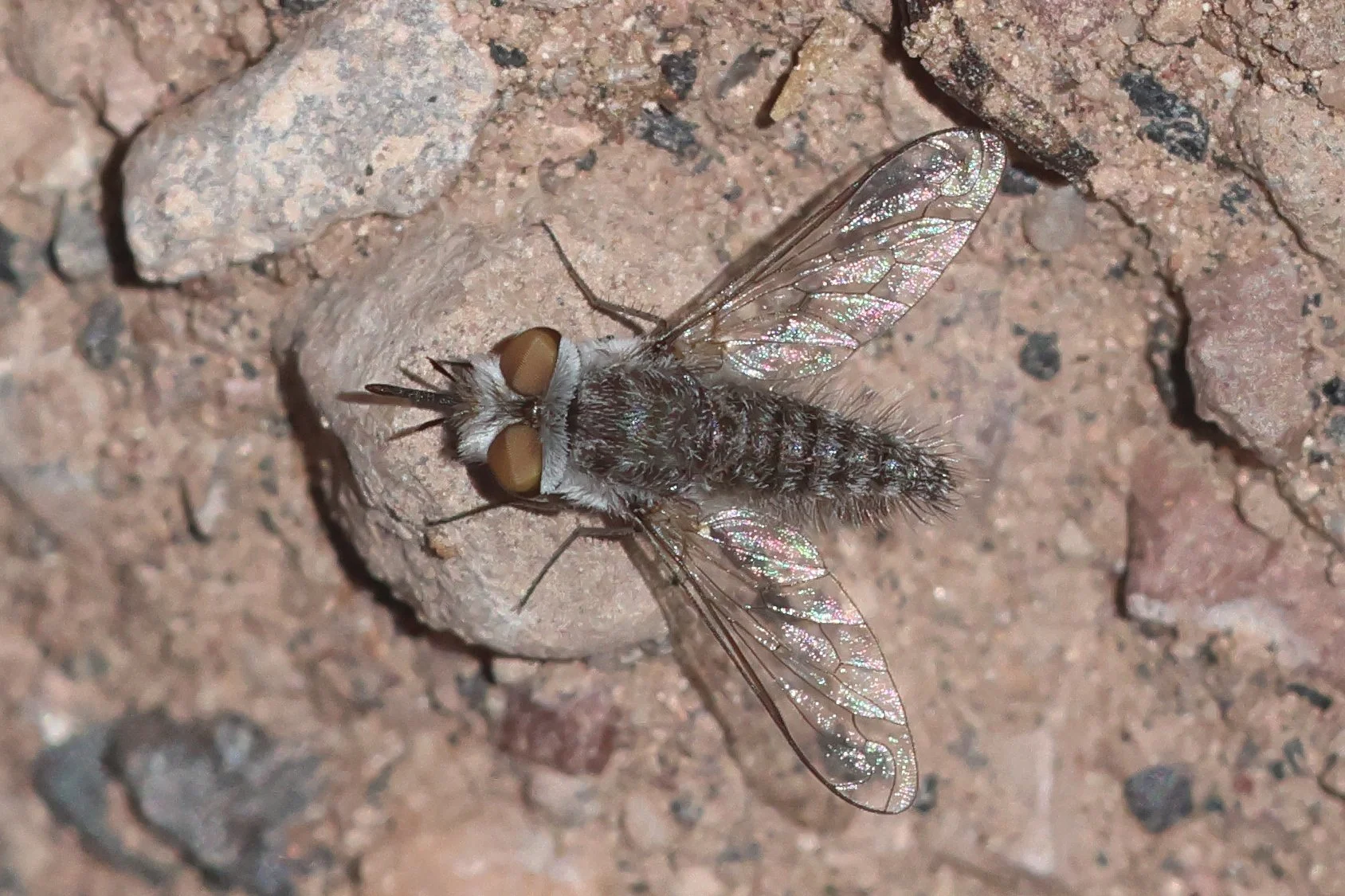
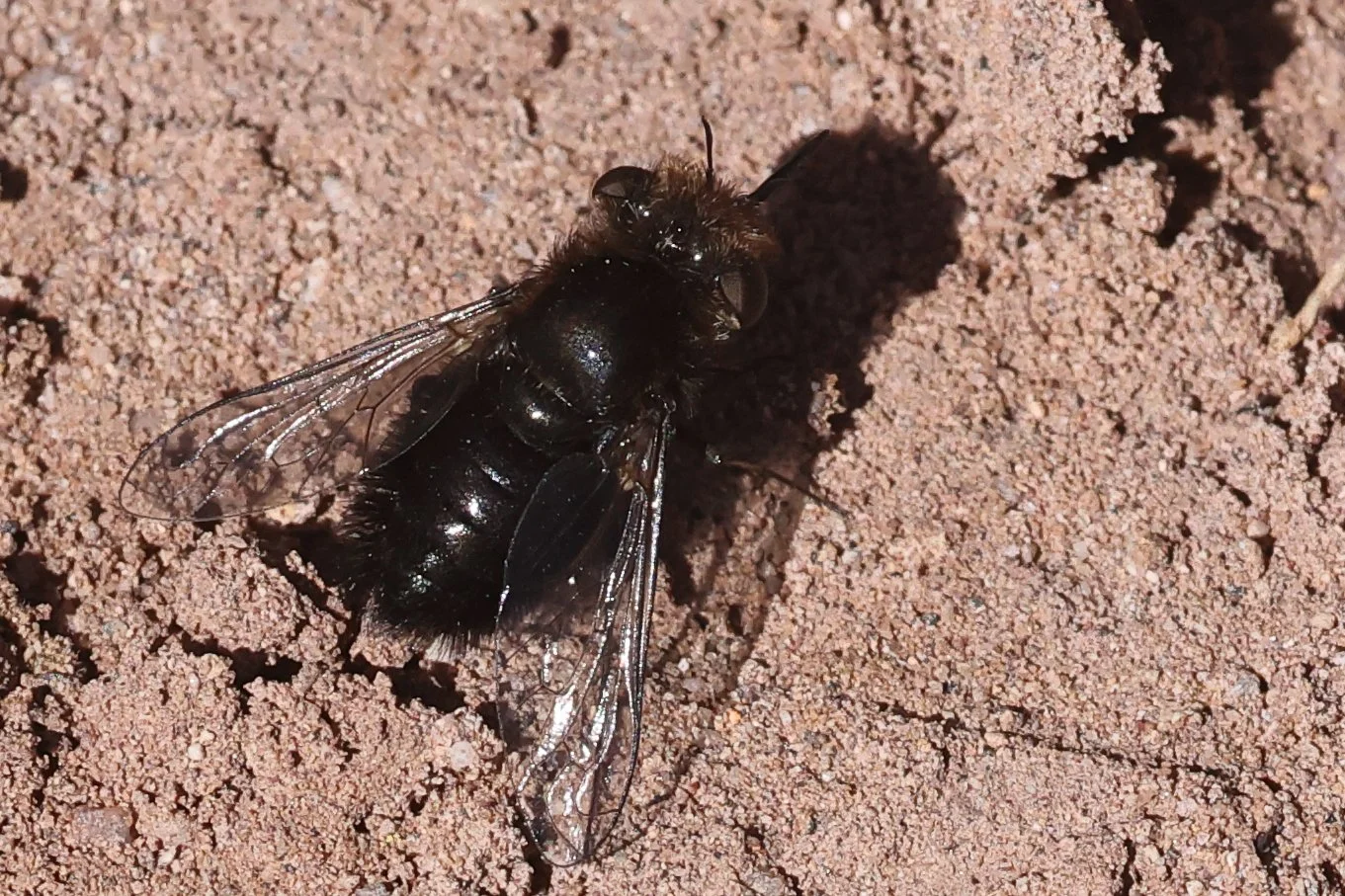

This is a small worldwide subfamily of 9 genera contains several dozen species. Only one genus occurs in our area; its species possess a somewhat elongated abdomen and weakly-developed thoracic bristles. Most species perform the hesitation-dance before perching.
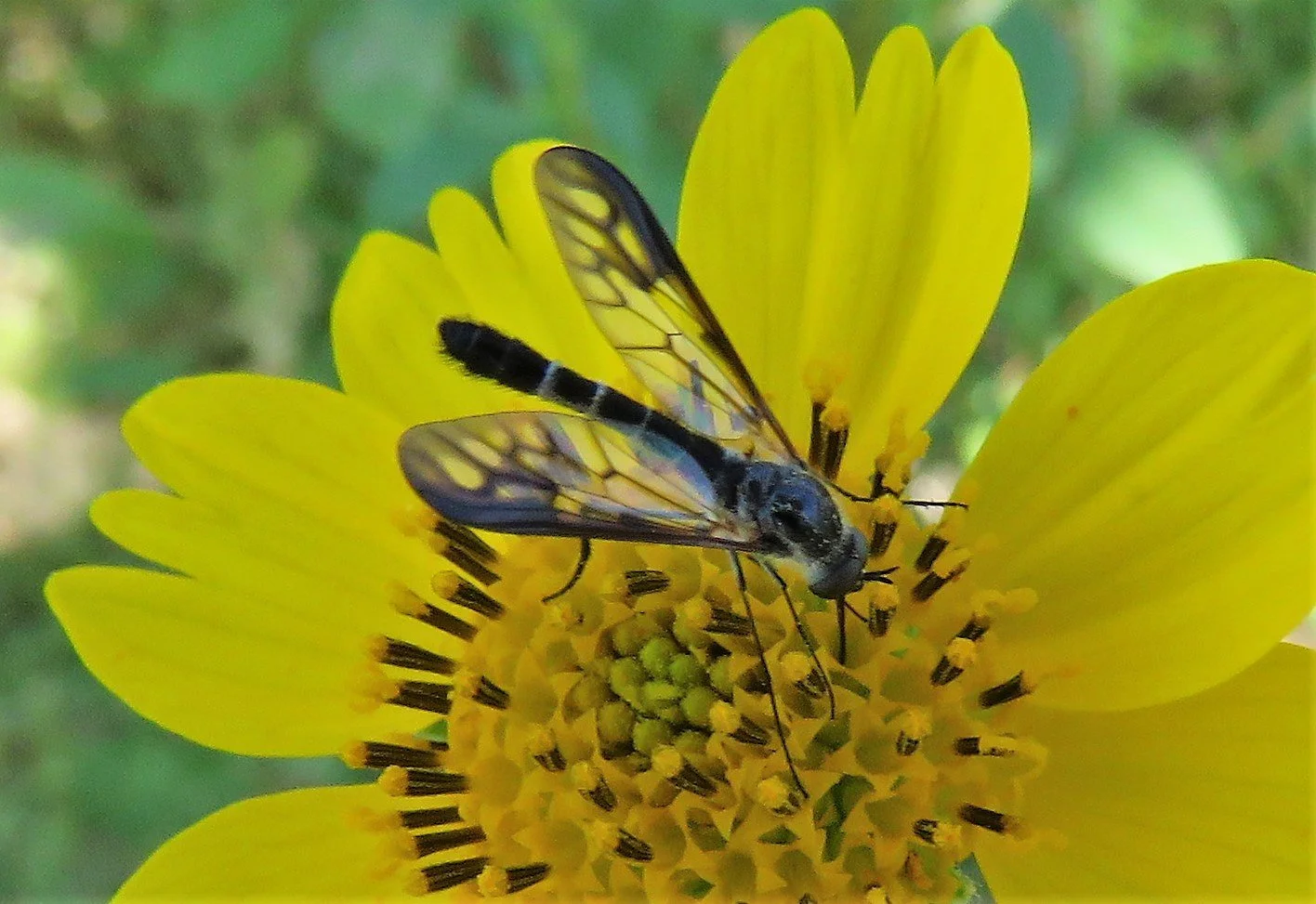


This subfamily, well distributed in the Eastern Hemisphere, comprises taxa of variable dimensions. They are mostly small to medium-sized, but occasionally very large. They all have eyes with a notched hind margin, and a 2nd longitudinal vein that arises basally and acutely from the 3rd.
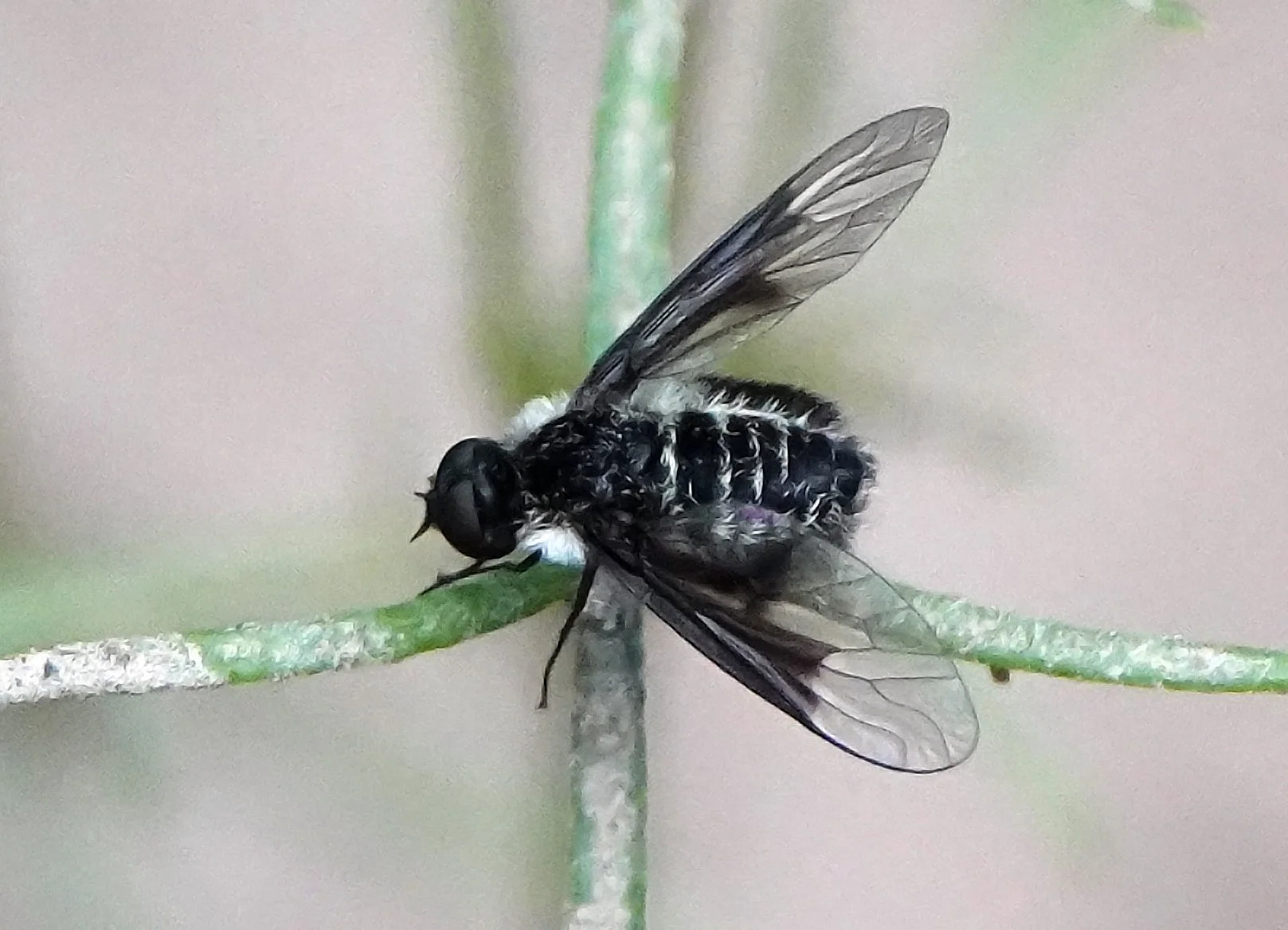
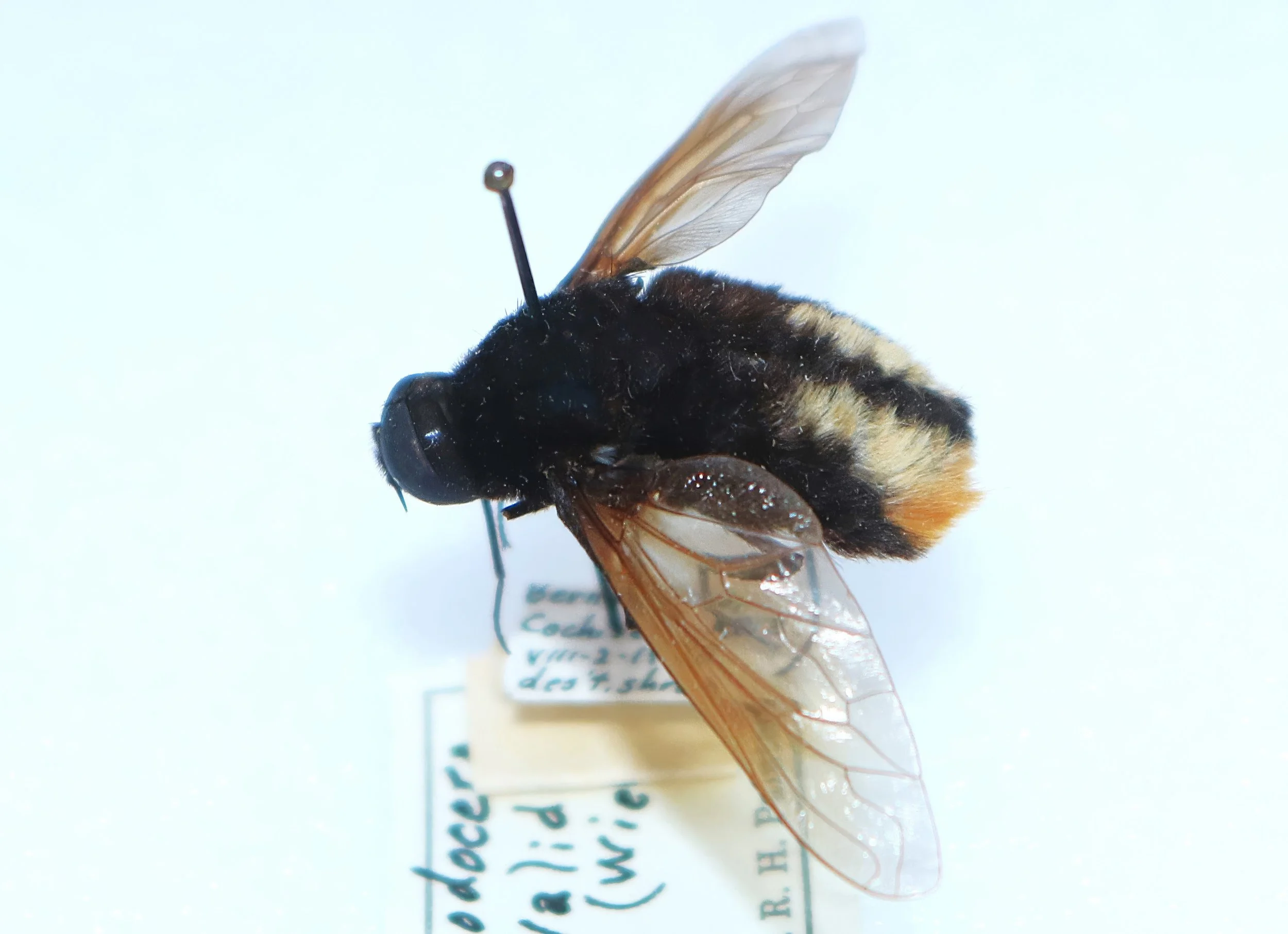
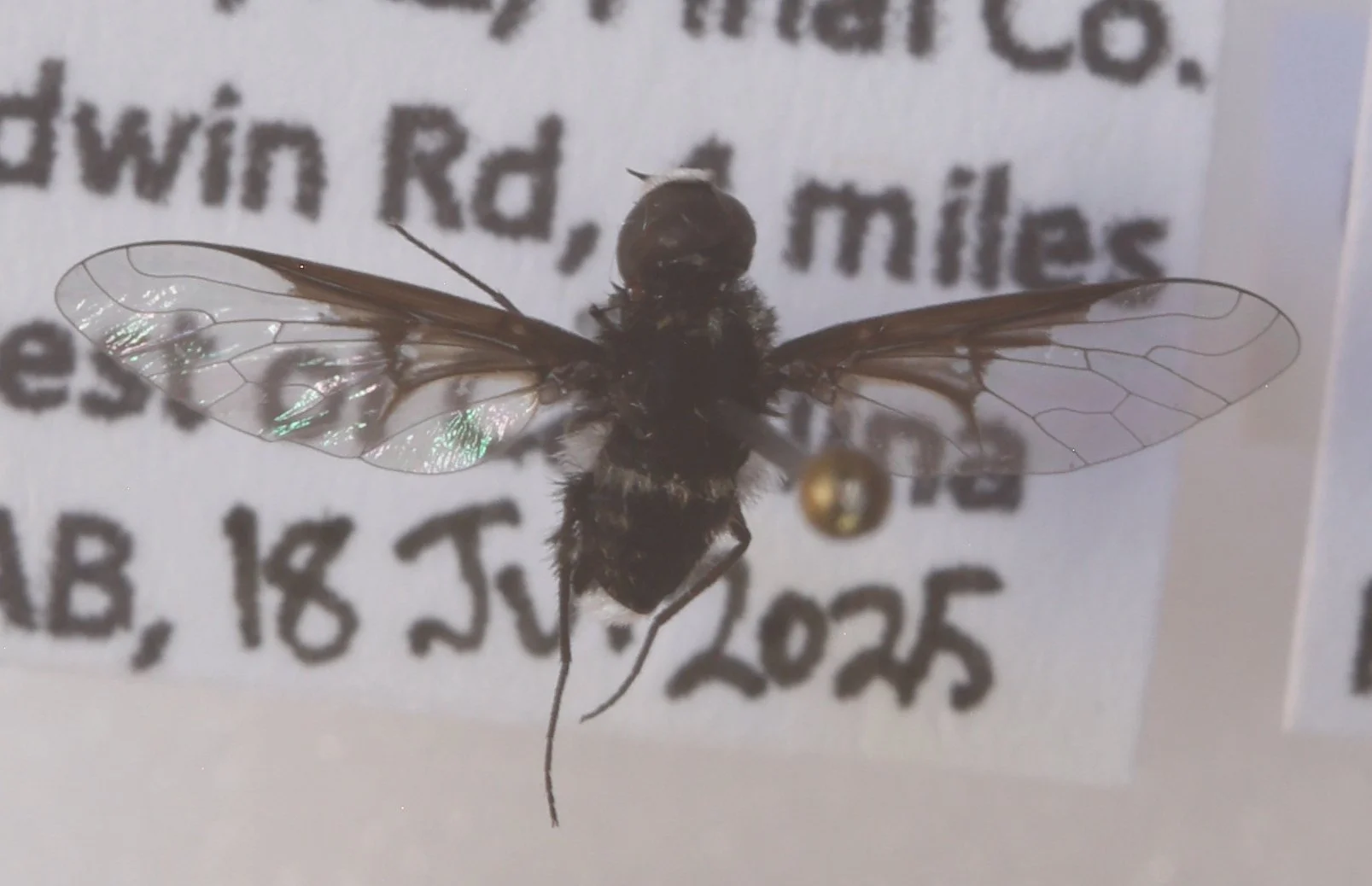
These are relatively small, sometimes inconspicuous, bombyliids. Typically, the thorax is slightly humped, and the wings show 2 submarginal and 4 posterior cells, and a discal cell with a distal point. The 3rd antennal segment is notched at its tip and quite variable in length. In most taxa, adults have long down-curved beaks, but species delineation is difficult or poorly known. Larvae feed, at least in part, on or within orthopteran egg pods and also in conjunction with antlion funnels.
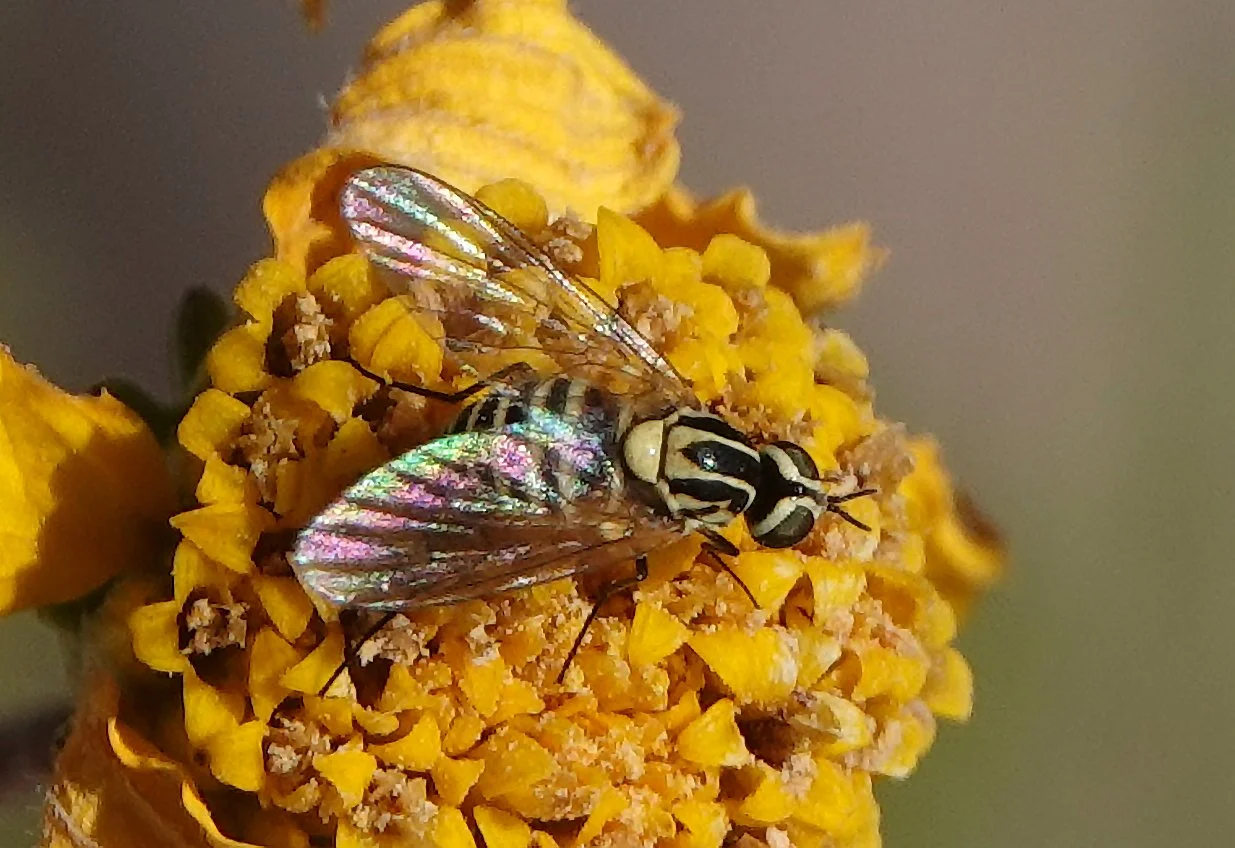
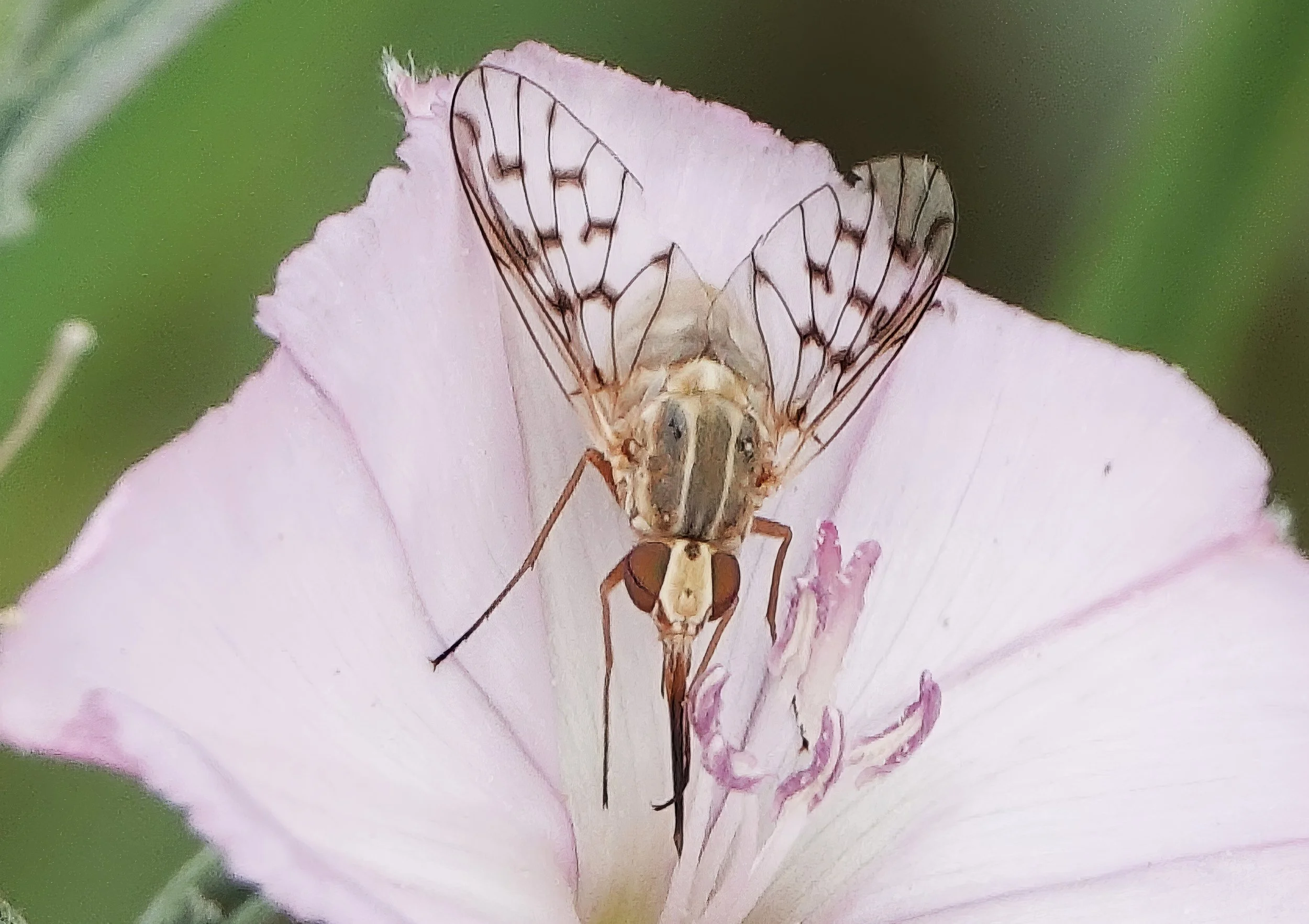

This group has short antennae and a short proboscis. The wings are narrow, and their 2nd longitudinal vein begins well before the anterior crossvein.
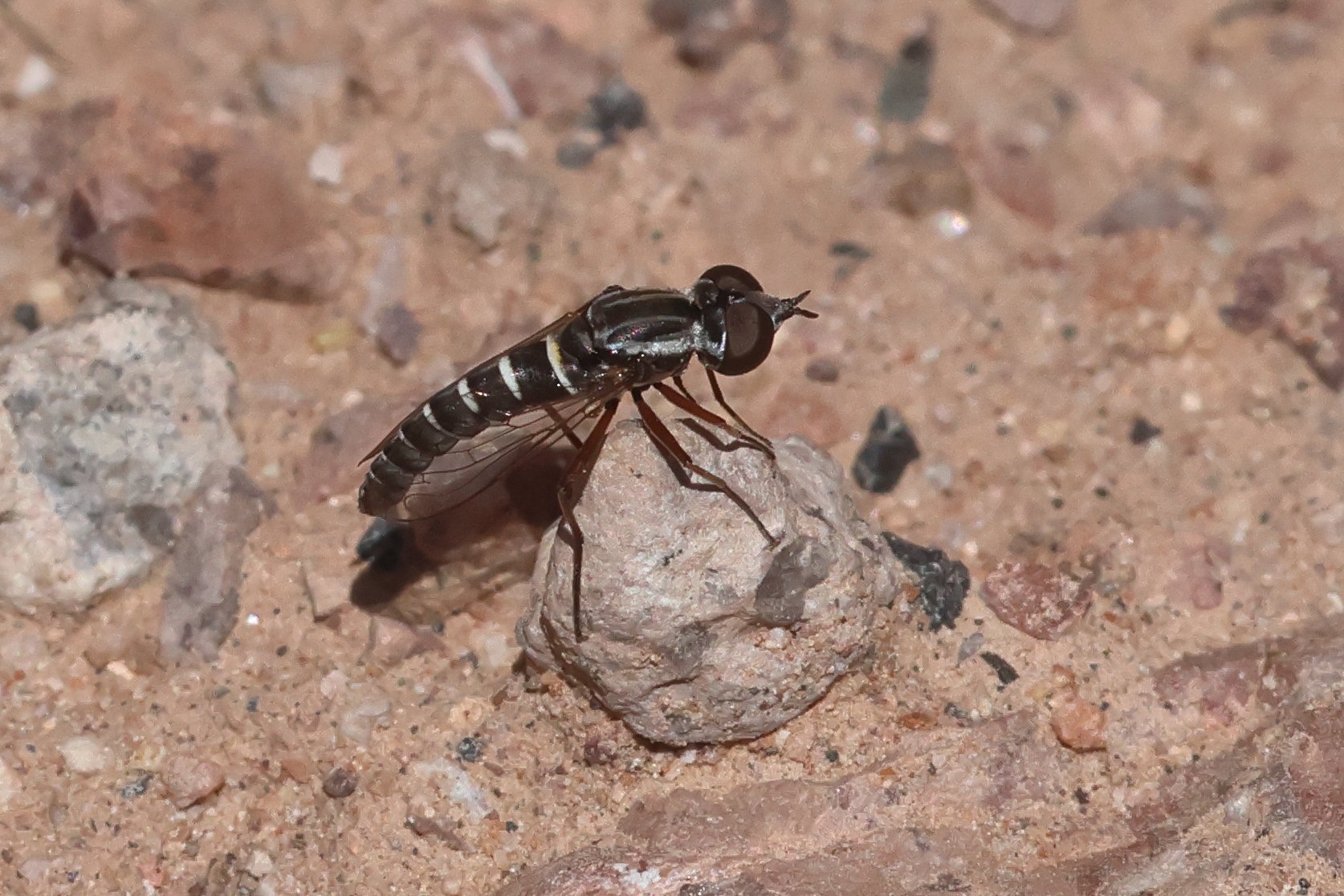

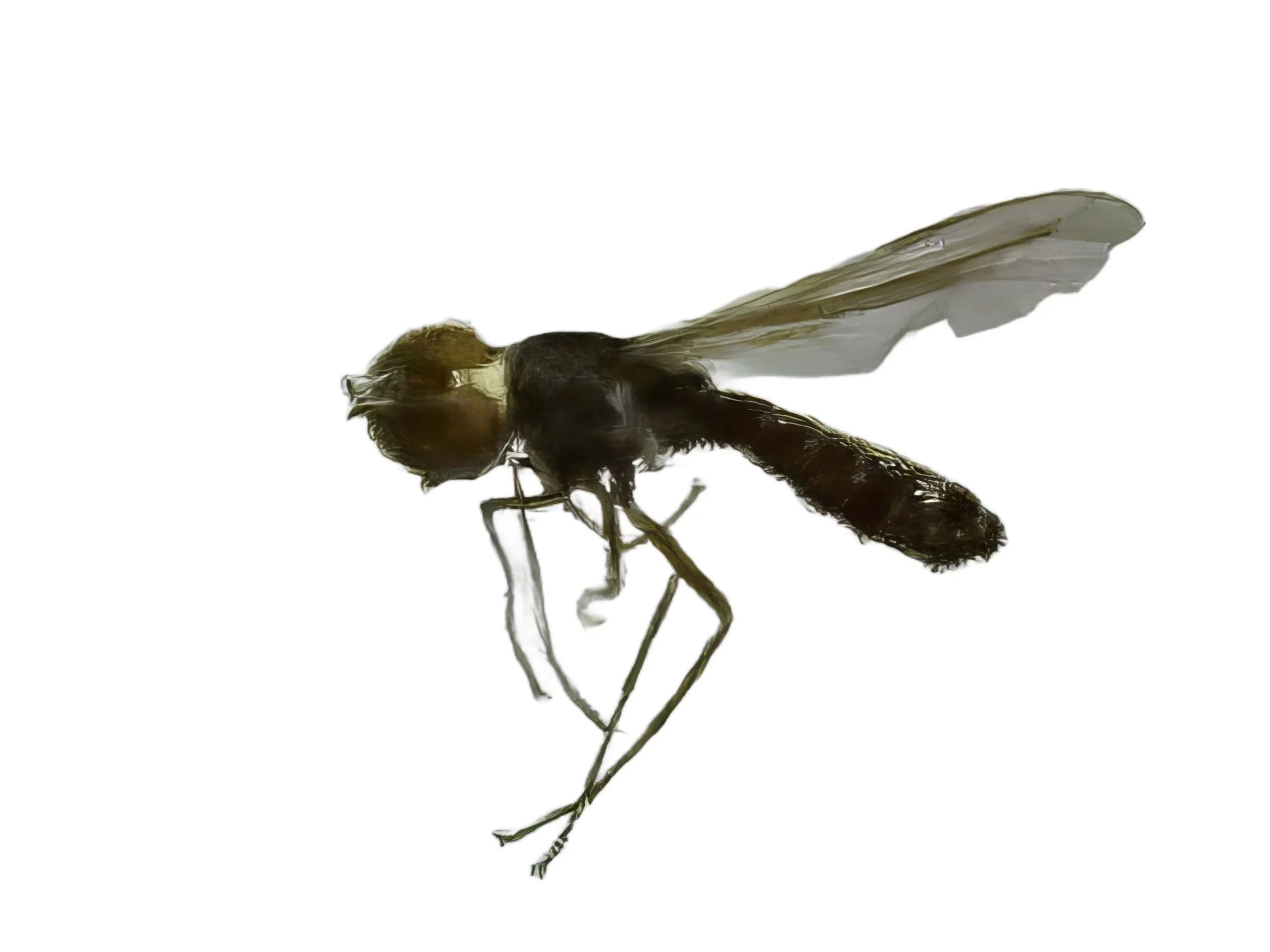
This subfamily features strongly humpbacked species, often with bristles evident on the thorax and legs. The prothorax is notably enlarged and, at least regionally, the species have 3 posterior cells. Note that the proboscis is fairly long and straight (not decurved), and far shorter than that of Phthiriinae.
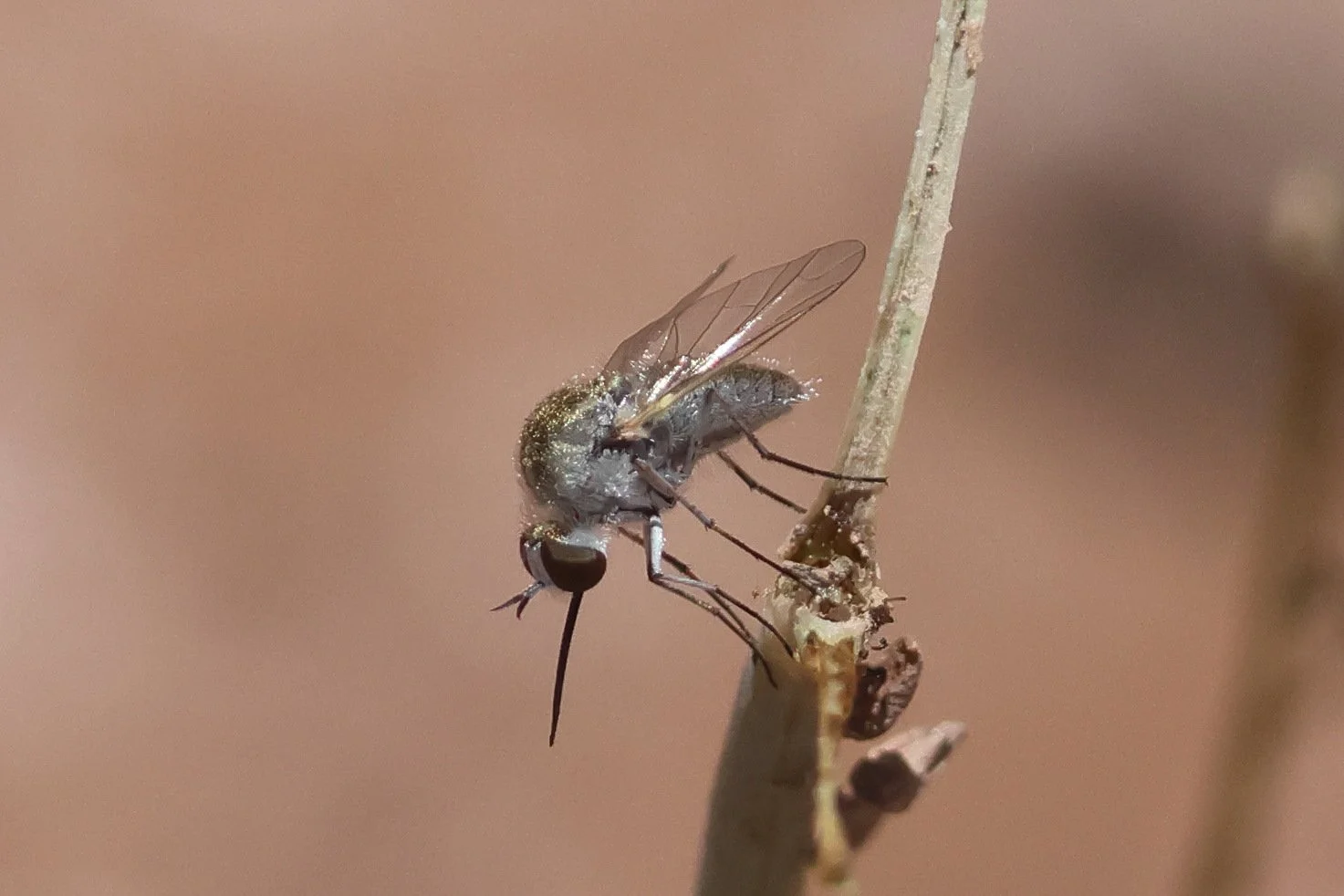
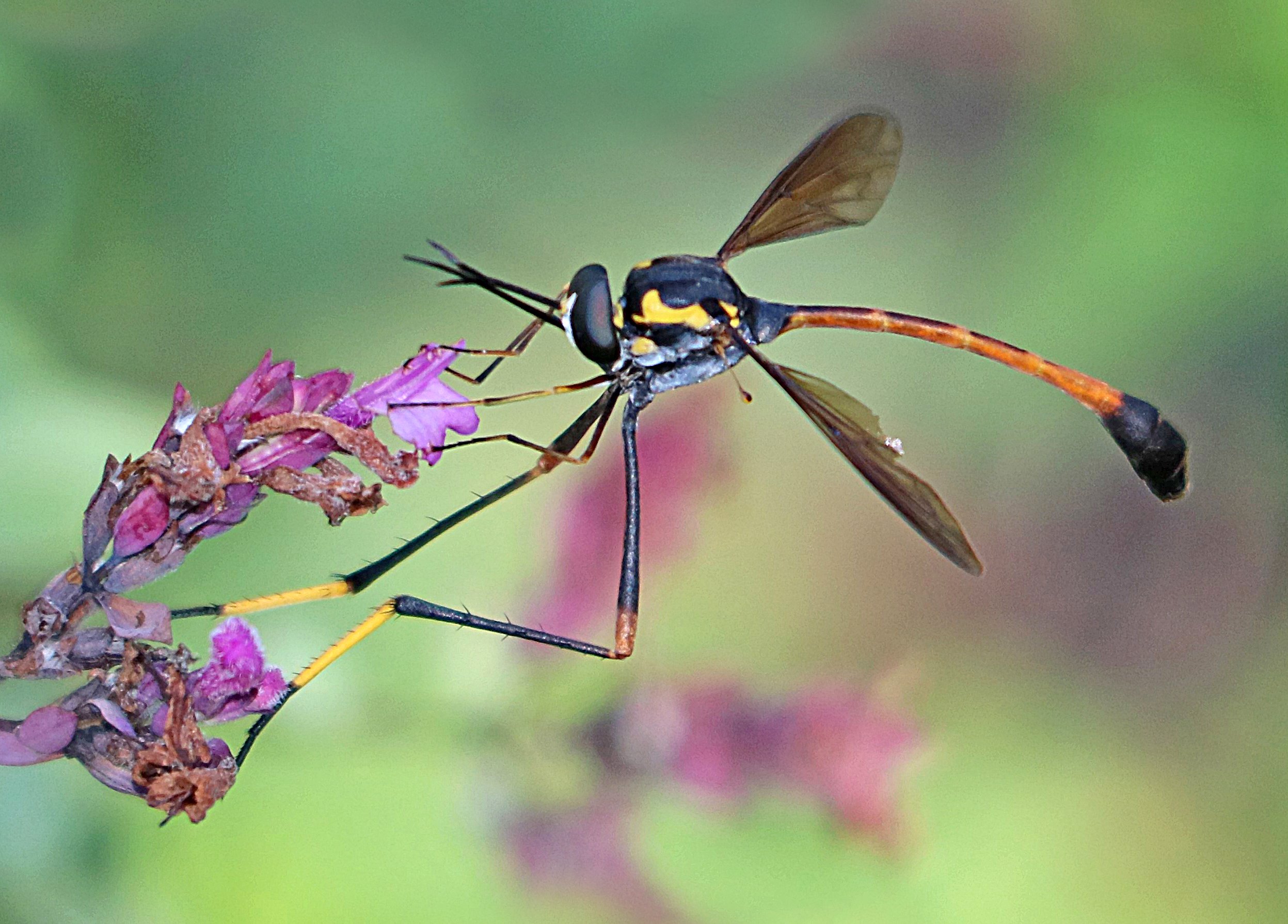
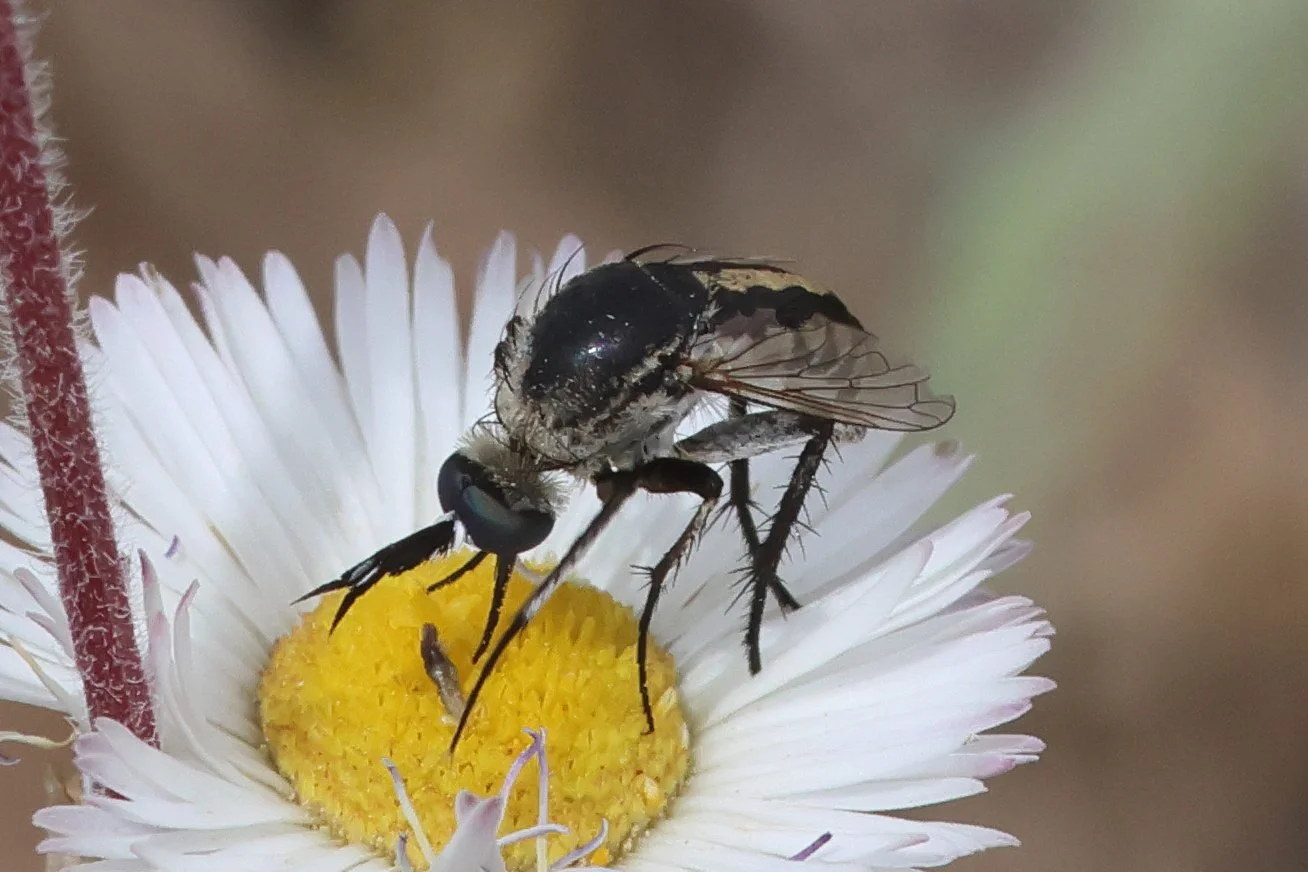
This subfamily contains three genera and about 180 species, mostly in the Old World. Current thinking is that these insects are bee flies with a short-thorax, a long proboscis, only 3 posterior cells, and an anal cell that is closed and stalked. Some taxa are smaller than 2 mm in length and are not covered in this website.