
Subfamily Tomomyzinae
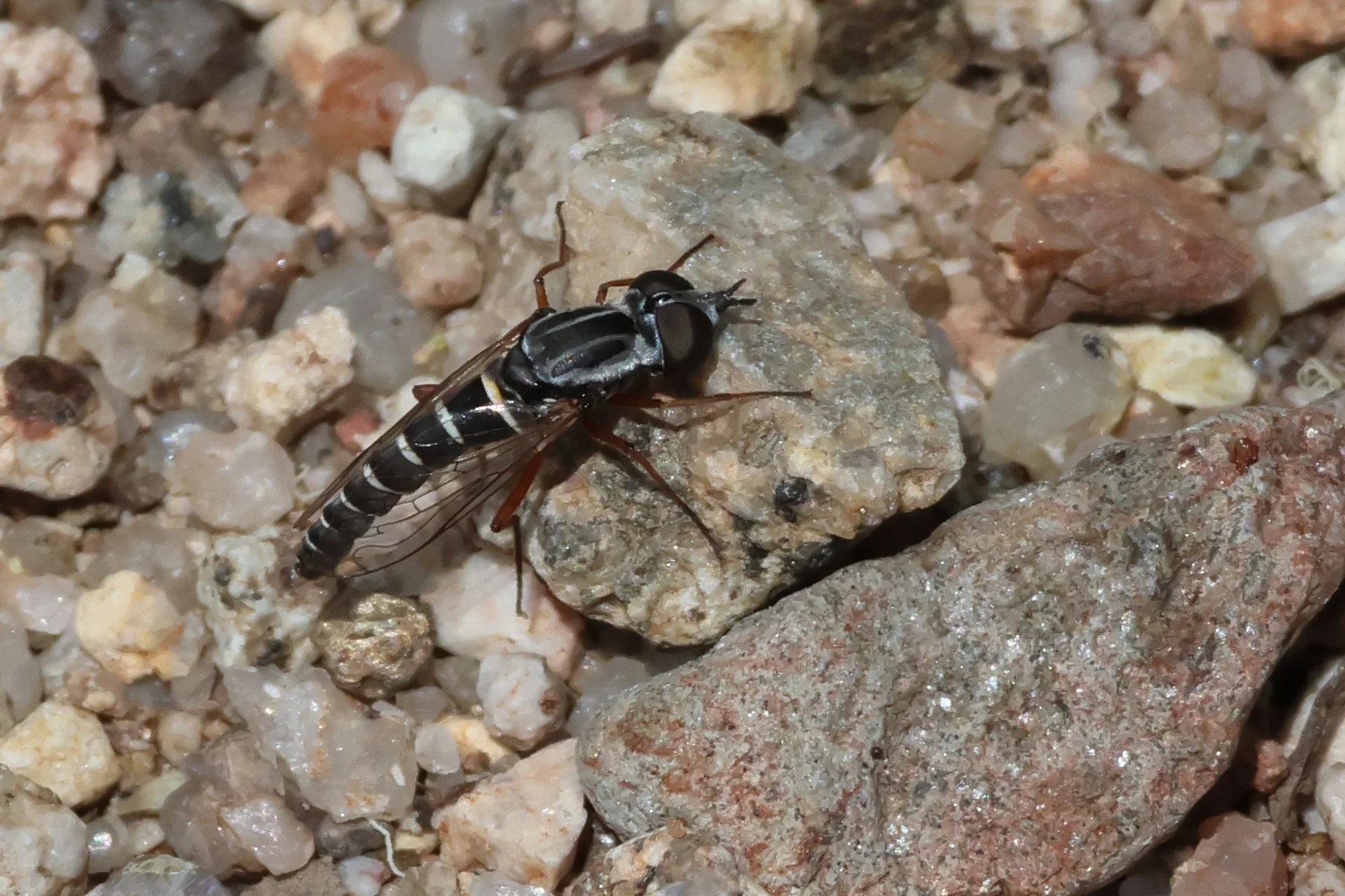

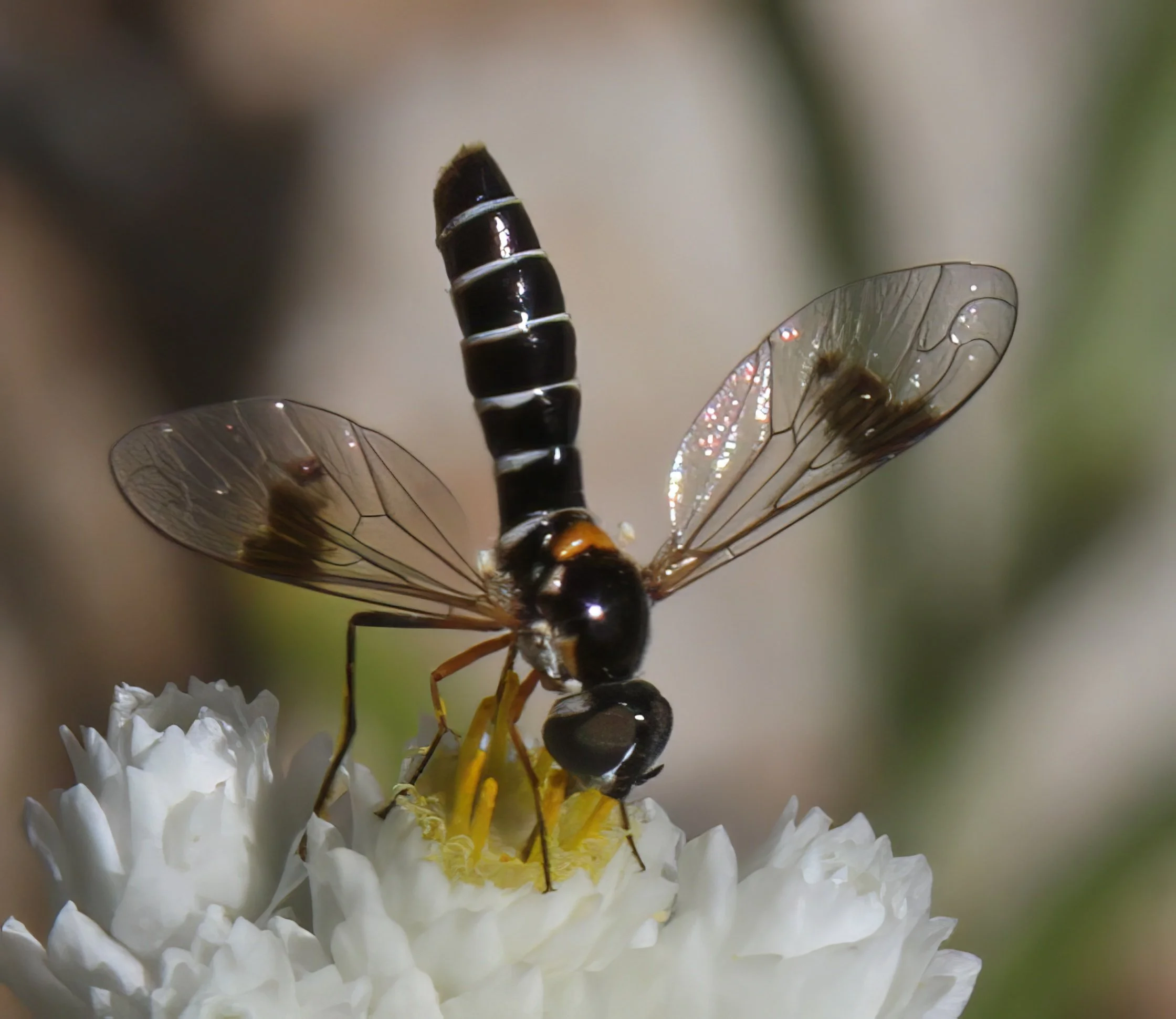
These are small to medium flies with total lengths of 7-9 mm. Due to the lack of tomentum, they often appear shiny and may suggest a flower fly (Syrphidae) with which they may occur. Their abdomen is slender, the legs are short, and the clubs of the halters are comparatively large. The wings have 3 submarginal and 4 posterior cells and both the anal and 1st posterior cells are widely open. They usually fly in late summer. A single specimen of yet another species, taken by N. McFarland in Ash Canyon in the Huachuca Mtns on 14 September 1981, is in the collection of Pat Sullivan. Neal Evenhuis identified that taxon as Amphicosmus near cincturus, a taxon otherwise unknown in the region.
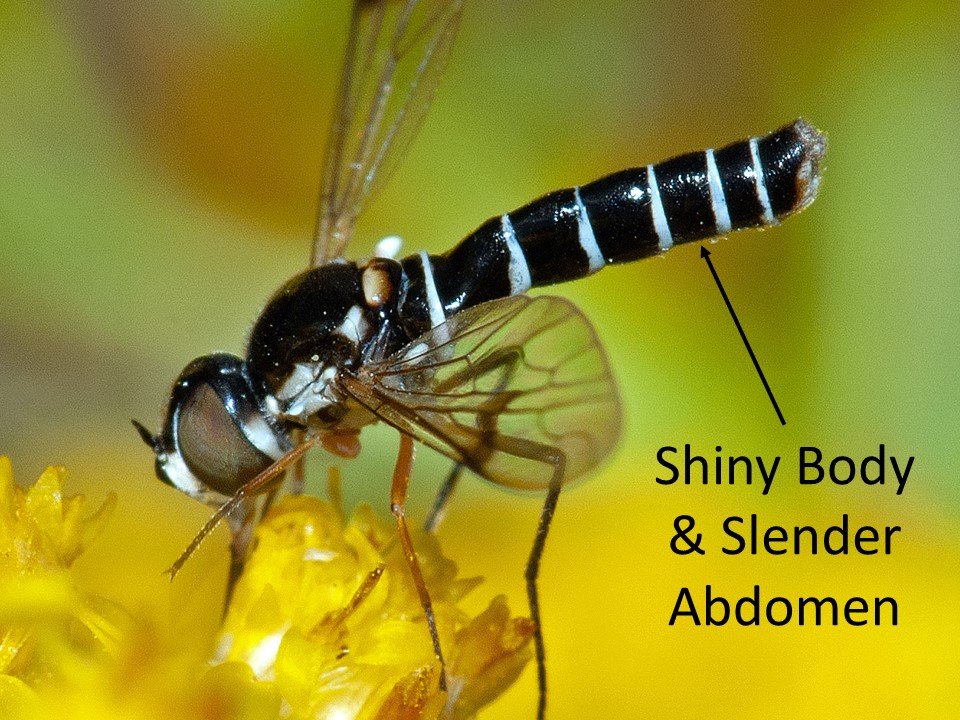
Shiny Body and Slender Abdomen
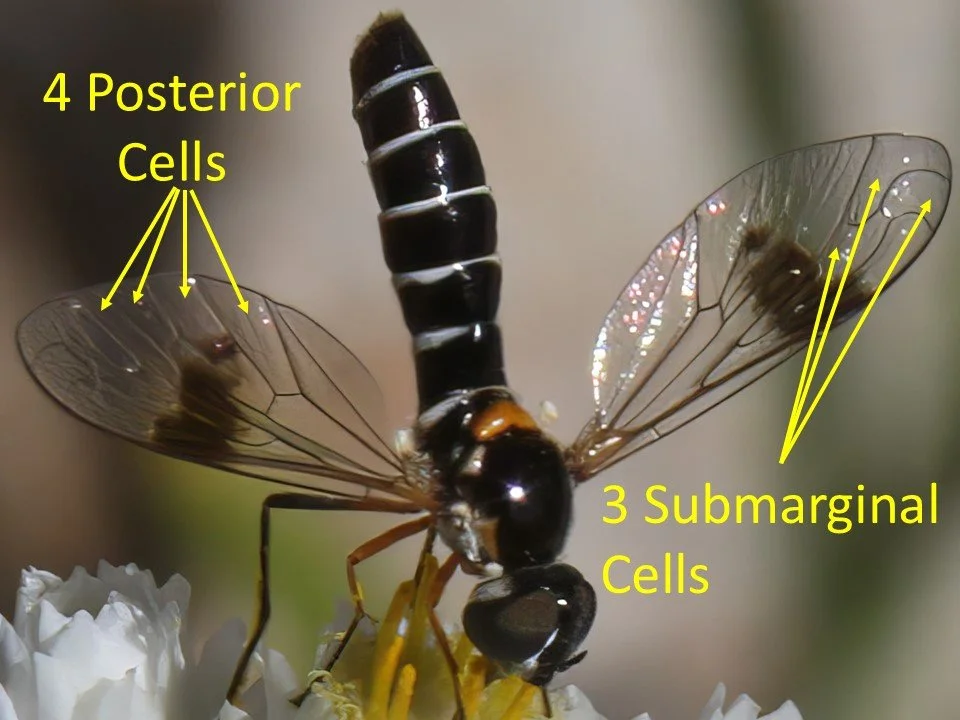
4 Posterior Cells & 3 Submarginal Cells
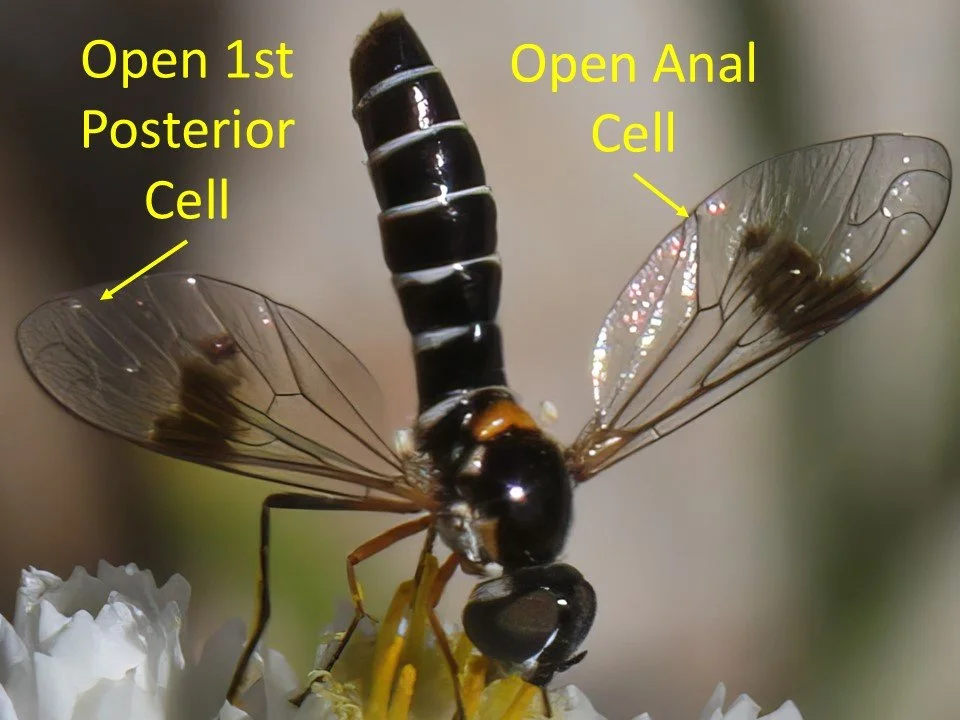
Open 1st Posterior Cell & Anal Cell
This small genus contains species with lengths of only 4-5 mm and with comparatively large heads and slender bodies. The legs are short and weak, and the abdomen appears ringed. There are 2 submarginal and 4 posterior cells, and the anal cell and the 1st posterior cell are very widely open. Nothing is known about the behavior of the immature stages.
Members of this genus are somewhat larger than those of the previous two genera, as long as 10 mm. Individuals are shiny and quite bear with an elongated, flattened abdomen. The front branch of the 3rd vein has a backward spur and the anterior crossvein reaches the discal cell at its outer 3rd. It is most often seen perched on hot, desert substrate or in sandy washes rather than at nectar.
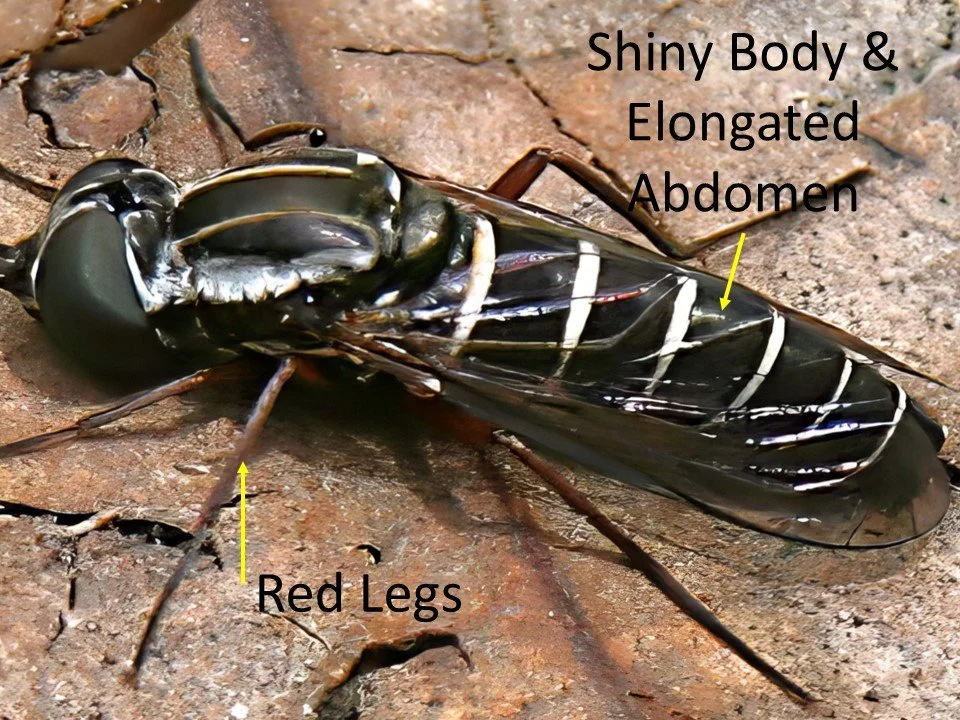
Shiny Body, Elongated Abdomen and Red Legs
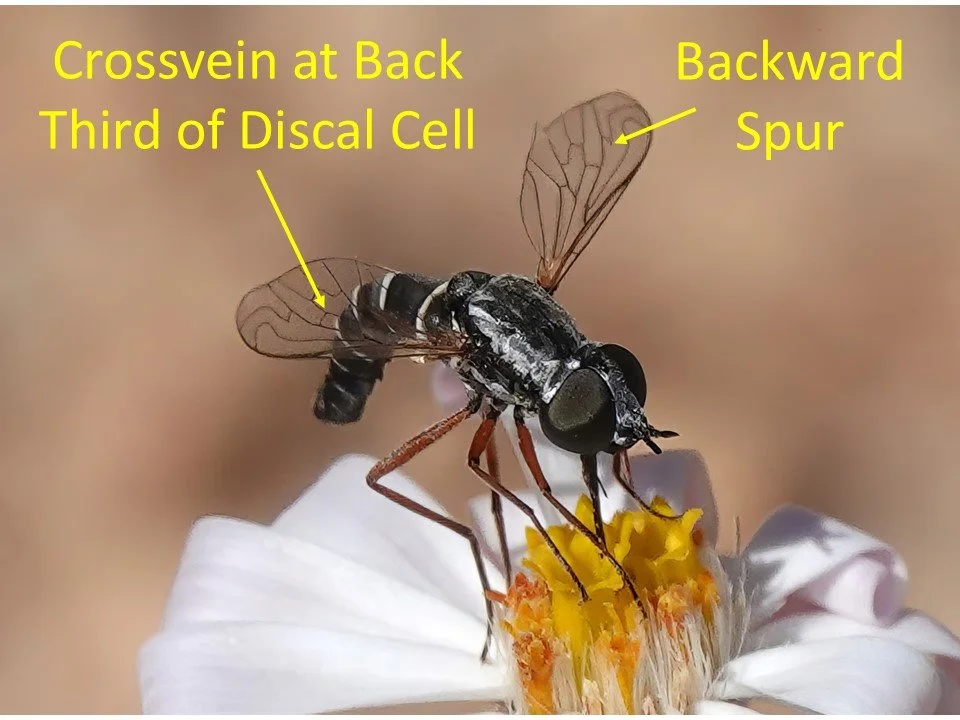
Anterior Crossvein at Outer Third & Backward Spur on R4