
Subfamily Phthiriinae

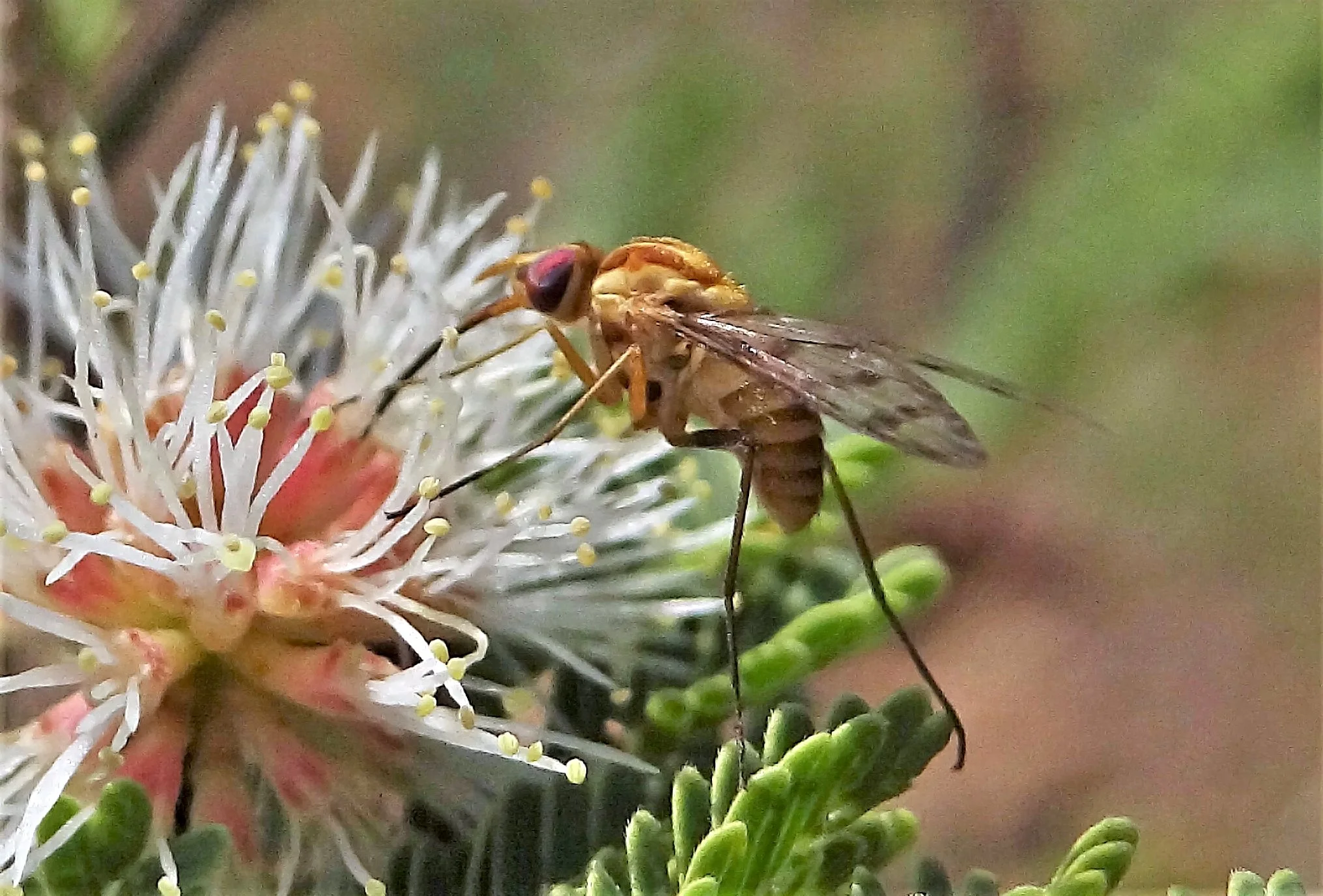
In addition to the following two genera, the genus Euryphthiria has been cited on occasion from the American Southwest, 3 times from SE Arizona. The genus was described quite recently by N. Evenhuis and is relatively unknown, but an image or two are shown in BugGuide and iNaturalist. The venation is similar to that of the other phthiriine genera and the wings are unspotted. Also note the large size, the heft of the abdomen, and a habitat usually between 6,800 and 8,000 ft.
This genus, and the following one (Poecilognathus) are sometimes easily separated and sometimes not. The use of phenotypic and structural characters mentioned in different source materials sometimes lead down different paths. For example, Evenhuis' loewi group, which he places in Poecilognathus, displays most characters of Neacreotrichus as per Hull (1973). Until more research is completed and until DNA examination says otherwise, we are placing individuals without right-angle third submarginal veins and also lacking stump veins in the genus Neacreotrichus. This may mean that the loewi group is better placed in this genus. One other unresolved issue has to do with antennal length. In all members of both genera, the antennae are long. However, in most specimens with Neacreotrichus venation, the 3rd antennal segments are usually linear and, in both sexes, fully 4 or more times the combined lengths of segments 1 and 2. On the other hand, specimens with Poecilognathus venation typically but not always have shorter, more rounded 3rd segments in both sexes, at times barely twice as long as the combined lengths of segments 1 and 2. At this point, it is not known if this is a species-level distinction or whether the exceptions are unspotted Poecilognathus or more properly placed in Neacreotrichus. With flights usually from mid-summer through early fall, adults are regularly on the wing very early in the day, sometimes by 6 am. But some individuals have been found as early as March and fly during the heat of the day. On occasion, adults have been caught in flight traps of various sorts.
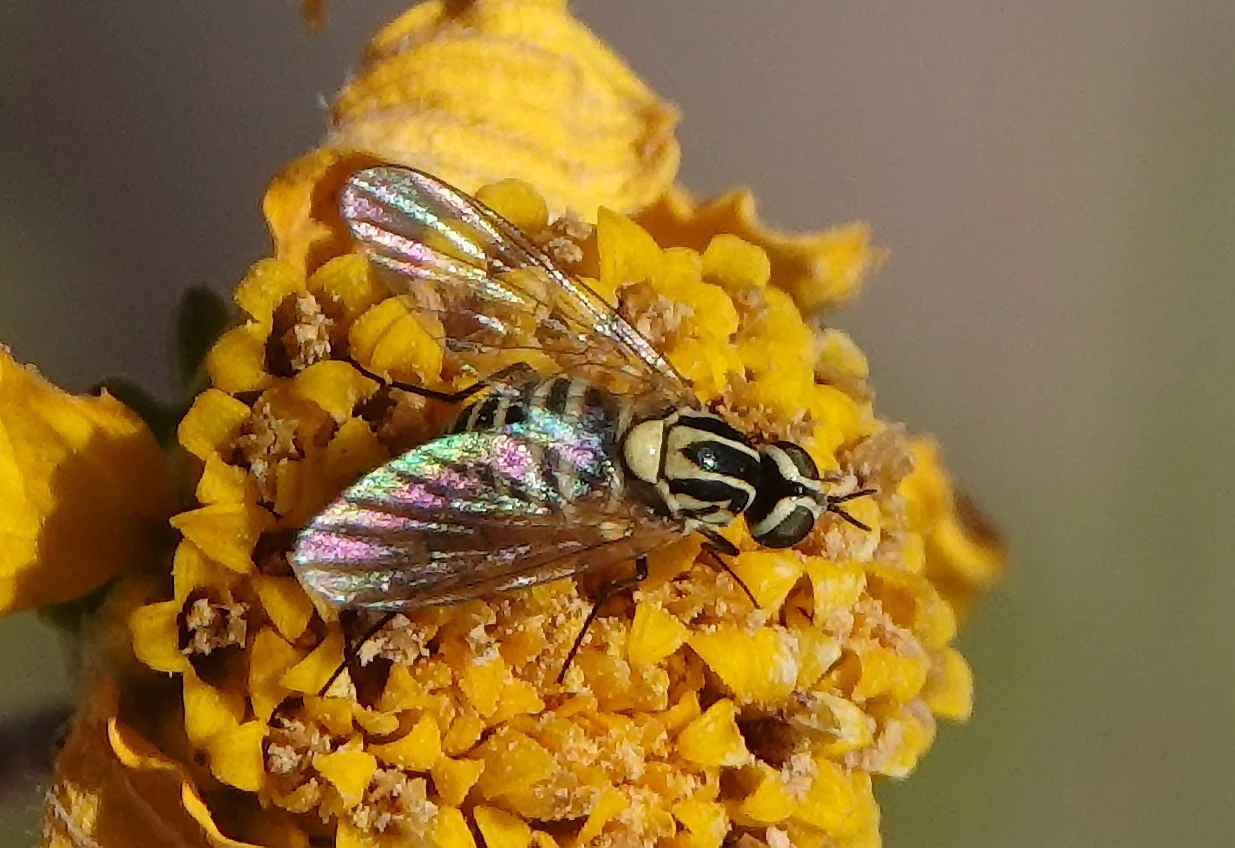
Identification to species level is poorly known in both genera. One cluster of species here placed in Neacreotrichus, is entirely black, a second group has black and white abdominal rings, and yet another has a mostly yellow abdomen with longitudinal stripes on the thorax. At least in part, members of this latter group have been referred to as N. diversus. And still another phenotype that may be something called "consors" has a yellow patterned abdomen with a dark shield-shaped blotch on the thorax. And finally, if "loewi" types, those formerly placed in Poecilognathus by some, are included here in Neacreotrichus, they can be recognized by the pale-striped thorax and mostly yellow abdomen. At least 6 possible species - consors, humilus, loewi, melanoscutus, picturatus, and vittiventris - have been cited from Arizona. All known phenotypes, which may or may not match up with these names, are shown here. As mentioned elsewhere, we assume that future work with DNA will shed significant light on the systematics of problematic genera such as this one.
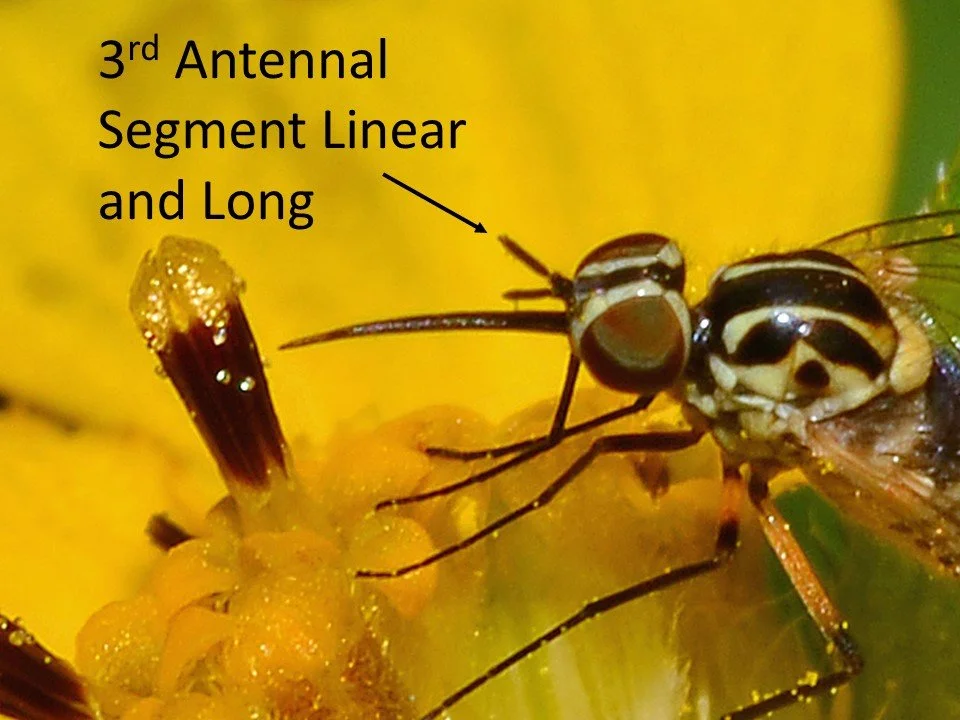
Linear and Long 3rd Antennal Segments
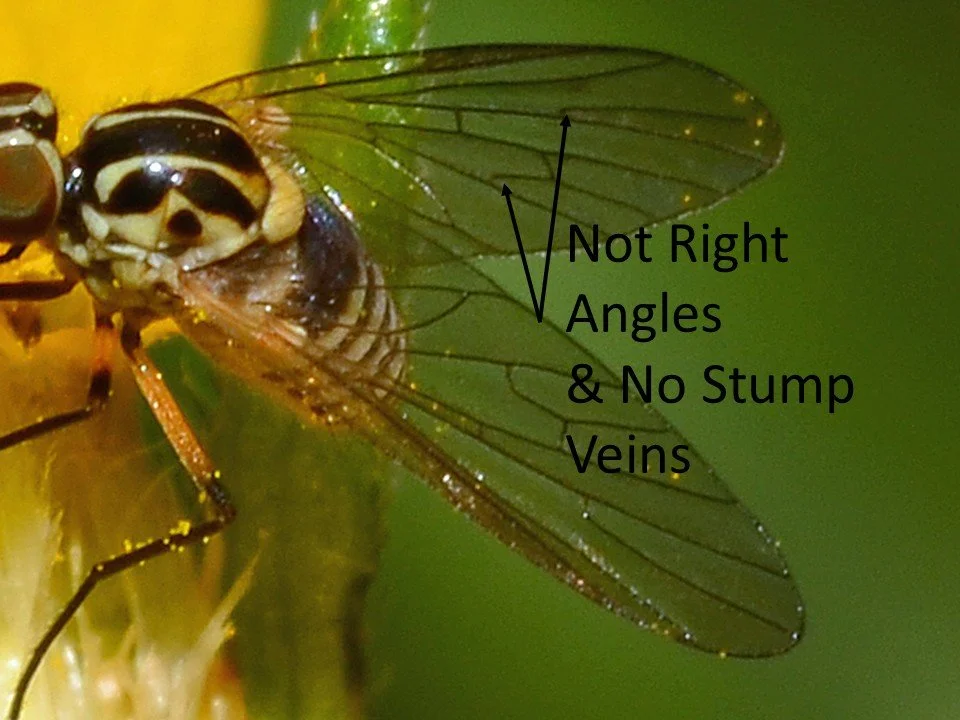
Veins not at Right Angles and No Stump Veins
This genus and the previous one, Neacreotrichus, are easily confused. For additional discussion, see the generic write-up above. That said, taxa placed in Poecilognathus in this website have slightly bulging 3rd segments on the antennae which are usually 2 - 3 times the combined lengths of segments 1 and 2. Stump veins are present in this genus, always at the right-angle bend in vein R4, and regularly at the base of the 3rd posterior cell pointing into the disc. To date, all regional species have had spotted wings, typically on the crossveins, putting them in the punctipennis group (Evenhuis 2024). We are not aware of any unspotted Poecilognathus, group loewi, (Evenhuis 2024) that have convincing records from our area. As with Neacreotrichus, all posterior cells are open but the anal cell is closed and stalked. Also, the anterior crossvein hits the discal cell at or beyond its middle. It is fairly common to see adults congregating in some numbers on single flower-heads. Most individuals are quite small, with lengths of under 5 mm, but a few taxa, especially in Cochise County, are larger, having body lengths of more than 7 mm. Several individuals have also been found under UV light during the monsoon season.
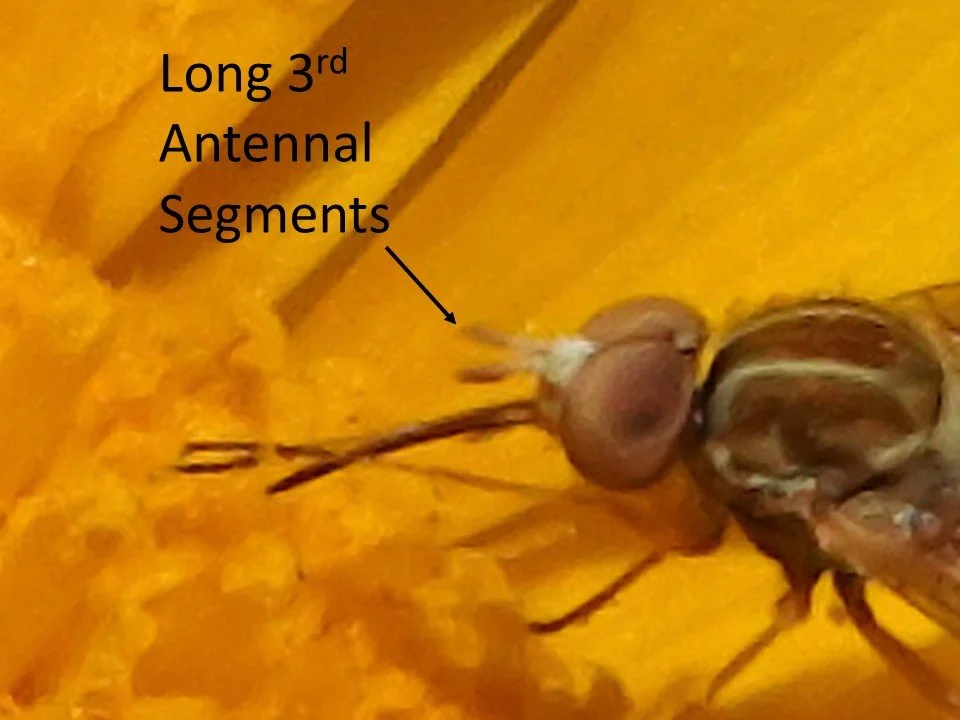
Long 3rd Antennal Segments
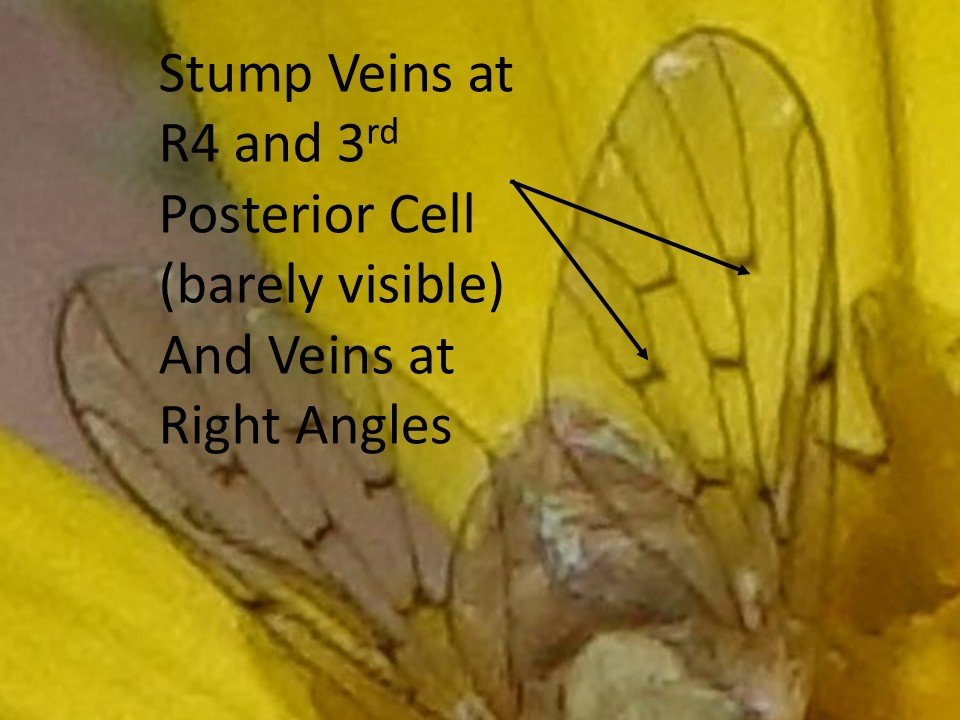
Stump Veins and Right-Angle Veins
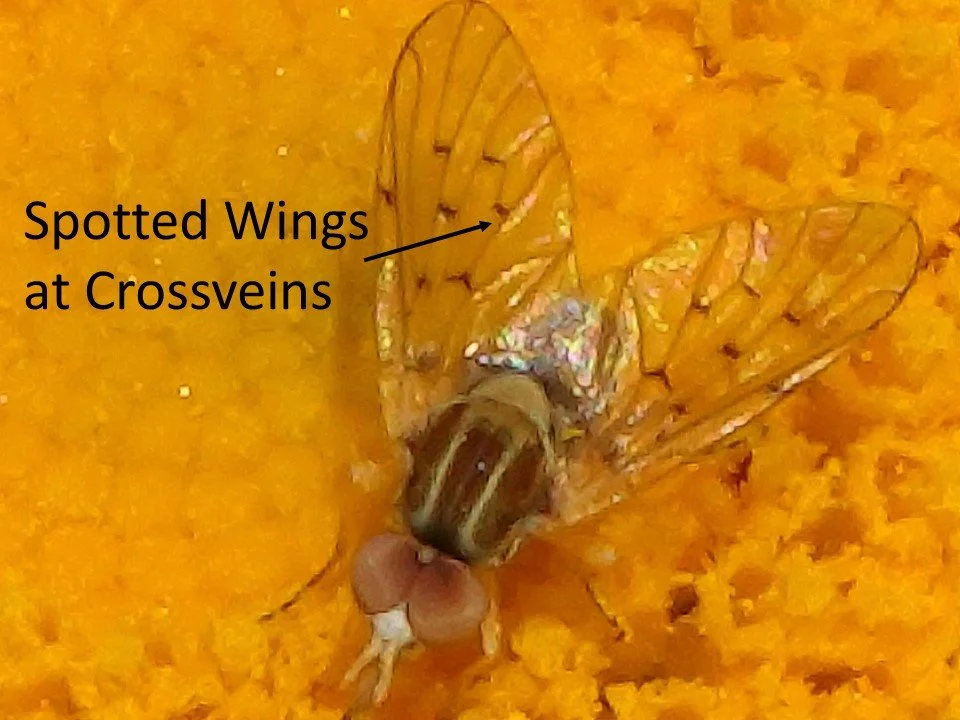
Spotted Wings
These are usually very small bee flies, with body lengths less than 4 mm. They are sometimes found within the flower corolla. In some cases, the eyes of ♂s can be brilliantly colored in bright reds or blues. The body itself is often without pile and is almost entirely shades of yellow. Most taxa assigned to this genus have somewhat milky, pale-veined wings and pruinose bodies (Kits 2008). Two individuals are known from the region - one from north of Benson and the other from near Willcox.
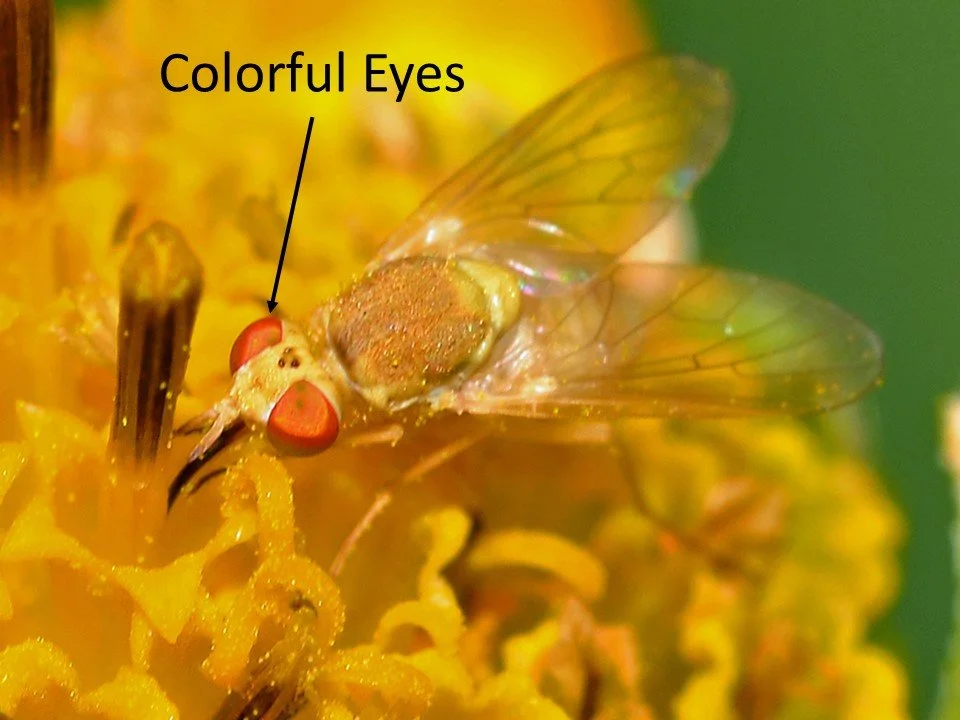
Colorful Eyes
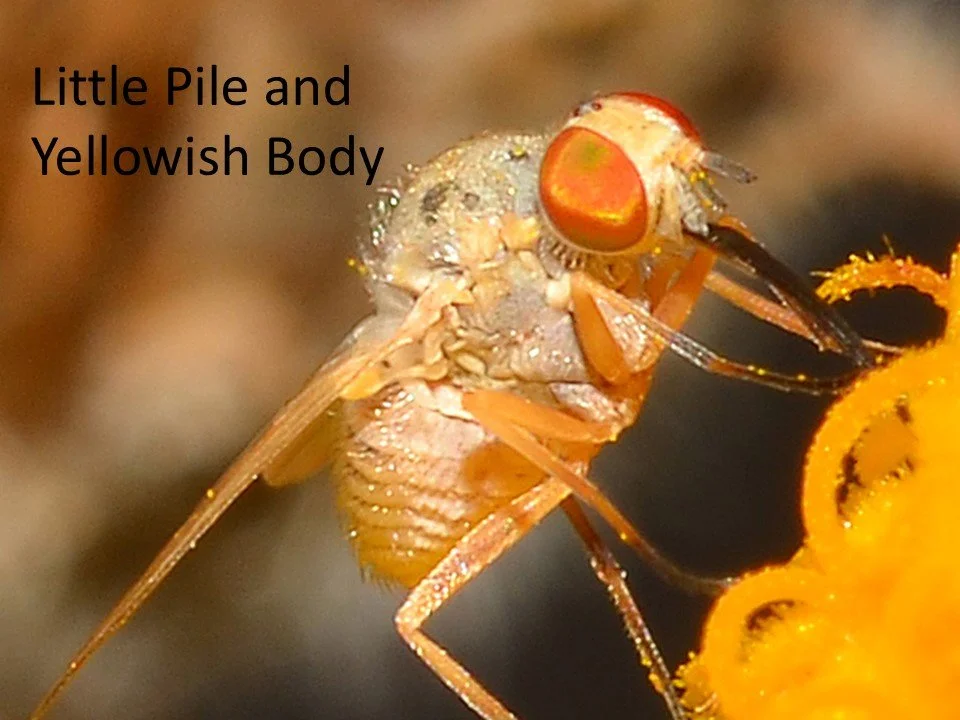
Little Pile and Yellow Body