
Genus Poecilognathus
Poecilognathus damfino
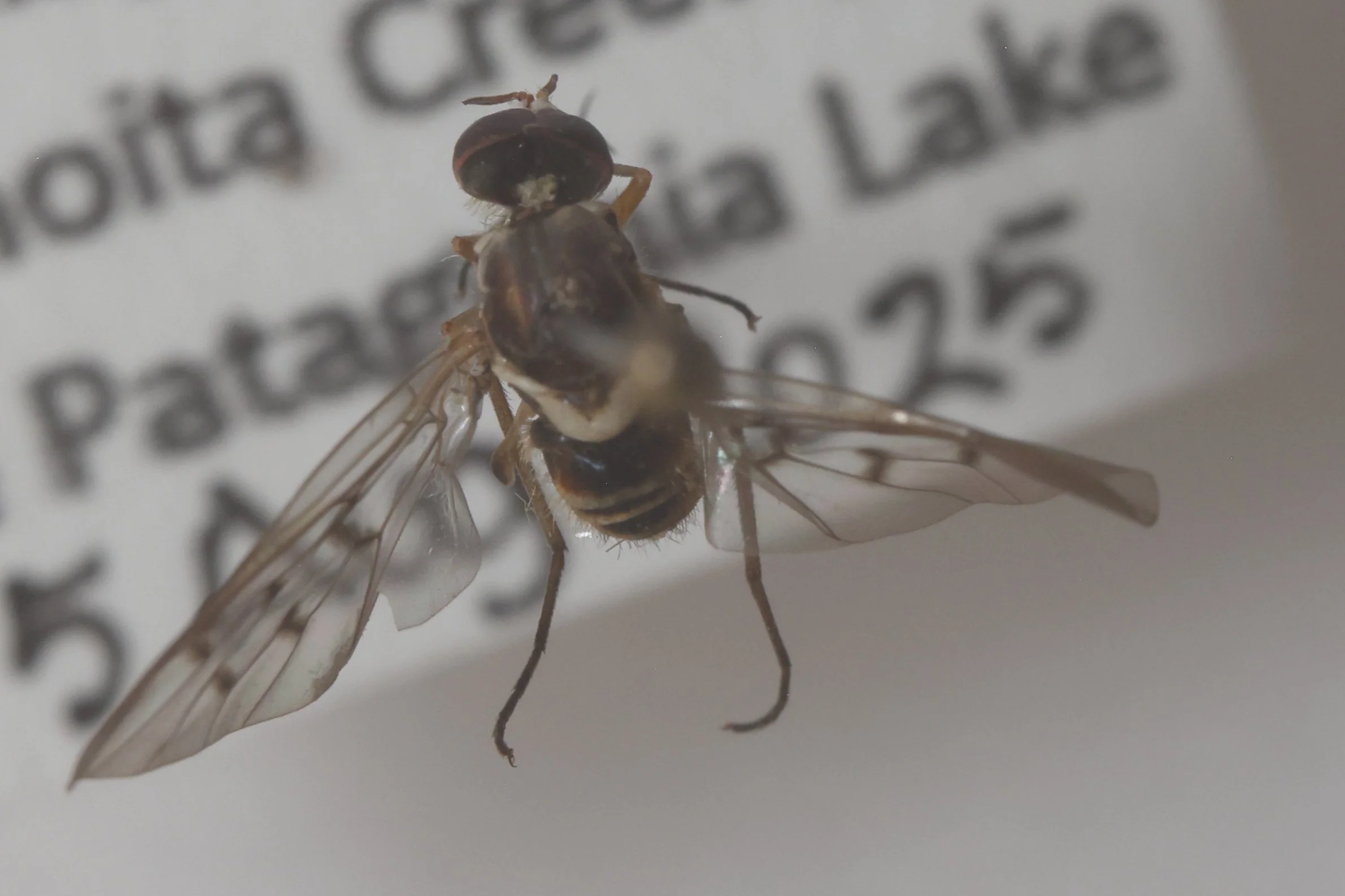
This larger, locally uncommon species has spotted wings, a black and white ringed abdomen, a black spot on the face, and a bold white band that circles the scutellum and extends forward laterally on the thorax. Importantly, the maxillary palps are yellow to light brown. It was only recently described, in 2024.
Range: PIMA, STCR
Occurs: Mid-July to Early August
Poecilognathus fuscomarginatus
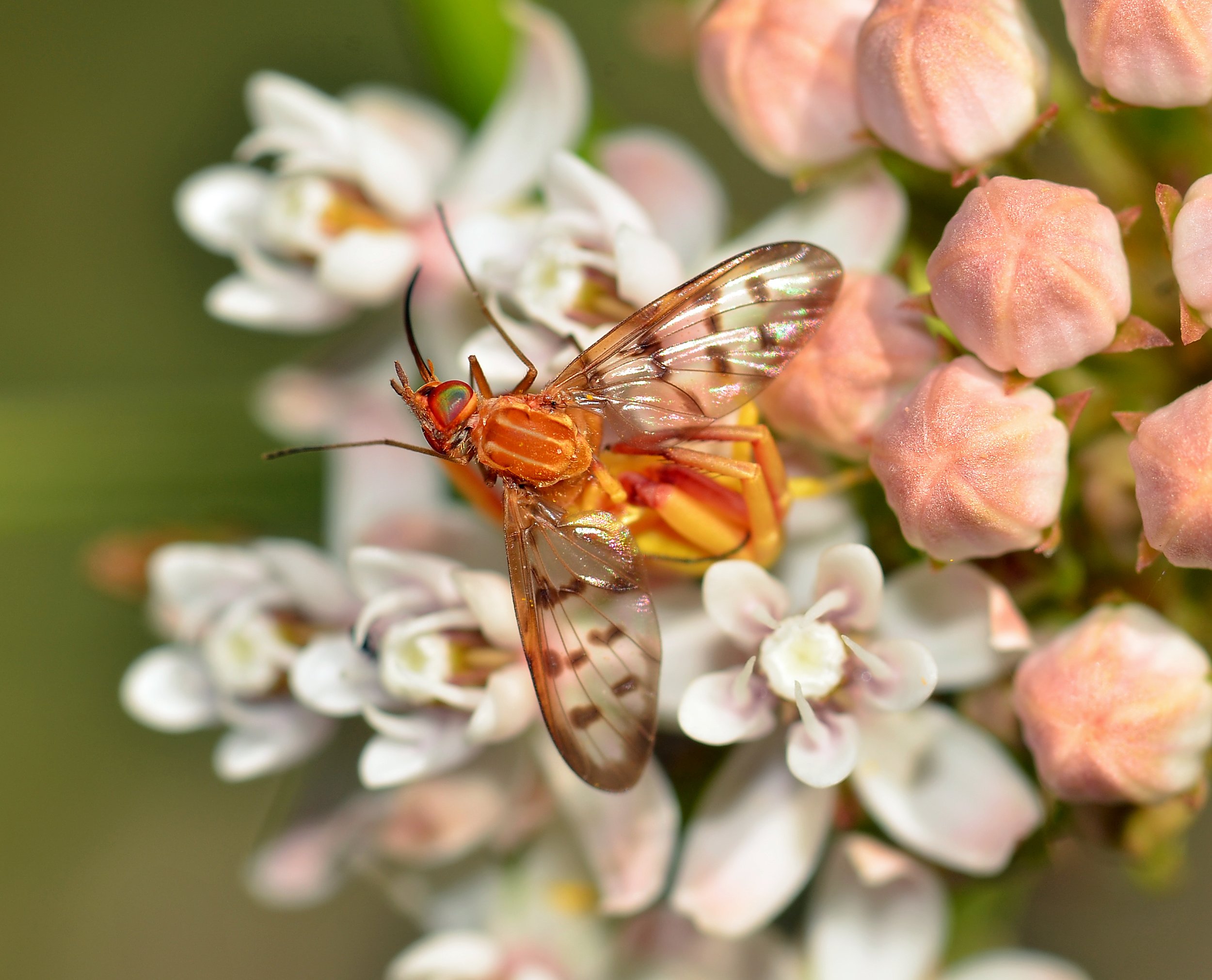
This small, montane species, first brought to our attention by Behrstock, is newly described (N. Evenhuis 2025). It is similar to unimaculatus but has coalesced submarginal spots, brown antennae, and brown hind legs. Additional records are needed.
Range: COCH, PIMA, STCR
Occurs: Mid-July to Mid-September
Poecilognathus scolopax
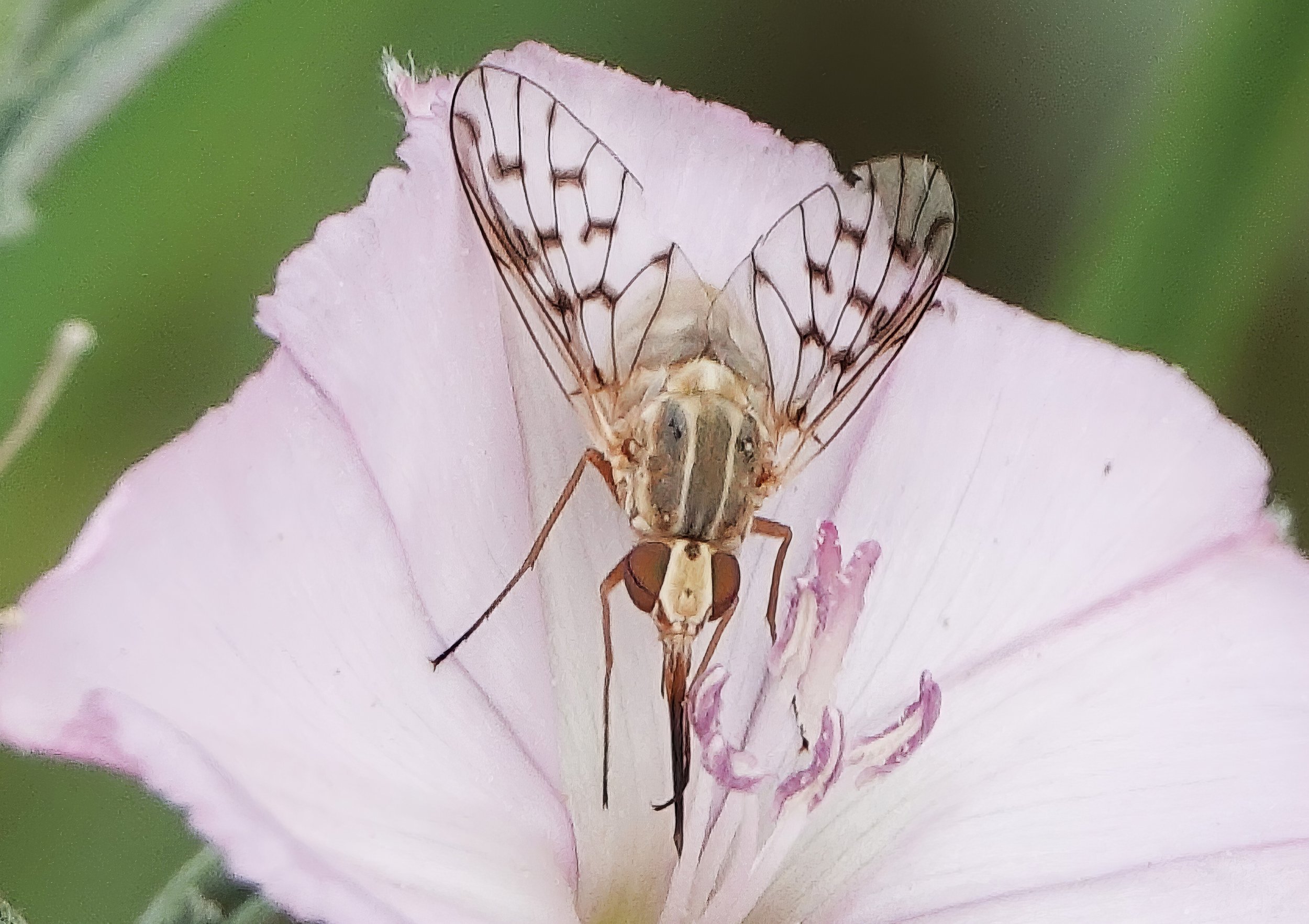
This is a large, dull species with heavily-maculated wings that are spotted at many crossveins and junctions. The scutellum is patterned with two rear-pointing triangles separated by a broad pale-yellow band, the hind femora and halteres are dark, there are 2 strong lateral spots on the face, and alternating light and dark bands on the abdomen. Known nectar plants include bindweed (Convolvulus) and Camphorweed (Heterotheca).
Range: COCH, GRAH, PIMA
Occurs: Mid-July to Late August
Poecilognathus unimaculatus
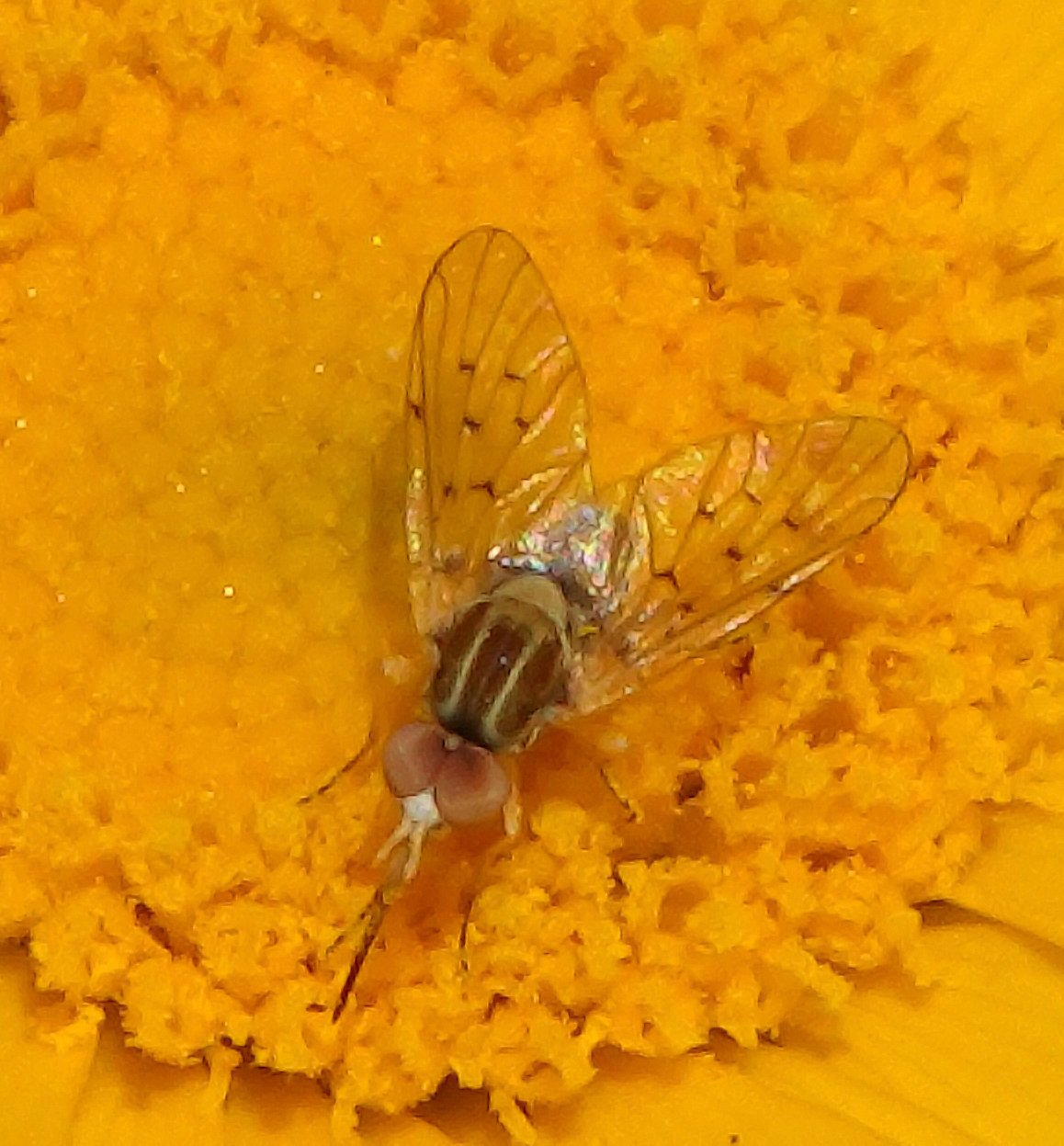
In this species, wing spotting is not weak, as in sulphureus, and can be seen readily with the naked eye. There are spur-veins including one into the discal cell. The thorax is gray-orange with 2 longitudinal white stripes and the halteres are typically dark. The species regularly occurs in numbers..
Range: COCH, PIMA, PNAL
Occurs: Mid-July to Late August
Poecilognathus sulphureus
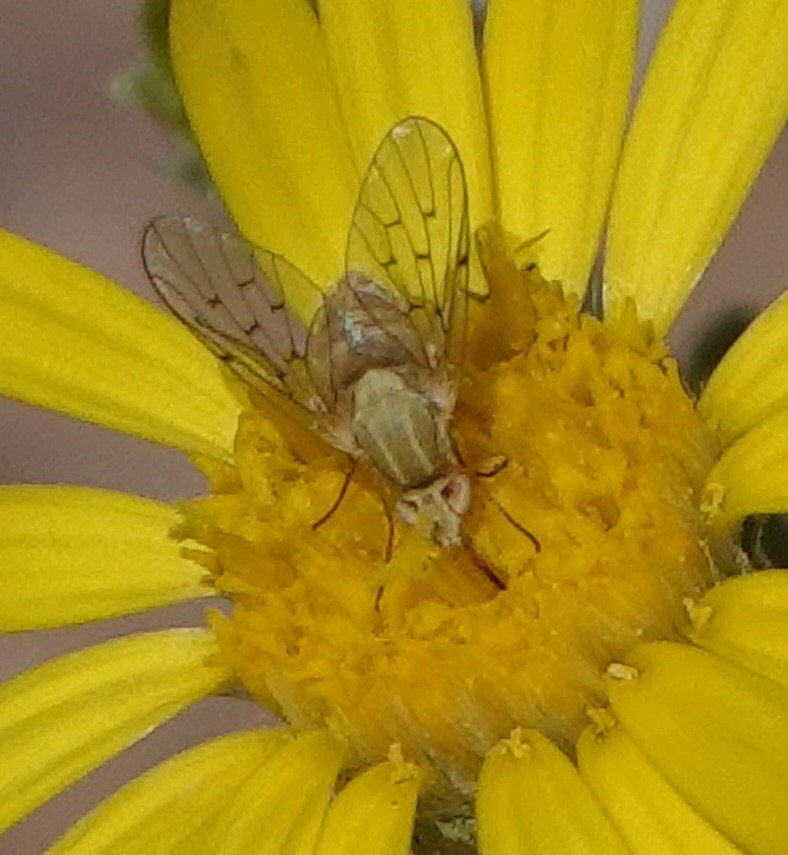
One of the tiniest species covered in this website, it has a body not much more than 2 mm long. Adults are almost entirely bright yellow, sometimes with a subtle hint of patterning. The species can readily be found at nectar, sometimes in numbers, for example, on desert marigold (Baileya multiradiata) flowers. The wings are weakly spotted at the crossveins, the proboscis is long and decurved, and the halteres are yellow.
Range: PIMA
Occurs: Late July to Early November