
Subfamily Toxophorinae
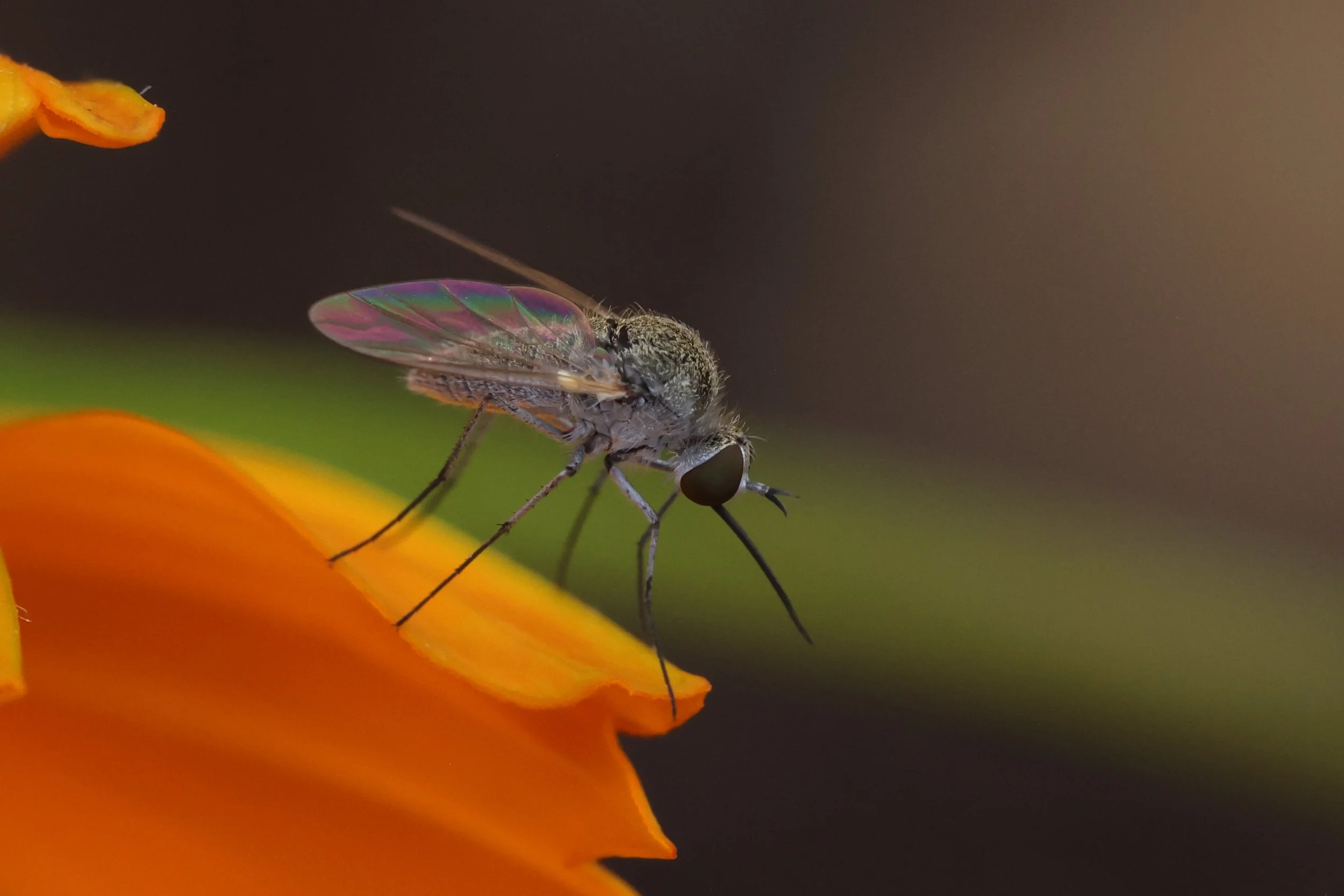

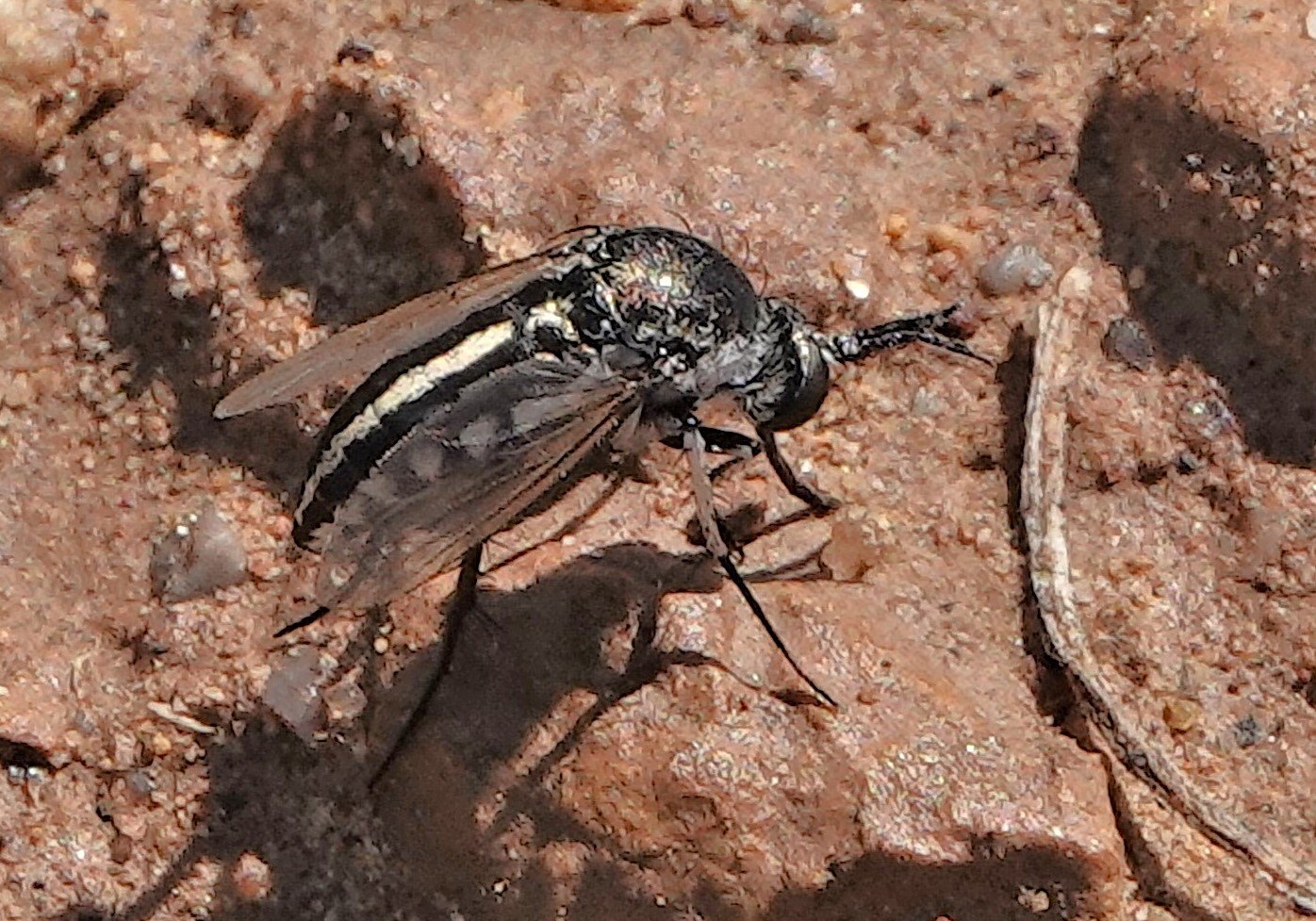
This genus, sometimes considered a subgenus of Geron, consists typically of a group of small to medium-sized species, usually 3-6 mm in length. As in true Geron, the members of Empidigeron have flaring antennae and hyaline wings, invariably with 3 posterior cells. But members of Empidigeron may be differentiated from those in Geron by one consistent feature of the venation. The distal branch of the 3rd submarginal vein is long, at least as long as the basal branch of that vein. This distorts and elongates the shape of submarginal cell r4 (see figure at right). Three names are available for taxa in Arizona - nudus, snowi, and aridus - but, again, identification is problematic due to the sketchiness of the keys. Which, if any, of the 3 names cited here apply to SE Arizona populations is not clear. What we do have is a number of specimens which can be easily placed in this genus. Most are from higher altitudes, at least within the Sta.Catalinas and Chiricahuas, and are sometimes found in numbers. County records include COCH, GRAH, GREE, PIMA, and STCR, and the flight periods include M May through M Aug and a single E Oct report. As mentioned under Geron, DNA investigations should greatly aid in matching populations with names.
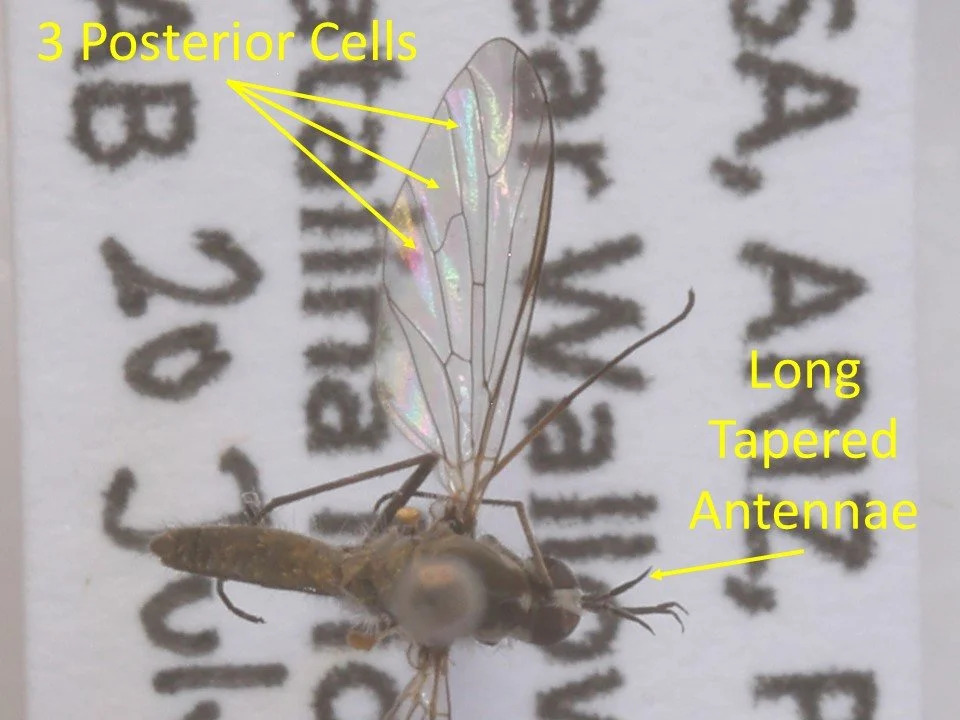
3 Posterior Cell and Long, Tapered Antennae
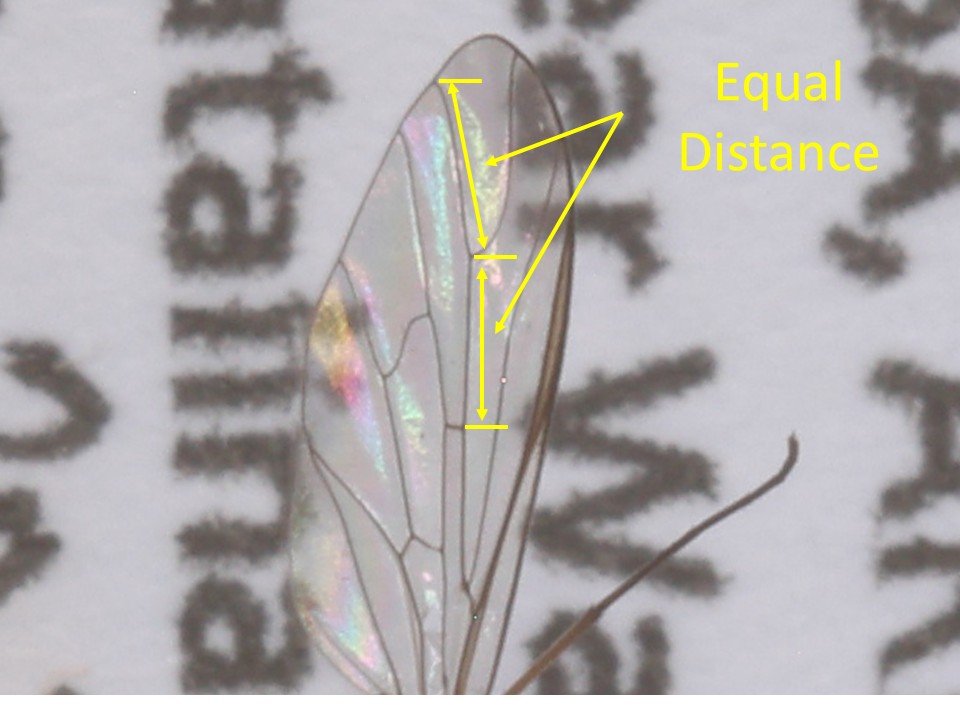
Equal Length of Distal and Basal Branches of 3rd Submarginal Vein
These are small to medium-sized species with 3 posterior cells. They are all hyaline-winged, or very slightly sub-hyaline. The posterior branch of the 3rd submarginal vein is shorter than the 3rd longitudinal vein, and the anal cell is closed and stalked. Females are more identifiable and key out more readily than males. The proboscis in all species is fairly long but not decurved (as they are in Poecilognathus and Neacreotrichus). Male genitalia may appear in two forms - digitate and rosette - both of which occur in most species in fairly equal numbers. The two forms may be related to mating status. The back is always humped, and the antennae are elongate with the third segment pointed. There is great similarity between members of this genus and of the genus Apolysis in the subfamily Usiinae. See that subfamily for additional information. In the latest treatment of the genus (Hall & Evenhuis 2003), 28 species were delineated, about a dozen of which are cited from SE Arizona.
Several phenotypes are evident in our region but, with the possible exception of rufipes (which was formerly called grandis due to its large size), none of them is easily identified to species. At least one species or species-group is entirely gray, another is mostly gray but with the dorsum of the thorax black, yet another is black over the entire dorsum and white ventrally, while still another is gray-brown but liberally sprinkled dorsally with golden tomentum. We figure these phenotypes in this website but do not know if any or all of them are related in some way to any of the taxa previously reported from Arizona (see below). This can be blamed at least to some degree on the inadequacy of the two known keys - Painter 1932, and Hall & Evenhuis 2003. As of 2026, neither Inaturalist nor BugGuide figures nor discusses in depth any specific-level identification within Geron. It is possible that with the development of DNA banks and barcoding, some taxonomic clarity will be developed. Until then, only genus-level identification is at our disposal. All known members of the genus are parasites of several genera of moths.
Taxa reported from Arizona include G. senilis, G. niveus, G. albidipennis, G. arenicola, G. confusus, G. cressoni, G. elachys, G. eriogonae, G. holosericeus, G. painteri, G. peucon, G. prosopidis, and G. vitripennis..
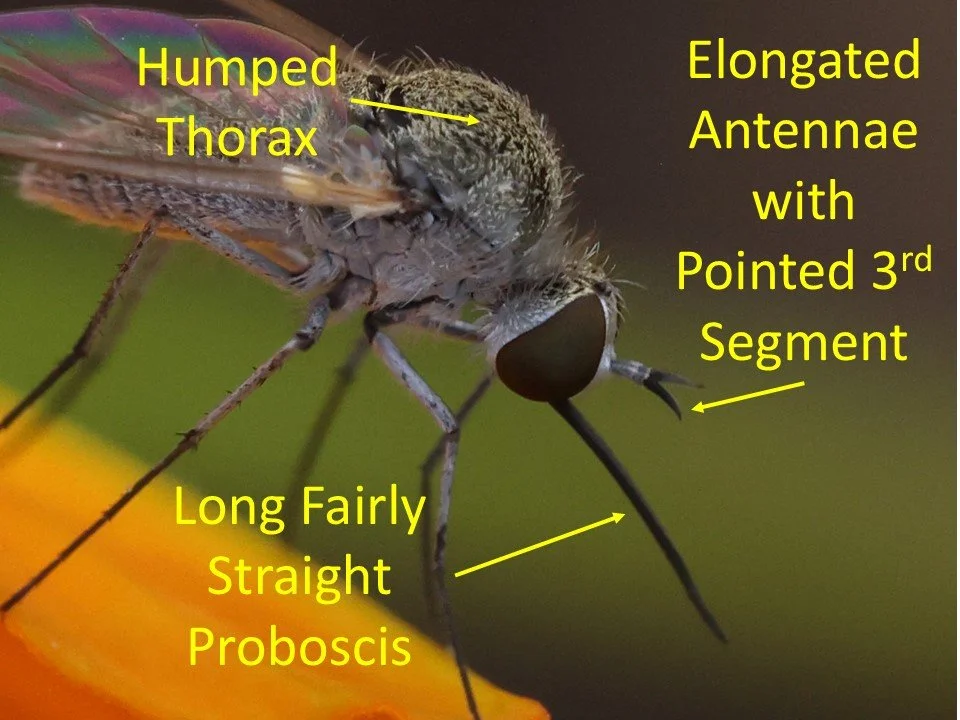
Pointed Antennae, Long Proboscis and Humped Thorax
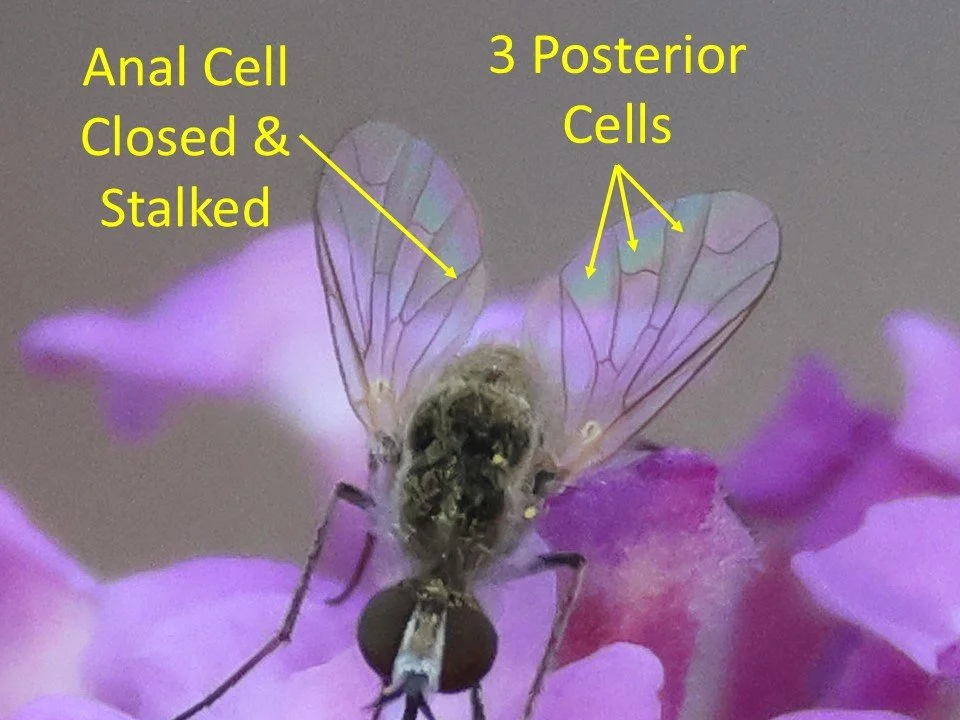
Closed & Stalked Anal Cell & 3 Posterior Cells
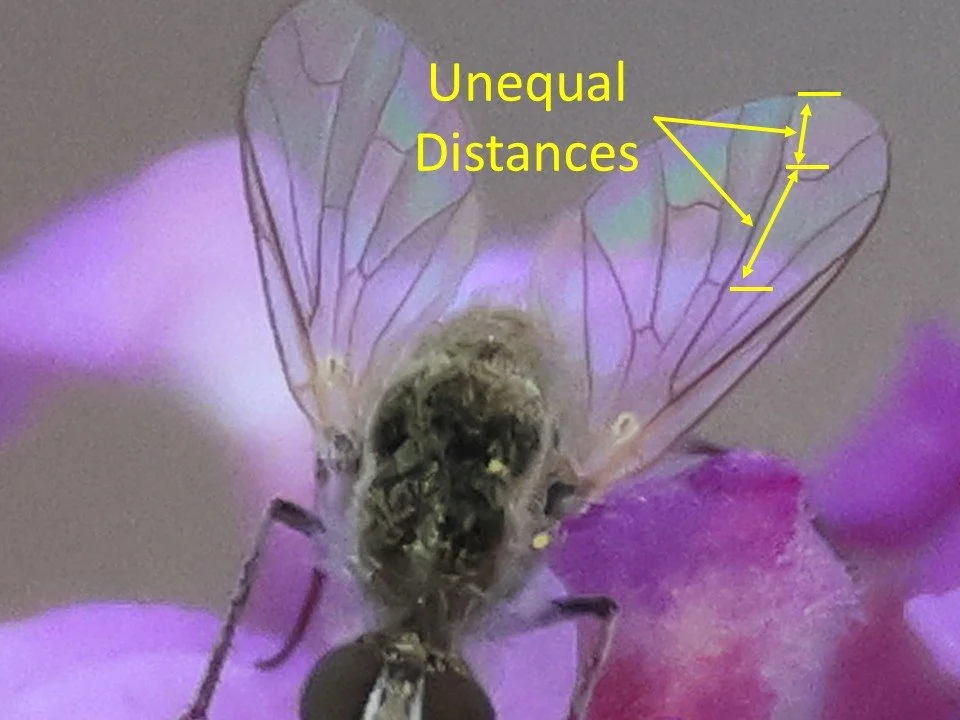
Unequal Length of Distal and Basal Branches of 3rd Submarginal Vein
In addition to their long narrow abdomen, the flight and coloration of these thread-like species closely mimic many Hymenoptera (wasps). These traits may provide them with some protection as they slowly drift among the blossoms from which they feed. The antennae and proboscis appear equally long, The wings are often smoky, and invariably contain 3 posterior cells.
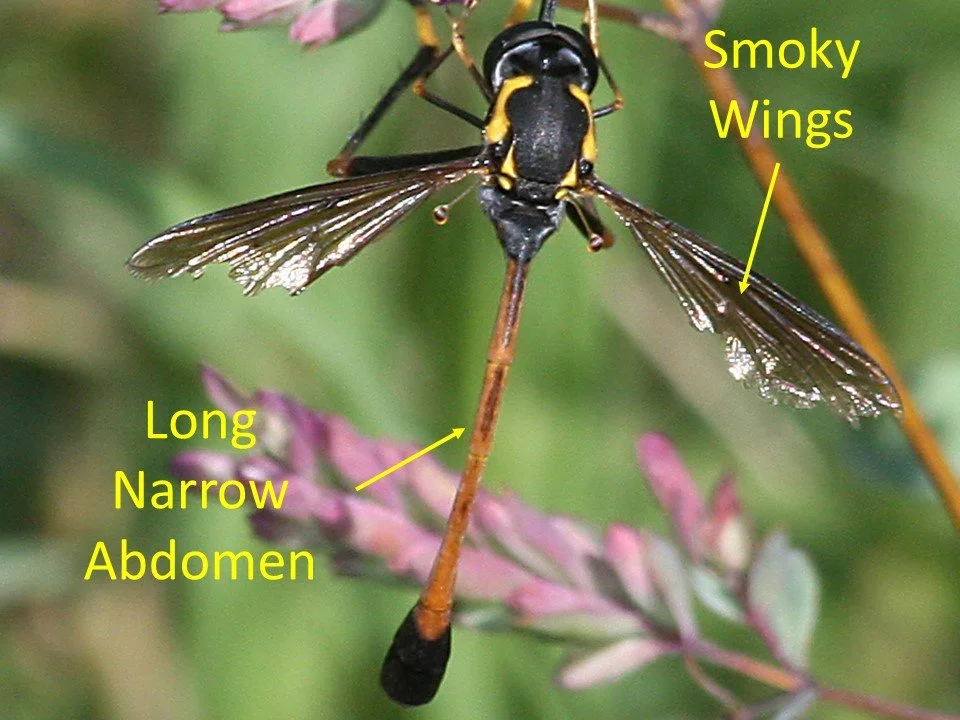
Long Narrow Abdomen & Smoky Wings
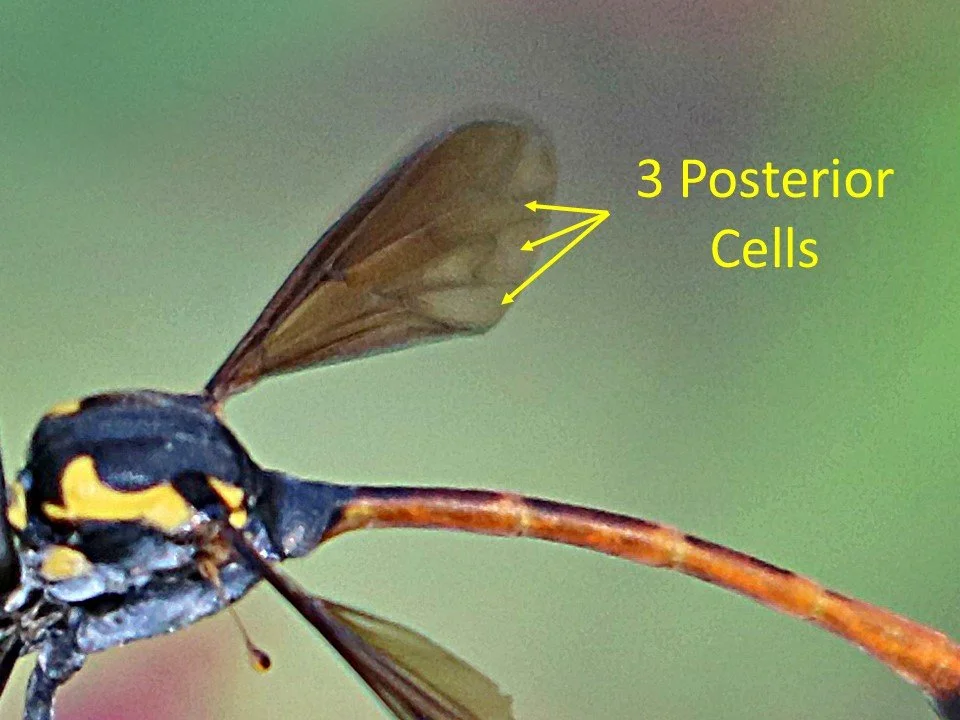
3 Posterior Cells
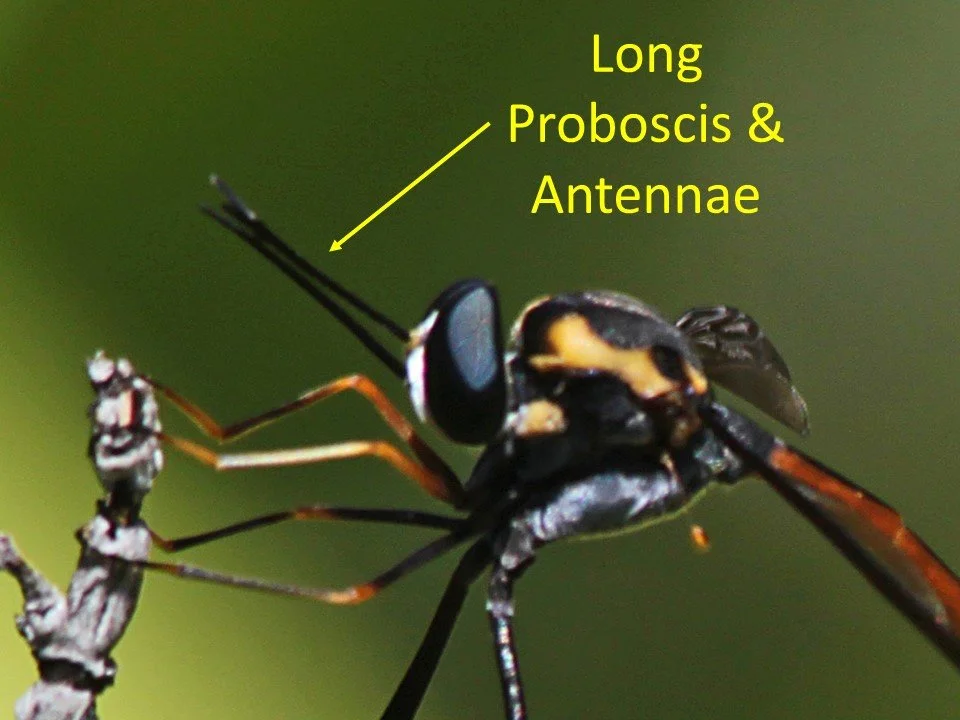
Long Proboscis & Antennae
Members of this genus have thoracic bristles that are strongly curved. The wings are noticeably small for the size of the insect and typically have 3 posterior and 3 submarginal cells. Most species have a light pattern on the abdomen. The femora are thickened, and the antennae and legs are quite long, perhaps causing the posture of the perched insects to be arched and almost beetle-like. Larvae typically parasitize vespid wasps.
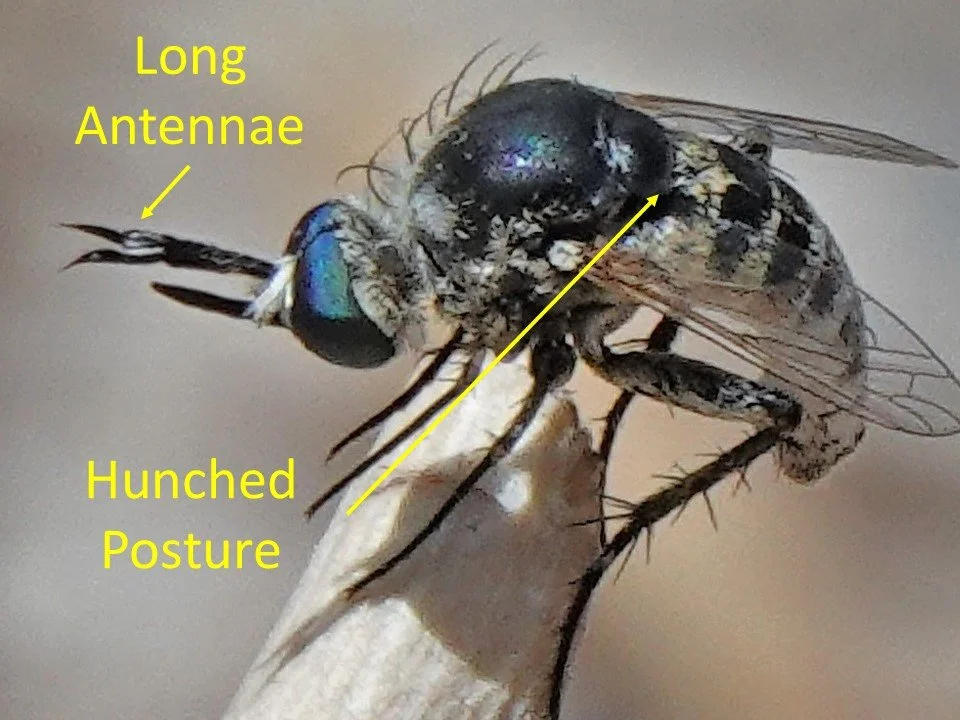
Long Antennae & Hunched Posture
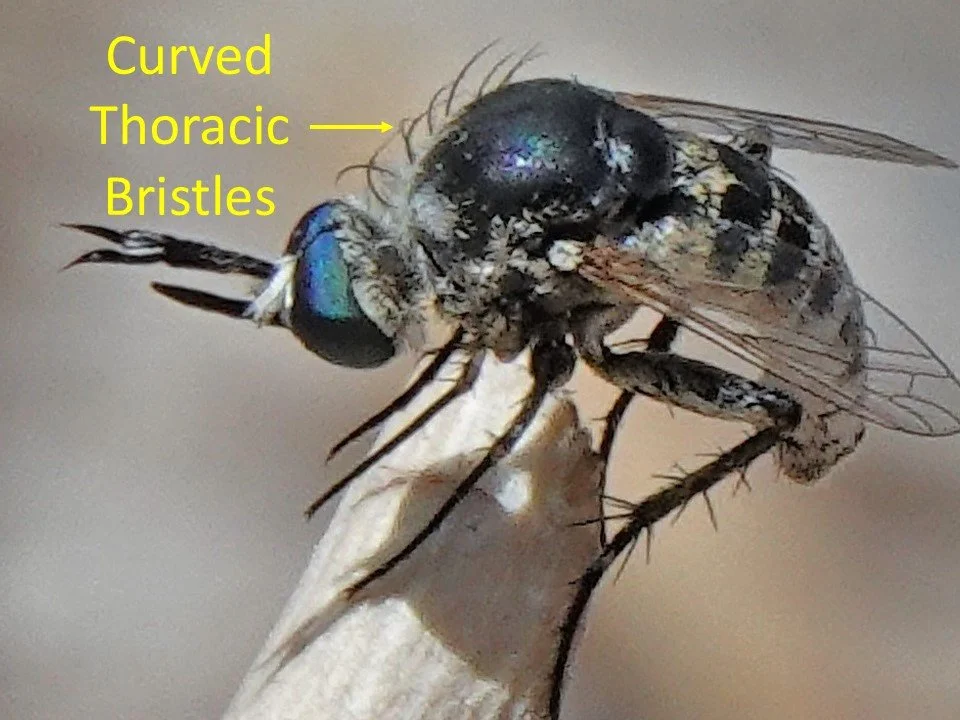
Strongly Curved Thoracic Bristles