
Subfamily Bombyliinae

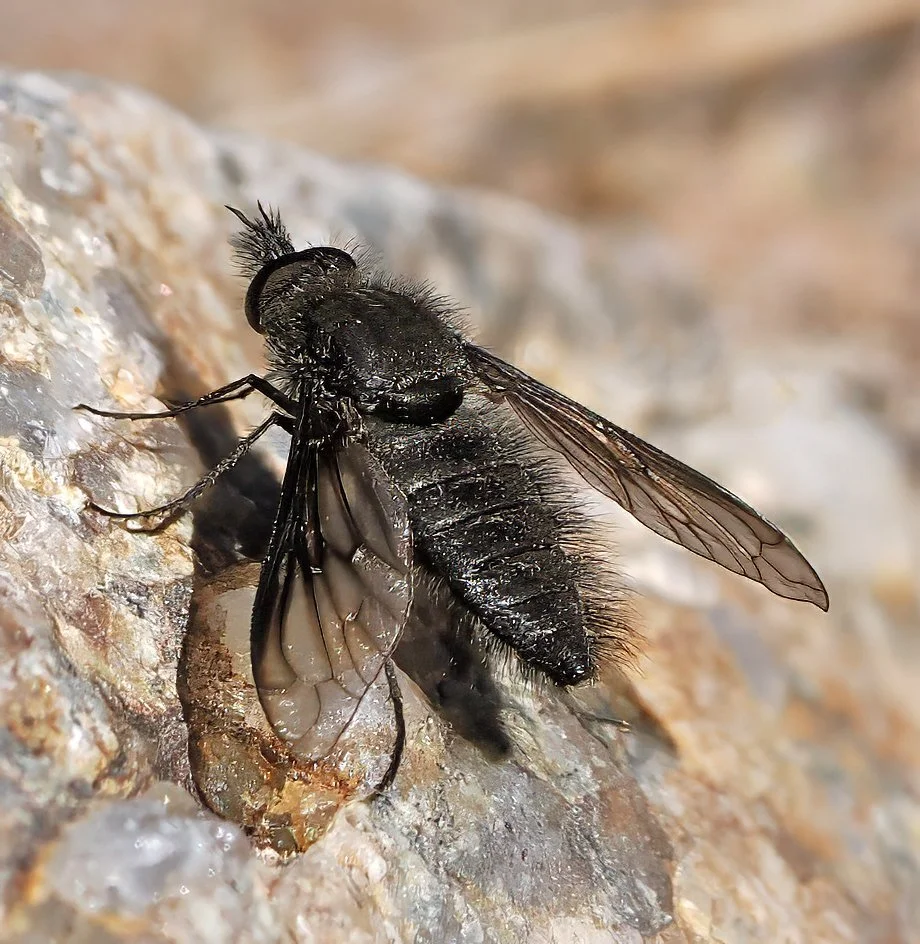

Note the dense pile, wide head, and short abdomen. The anterior crossveins are close to the base of the discal cell. The facial pile is extensive, nearly covering the face, and the eyes in both sexes are separated. Characters required for identification to species can be difficult to see without in-hand examination. The genus is small with only 4 Nearctic species, all of which occur in our region and all of which fly in the fall. Larvae parasitize both locust and grasshopper eggs. Tribe Bombyliini.
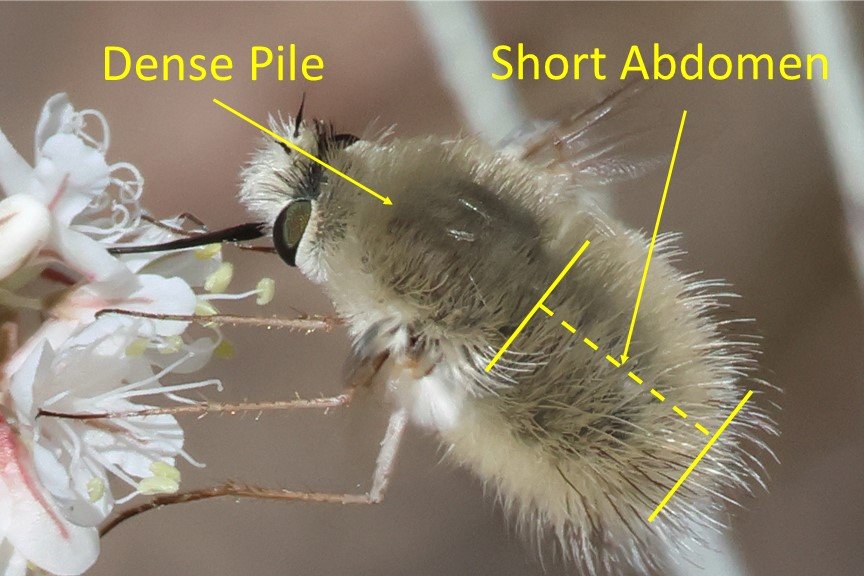
Dense Pile and Short Abdomen
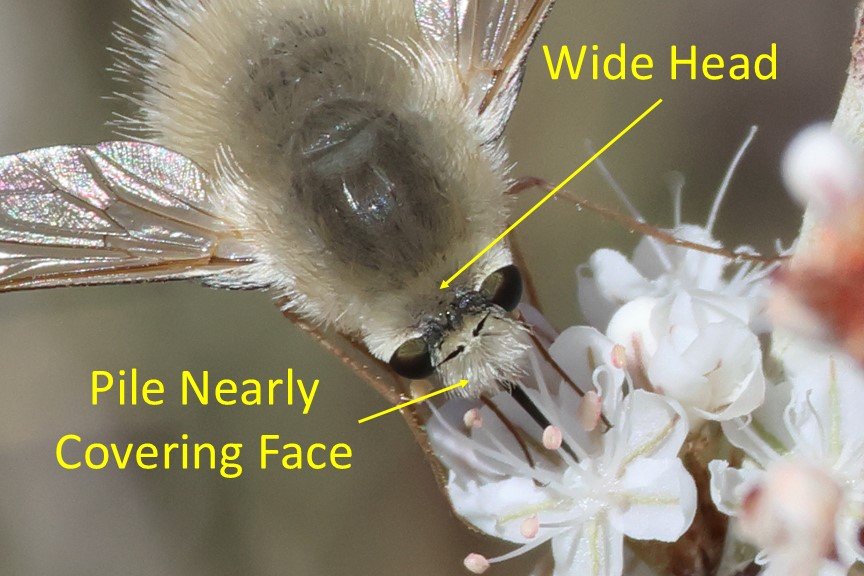
Wide Head and Pile Nearly Covering Face
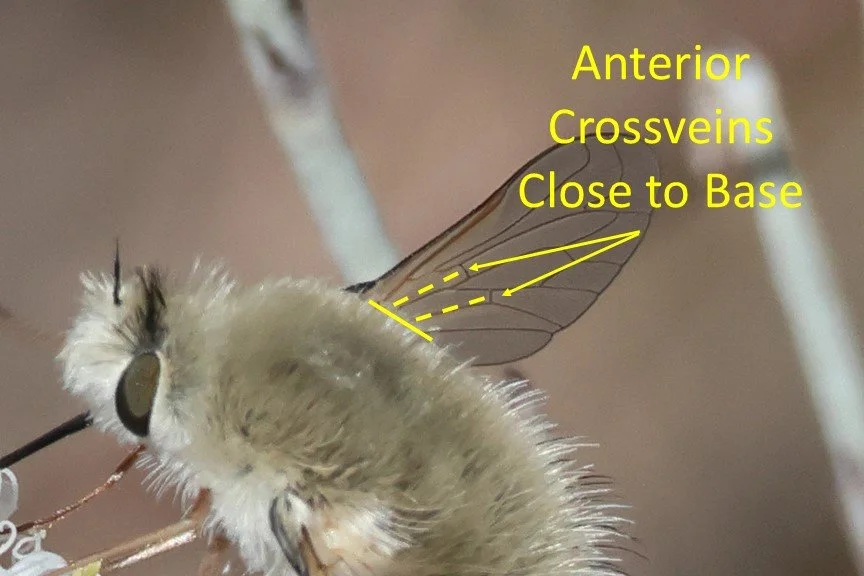
Anterior Crossveins Close to Base of Discal Cell
Worldwide in distribution, this genus includes perhaps 450 species. Close to 60 are known from the Nearctic; at least 7 have been found in Arizona. They have been the subject of pollination studies on several continents. Their resemblance to bees may account for the name of the entire family Bombyliidae. Typically, the abdomen is short and squat and covered with dense pile. The legs are long, and the proboscis is usually very long, allowing them to feed without perching. Their wings are often tinted, smoky, or spotted, have 2 submarginal cells, and a closed and stalked 1st posterior cell. Solitary bees are the known targets for the parasitic immatures. The keys to the genus, and the accompanying drawings are difficult to use making species identification problematic.
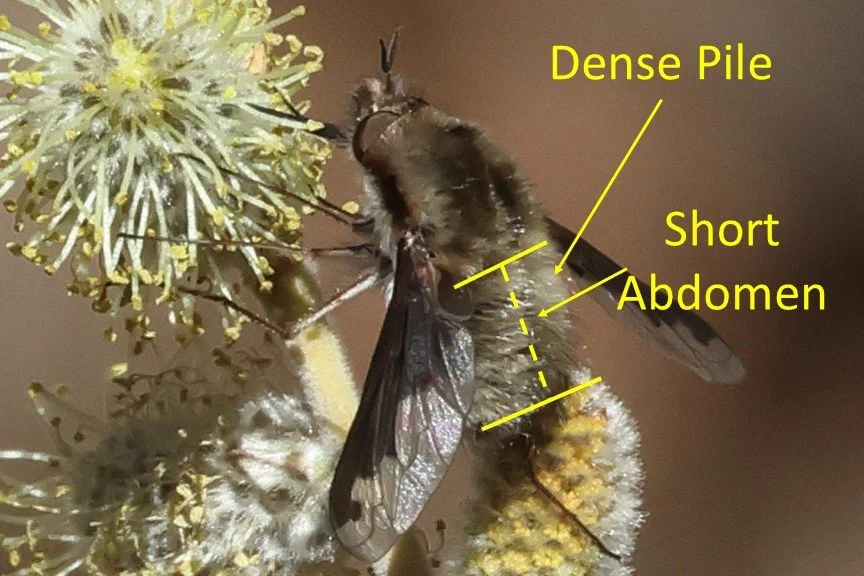
Short Abdomen with Dense Pile
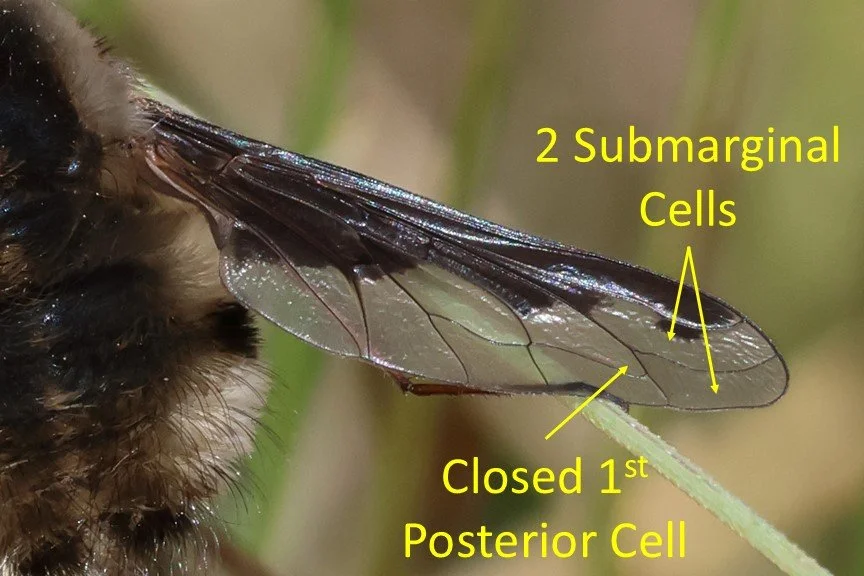
2 Submarginal Cells and Closed 1st Posterior Cell
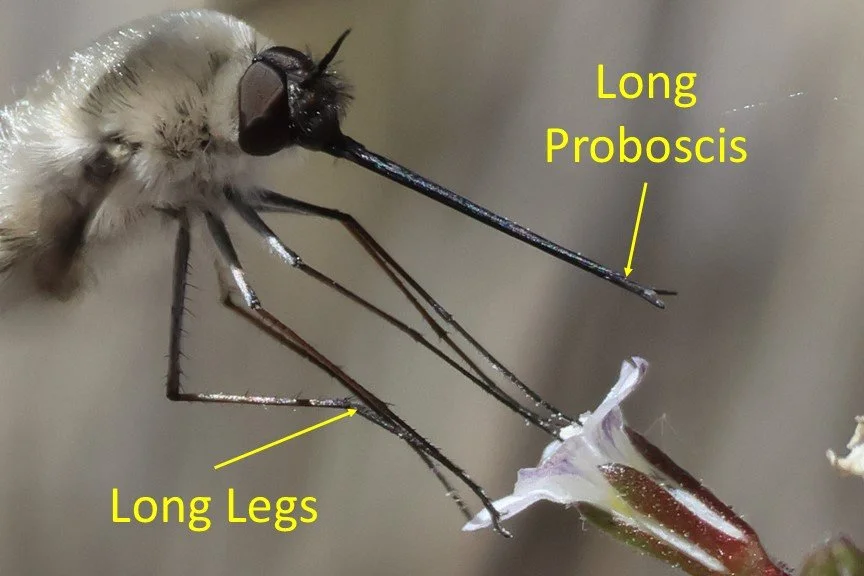
Long Proboscis and Legs
There are 16 Nearctic species, largely northern and western. Their venation is very much like Sparnopolius with the RM crossvein basal, long dense pile on the basal antennal segments and the 1st posterior cell open at its margin. Most species have darkened wings or are well maculated; various members of the genus have either 2 or 3 submarginal cells. In addition to the species below, C. painteri has been recorded northward in Arizona and may eventually turn up in our area. Tribe Conophorini.
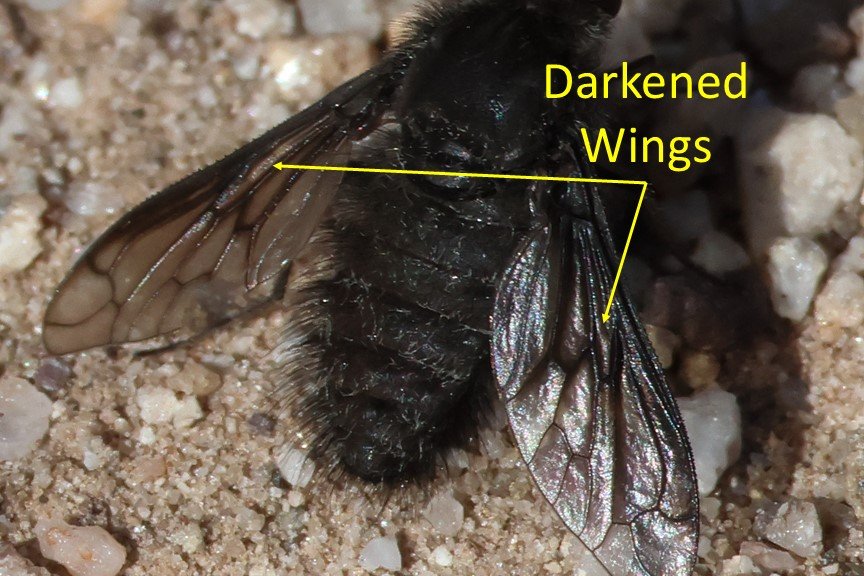
Darkened Wings
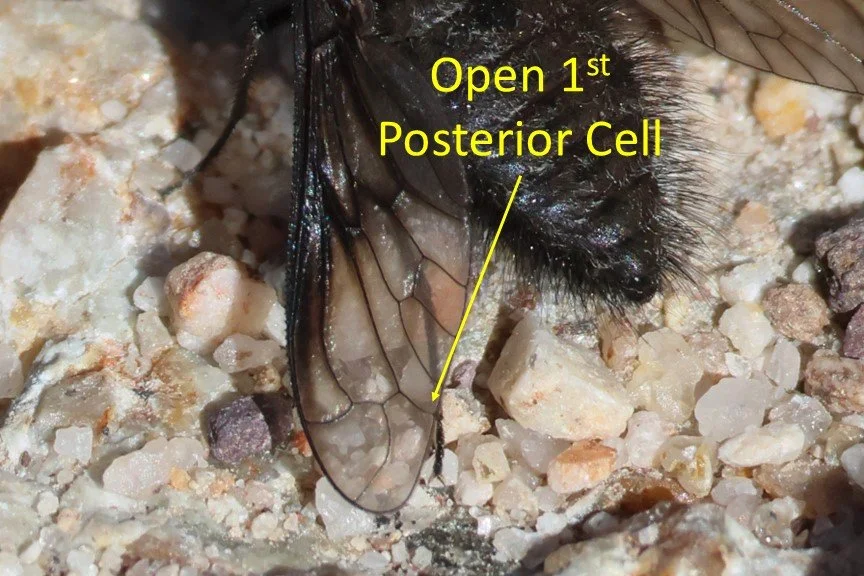
1st Posterior Cell Open
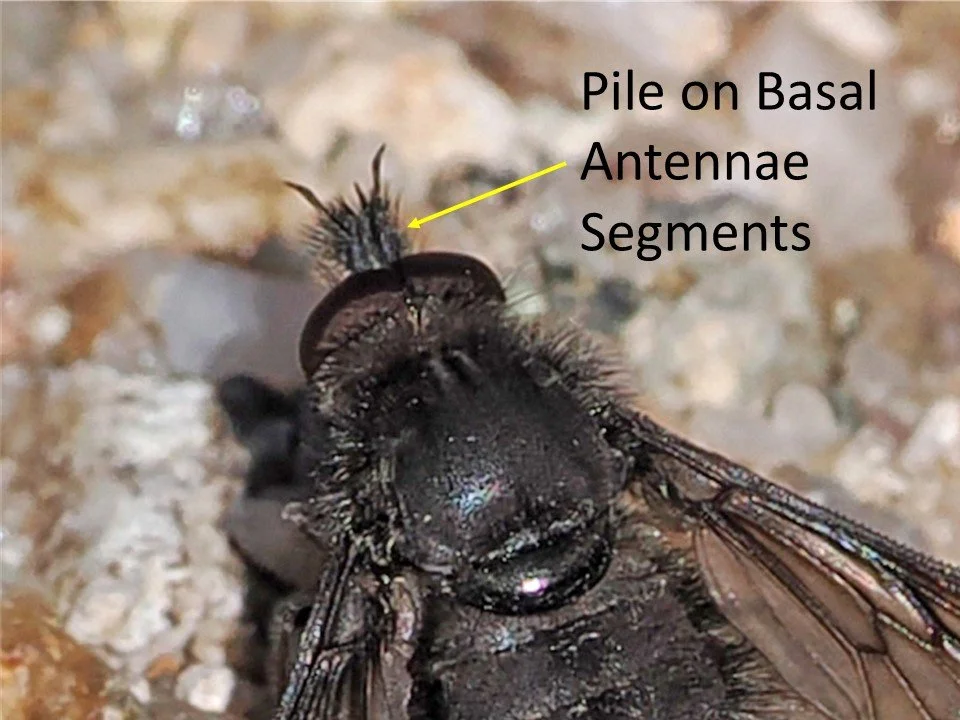
Long Dense PIle on Basal Antennal Segments
These are small to medium-sized bombyliids with long proboscis and venation very much like Lordotus. There are two Nearctic species, both of which inhabit SE Arizona. Adults have a subdivided scutellum and visit low-growing flowers and sandy substrates. Tribe Conophorini.
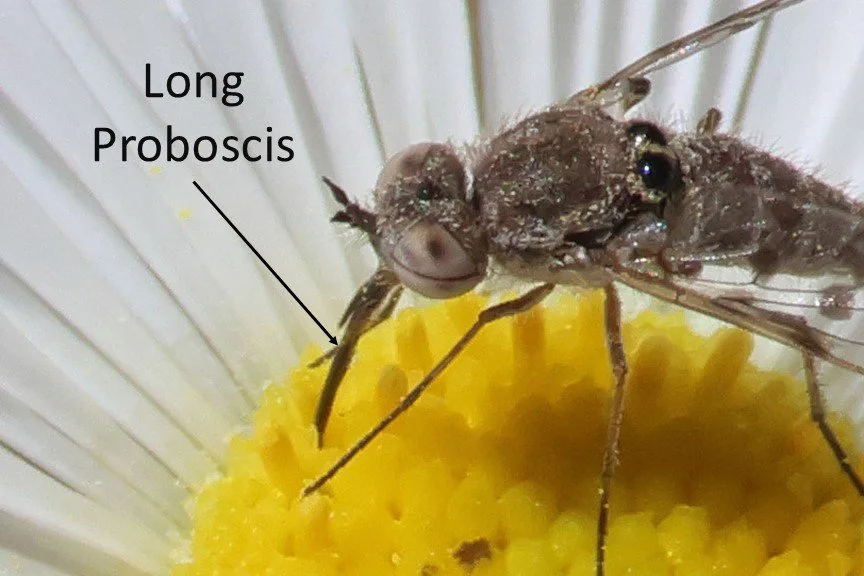
Long Proboscis
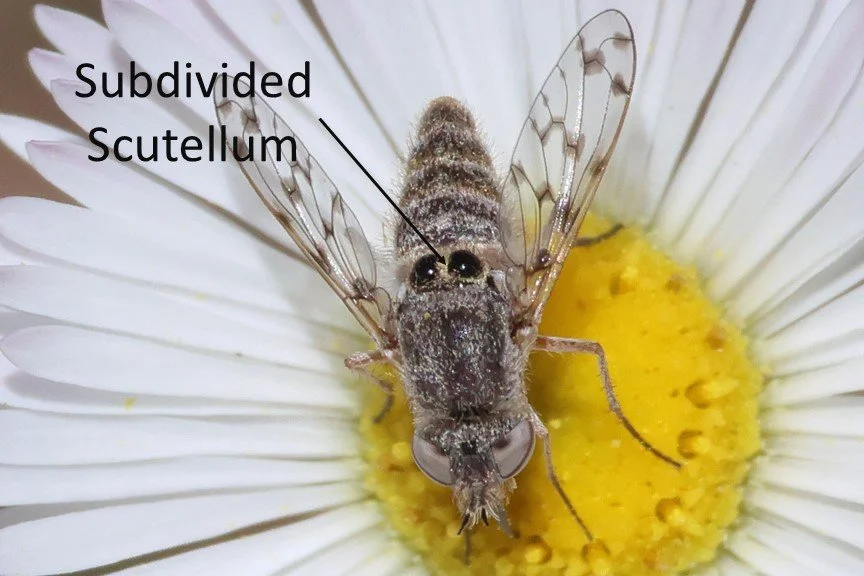
Subdivided Scutellum
These are medium to large flies with a short abdomen. There are 5 Nearctic species; 2 are found in SE Arizona. As in the genus Triploechus, the hind margin of the eye is indented. The unique venation gives the appearance of there being only 3 posterior cells. The eyes of the males touch, or very nearly so, and the pile is very dense. They often occur at moist stream sides. Larvae may parasitize alkali bees that pollinate crops. Tribe Bombyliini.
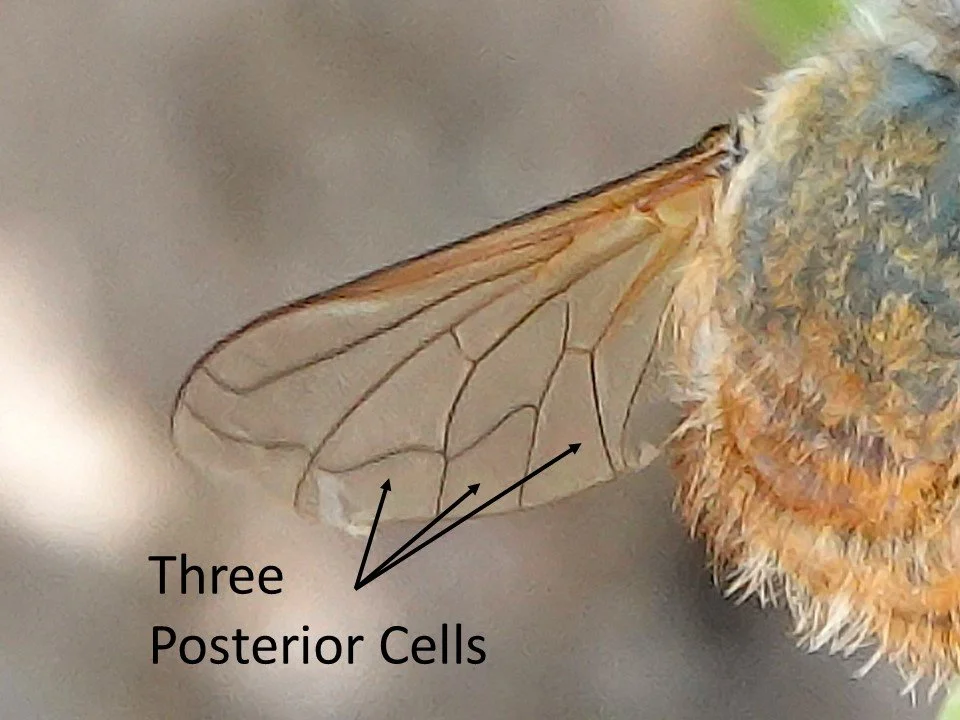
Three Posterior Cells
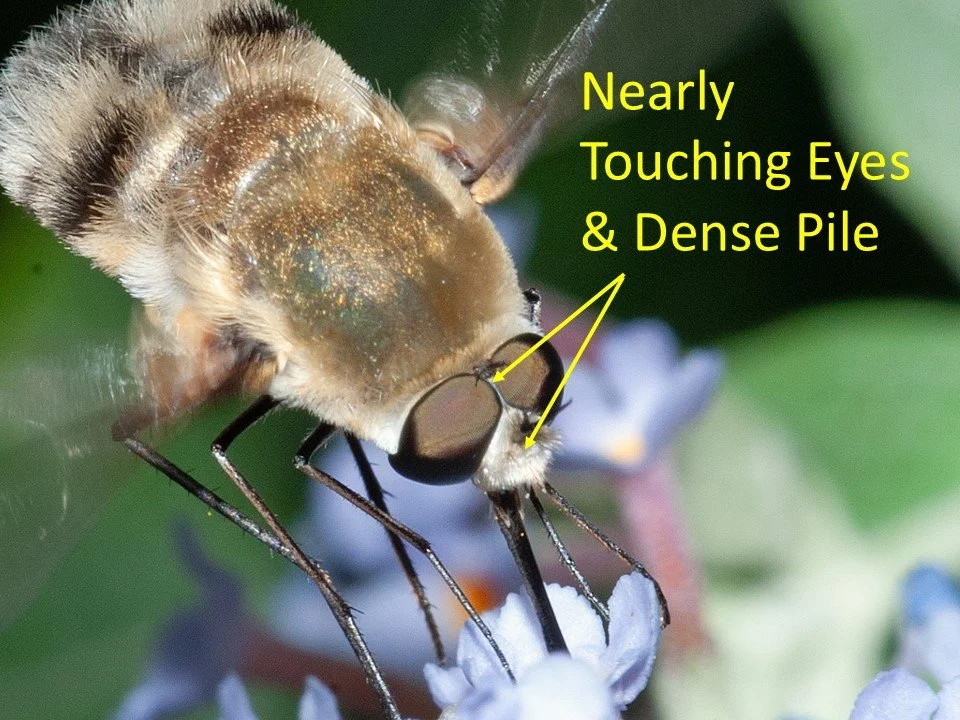
Eyes Nearly Touching (male) & Dense Pile
A genus of 29 species, 22 of them reported from Arizona. There are several species groups and differentiating within them can be difficult. They are small to mid-sized, usually with dense pile, 3 submarginal cells, and an open 1st posterior cell. Usually, the male’s eyes touch and the female’s do not. The costal area of the males of some species has small bumps called denticuli; this feature, and the presence or absence of a terminal style on the antenna require magnification to see. Adults typically visit composites and also perch on the ground. This ground perching involves a fast, final drop, a good character for identification to genus. The larvae usually parasitize bees and wasps. Tribe Conophorini.
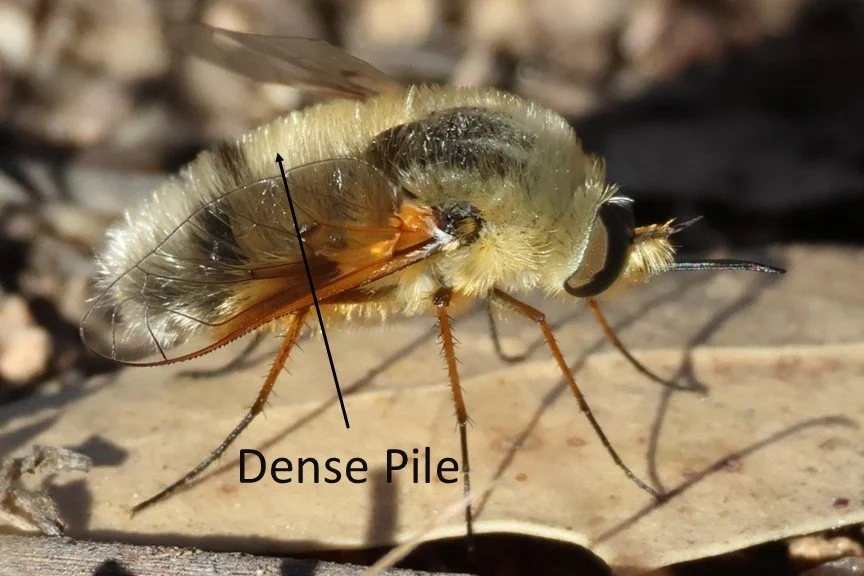
Dense Pile
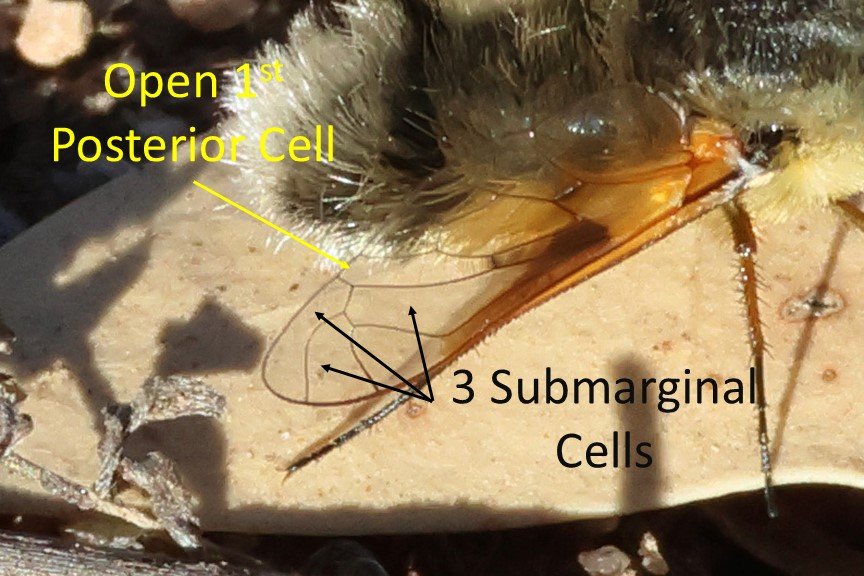
Open 1st Posterior Cell and 3 Submarginal Cells
In the Nearctic region, there are 31 identified species, 12 known from Arizona. As a whole, they are strongly attracted to puddle edges. All species are small, with a body length as tiny as 3 mm, and generally very colorful. The wings are mostly hyaline. The 1st posterior cell is open, closed and stalked, or closed at the margin. Silver scale patches on the thorax and abdomen and at the base of the antennae are nearly universal. The sexes typically are patterned and colored differently with hues of purple, red, and orange fairly common in both sexes. In spite of this, identification can be difficult and some species are known from only one sex or the other. Unfortunately, body pile is loosely attached making repeated handling unwise and thus stressing collections of photographic images over specimens. The members of the genus are thought to be parasitic on solitary bees. Tribe Bombyliini.
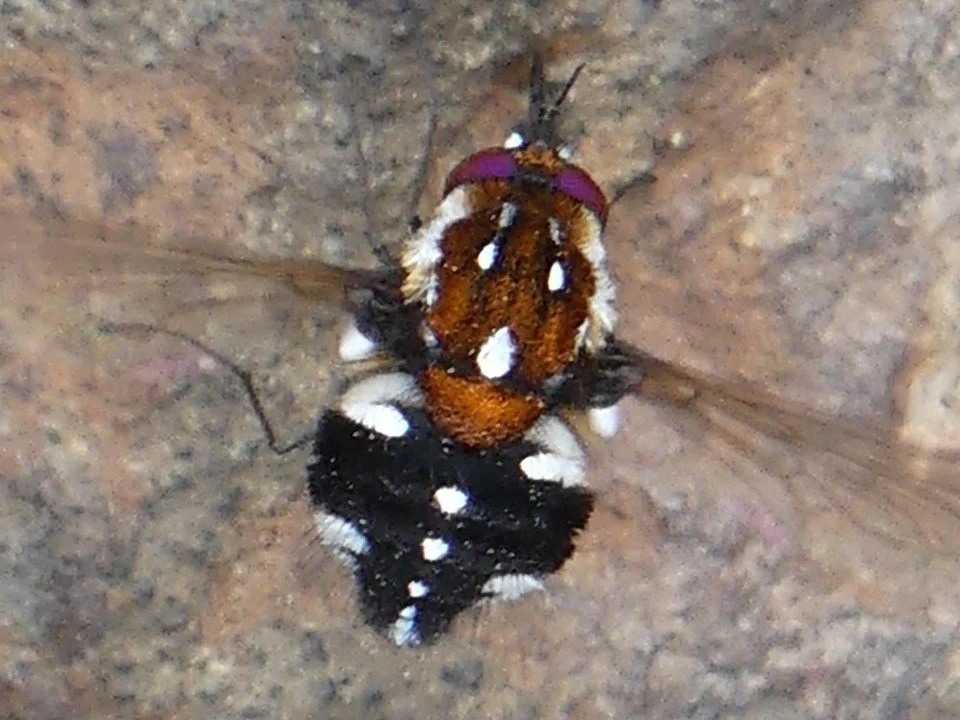
Small and Colorful Body
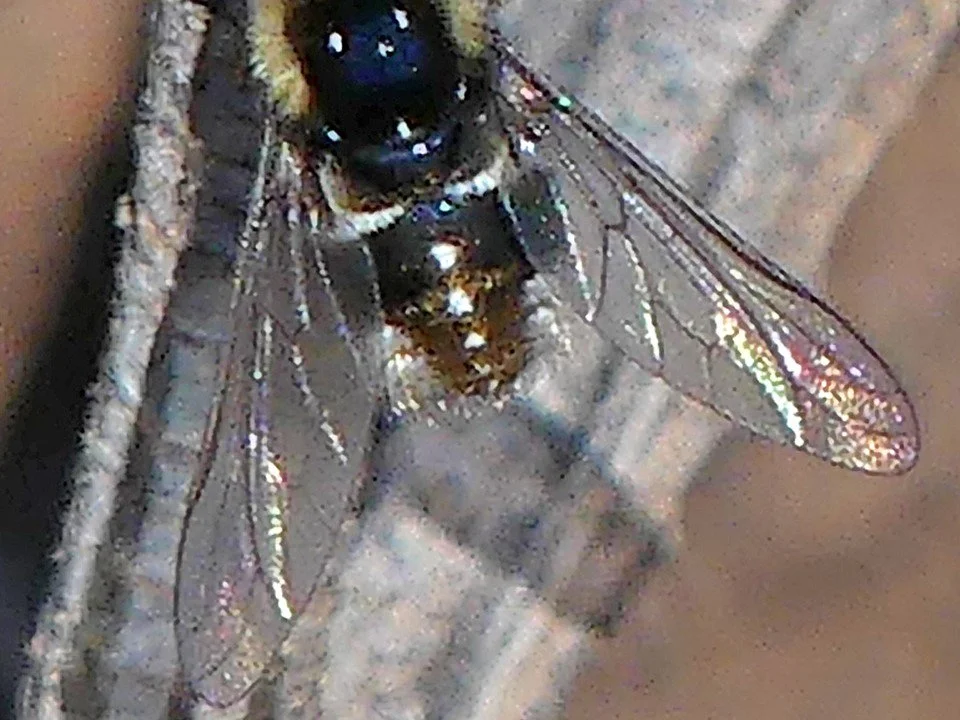
Hyaline Wings
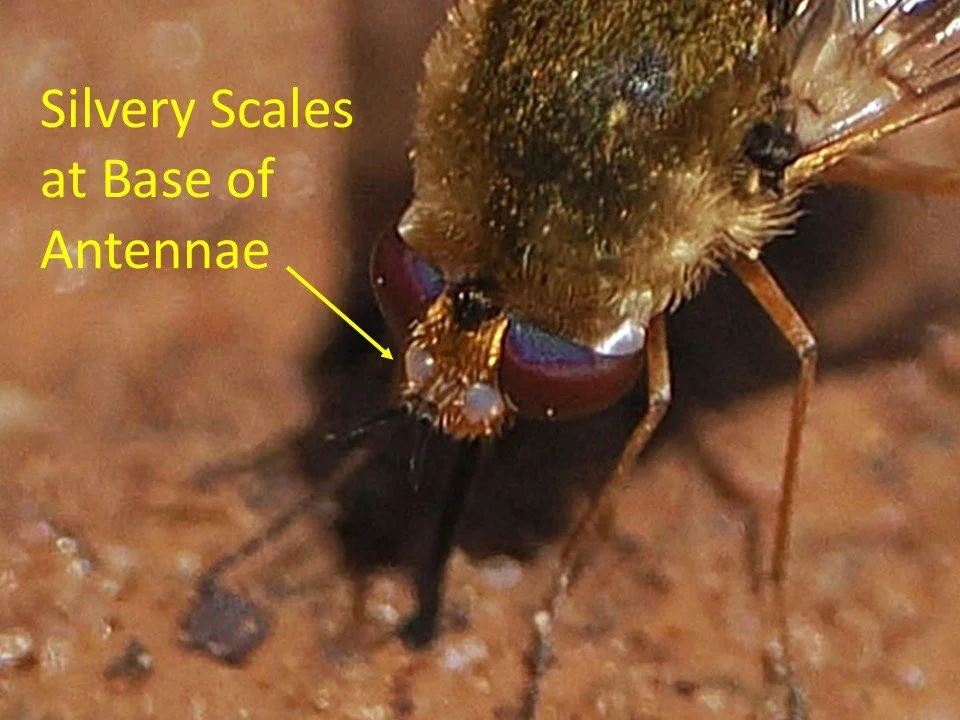
Silvery Scales at Base of Antennae
These species are medium-sized with comparatively short wings, a fairly long proboscis, dense body pile and pile on the first two antennal segments. The wings are always hyaline, and most species have 2 submarginal cells. The anterior crossvein reaches the discal cell proximal to its midpoint and the 1st posterior cell is wide open. Eyes of the males touch; they do not on females. Some females are bright orange. Immatures feed on the larvae of beetles and various bees. Tribe Conophorini.
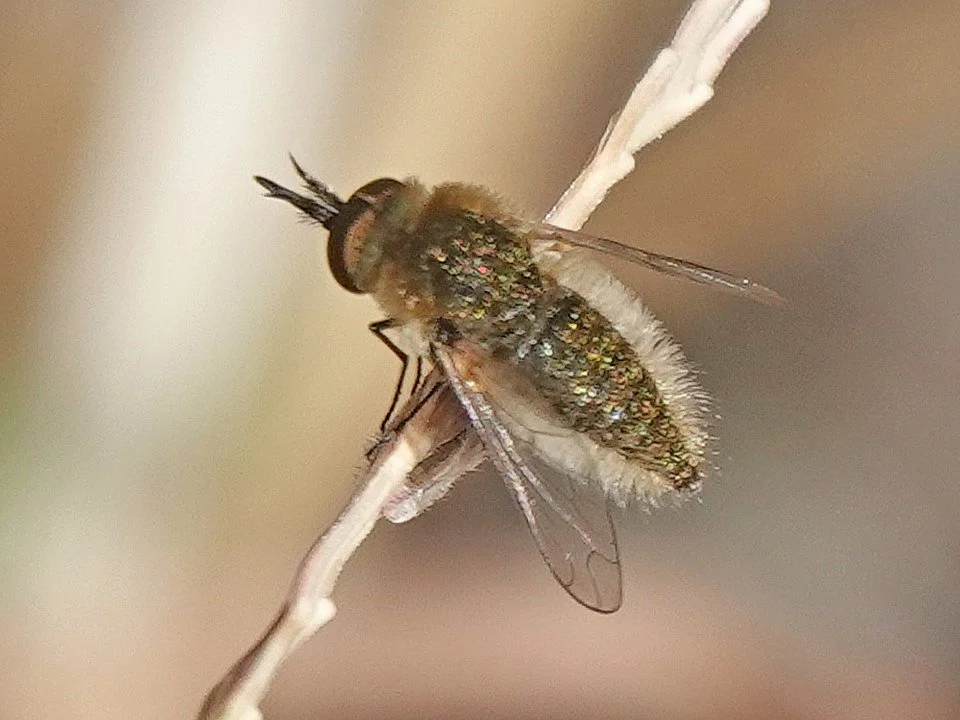
Hyaline Wings
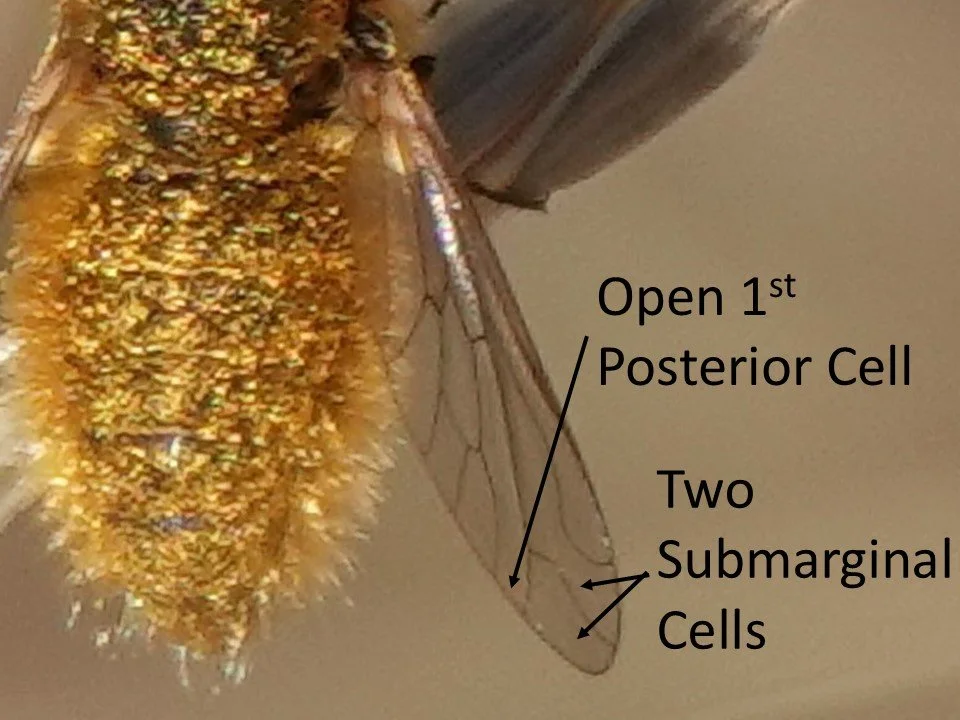
Open 1st Posterior Cell & 2 Submarginal Cells
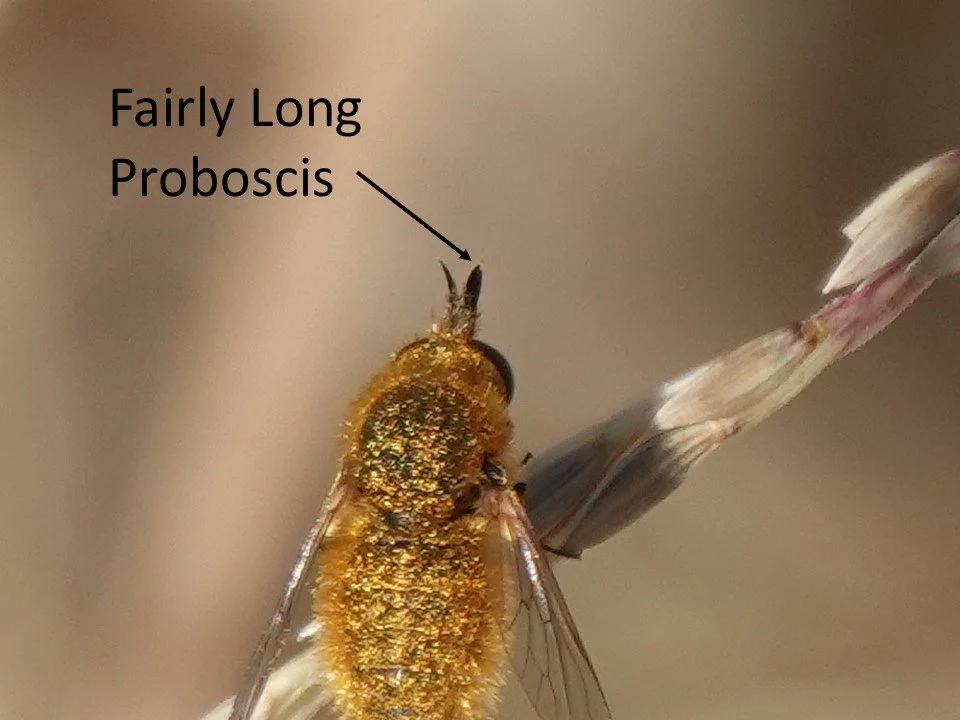
Fairly Long Proboscis
Note the long pile over much of the body. The anterior crossvein is considerably proximal to the middle of the discal cell and the 1st posterior cell is stalked and closed. The pile on the face is quite reduced, especially in comparison to the similar genus Anastoechus. The larvae parasitize the eggs of locusts. Tribe Bombyliini.
The members of this genus are uncommon and generally have a short flight period. They are variably-sized, with a notch along the rear margin of the eye similar to Heterostylum (with which it was originally lumped) and with the head only slightly narrower than the thorax. Wing vein R2+3 is long and the distal section of it doubles back to meet the costa at an obtuse or right angle. As with many bombyliines, the 1st posterior cell is closed and stalked and the eyes of the males touch or nearly so. Tribe Bombyliini.
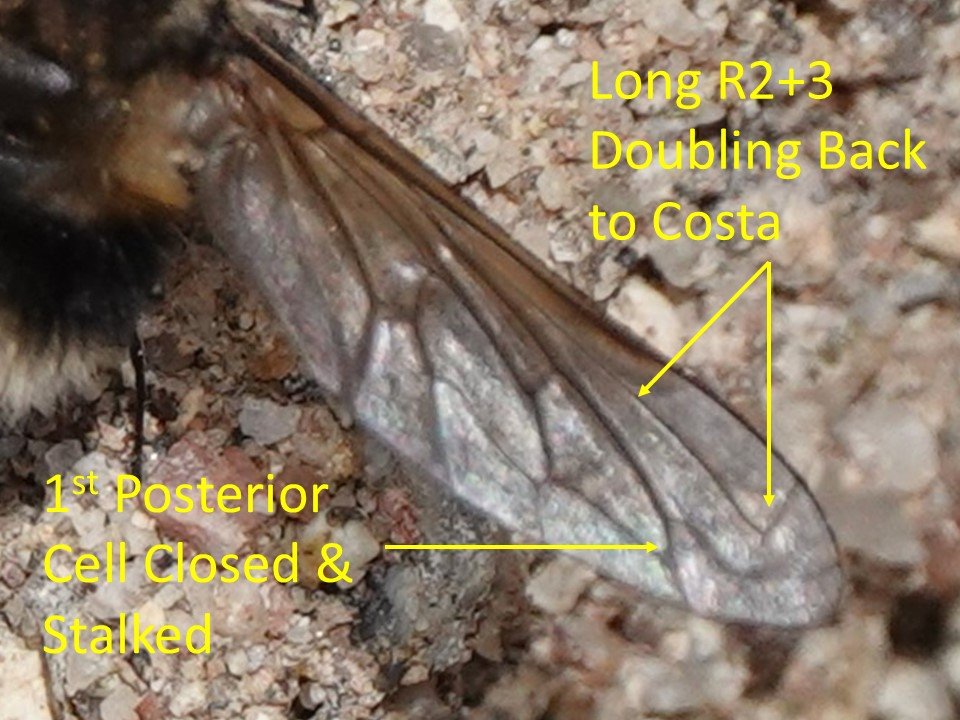
Closed & Stalked 1st Posterior Cell & Long R2+3 Doubling Back
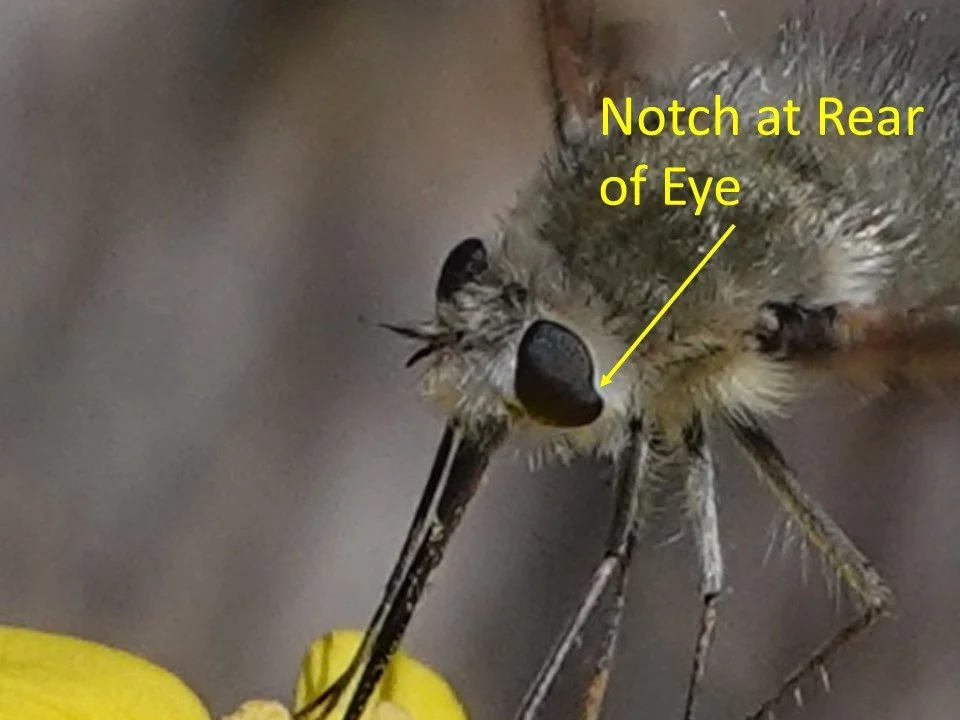
Notch at Rear Margin of Eyes