
Genus Bombylius
Bombylius arizonicus

This is a low-desert species, present in our region during the early spring. The halteres are yellow; the wing-spotting is weak but present, mostly on the crossveins. Note that the R-M crossvein meets the discal cell beyond its midpoint and the tuft of pile next to the antennae is not silver. The femora are all dark.
Range: COCH, GRAH, GREE, PIMA, PNAL
Occurs: Early February to Early April
Bombylius ballmeri
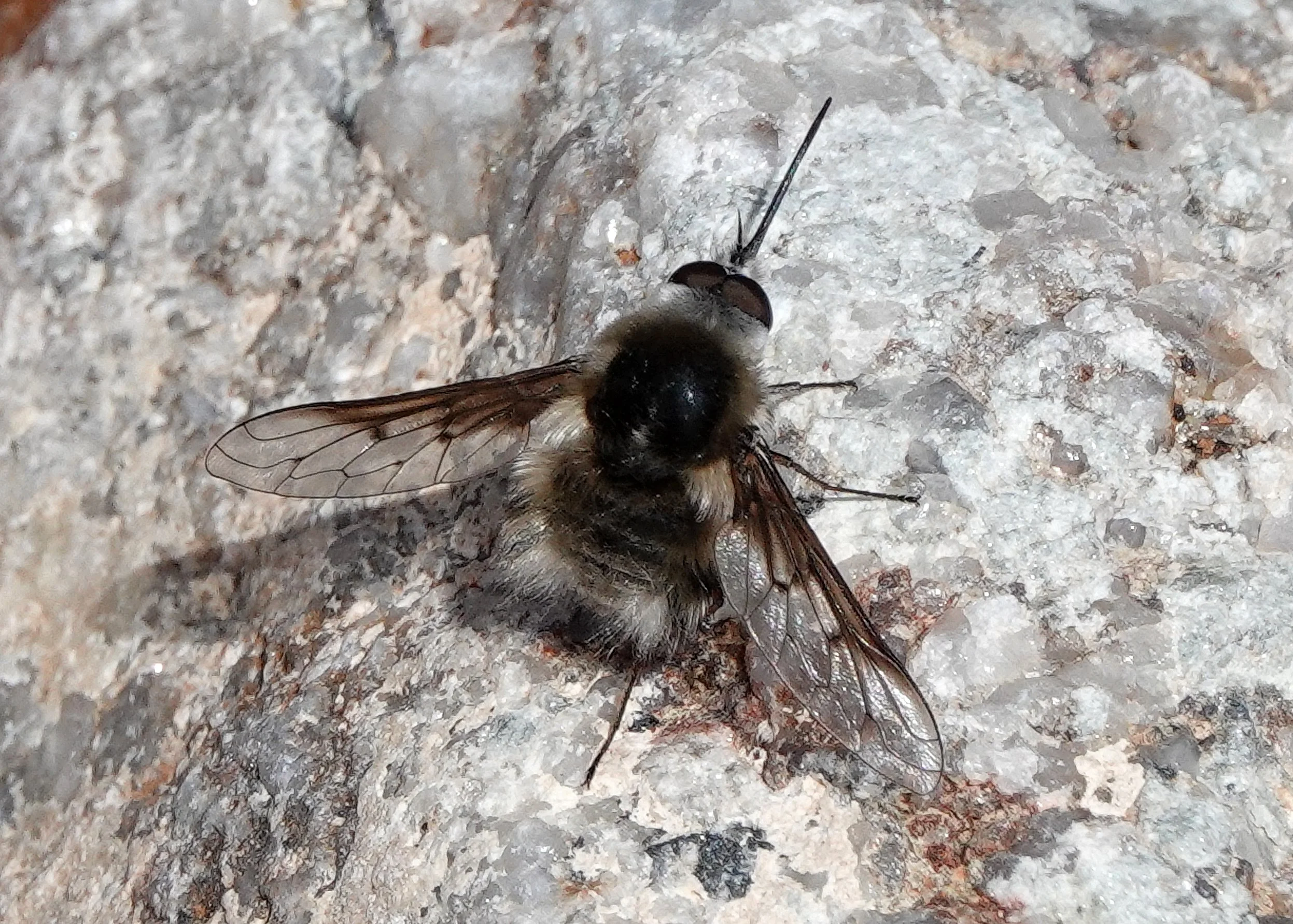
This early spring flier is fond of Lesquerella flowers. It is characterized by the tufts of silver pile next to the antennae and the presence of spotting in the hyaline sections of the wings. Most importantly, though, it is the only regional species with the femorae at least partially orange. Individuals are quite large with some approaching 10 mm in length.
Range: COCH, GRAH, GREE, PIMA, PNAL
Occurs: Early February to Late March
Bombylius diegoensis
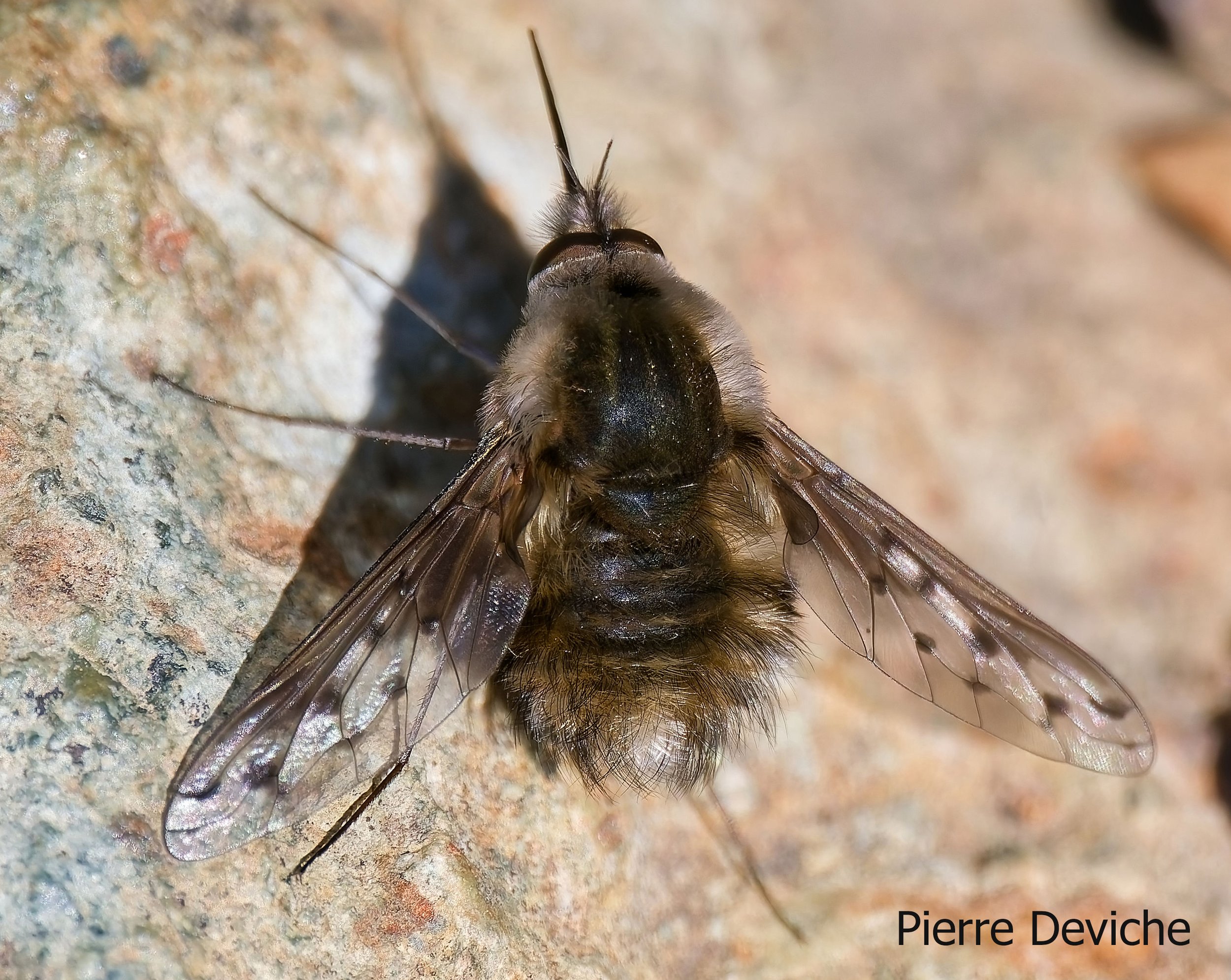
This is an early season, desert species. It is medium-sized with smoky dotted wings, and with a unique spot in the center of the 1st posterior cell. The anterior crossvein meets the discal cell well before its midpoint, and the vein at the distal end of the cell is very small or non-existent. The proboscis is twice the length of the antennae. It has a short flight season, but can be locally numerous during wet springs.
Range: COCH, PIMA, PNAL, STCR
Occurs: Early March to Early April
Bombylius duncani/eboreus
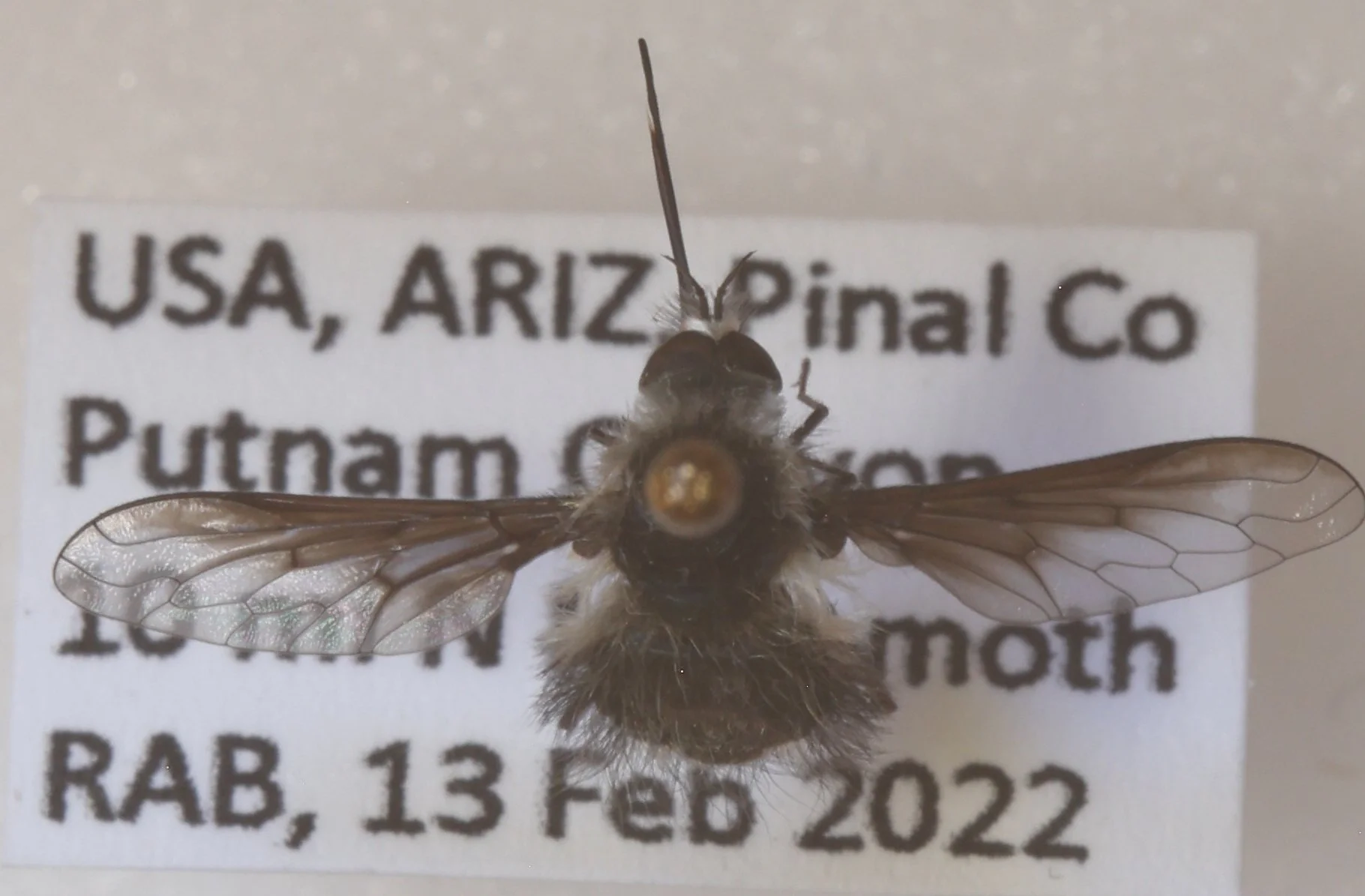
A number of the members of this genus are very early spring fliers. This one has the anterior and basal portions of the wings darkened (including most of the marginal, anal, and axillary cells) blending to hyaline farther back on the wings and lacking spots in those hyaline areas. Much of the abdominal pile is black, especially laterally. The face and front are gray and the proboscis length is shorter than in facialis. The femora are black and the body length is small, typically 6-8 mm. Note also the clusters of silver pile at the bases of the antennae.
Range: COCH, GRAH, GREE, PIMA, PNAL
Occurs: Early February to Early April
Bombylius facialis
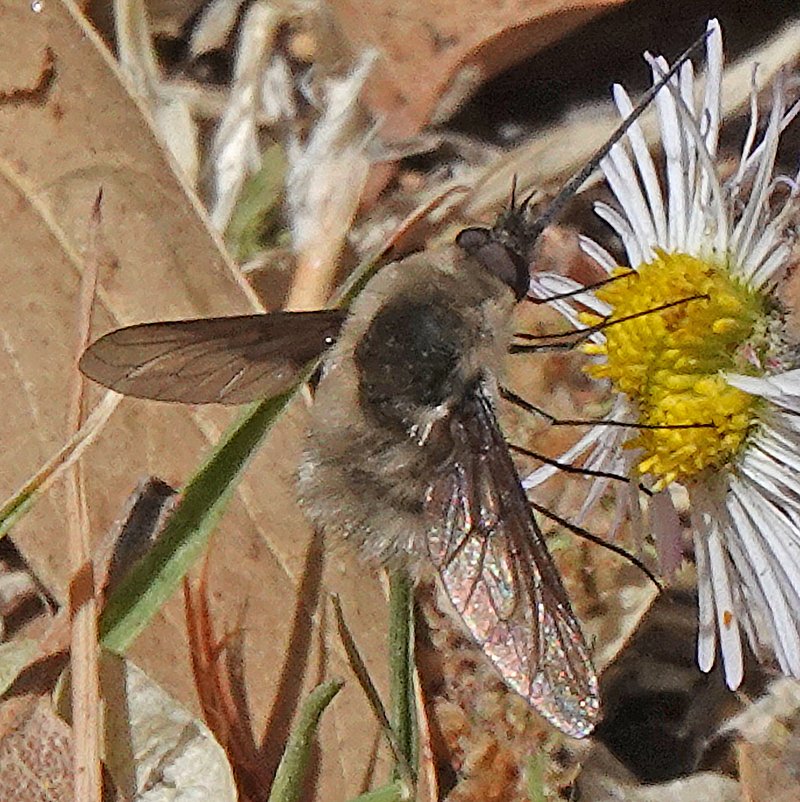
Perhaps one of the most familiar regional members of the genus, this is a late spring, mid and high altitude, mid-sized (6-8 mm) flier. Its wings are smoky and without spotting, the legs are mostly orange except for the basal sections of the femora that are dusky. The facial and frontal pile are black, the facial chitin is rich brown, and the anterior crossvein joins the cell before its middle. Note the lack of silver pile clusters at the antennal bases.
Range: COCH, GRAH, PIMA, PNAL, STCR
Occurs: Mid-March to Early June
Bombylius major

This species is large, common, and widespread. It has been found in Europe, North Africa, and much of Asia. Regionally, it occurs regularly in the spring, at low and mid altitudes, and is the only local Bombylius species with a defined pattern of wing infuscation. There is occasionally a pale, dorsal mid-line, more apparent in flight.
Range: COCH, PIMA, PNAL
Occurs: Early February to Mid-April
Bombylius plichtai

In late winter to early spring, this species occurs at low altitudes. Specimens are fairly large, 8-10 mm long, and possess silver-white pile next to the antennae bases. The femora are black; the remainders of the legs are brown. The wings are infuscated with smoky gray, but the anal and axillary cells are hyaline. There are dark spots on each of the two crossveins and no other wing spotting.
Range: COCH, GREE, PNAL
Occurs: Late February to Mid-March
An additional species mentioned in the literature but without complete data is B. balion.