
Genus Lordotus
Lordotus abdominalis

The ♂s of this species have a black body and black legs. On the dorsum, the abdominal pile is white and the thoracic pile orange; ventrally the first few sternites are black. The wings are neither infuscated nor denticulate.
Range: GRAH, PIMA, PNAL
Occurs: Mid-March to Late April
Lordotus albidus

This species typically has color in the wings, occasionally as heavily as in striatus. The bristles on the middle tibiae are short and thick, the abdominal pile is predominantly off-white in both sexes, and in the ♂s the wings are denticulate. It is similar to striatus but lacks the silver tomentum at the center of the abdominal tergites.
Range: COCH, GRAH, PIMA, PNAL, STCR
Occurs: Late March, Early September to Mid-October
Lordotus cingulatus

Adults favor sandy arroyos. They are small to medium in size and very similar to L. miscellus. The ground color is dark with bands of mostly white tomentum on the abdomen but often with a band of blackish pile on T4 and rusty pile on T6. In the male, the costa is denticulate.
Range: GRAH, PNAL
Occurs: Early October to Late October
Lordotus diversus
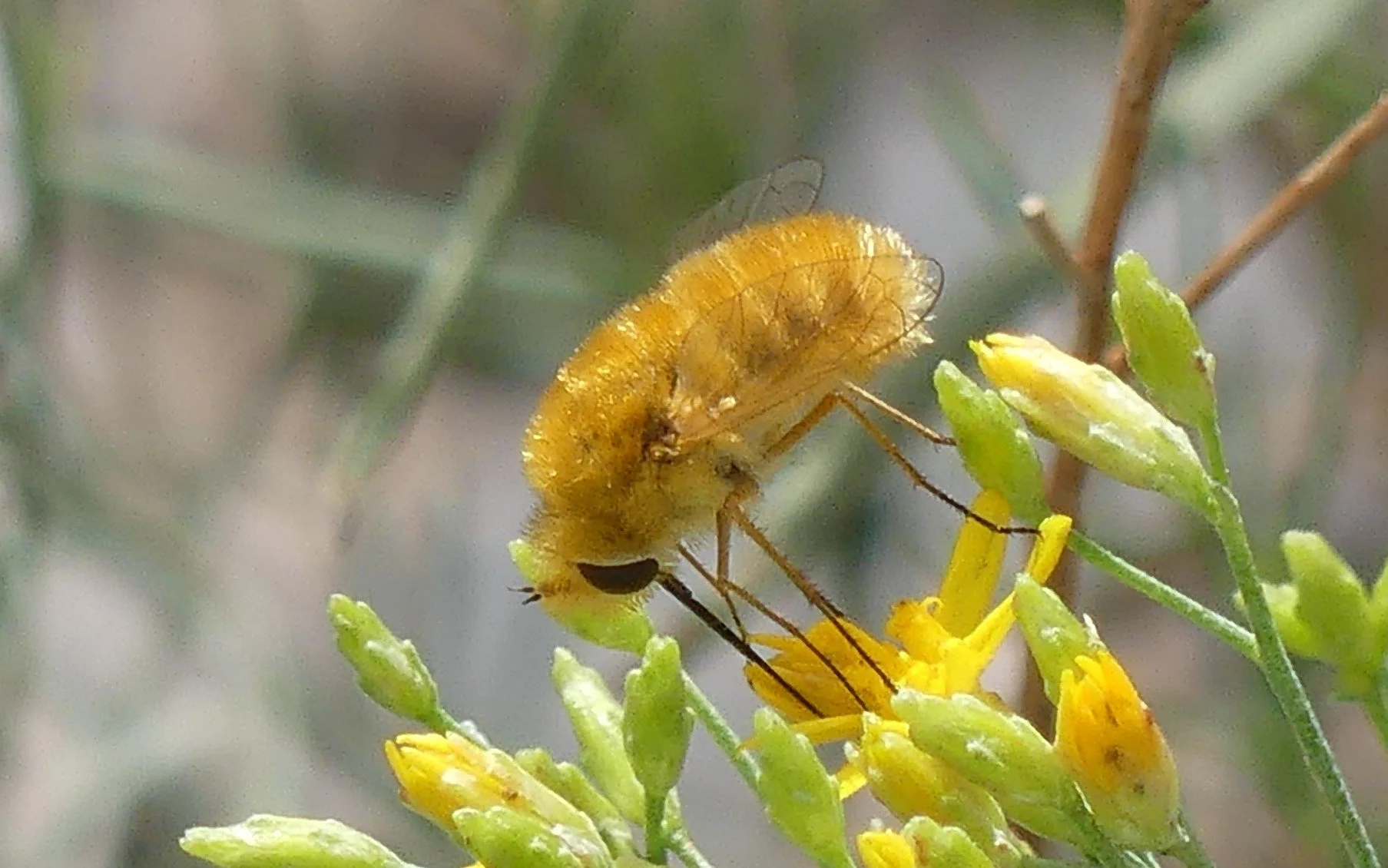
In this species, the ♂ has white pile; the female’s is deeper orange. The wings of the ♂ are denticulate and the legs of both sexes are almost entirely orange. The body length is 6-9 mm. There is little color in the wings although the veins tend to be orange.
Range: COCH, GREE, PIMA, STCR
Occurs: Early August to Mid-November
Lordotus divisus

This is typically a medium-sized species with a black body and black pile. The wings are hyaline with orange veins and are not denticulate. The proboscis is long.
Range: PIMA, PNAL, STCR
Occurs: Early April to Late May
Lordotus gibbus
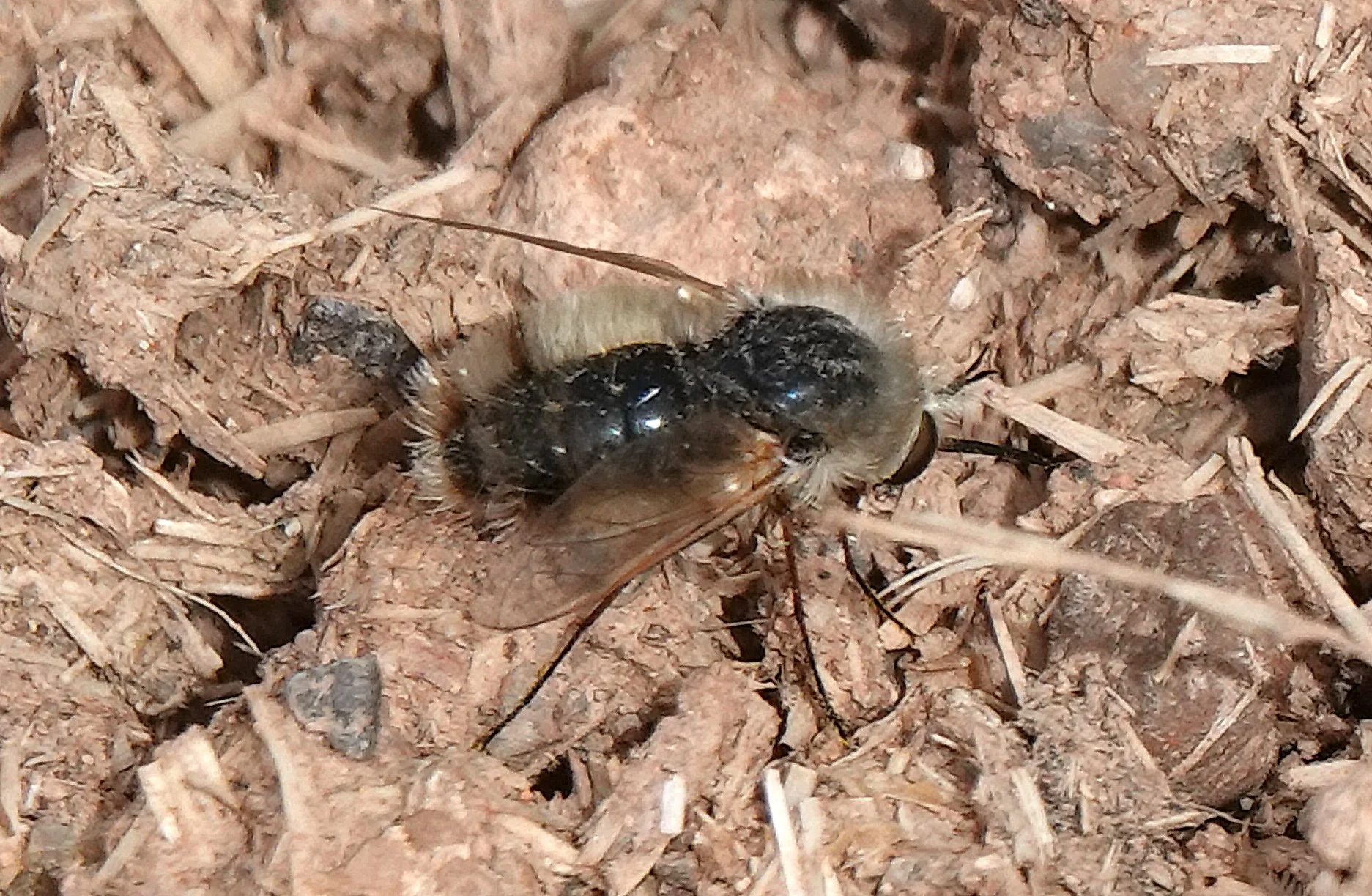
A medium-sized species that is most common late in the season, and regularly seen at high altitudes perching on the ground. Note the partially infuscated wings, the long cream and black pile, and the lack of tomentum on the thorax and abdomen.
Range: COCH, GRAH, GREE, PIMA, PNAL, STCR
Occurs: Mid-August to Late October
Lordotus luteolus

This mid-sized species is similar to L. pulchrissimus, having hyaline wings and lacking denticles on the costa. Like it, it also has mostly orange legs but differs from that species in having bare patches on the side of the thorax.
Range: COCH, STCR
Occurs: Late August to Mid-October
Lordotus perplexus
No Photos Availables
This is a mid-sized Lordotus species with entirely hyaline wings. The legs are dark, and the abdominal venter is completely black. There is liberal white tomentum on the tergites. Note also the linear antennae.
Range: PIMA, STCR
Occurs: Late March to Early May
Lordotus pulchrissimus

This is a mid-sized Lordotus species with entirely hyaline, denticulate wings. The legs are dark, and the abdominal venter is completely black. There is liberal white tomentum on the tergites. Females are orange and greatly resemble female zona but have black coxae.
Range: COCH, GRAH, GREE, PIMA, STCR
Occurs: Early August to Early November
Lordotus rufotibialis

Lordotus sororculus

Lordotus striatus
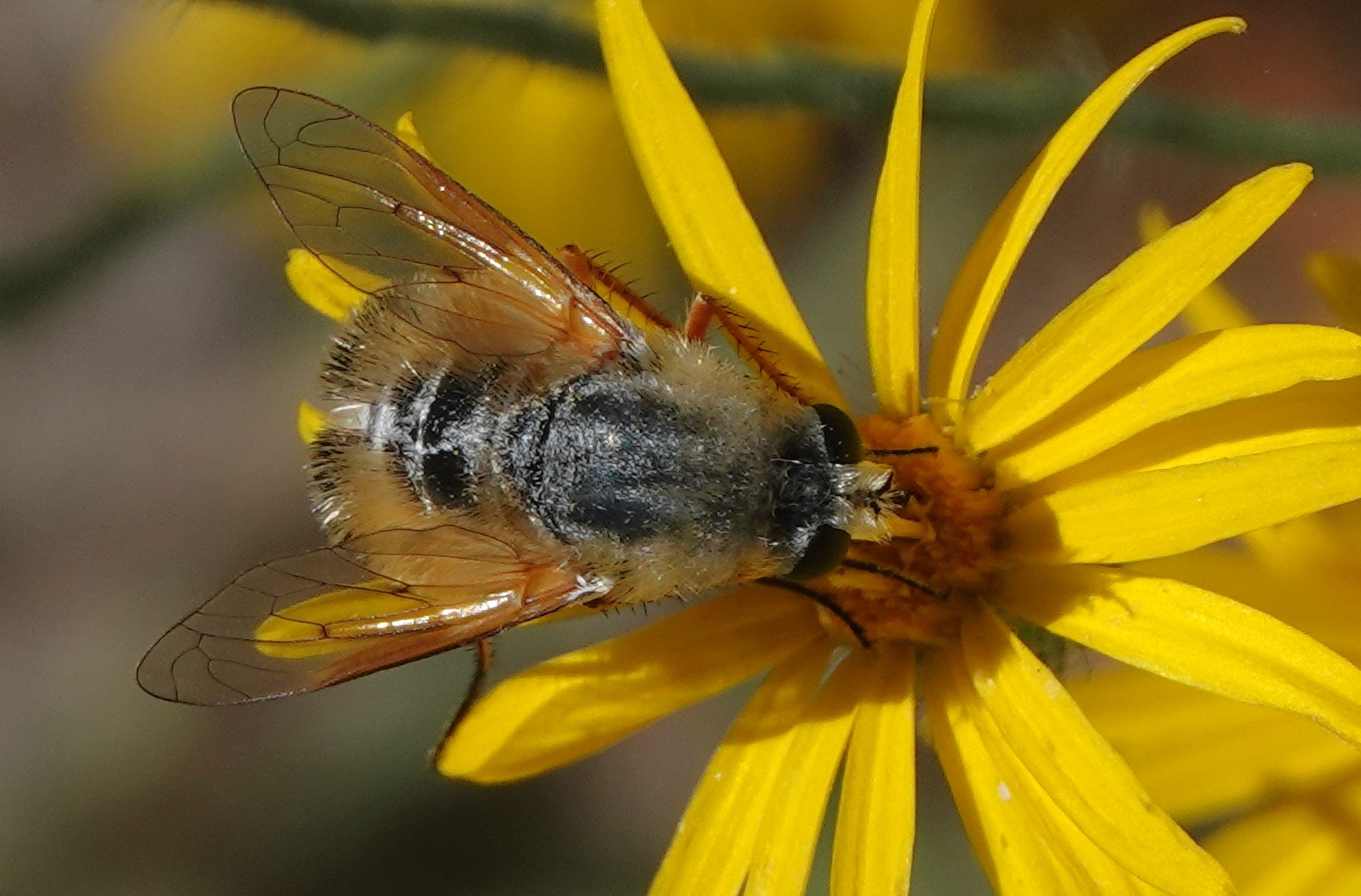
Lordotus zona

The body on this species averages 8 mm long. The tibiae are orange and ♂s have white pile with a black ring around T4. The costa is denticulate, and the wings are mostly hyaline.
This is a large species, usually with a body length of 8-11 mm. The thoracic pile is mostly white, and the abdominal pile is orange, especially laterally. There is a line of white tomentum through the dorsum of the abdomen and a black band on T4. In both sexes, the orange and brown color of the wings is pronounced. The male’s wings are denticulate. Look for adults on Bebbia flowers and sometimes at high altitudes perching on the ground.
The body on this species is 5-7 mm long with a black abdomen covered in white pile. The legs and antennae are dark, the wings are hyaline, and males are without denticuli. Females have abdominal bands of white tomentum confined to the interstices.
This is also a fairly large species, perhaps a bit smaller than the previous one. As with many members of this genus, it is sexually dimorphic. Females typically have bright orange pile while males are white. The male’s wings are denticulate; both sexes have orange legs, and the first two segments of the antennae are also orange.
Range: PIMA, PNAL
Occurs: MId-September to Early October
Range: COCH, GRAH, PIMA, PNAL, STCR
Occurs: Late September to Late October, Early April to Mid-April
Range: COCH, GRAH, PIMA, PNAL, STCR
Occurs: Early September to Late November
Range: COCH, PIMA, PNAL, STCR
Occurs: Mid-August to Mid-October
Also reported from Arizona are L. apicula, L. arizonensis, L. bipartitus, L. bucerus, L. diplasus, ermae, L. junceus, L. lutescens, and L. miscellus.