
Genus Parabombylius
Parabombylius arizonicus
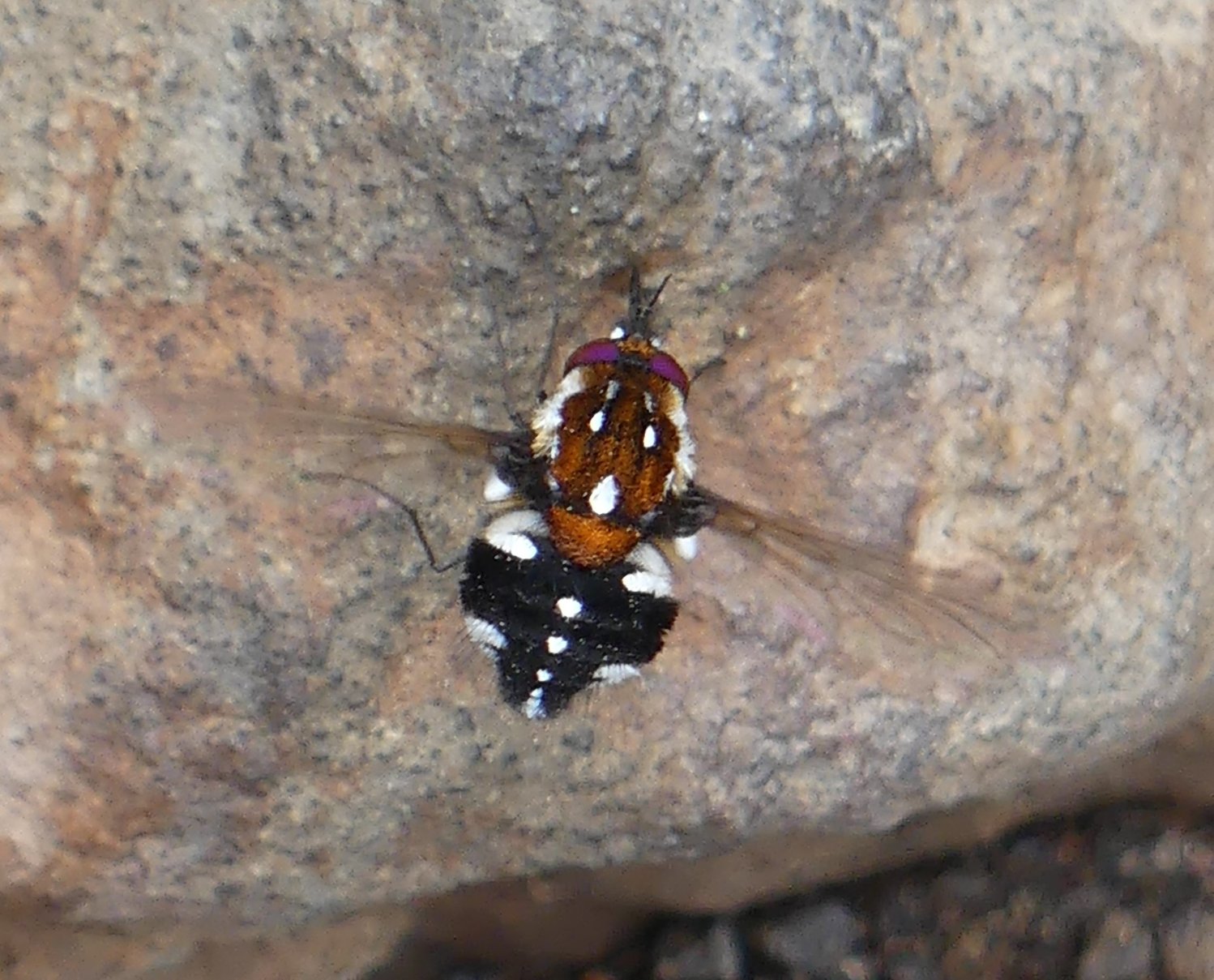
There are very few known records for this insect. It is apparently a spring flyer and one of the few species with the first posterior cell open.
Range: STCR
Occurs: Early March
Parabombylius ater
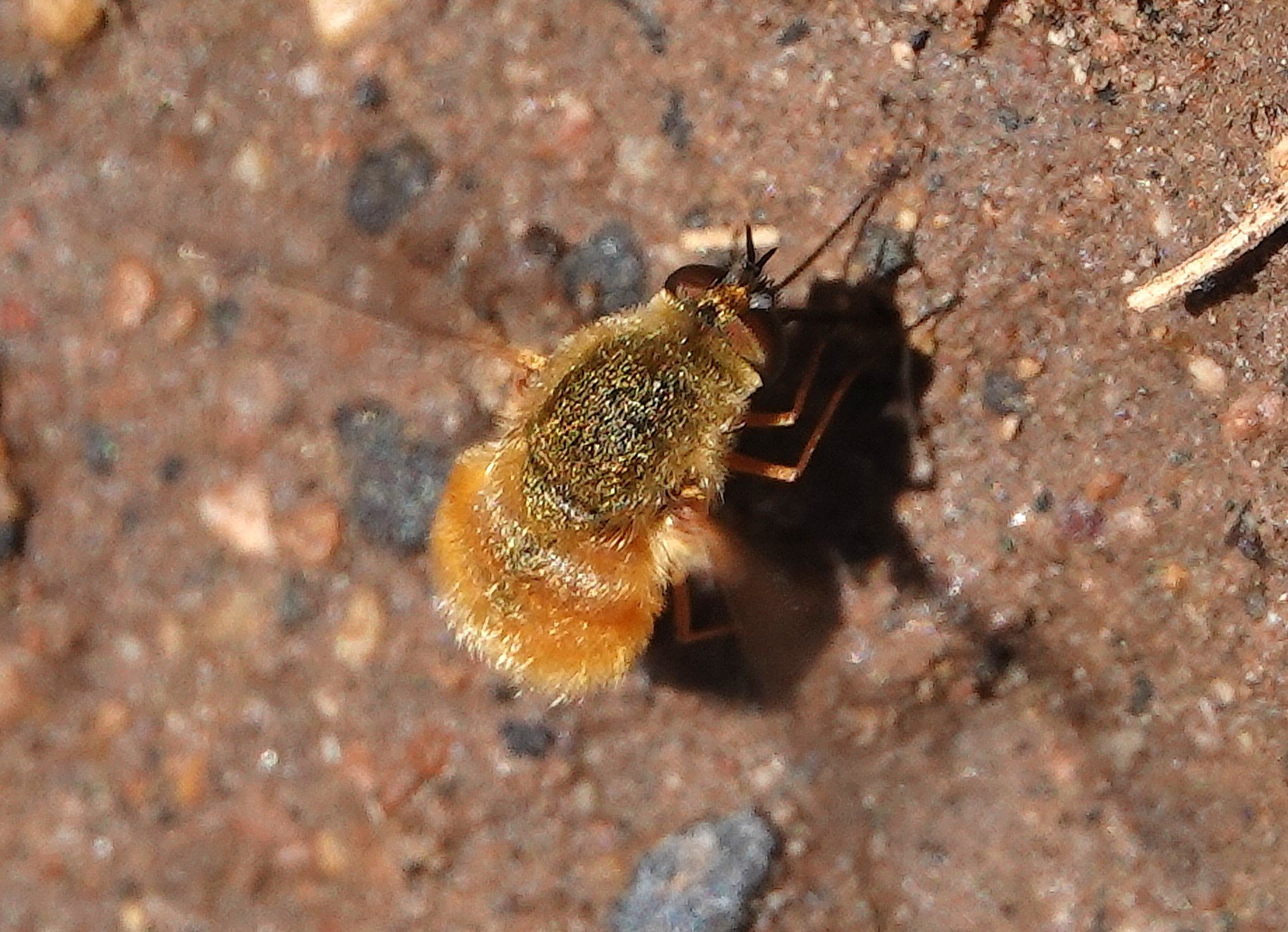
At the northwestern edge of its range, this species is new for Arizona. The ♂ is covered entirely in long golden pile, lacking any white spots on the tergites. All 3 segments of the antennae are dark.
Range: COCH, PIMA, PNAL
Occurs: MId-July to Mid-August
Parabombylius fulvus

This species is very similar to P. syndesmus, both are overwhelmingly golden. One pronounced difference is that in P. fulvus, the first posterior cell is open. Males show mixed yellow and black pile on the head; the females have silver spots on the tergites, and the first two antennal segments are orange.
Range: COCH, PIMA, PNAL
Occurs: Mid-July to Early September
Parabombylius hesychastes
No Photos Availables
Males have a line of white, medial spots down the terga, dark femora, and are similar to rutilus but T1 is white to cream colored rather than orange. Females are unknown.
Range: COCH, PNAL
Occurs: Early August to Late August
Parabombylius iphiculus
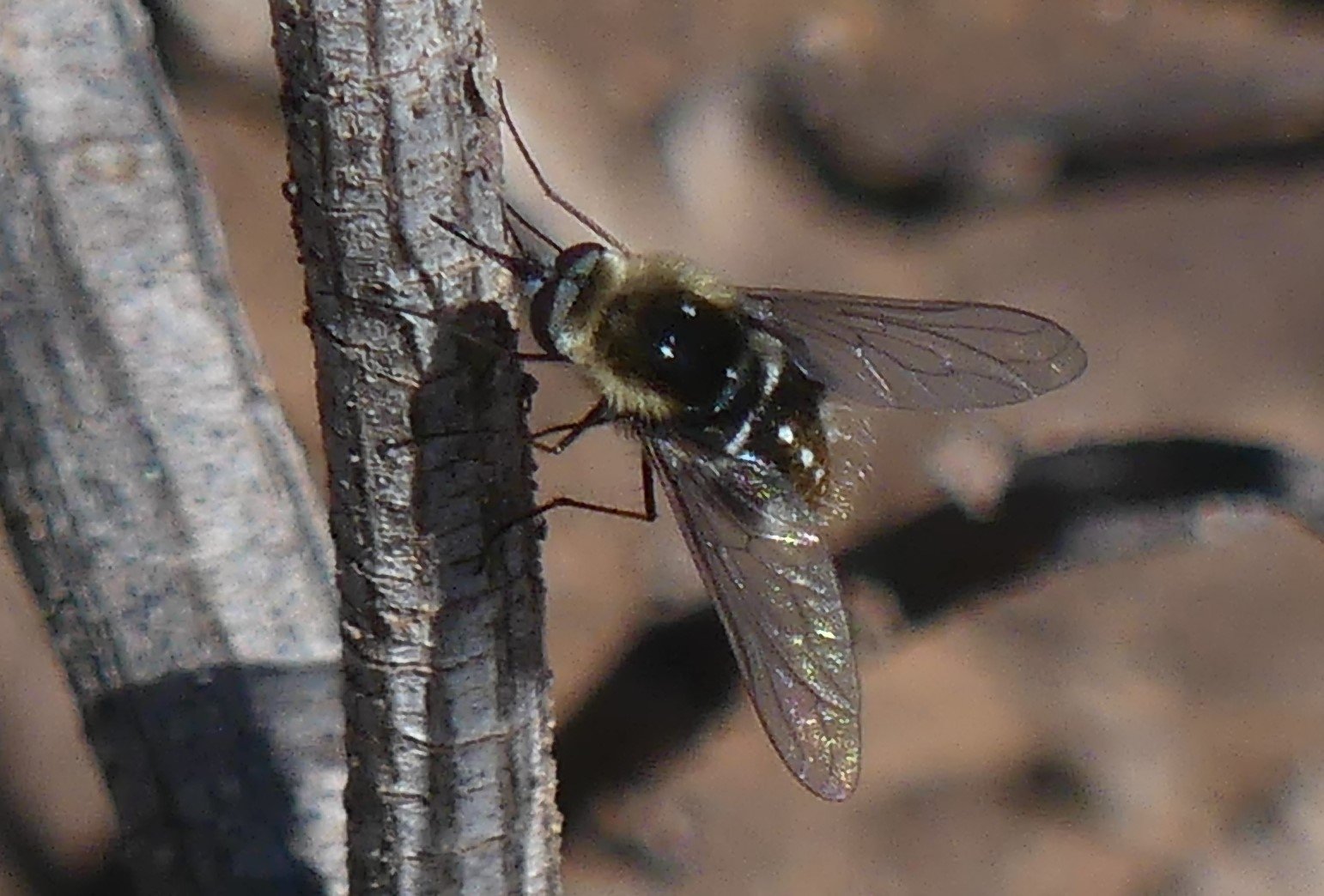
Both sexes show a median line of white dots along with varying amounts of yellow pile on the tergites. Females also have yellow occipital pile and short facial pile. The first posterior cell is closed and stalked, and the femora are mostly brown. Adults are seen at puddles and are regularly found nectaring on Euphorbia, Lippia and scorpionweed.
Range: COCH, PNAL
Occurs: Late July to Mid-August
Parabombylius maculosus
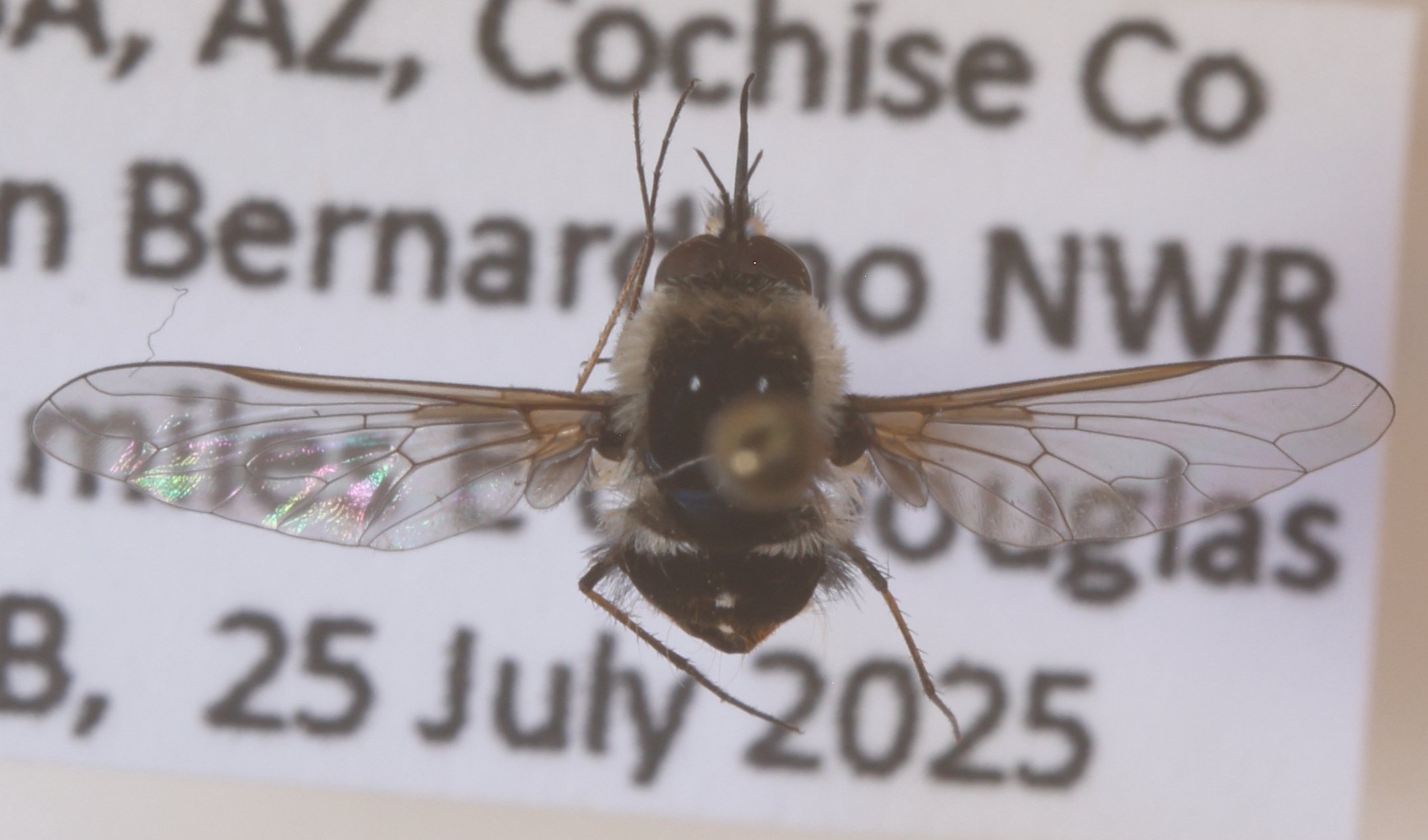
In ♀s of this fairly large species, the femora are orange; the facial pile and first two antennal segments are dark. Males are usually white, yellow, or orange with at least some silver medial spots on the tergites.
Range: PIMA, PNAL
Occurs: Early August to Early September
Parabombylius nephthys
No Photos Availables
Described and only known from females! It is very similar to the following species, nigrofemoratus, but the metapleura show yellow and black pile rather than pure white.
Range: COCH, GREE
Occurs: Late August to Early September
Parabombylius nigrofemoratus
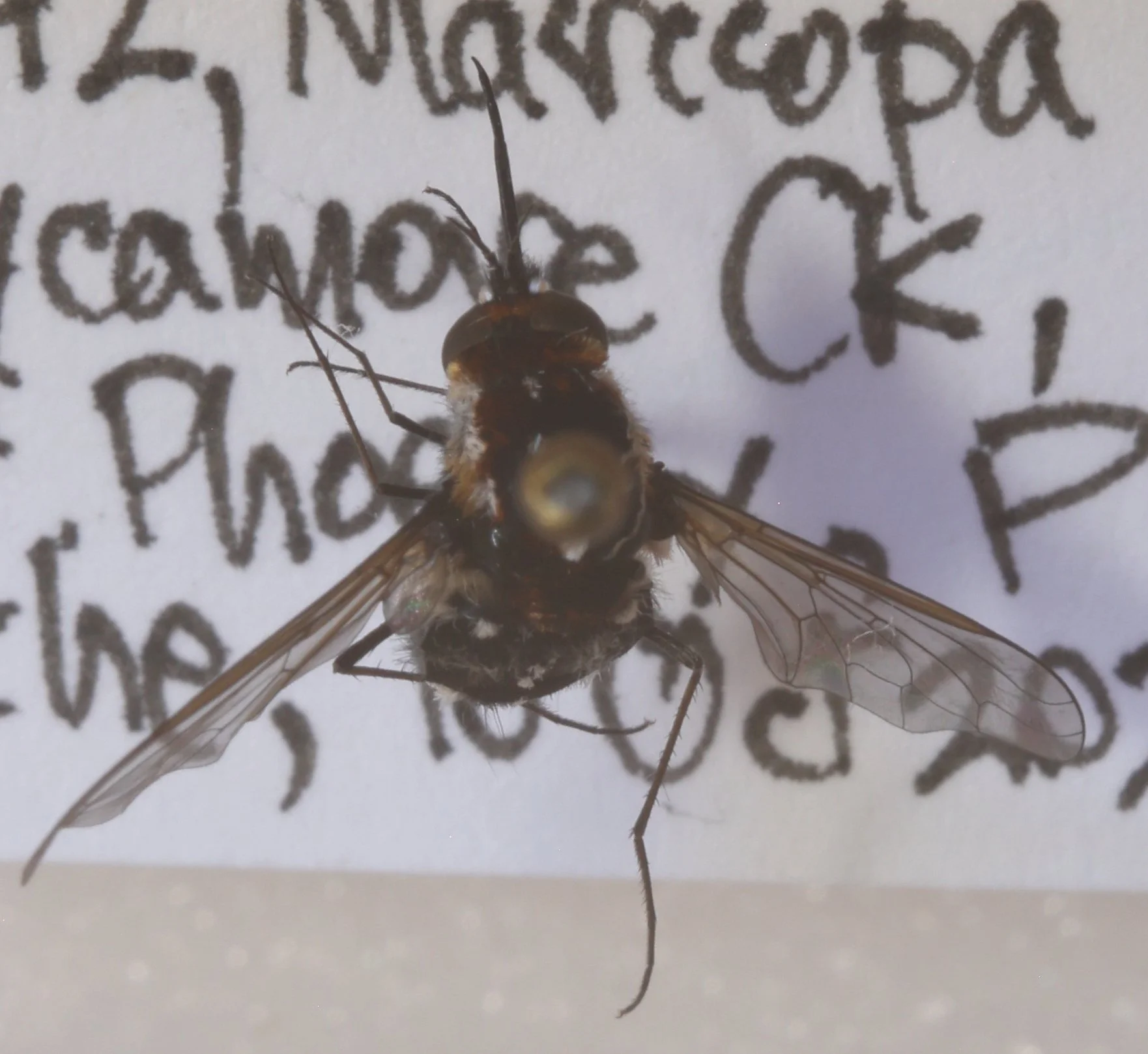
One of the larger species, it is maculated with white epaulets, white pile on T1, and white lateral spots on T4-6. The first posterior cell is slightly open, the body lacks orange pile, and the femora and antennae are black.
Range: COCH, GREE, PNAL
Occurs: Mid-July to Early September
Parabombylius pyrrhothrix
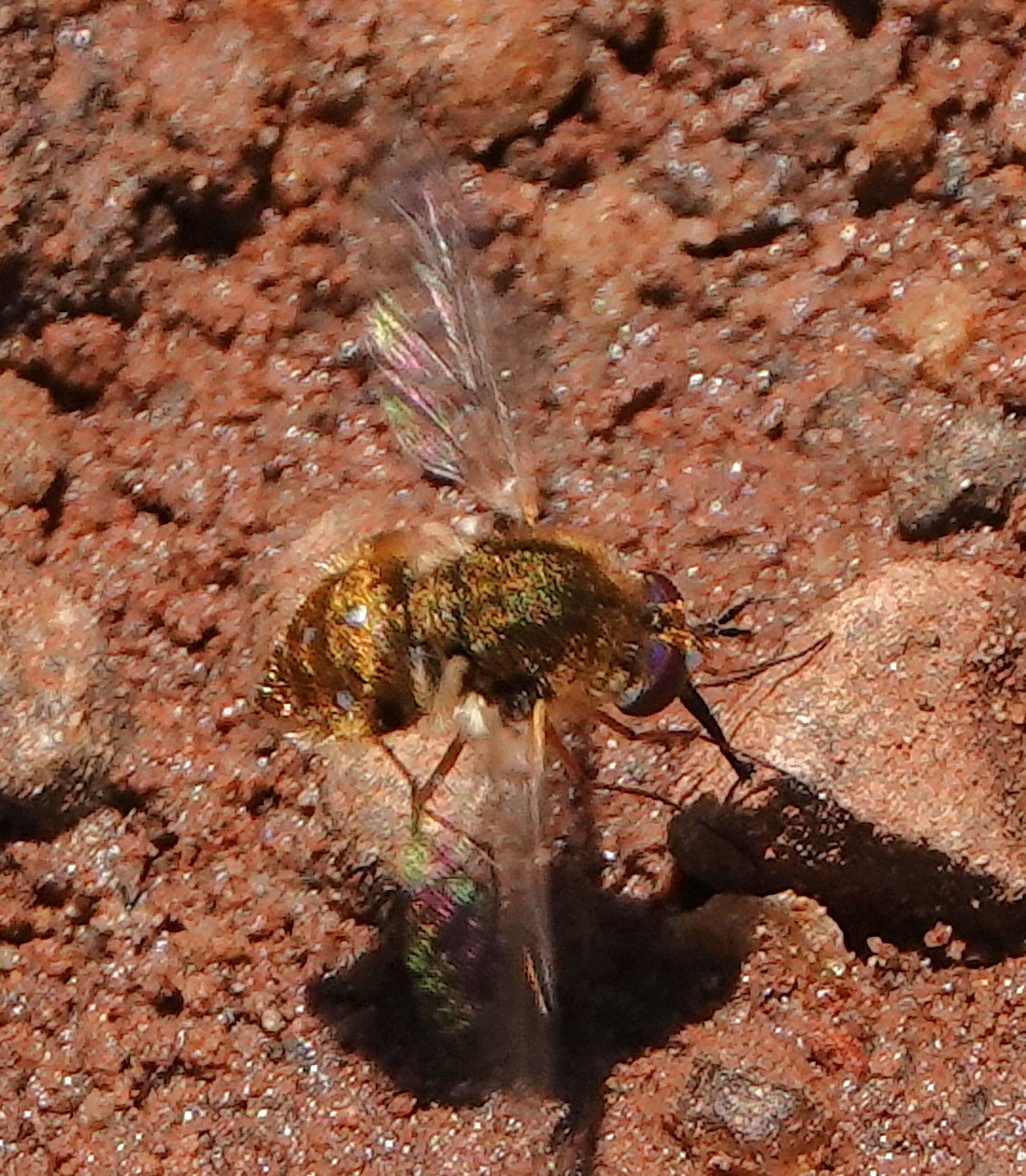
Males are unknown to us. Females have orange pile on the hind margins of the tergites and a white interrupted band on T1. They also have white spots on the midline of the abdomen, yellow legs, and antennal segments 1 and 2 are orange. Note also the wide open 1st posterior cell.
Range: COCH, PNAL
Occurs: MId-July to Late August
Parabombylius rutilus
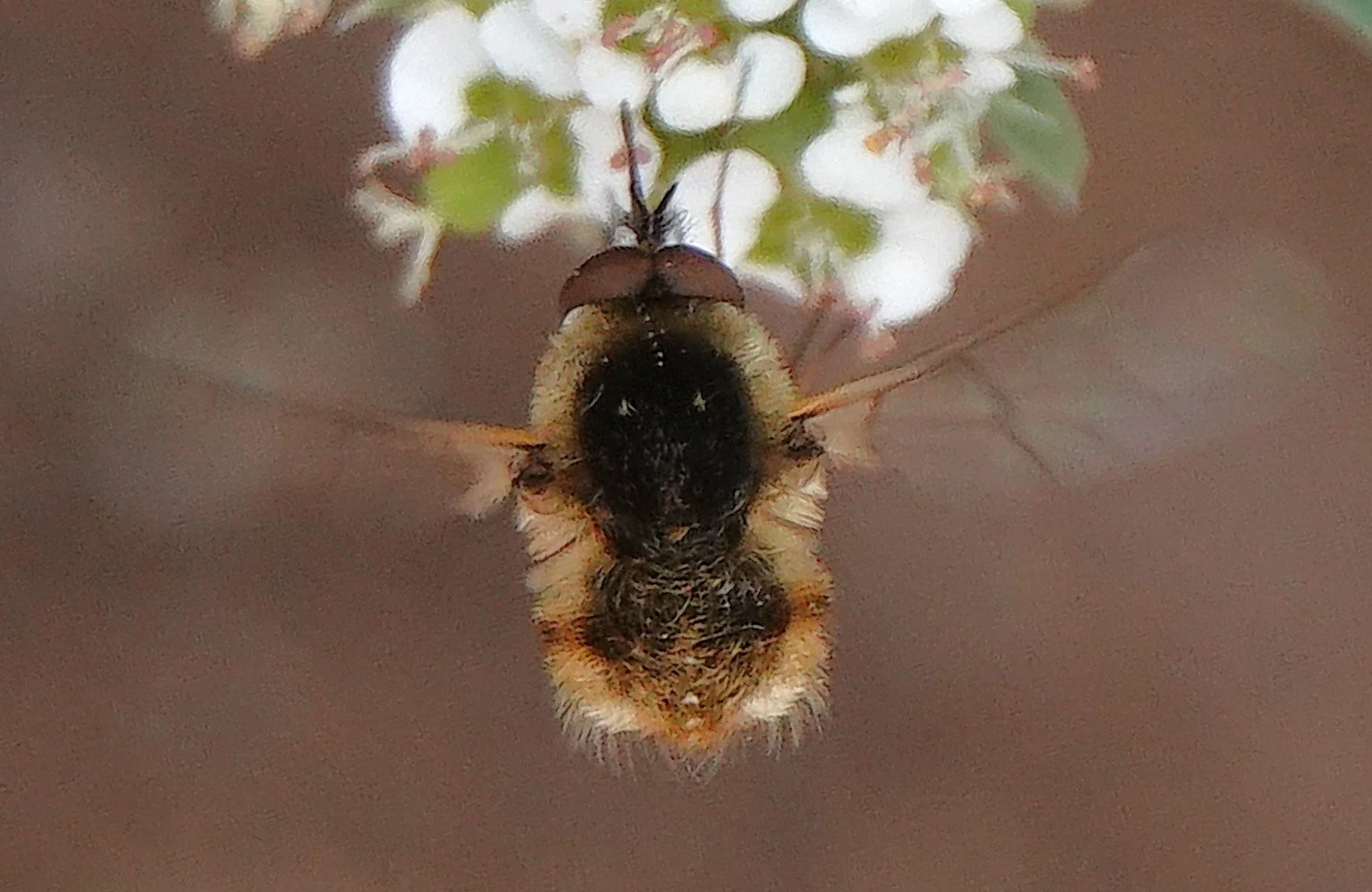
Not previously known west of New Mexico, we cite this species from several spots in SE AZ. The species has dark antennae surrounded by long black pile, a few white median spots, and white dorsolateral markings on T3 and T4. There is also a hint of brown infuscation basally on the wings.
Range: COCH, PNAL
Occurs: MId-August to Late August
Parabombylius subflavus
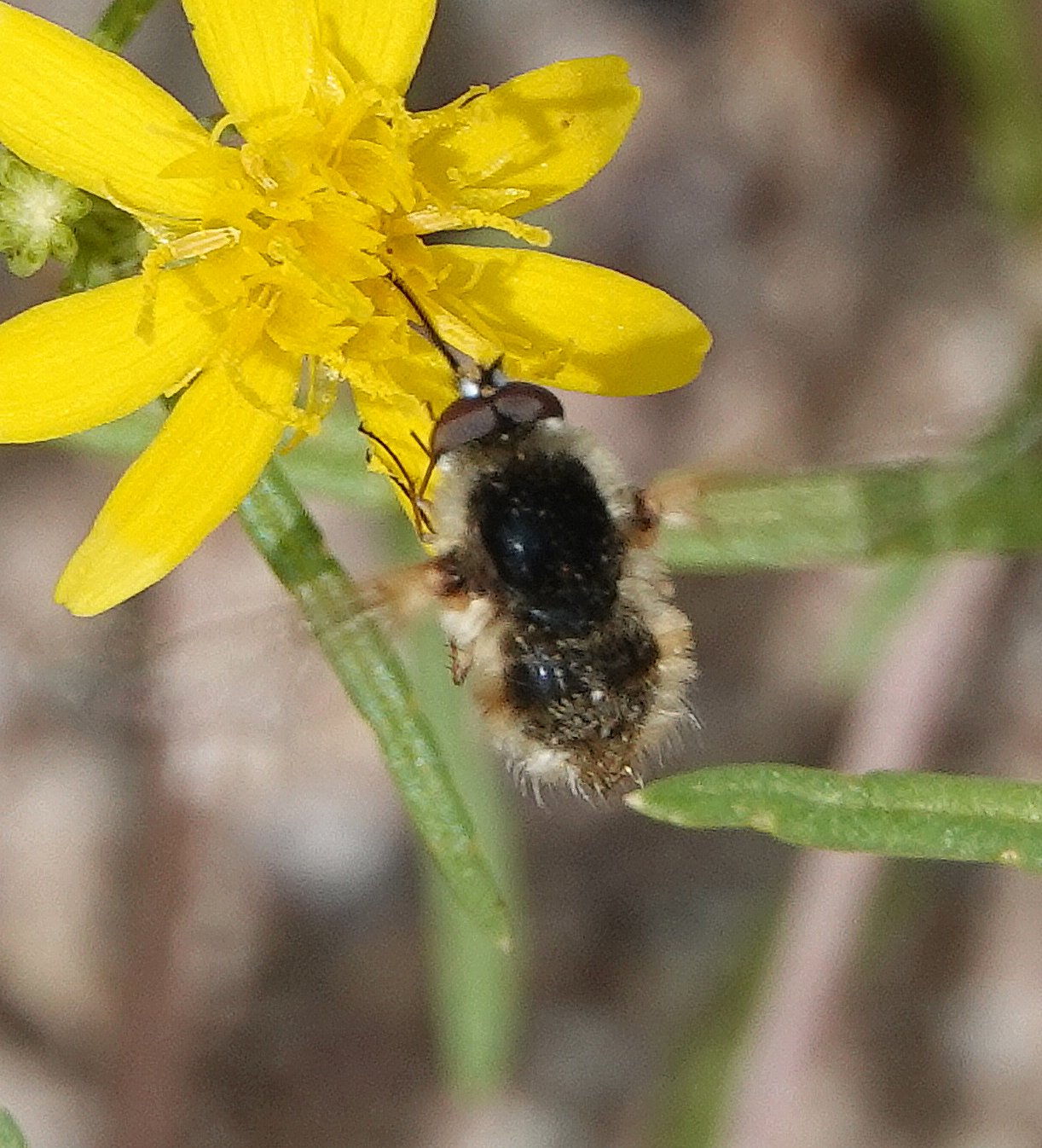
The terga on this species are mostly yellow but with some white medial spots. On males, the tibiae, tarsi, and apex of the femora are yellow; the legs are solid orange on females. The ♀ thorax lacks silver spotting. The first two antennal segments are black in males but orange in females.
Range: COCH, PIMA, PNAL, STCR
Occurs: MId-July to Late August
Parabombylius syndesmus

In males, the pile of the head is entirely dark and the tergites blend from brown to orange. There is no medial, silver tomentum on the abdomen in females and the 1st and 2nd antennal segments are bright orange.
Range: COCH
Occurs: Late August