
Pollination
Next to the Apoidea--the solitary and social bees--the order Diptera is recognized as the second most important pollinating group of insects. Within the nearly 200 families of flies worldwide, the Bombyliidae are among the several most important as pollinators (Larson et al. 2001). Pollination by Diptera is referred to as myophily (fly-loving). In the coevolutionary dance that began with the first flowering plants perhaps 130,000,000 years ago, flies (and other pollinators) were the drivers that molded the characteristics of blossoms (i.e., size, position, color, scent, shape, sugar concentration, flowering time), and flowers in turn, dictated the characteristics of their pollinators (think red tubular flowers that shaped the needle-like bills of hummingbirds). Flowers quietly forged the various behaviors and characteristics of bee flies, including their flight season, daily activity, proboscis length, feeding height, visual acuity, color preferences, and social interactions while feeding. If you look at flowers, you will find bee flies and vice versa.
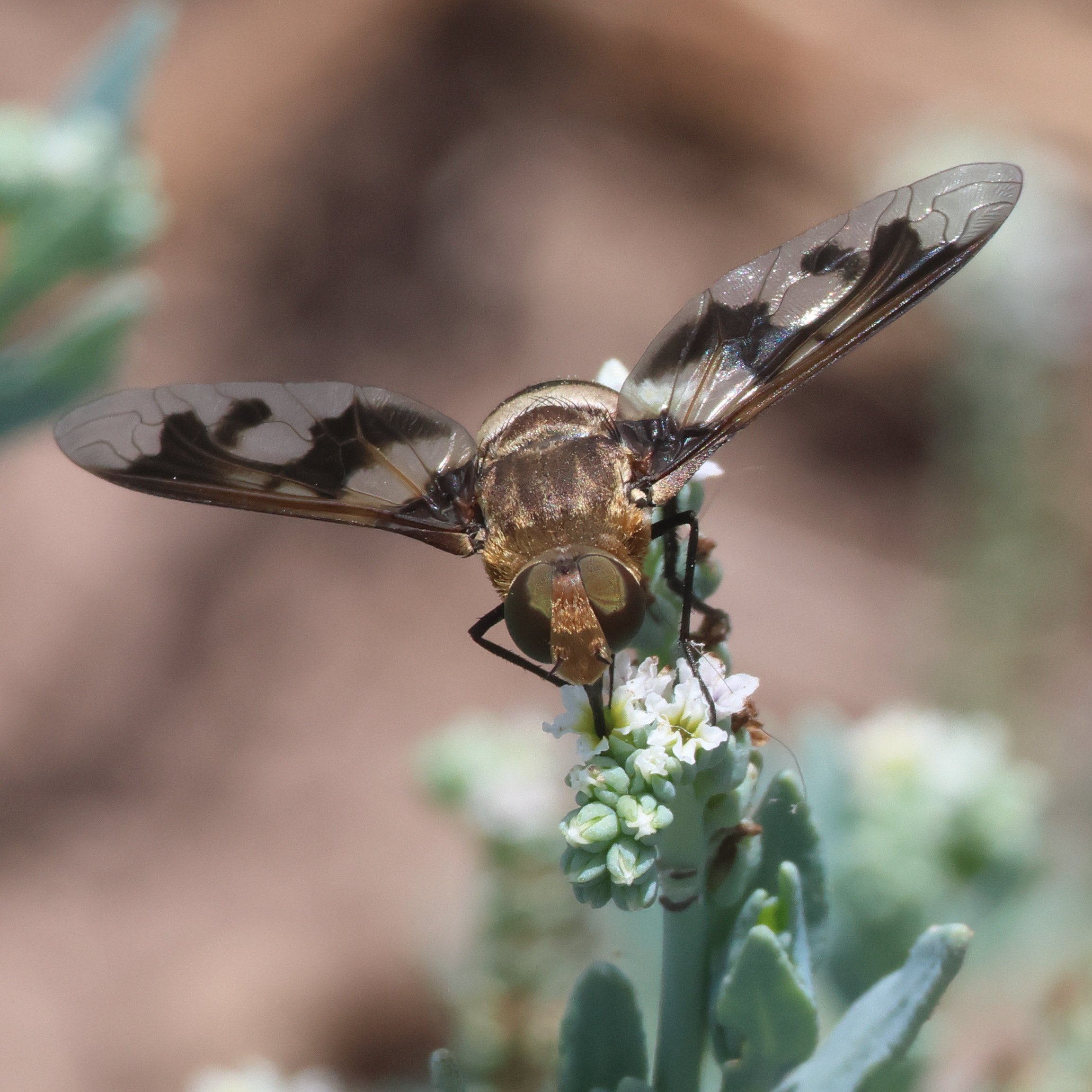
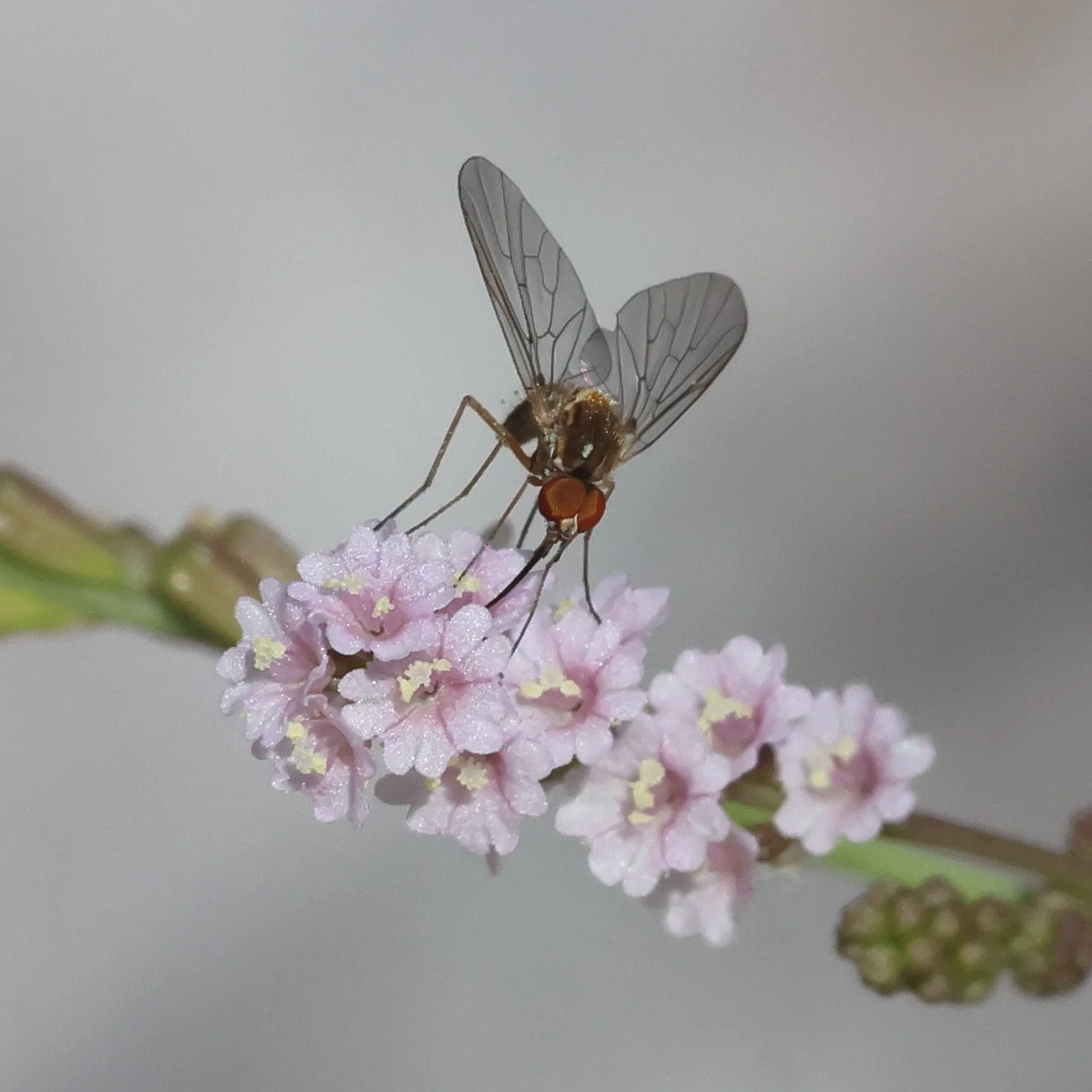
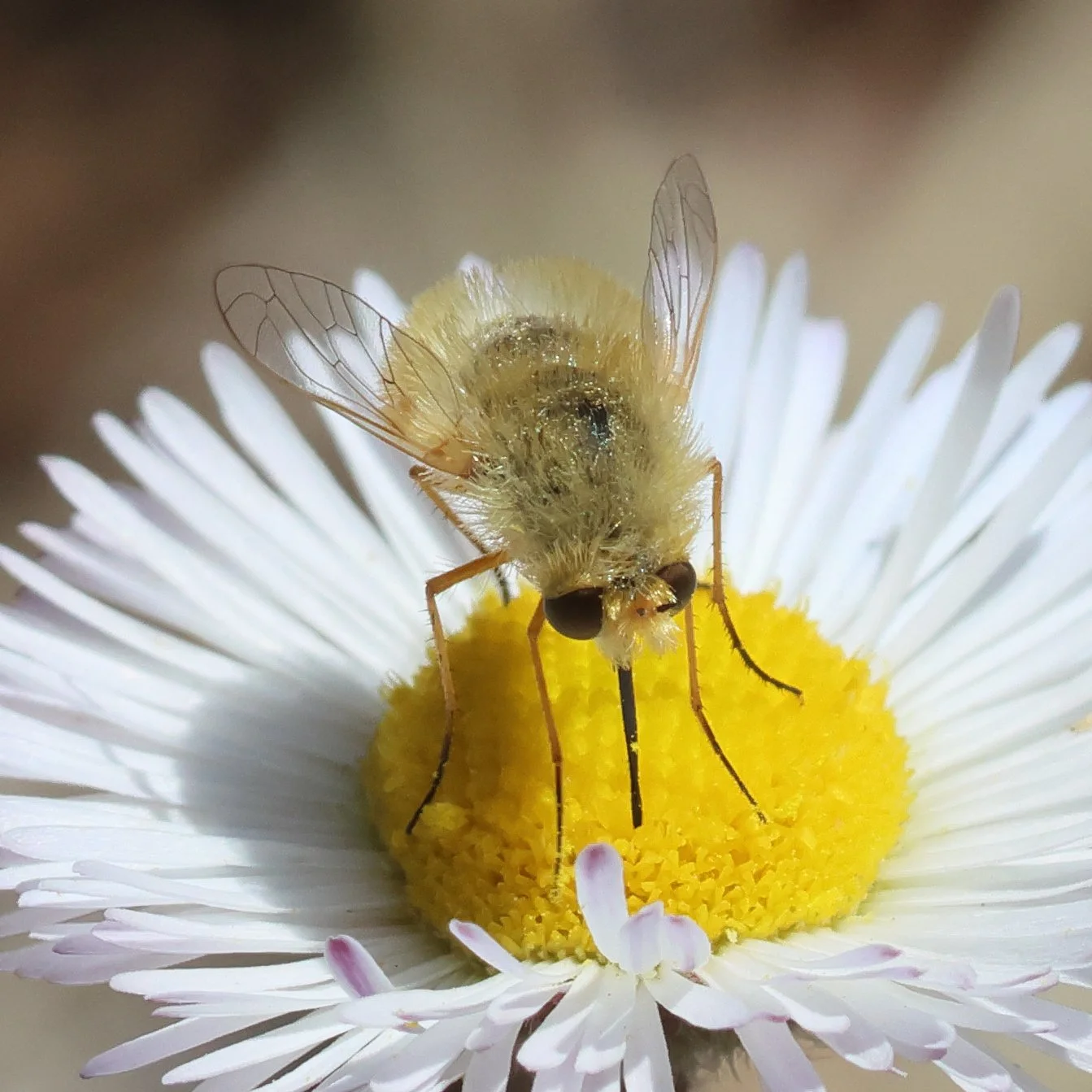
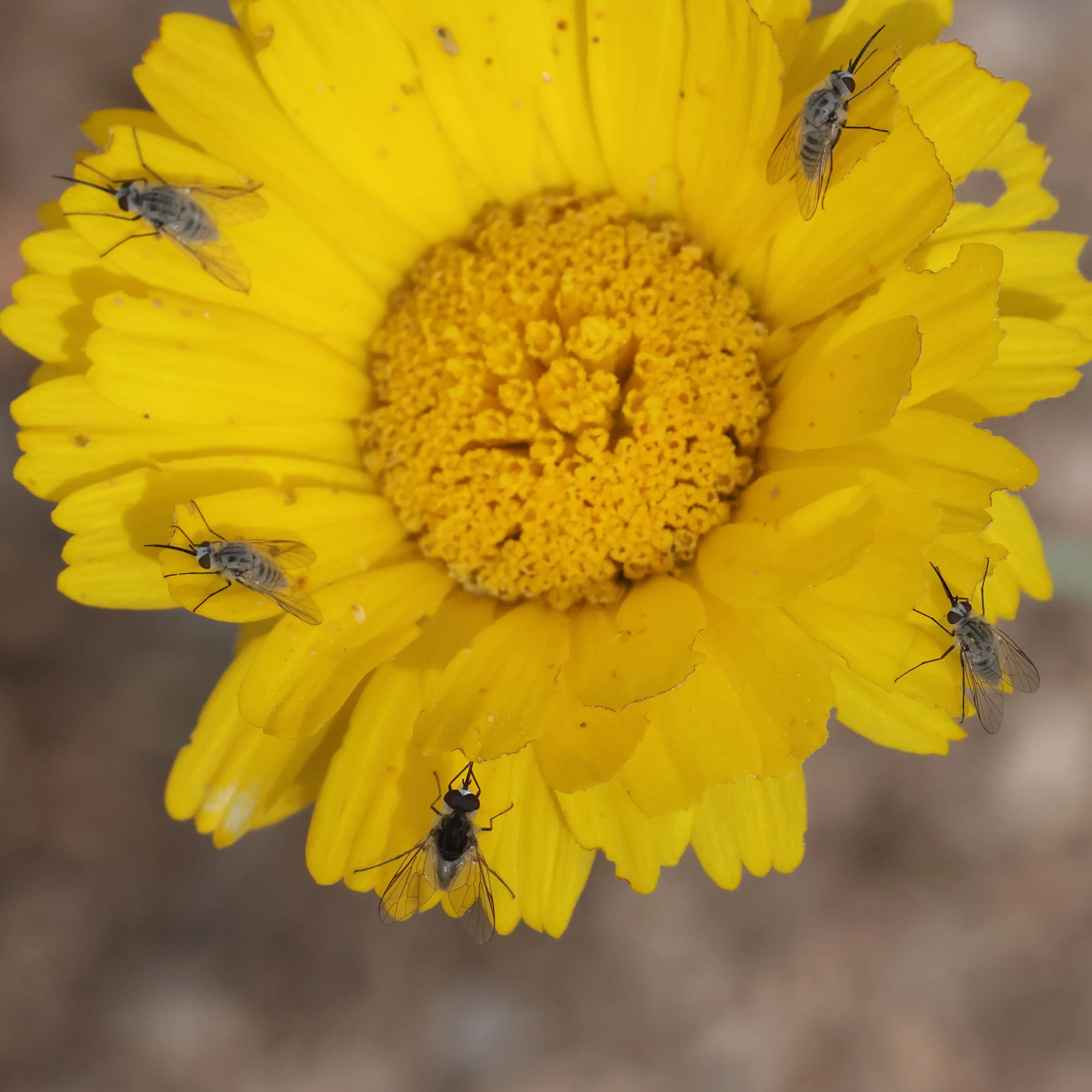
Bee flies visit flowers to feed on a blend of sugars and water known as nectar, a form of feeding known as nectarophagy (nectar-eating). In the process, they generally hover near, then alight on a blossom, and suck nectar with their non-retractable proboscis. Often, this activity, enhanced by their hairy bodies, spreads pollen grains from flower to flower. Microscopic examination, or close-up photos often reveal a dusting of pollen grains on the proboscis, scales, head, legs, and hairy parts of the thorax. However, not every flower visitor is a pollinator. In some instances, bee flies are “nectar thieves,” that provide no service to the plant. For example, a species with the “wrong” proboscis or leg length may reach the nectar source but fall short of the anther or stigma and fail to pick up or deliver pollen.
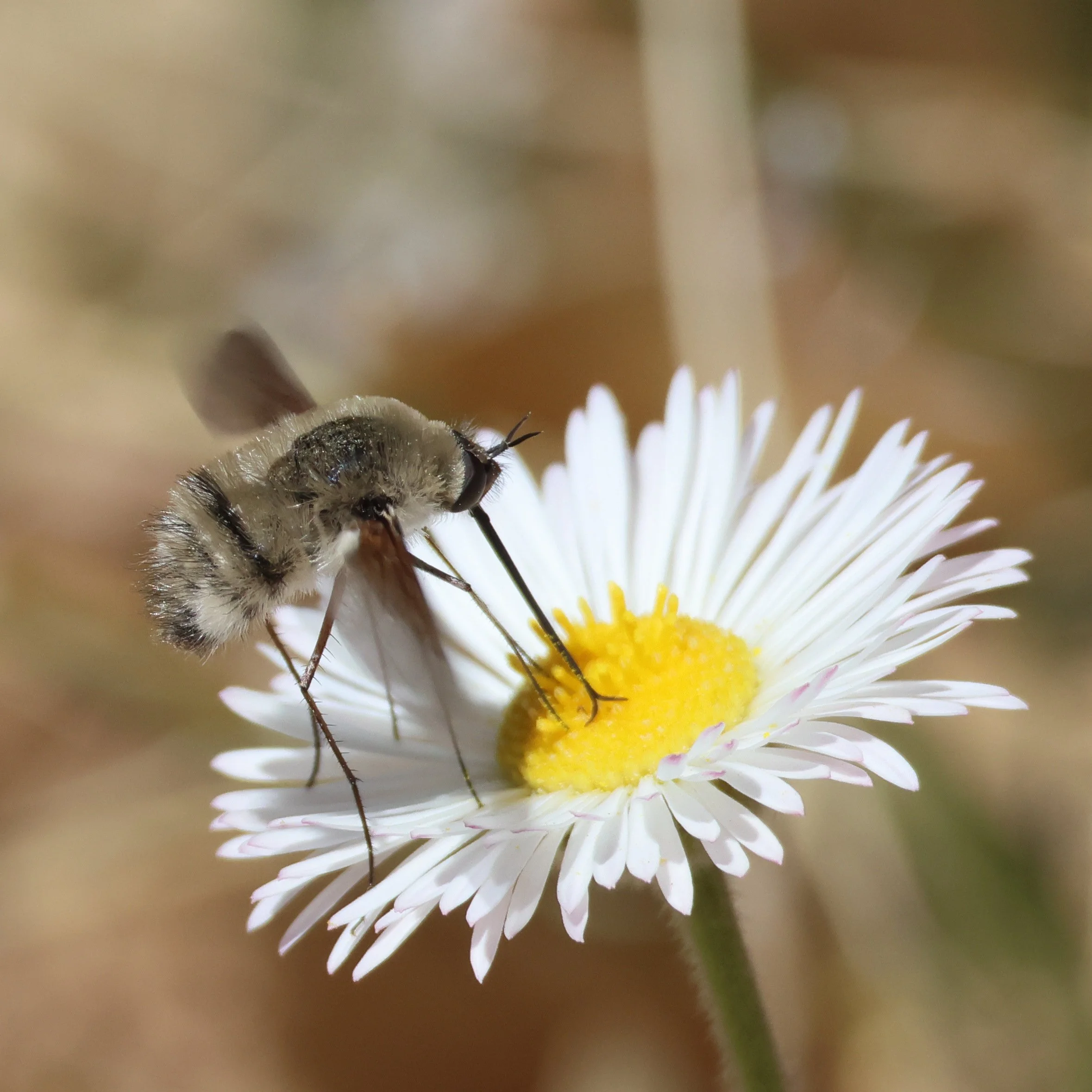
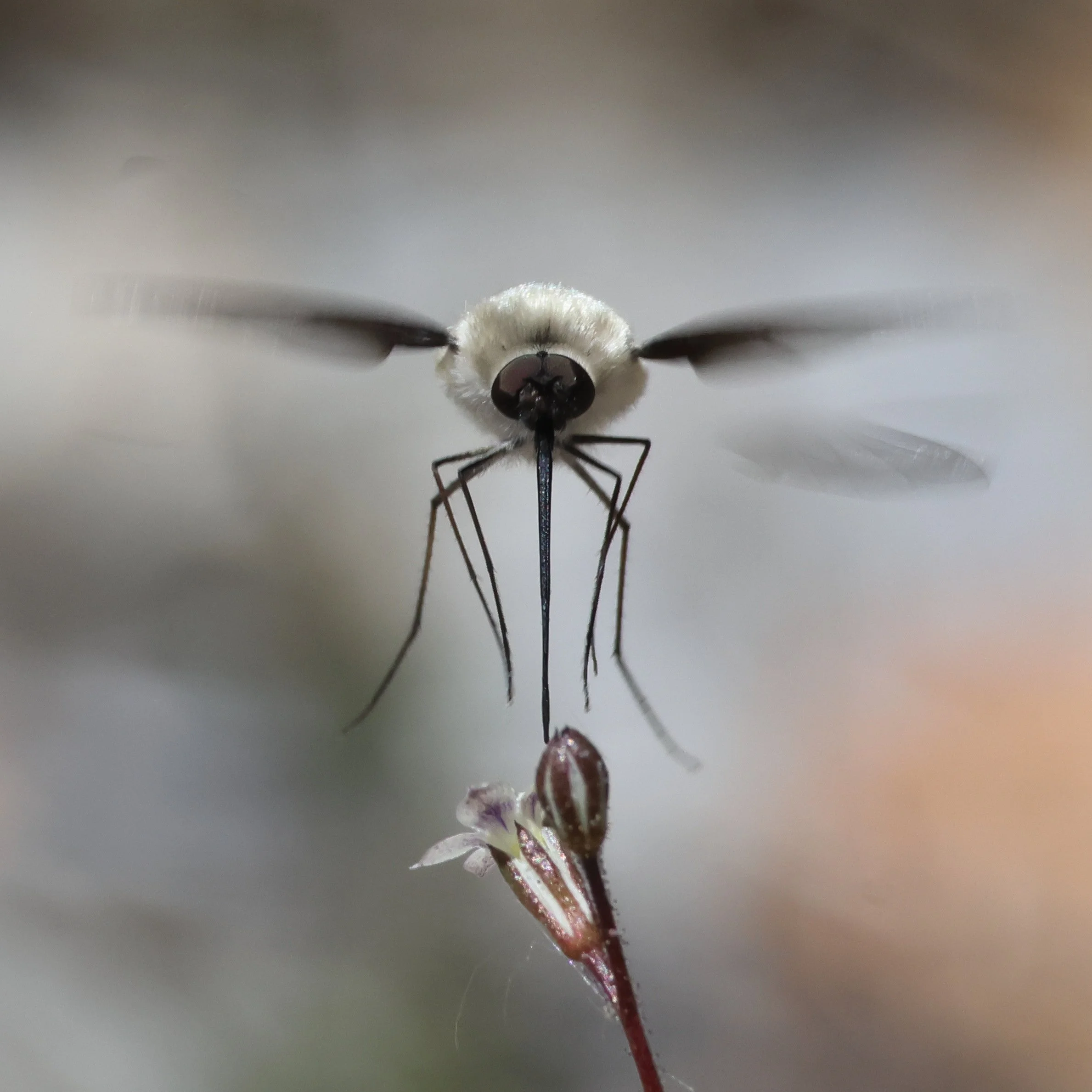
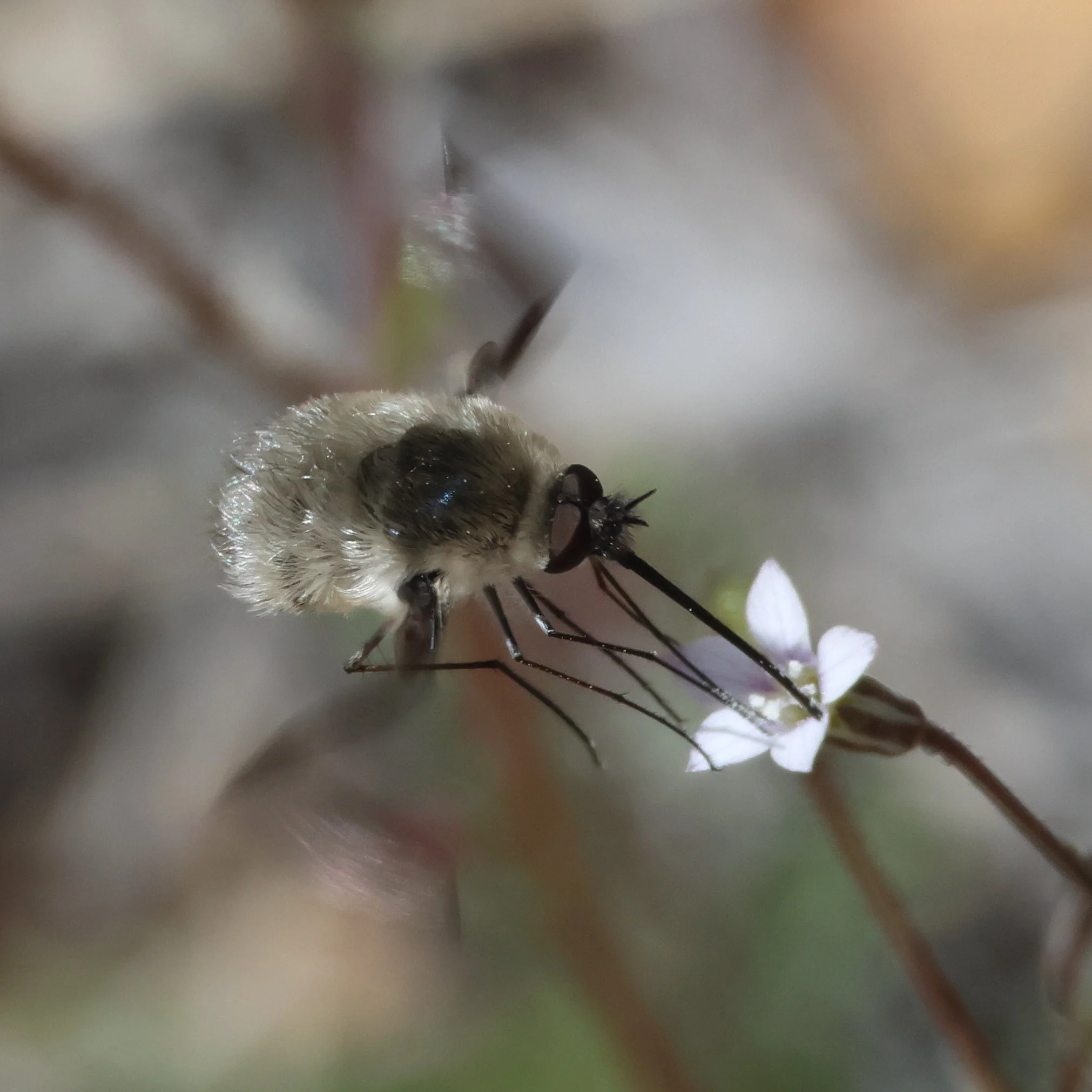
The plant provides a nectar reward (a meal) that entices the fly to visit the blossom. By spreading pollen and fertilizing the plant, the fly ensures a future supply of the blossoms it depends upon. Bee fly pollination has been studied extensively in the Old World; e.g., England, continental Europe and Japan, less so in North America. Pioneering studies by Knoll (1921), reevaluated by Kastinger and Weber (2001) examined the cues by which bee flies find flowers. Long distance attraction (blossom shape or color) was confirmed by sealing blossoms in glass tubes. Flies were visually attracted these plants, approaching the blossoms with their proboscis and legs pointing forward, as if preparing to land and feed. There was, owing to the closed glass tubes, no olfactory component to long distance attraction. Short distance attraction was demonstrated in a European Bombylius that was attracted to very strong scents (Knoll 1921). Blossom colors dictated frequency of bee fly visits; blue, violet, purple, white and to a lesser extent, yellow blossoms were visited most frequently (Kastinger and Weber 2001). Reddish and pink blossoms were only rarely visited (although attractive to other kinds of pollinators). Tubular, disc, or lipped flowers were visited more often than keeled or funnel-shaped flowers. Plants with readily available exposed nectar as well as hidden nectar were visited. No plant is pollinated exclusively by bee flies, but in one study, their visits were important enough to affect seed production of certain plants in shaded verses open forest habitats (Kastinger and Weber 2001). In some cases, bee flies may be more important pollinators than bees (Kastinger and Weber 2001), making it less clear which group of insects is driving the evolution of those blossoms.
Among the immense number of flowers visited by bombyliids, SE Arizona has a noteworthy diversity of milkweeds (Asclepias: Apocynaceae), with 20 species or more inhabiting the region. During a study in Cochise County (Behrstock 2021), approximately 28 species of bombyliids nectared on Arizona milkweed (A. angustifolia), a montane species that produces clusters of small, white, nectar-rich blossoms. Milkweeds attract a huge diversity of pollinators that feed on nectar and, in the process, inadvertently grab the plant’s hidden pollinia (pollen bundles). No confirmed milkweed specialist insects are known, at least in North America, a remarkable case of non-specialization. After being “grabbed” by one blossom (and removing a pair of pollinia), the insect moves to another flower, is grabbed again, and deposits the pollinia. This mechanism favors strongly-built insects; i.e., bees and wasps, that can yank their legs out of the blossom. Bombyliids, with their spindly, weak legs, are at a distinct disadvantage, and a number of them were seen trapped by milkweed blossoms and unable to free themselves. Nonetheless, 10 species of bee flies had successfully escaped from the clutches of Arizona milkweed and were observed carrying its pollinia.


