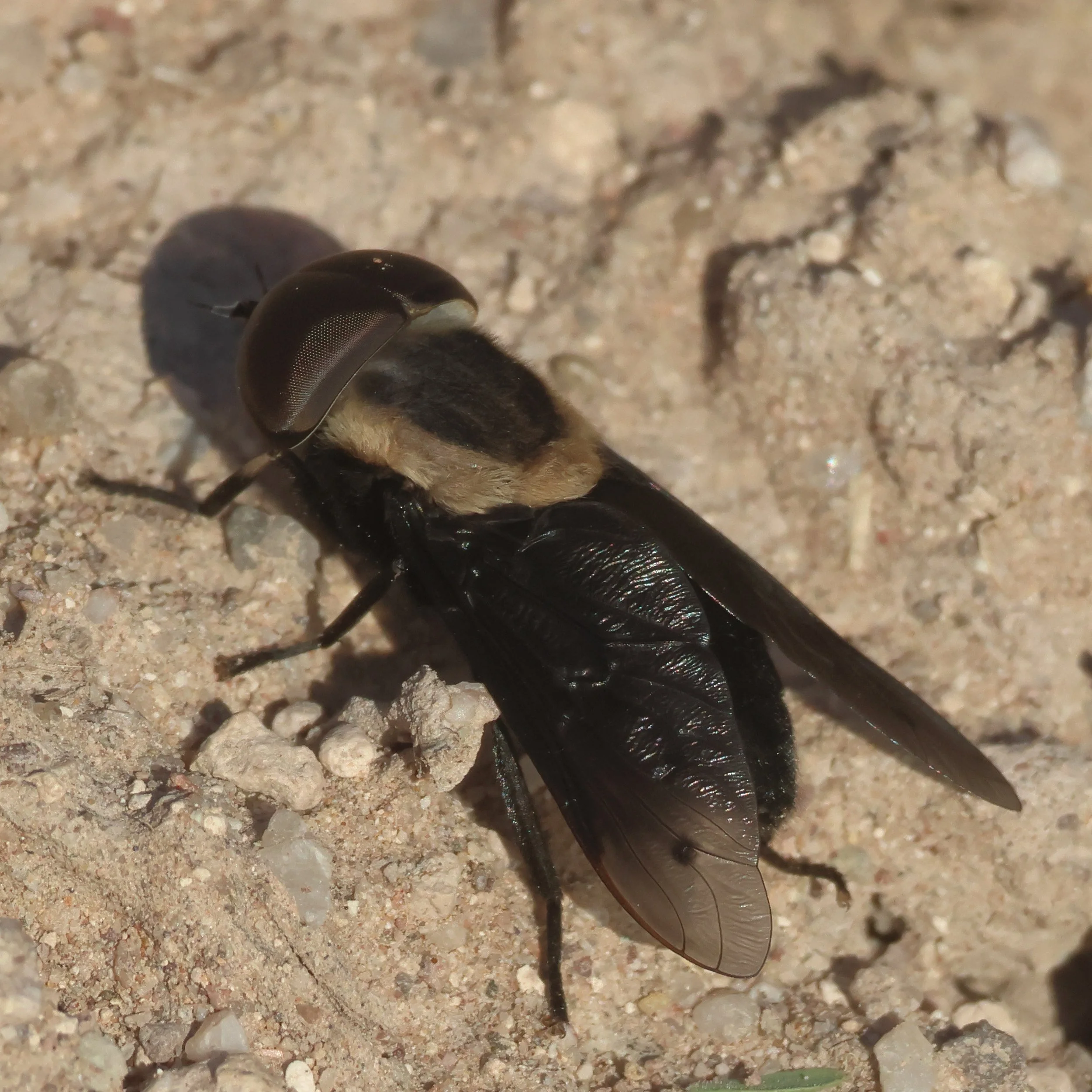
What Is and What Isn't a Bombyliid?
Many bombyliids have wing and/or body patterns and colors that mimic bees and wasps and may grant them some degree of protection. This is a case of Batesian Mimicry, wherein a dangerous model (venomous, poisonous, fierce) or group of models, is mimicked by harmless organisms that receive protection from the resemblance. Arguably, the family most confoundingly similar to bombyliids is the hover flies or flower flies (Syrphidae). As the name implies, they characteristically hover, as do bee flies. Early in the day, smaller species of syrphids fly low within lush vegetation and can easily be mistaken for bee flies. They also feed on nectar and are frequently seen competing with bee flies on the same forbs and shrubs (but note their shorter mouth parts), and frequently hold their wings out from the body like a bombyliid. Note that syrphids have strong legs and readily change position while perched, something that spindly-legged bombyliids do not often do. Many species of hover flies have white faces, an unusual character in bee flies, and it is common for syrphid flies to wave their abdomens while perched, a behavior unknown in bee flies. Finally, hover flies tend to have a smoother, more colorful integument (exoskeleton) while bee flies, more often than not, are covered in the pile and tomentum that gives them their fuzziness and color.
Syrphid Flies
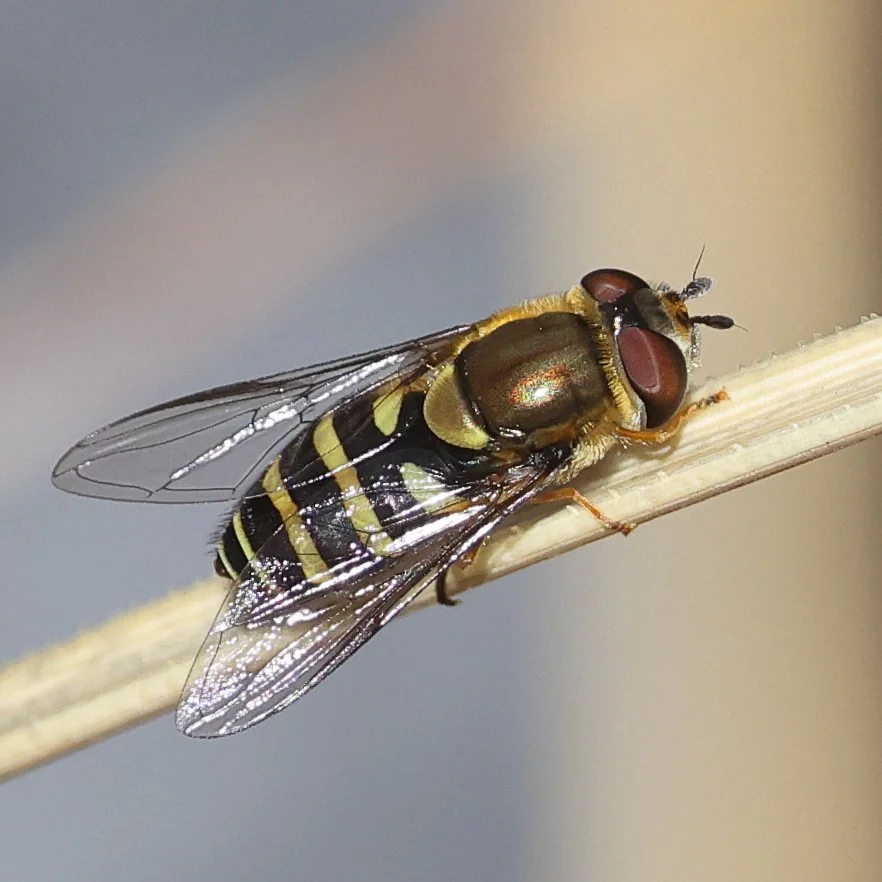
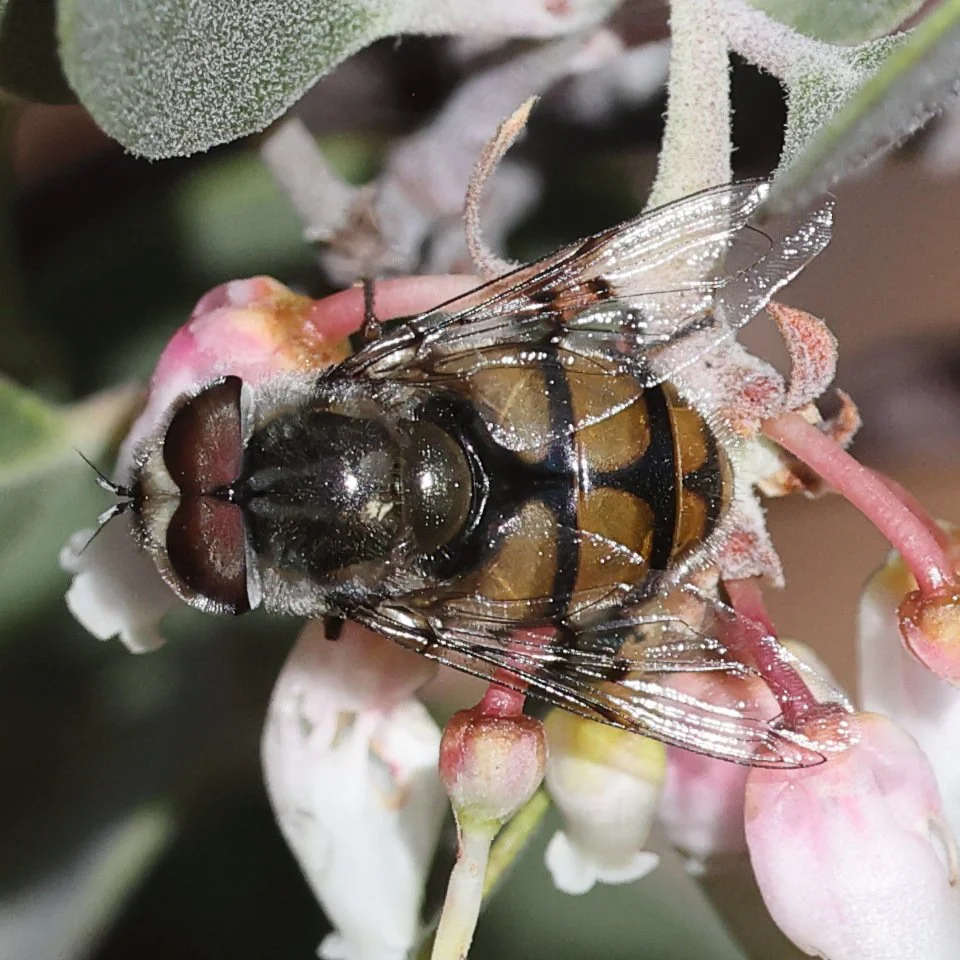
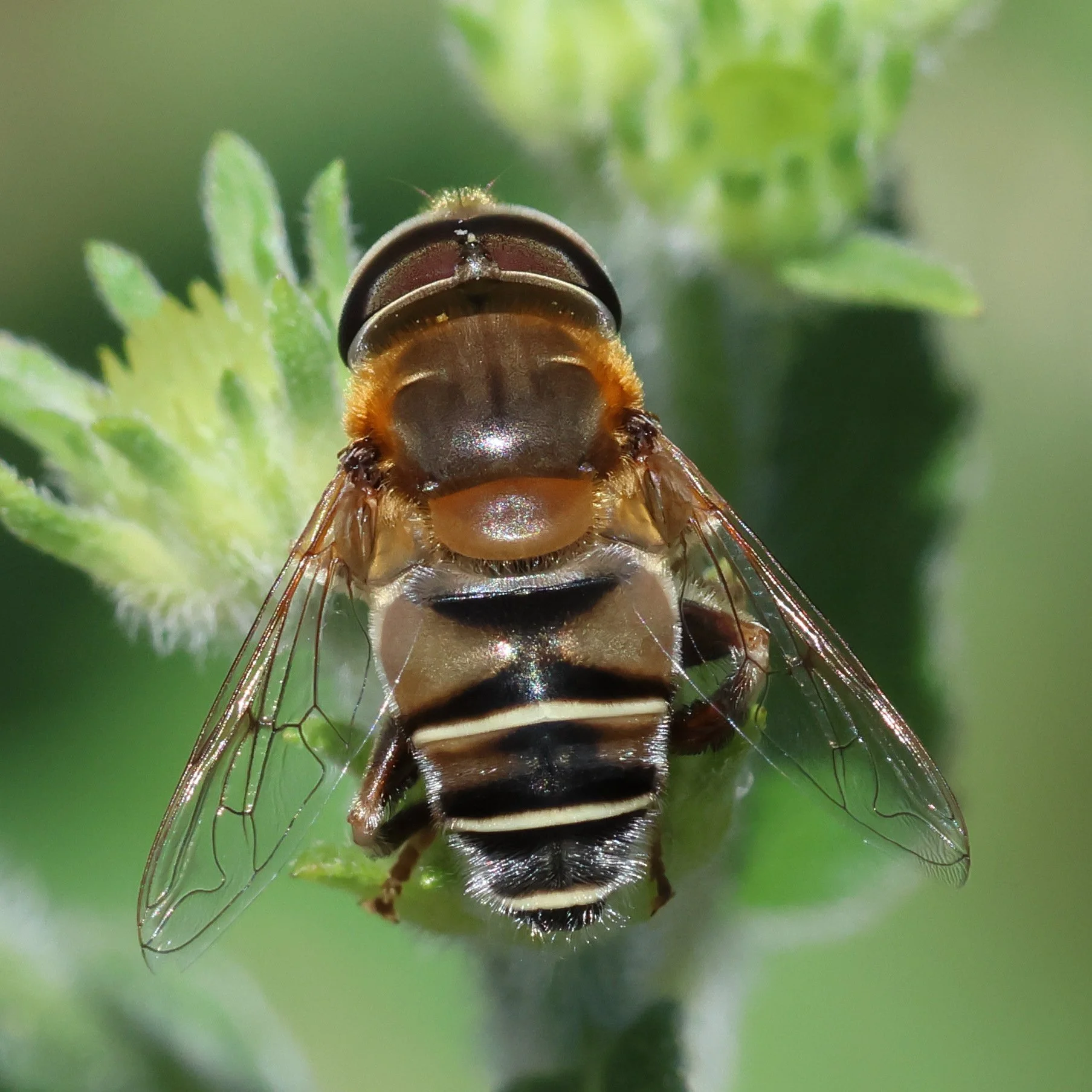
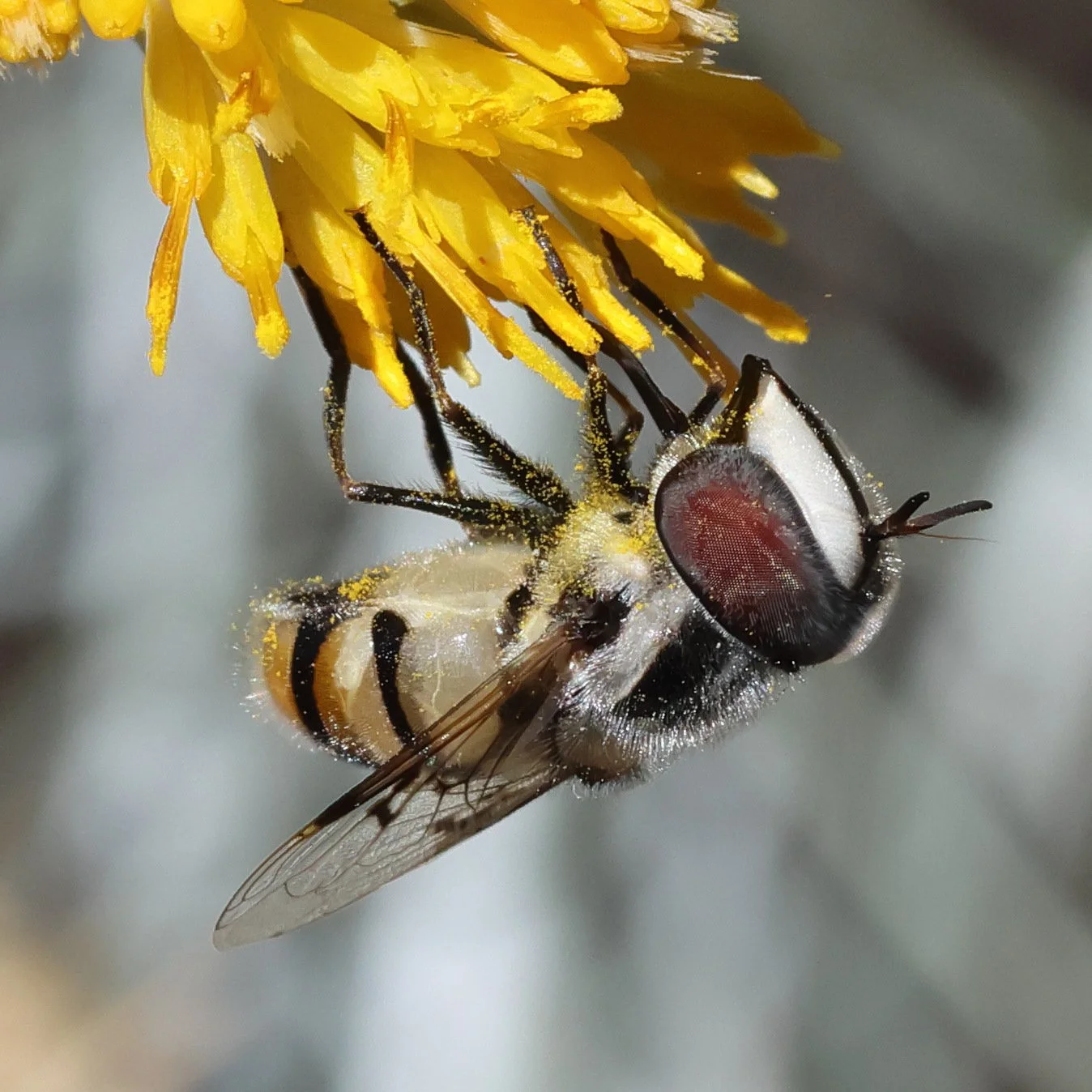
When preparing to perch, bee flies generally slow their flight and perform a soft landing. The actual landing, not only on the ground but at nectar blossoms, is typically horizontal with little or no ensuing movement. This is in apposition to syrphids, a group whose members land abruptly, often vertically on the sides of inflorescences, routinely pumping their abdomens and as mentioned above, variously changing their position and/or location. Closer inspection will also reveal a syrphids' lack of a long proboscis and the presence of wing-veins parallel to the posterior edge of the wing, a characteristic lacking in bee flies. More wasp-like abdominal patterns, with contrasting bright yellows, blacks, and even reds, are also common in syrphid flies; bombyliids tend to have more muted coloration.
Aggregation flights, single or multispecies swarms associated with feeding or group movements, are known for many insect groups; i.e., social bees (Hymenoptera), caddisflies (Trichoptera), Lepidoptera such as the Monarch butterfly, and stoneflies (Plecoptera), but are arguably best developed in the true flies. This behavior is seen in more primitive dipterans (Nematocera), as well as more advanced families; i.e., some horse flies (Tabanidae) and soldier flies (Stratiomyidae), but is unknown in bombyliids.
Many bee flies produce sounds in flight; others produce no audible sound. With practice, some insect groups can be identified by the pitch, duration, and timbre of their sounds. For example, robber flies, not typically nectar feeders, have shorter forays when hunting and therefore shorter bursts of sound. Honey bees fly slowly with a prolonged flight while seeking nectar and their sounds tend to be lower pitched and longer in duration. Bee flies in the subfamily Bombyliinae tend to have a long proboscis and hover while taking nectar. This prolongs their flight sounds; small species in this subfamily make very high-pitched, lengthy sounds and can clue the observer as to their presence. These species can sometimes be identified by their sounds alone, at least to genus.
The Bombyliidae, bombyliids, or bee flies, are but one family of flies in the order Diptera. As the scientific name suggests, all members of this order have two wings (one pair), more specifically, the front wings. The hind wings in all flies, not just bombyliids, are modified into halteres, moveable structures serving, at least in part, as balancing organs like mini-gyroscopes. A haltere resembles a rod with a round or egg-shaped ball at the end. Its form and color may be important characteristics for identification. The front pair of wings is responsible for flight and the movements of these wings, as far as is known, are governed by indirect muscles; i.e., muscles are not directly associated with the wings but trigger rapid changes in the shape of the thorax—the box-like portion of the body to which the wings and legs are attached.
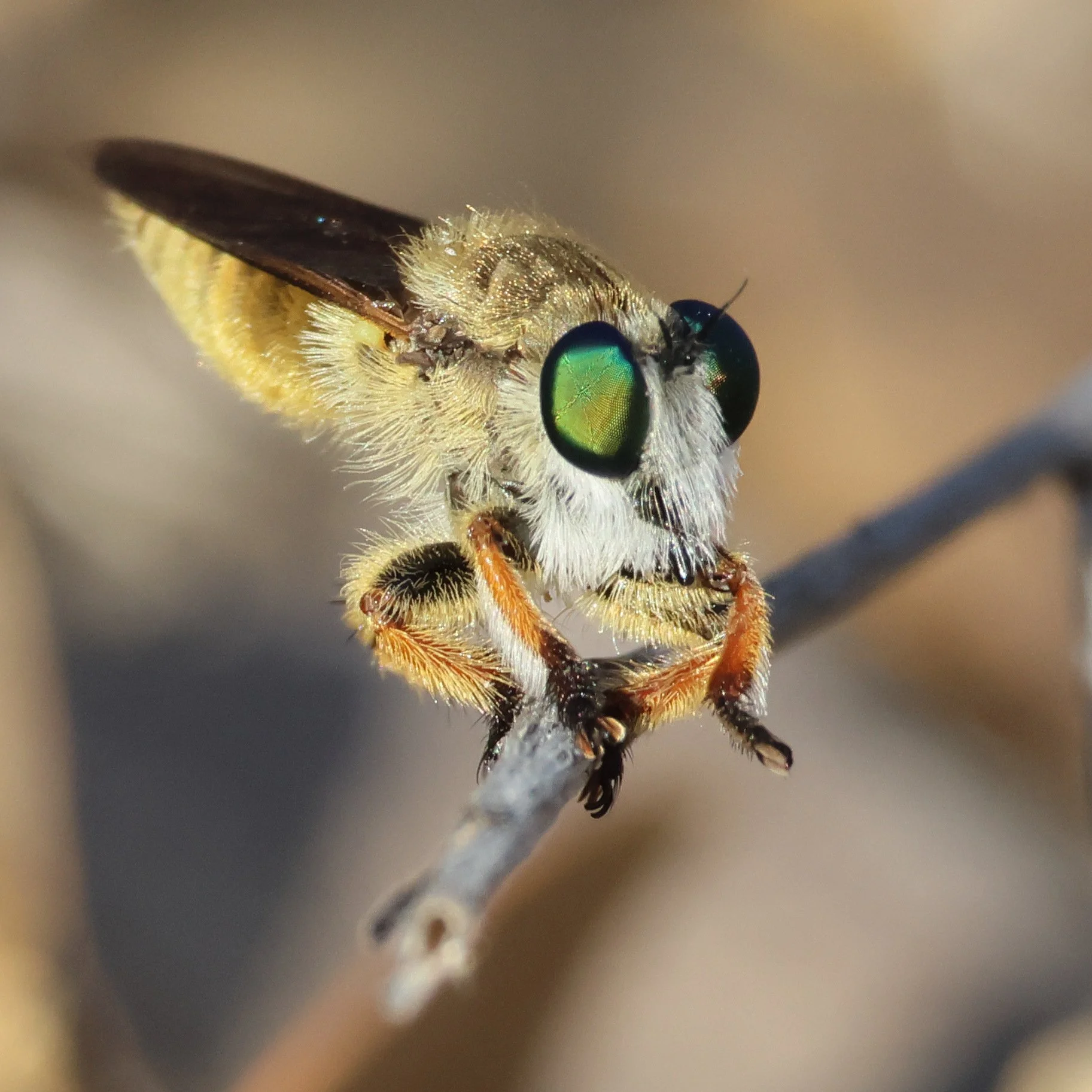
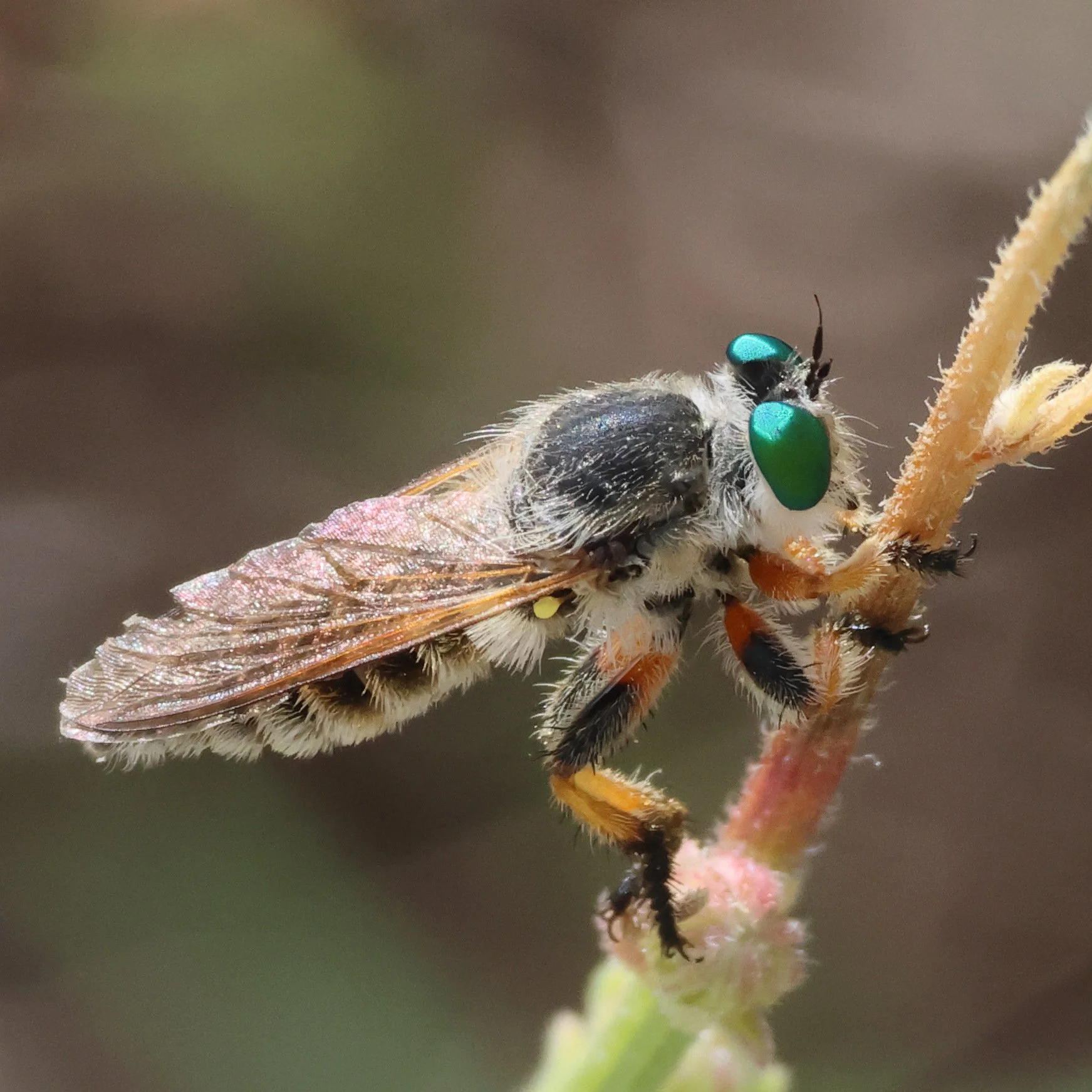
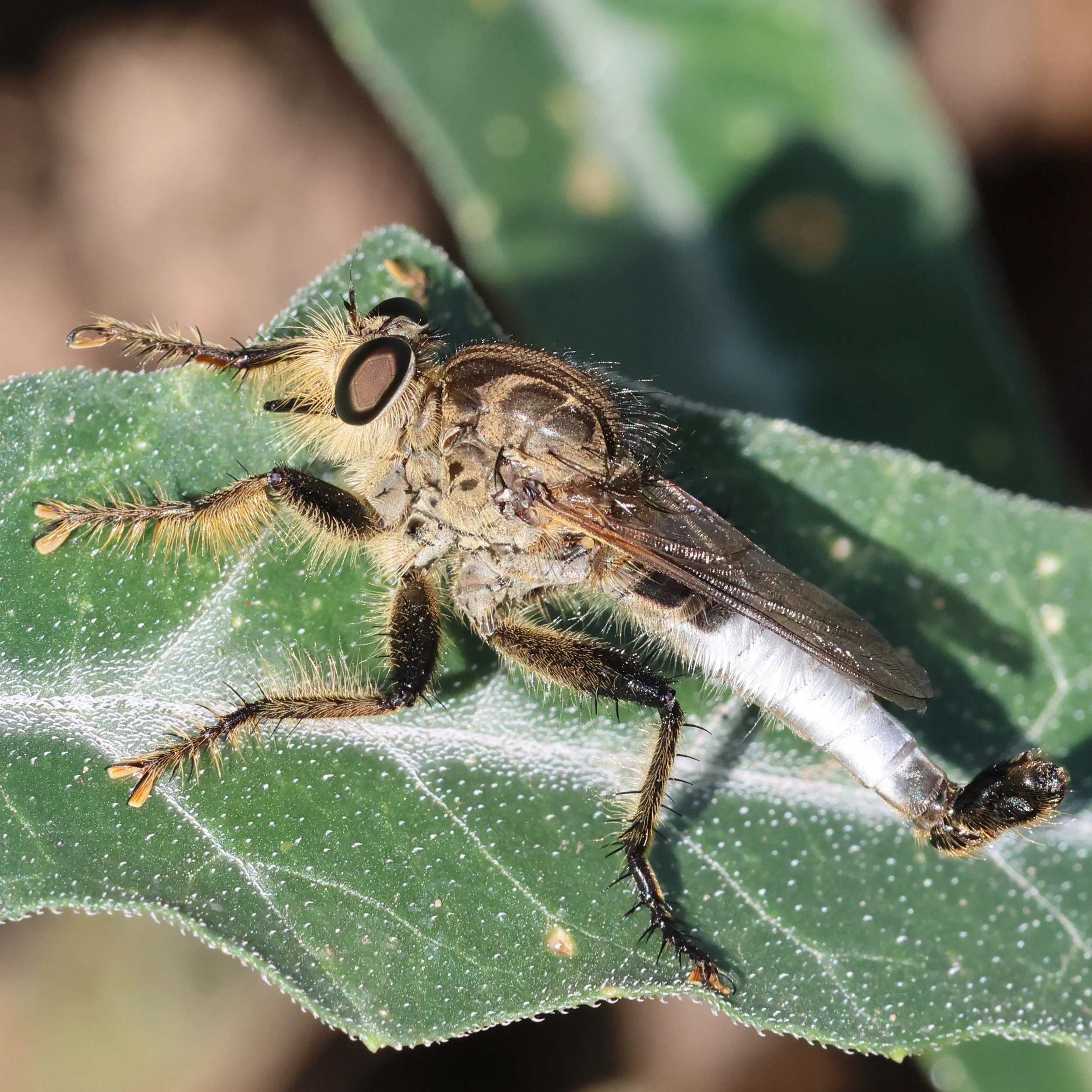
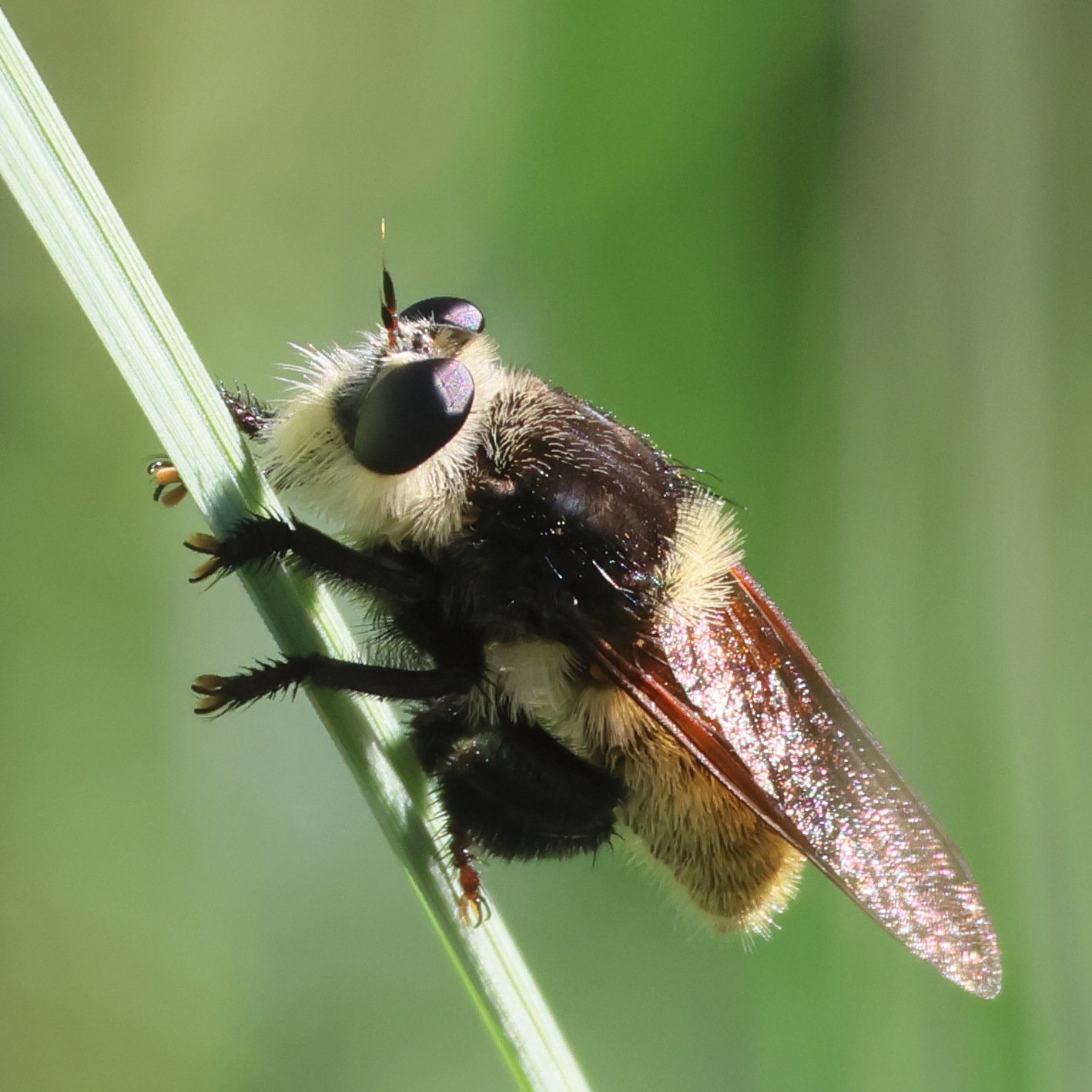
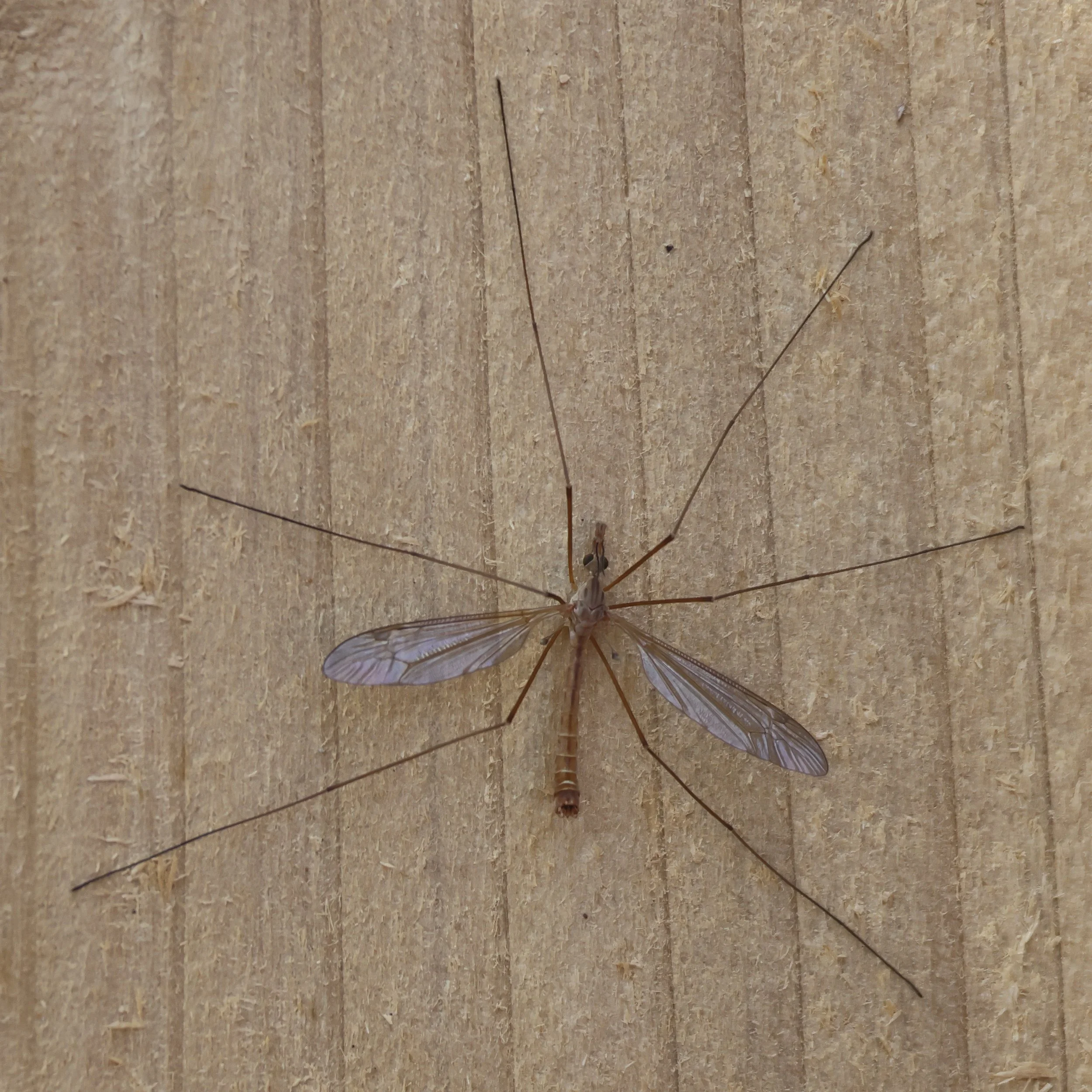
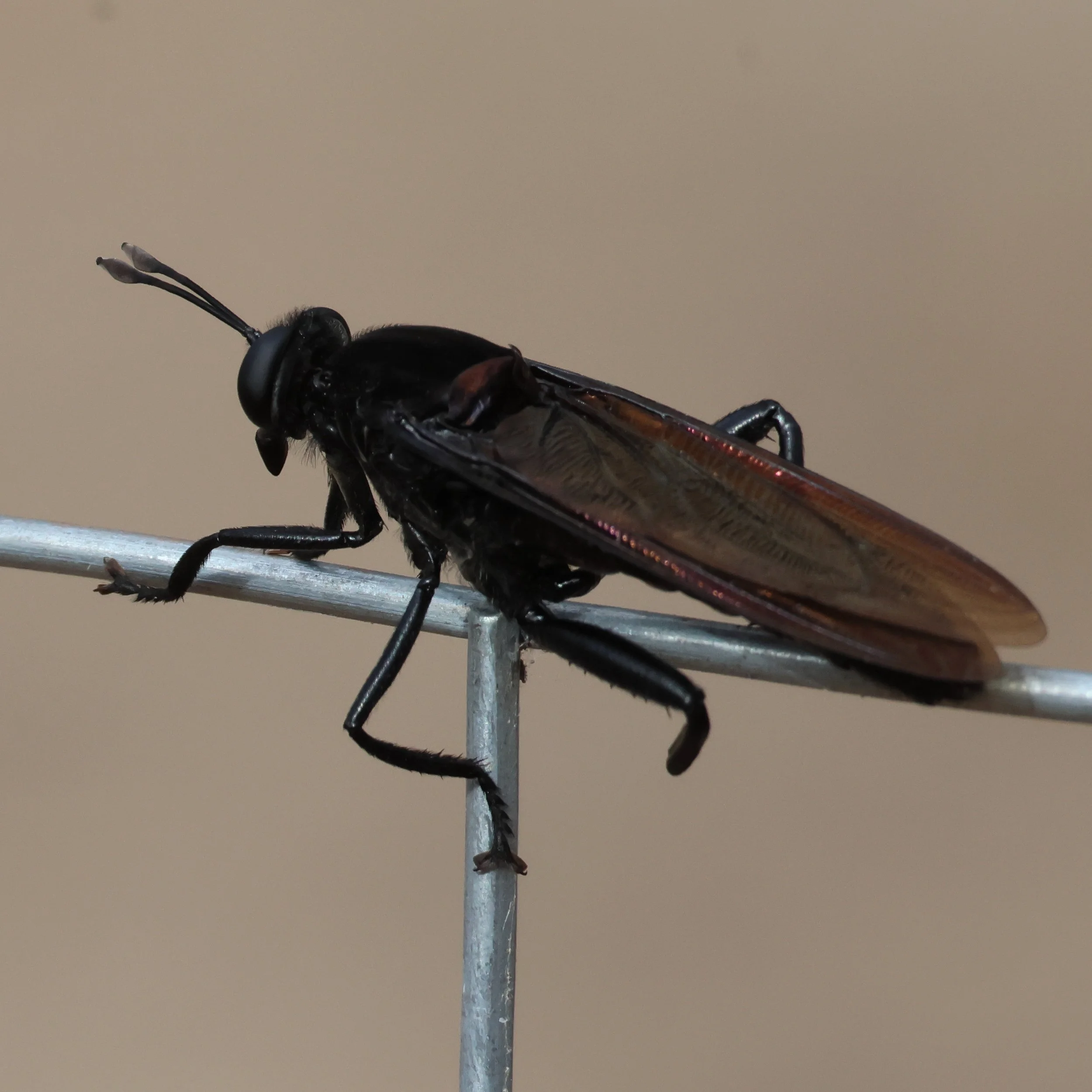
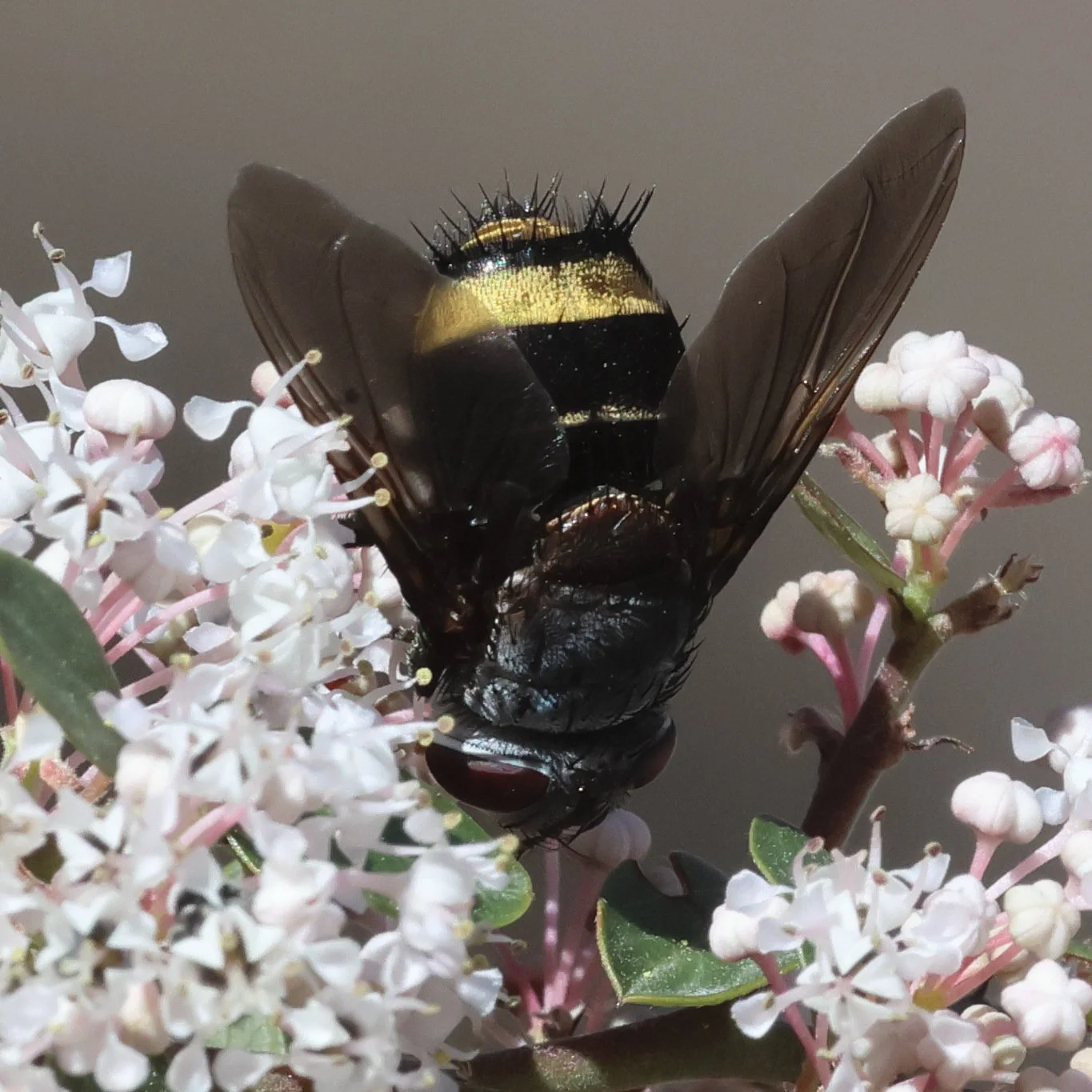
In North America, there are at least 106 families of flies (Borror et al. 1981). According to recent tabulations (Evenhuis & Greathead 2015), some of the world’s most diverse dipteran families include the crane flies (Tipulidae: over 10,000 species), tachinids (Tachinidae: around 9,600 species), hover or flower flies (Syrphidae: about 6,100 species), robber flies (Asilidae: about 7,500 species), and bee flies (Bombyliidae: almost 4,800 species). Most recent lists of bee flies from the Nearctic (the New World north of the tropics; i.e., northernmost Mexico, the U.S.A. and Canada) suggest a fauna of more than 800 species. Bombyliids belong to the superfamily Asiloidea. As such, they are closely related to predatory families including the robber flies and mydas flies (Mydidae). However, as adults, bee flies are not predatory. Of those 800+ North American species, a large percentage occur in the American Southwest and adjacent northwestern Mexico. Due to the family's predilection for dry climates, and the region’s diverse habitats (see below) upwards of 220 taxa have been identified in southeastern (SE) Arizona alone. Additionally, dozens more have been cited in publications but, for various reasons, have not yet been reliably identified from the region. An additional cluster of taxa, representing species from many genera, remains undescribed. They await being “new to science” but as yet there are insufficient specimens, genetic data, photographs, and other pertinent information upon which to base descriptions.
Robber Flies
Crane Fly
Midas Fly
Tachinid Fly
Horse Fly