
Genus Thyridanthrax
Thyridanthrax fenestratoides

The wings on this 8mm long species are 50% infuscated with black. There are windows at the crossveins and clouding between the costa and subcosta. The anal and axillary cells are not entirely black, and the alula is hyaline. Contrast it with T. selene and T. minusculus.
Range: PIMA, PNAL
Occurs: Late March to Late May, Mid-September to Early October
Thyridanthrax luminis

The wings of this species are the least maculated in the genus, as there are very large windows and hyaline costal, anal and axillary cells. White abdominal rings are present on T3-7. There appear to be two flights, at least in some years.
Range: COCH, GRAH, GREE, PIMA, PNAL
Occurs: Late April to Mid-May, Mid-August to Early September
Thyridanthrax melanopterus

At least recently, there are very few regional records of this species, it being more common in southwestern New Mexico. Nearly the entire wing is infuscated except for windows at the crossveins.
Range: COCH, GRAH, GREE, PIMA
Occurs: Late March to Mid-May
Thyridanthrax “minusculus”
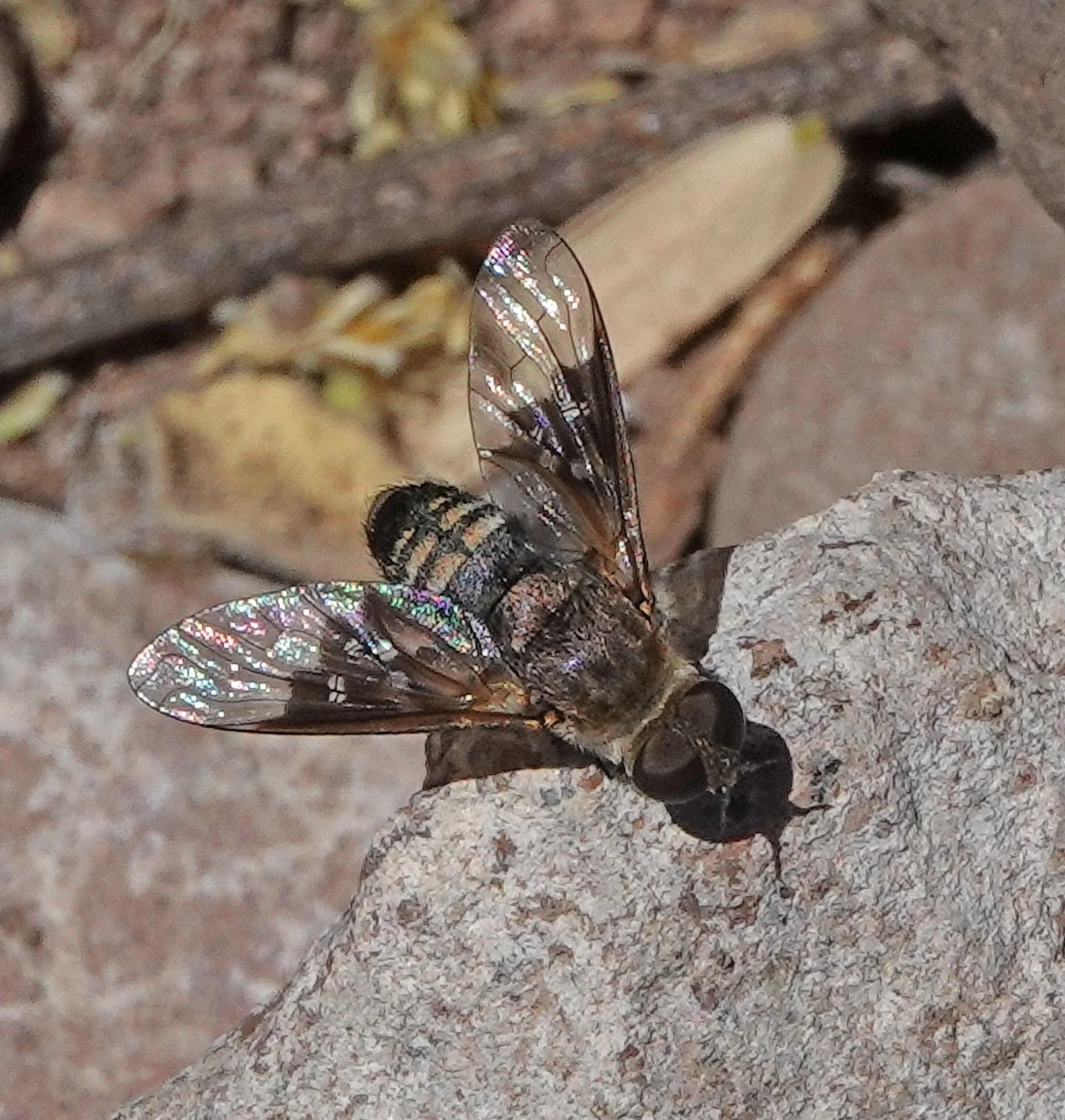
This is a very small species (description in prep), with a body size of 4-6 mm. Consistently, there are 5 well-defined doubled windows in the dark infuscation. It is crisply patterned, like a miniature T. fenestratoides but the axillary cell and alula are hyaline and most of the anal cell and the costal cell are only weakly infuscated, if at all. Watch for it on flowers of Graythorn (Ziziphus) and various spurges (Euphorbia). Occasionally occurs in numbers.
Range: COCH, GRAH, PIMA, PNAL
Occurs: Mid-May to Mid-July
Thyridanthrax pallidus
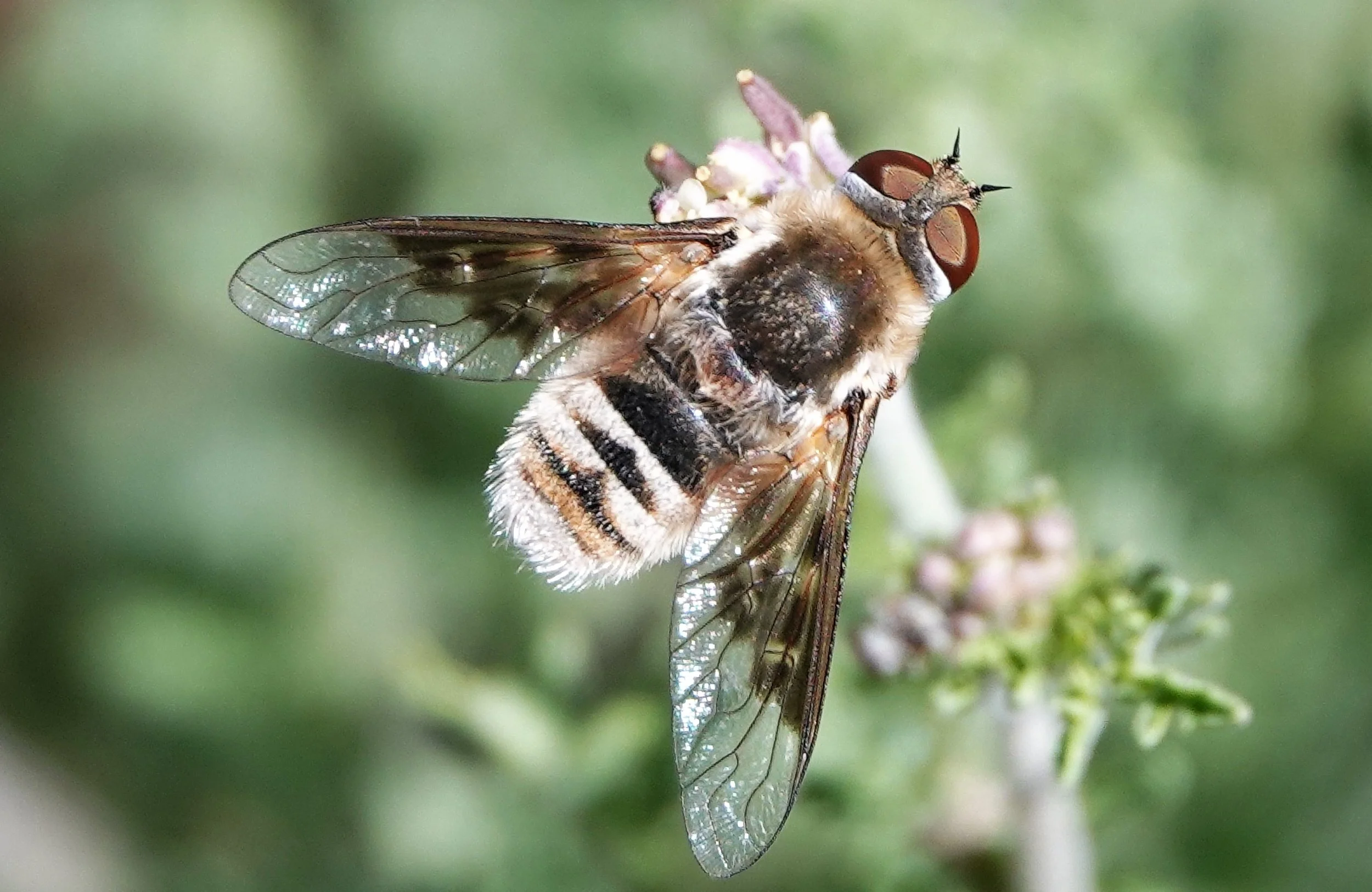
This familiar spring flier is the region’s most common and widespread Thyridanthrax. The smudged infuscation includes the anal, axillary and costal cell. Note the species' predilection for low growing spring flowers.
Range: COCH, GRAH, GREE, PIMA, PNAL
Occurs: Mid-March to Late May
Thyridanthrax pertusus

With a more open wing pattern than T. pallidus, this species is similar to T. nugator and almost as pale as T. luminis. Note the black infuscation in the center of the anal and axillary cells as well as basally in the costal cell but the basal half of the discal cell is hyaline. The species sometimes perches on vertical surfaces.
Range: COCH, GRAH, PIMA
Occurs: Late February to Early October
Thyridanthrax selene

The body of this mid-spring flier is 7-10 mm long. Wing infuscation is extensive and dark, perhaps 60%, and the dark color includes some of the windows' crossveins. The anal and axillary cells are entirely black, and the alulae are hyaline. Compare to T. fenestratoides.
Range: COCH, GRAH, GREE, PIMA, PNAL, STCR
Occurs: Late March to Late May
Additional potential species include T. nugator.