
Genus Thevenetimyia
Thevenetimyia affinis
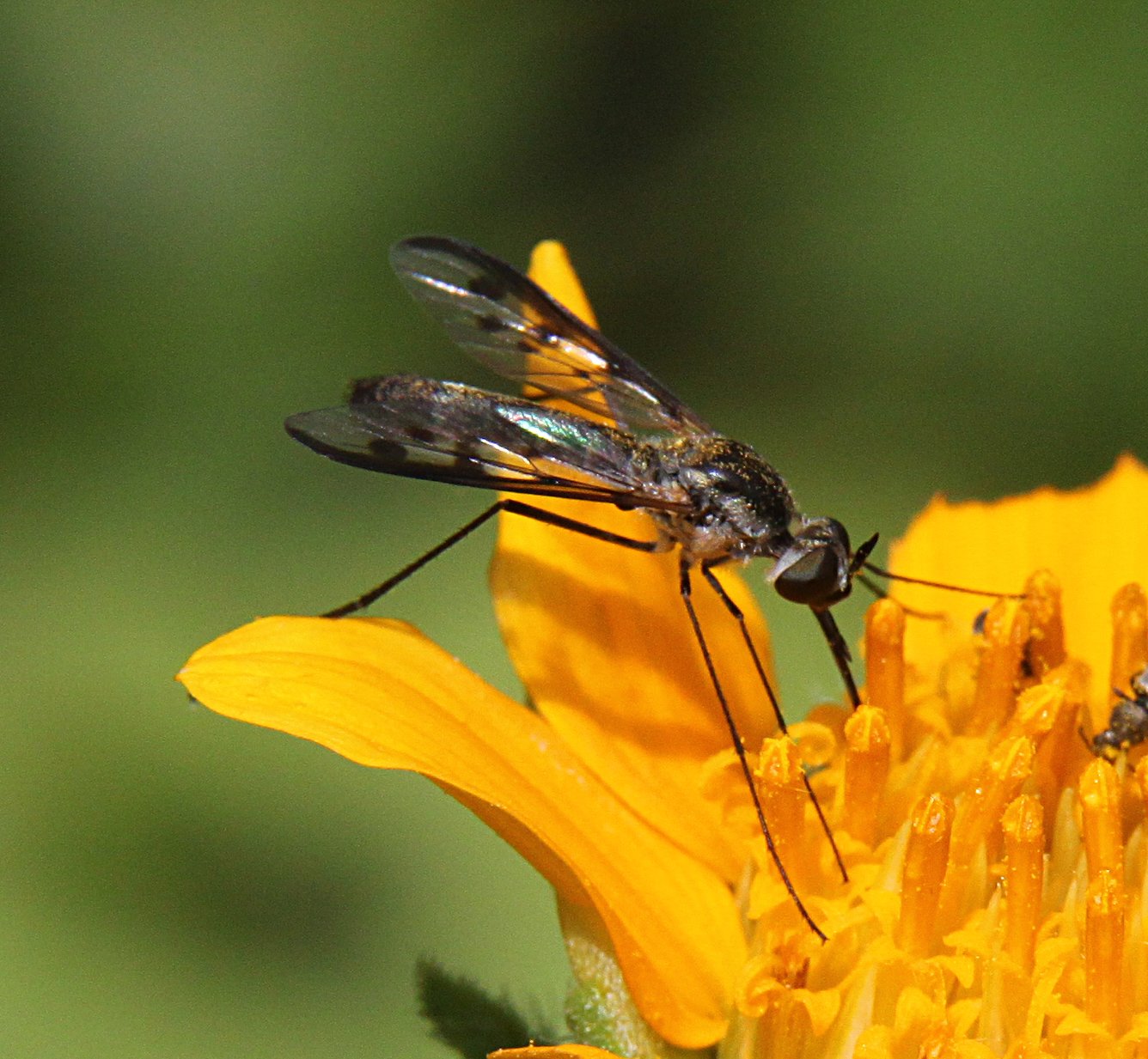
Spindly and mosquito-like, this species has wings with a dark leading edge and a small array of dots. It is most often seen perched on composites and is regularly near or beneath the riparian canopy.
Range: COCH, PIMA, PNAL, STCR
Occurs: Late August to Late October, One Record in Mid-March
Thevenetimyia canuta
The few regional reports have all been from the E side of the Huachucas. This is a large species with mostly dark wings but clear wingtips. It is decidedly rare in the region.
Range: COCH
Occurs: Early August, Early October
Thevenetimyia culiciformis

Usually wispier even than T. affinis, this species has wings which are nearly hyaline but with a small amount of dotting toward the costa. It is quite small, not much larger than a mosquito, from which the species name is derived. Adults visit shrubs for nectar, especially composites, and frequently perform the hesitation dance.
Range: PIMA, PNAL, STCR
Occurs: Mid-August to Early November
Thevenetimyia maculipennis
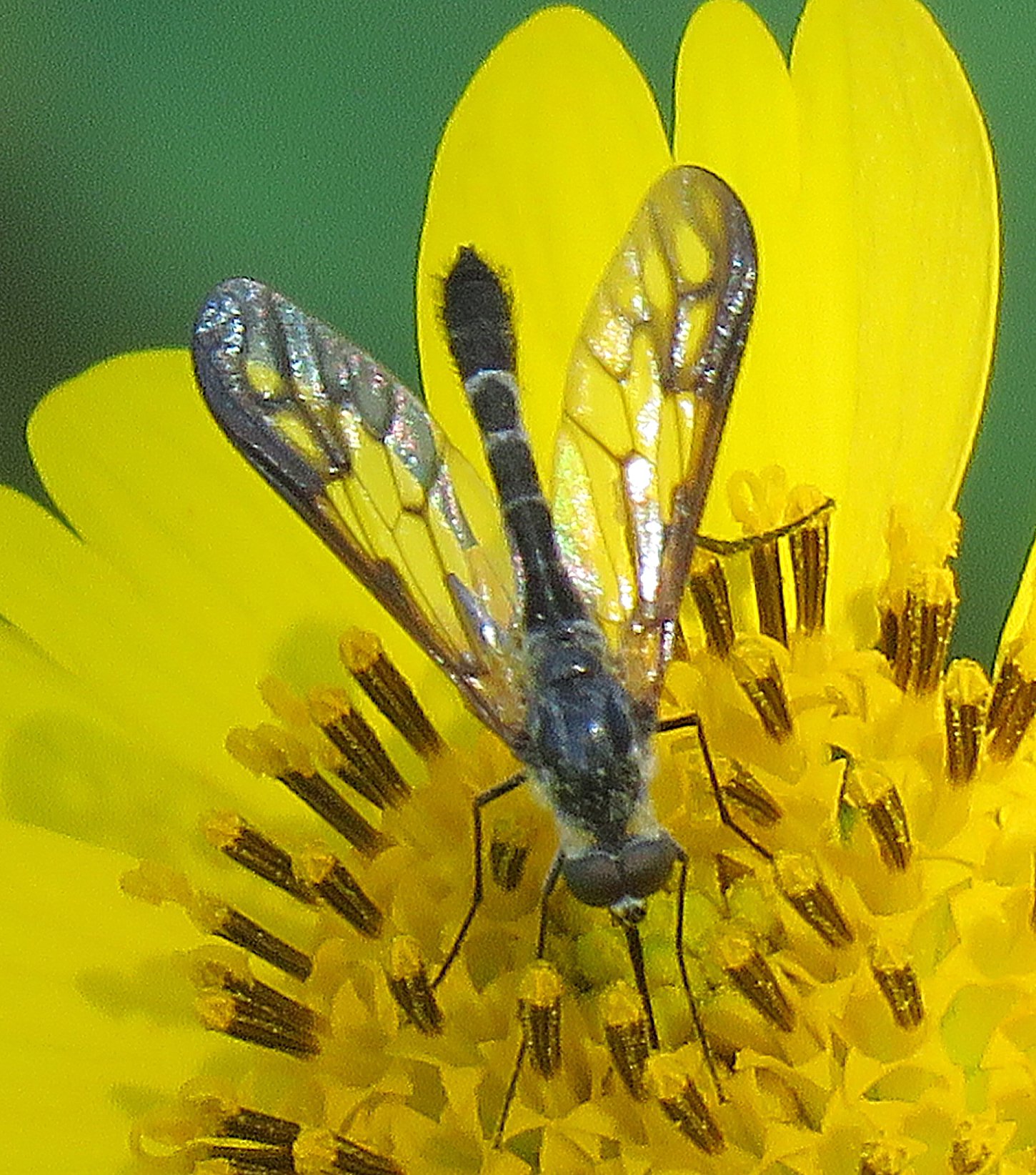
This is one of the larger and more robust species in the genus. For the most part, the wings are not dotted but patterned on the veins, especially toward the wingtips. The thorax and abdomen are mostly shiny black. It is regular at nectar, especially at camphorweed.
Range: COCH, GRAH, PIMA, PNAL, STCR
Occurs: Early August to Early October
Thevenetimyia speciosa
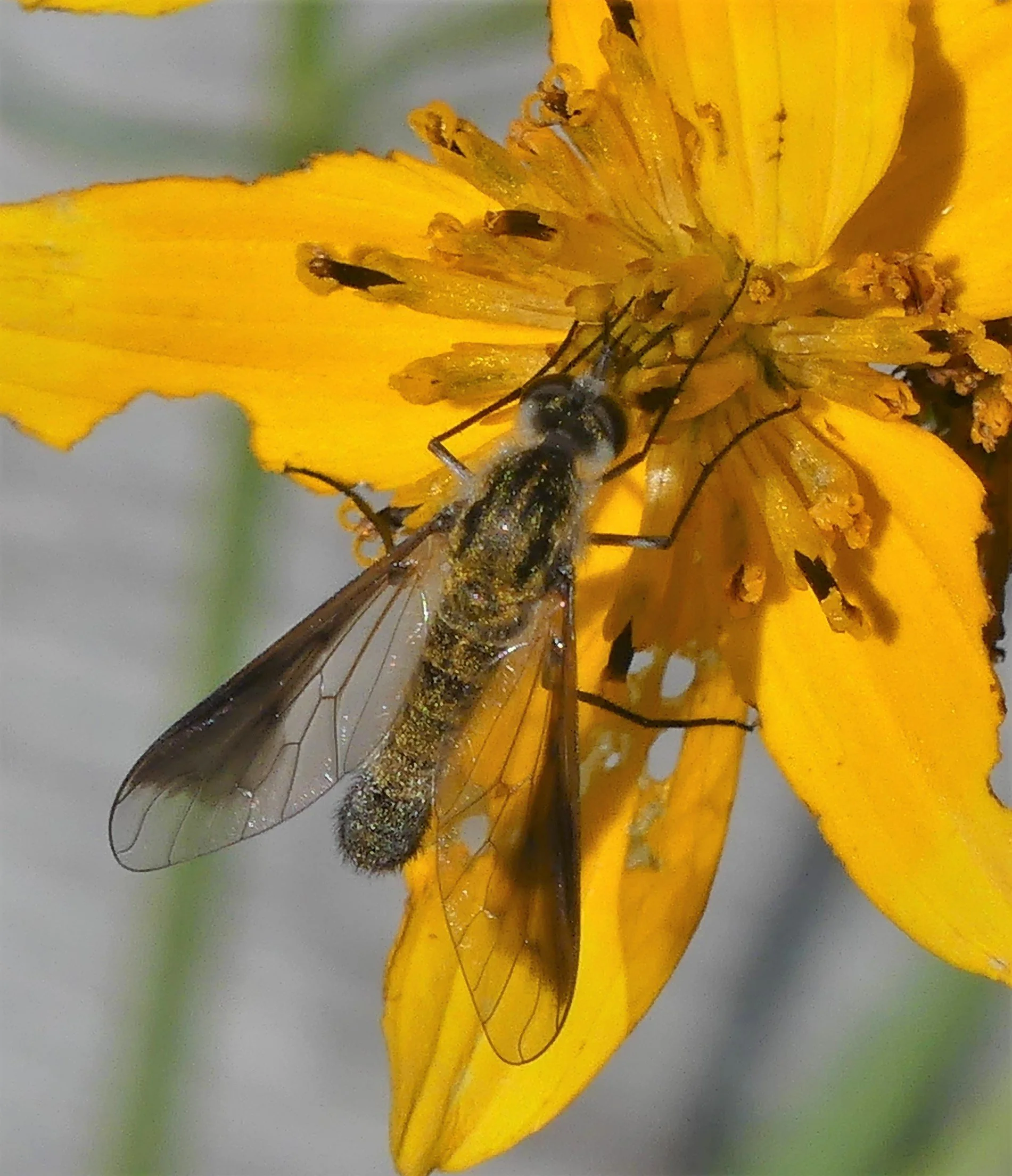
The wings on this species have a unique dark, elongated, triangular patch along the costa. There is extensive golden pile on the thorax and abdomen. Adults are often encountered in tall composites; e.g., Viguiera, Verbesina, and Tithonia.
Range: COCH, GRAH, PIMA, PNAL, STCR
Occurs: Mid-September to Mid-November
Also reported from the region is a specimen of T. magnus from Tucson during the 1920s and a singleton of T. fascipennis in Portal during the 1960s.