
Genus Poecilanthrax
Poecilanthrax apache
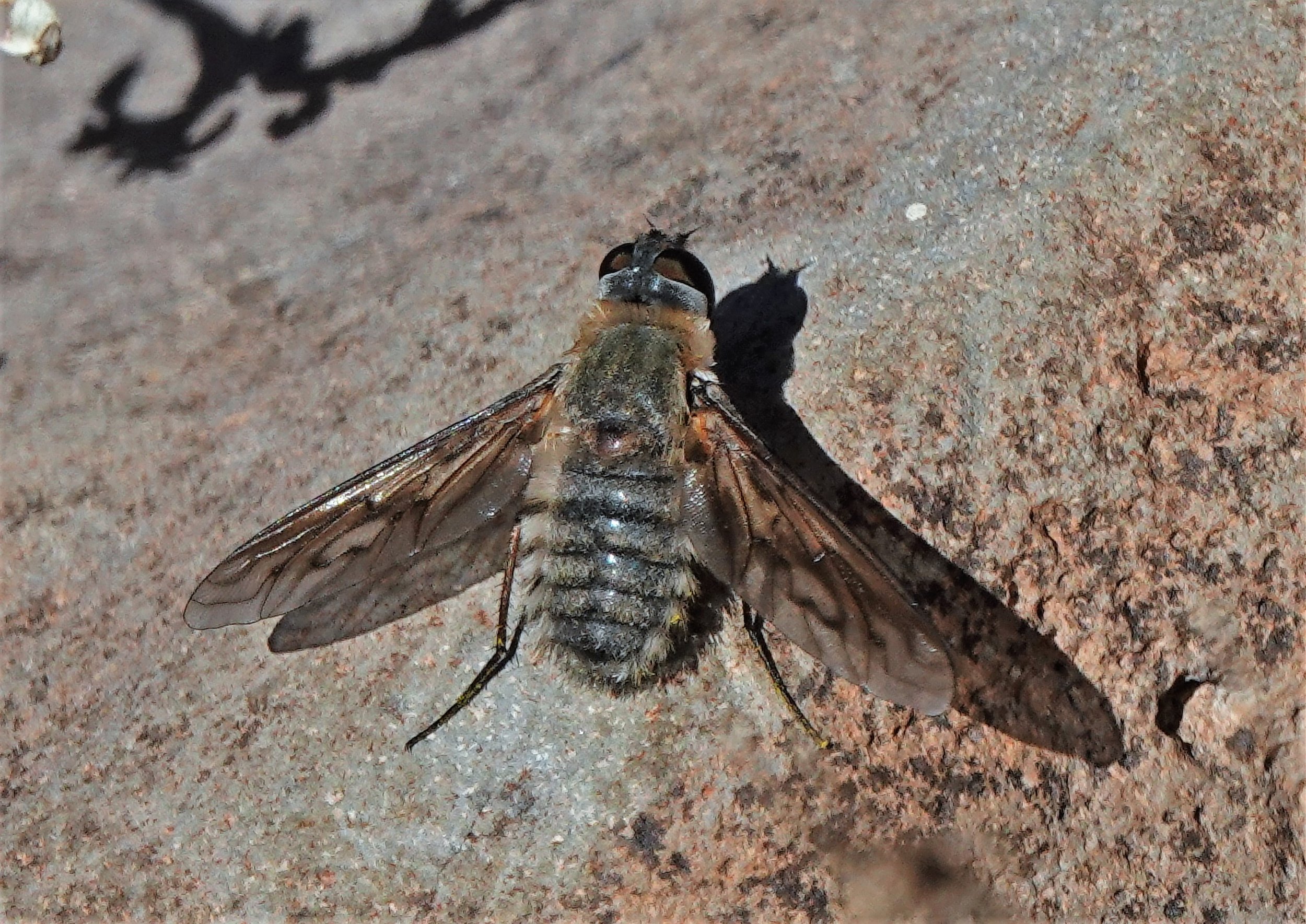
The wings are mostly smoky gray overlain basally with chocolate brown. Each abdominal segment shows alternating tufts of long black and tan lateral pile. Dorsally, the abdomen is banded in black and silver-gray. Care must be taken in separating it from P. californicus.
Range: COCH, GRAH, GREE, PIMA, PNAL, STCR
Occurs: Late September to Early November
Poecilanthrax arethusa
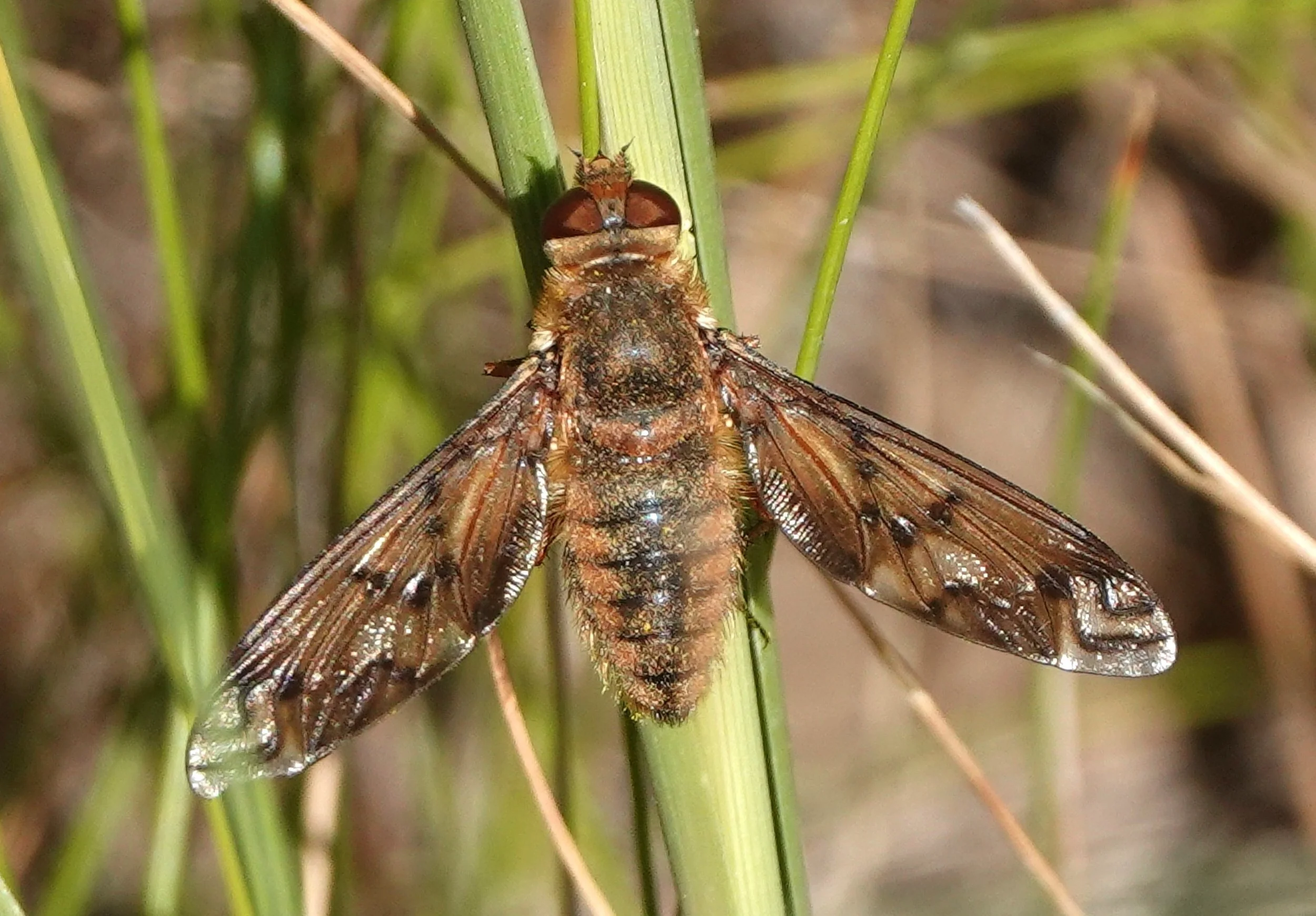
The wings are largely patterned in brown but most of the abdomen, face, and some of the wing is orange, and the wingtips are black and hyaline. Typically, the stump vein in the 3rd posterior cell is complete, giving this species what appears to be 5 posterior cells. Although this species has a long flight period, it is far more common late in the season than it is earlier.
Range: COCH, GRAH, PIMA, PNAL, STCR
Occurs: Mid-July to Late October, Early April to Early June
Poecilanthrax californicus
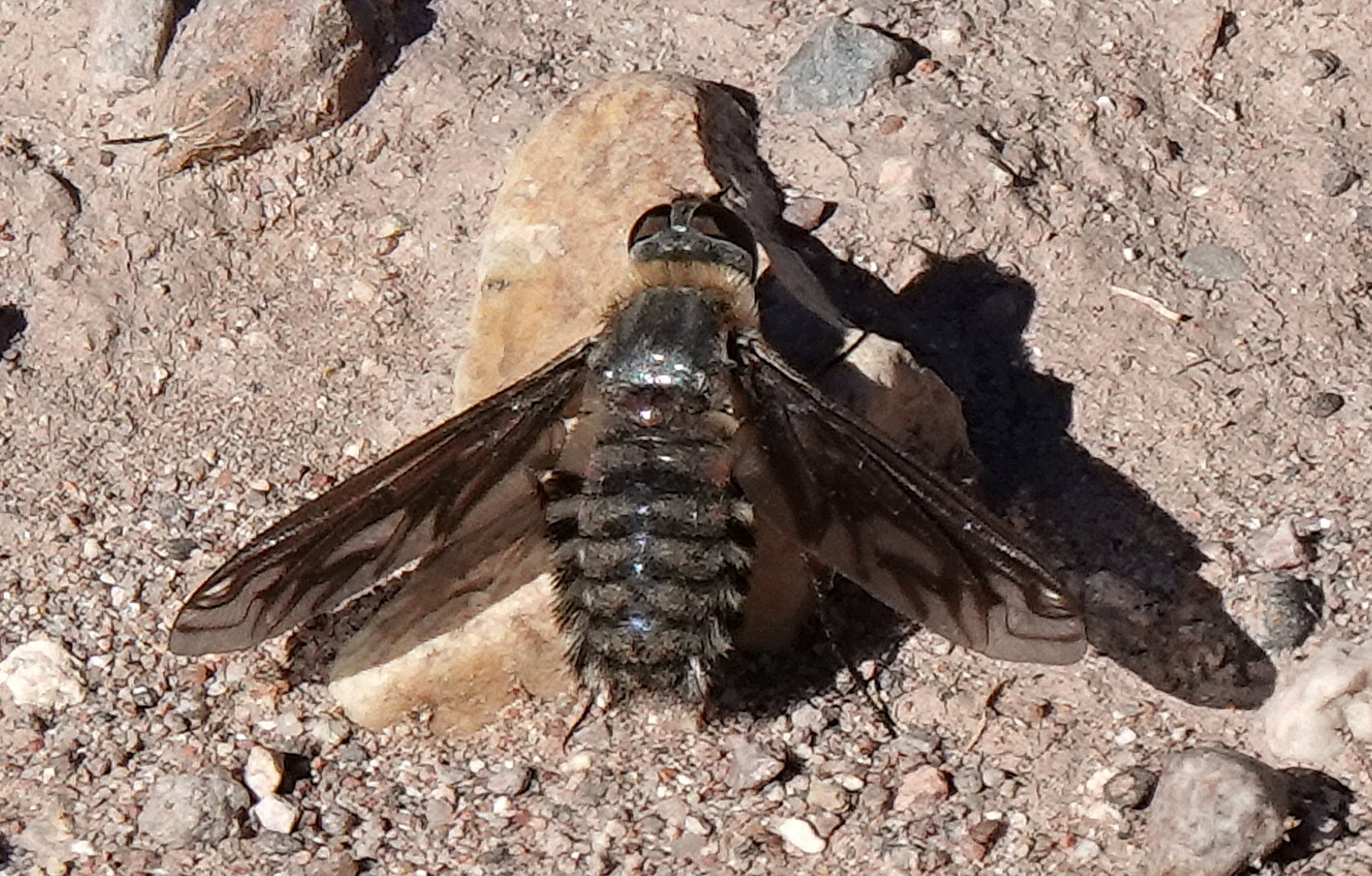
The wings of this species are charcoal overlain with a black pattern so in general, it appears similar to P. apache. It differs from apache, however, in its lack of a chocolate brown wash on the wings, the upright black pile on the gray abdominal segments, and the more pronounced chestnut collar and scutellum.
Range: COCH, GREE, GRAH, PIMA, PNAL, STCR
Occurs: Late September to Mid-November
Poecilanthrax effrenus

The red veins on the wings on an otherwise dark background are diagnostic for this species. Also note the scant hyaline spotting and the red and black abdomen. It can be especially common in late June in grasslands just east of Sierra Vista.
Range: COCH, GRAH, PIMA, PNAL, STCR
Occurs: Mid-June to Mid-August, One Late September Record
Poecilanthrax hyalinipennis
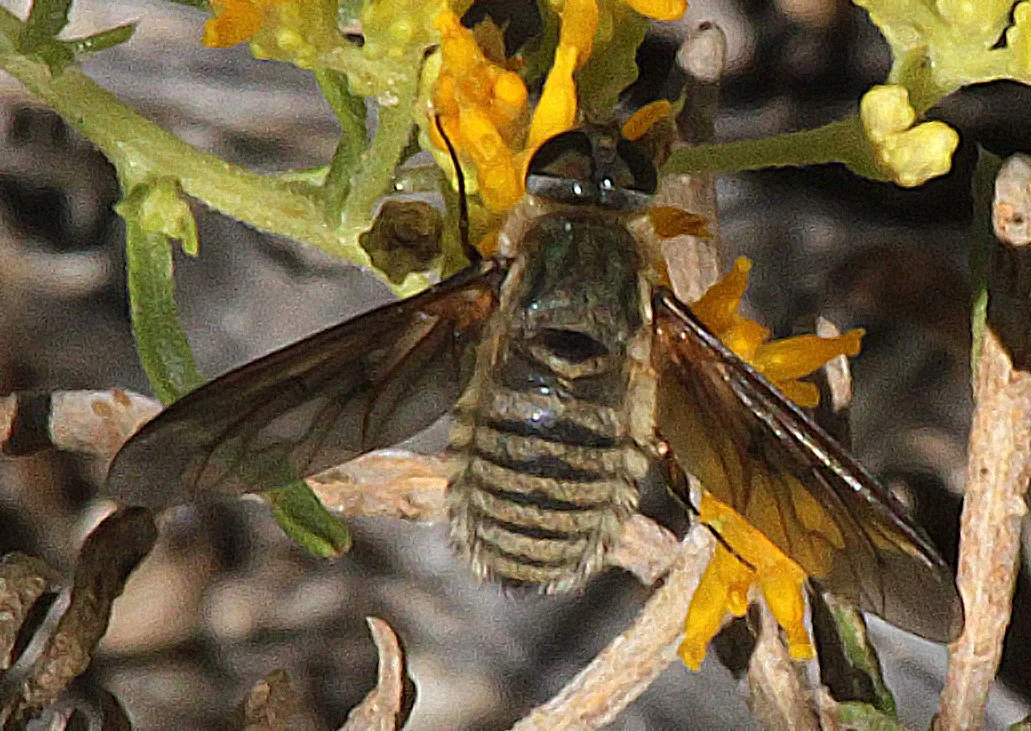
Although this species has been cited in the literature from much of the region, there is only a single record known, photographed at Roper Lake. The wings are uniform gray, with some red veins anteriorly. The abdomen lacks red, and the lateral pile is entirely white.
Range: GRAH
Occurs: Late September
Poecilanthrax ingens

This uncommon species is the largest regional member of the genus, with a body length of 12 mm or more. The wings are mostly dark with very little hyaline spotting; occasionally, there are patches of red toward the leading edge. Both the thorax and abdomen have obvious lateral orange and black pile. Because of its dark wings, size, and elevational preferences, it may be confused with Exoprosopa fumosa. Most of the regional reports are from the Huachuca Mtns, where it comes to damp soil and nectars on blossoms of various flowers including milkweed.
Range: COCH, PIMA, STCR
Occurs: Late July to Mid-September
Poecilanthrax poecilogaster
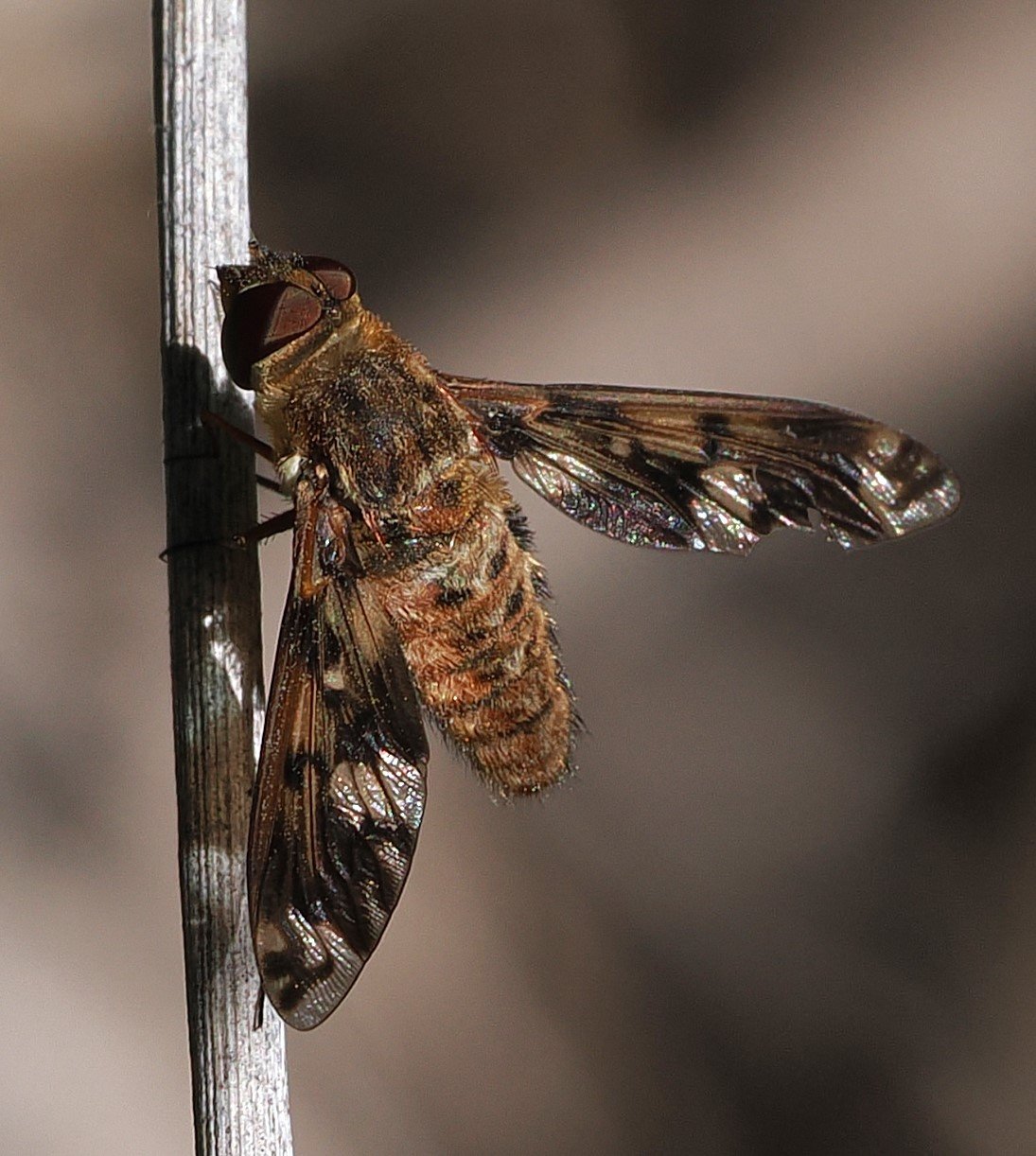
This is the most common regional member of the genus, and sometimes dozens can be seen in a day's outing. In general, it is fairly large, but individual body lengths range from 7-11 mm. The intricate wing pattern of brown on hyaline and the brick-red ground color of the abdomen help to identify it.
Range: COCH, GRAH, PIMA, PNAL, STCR
Occurs: Early April to Early June, Mid-September to Late October
Poecilanthrax willistonii
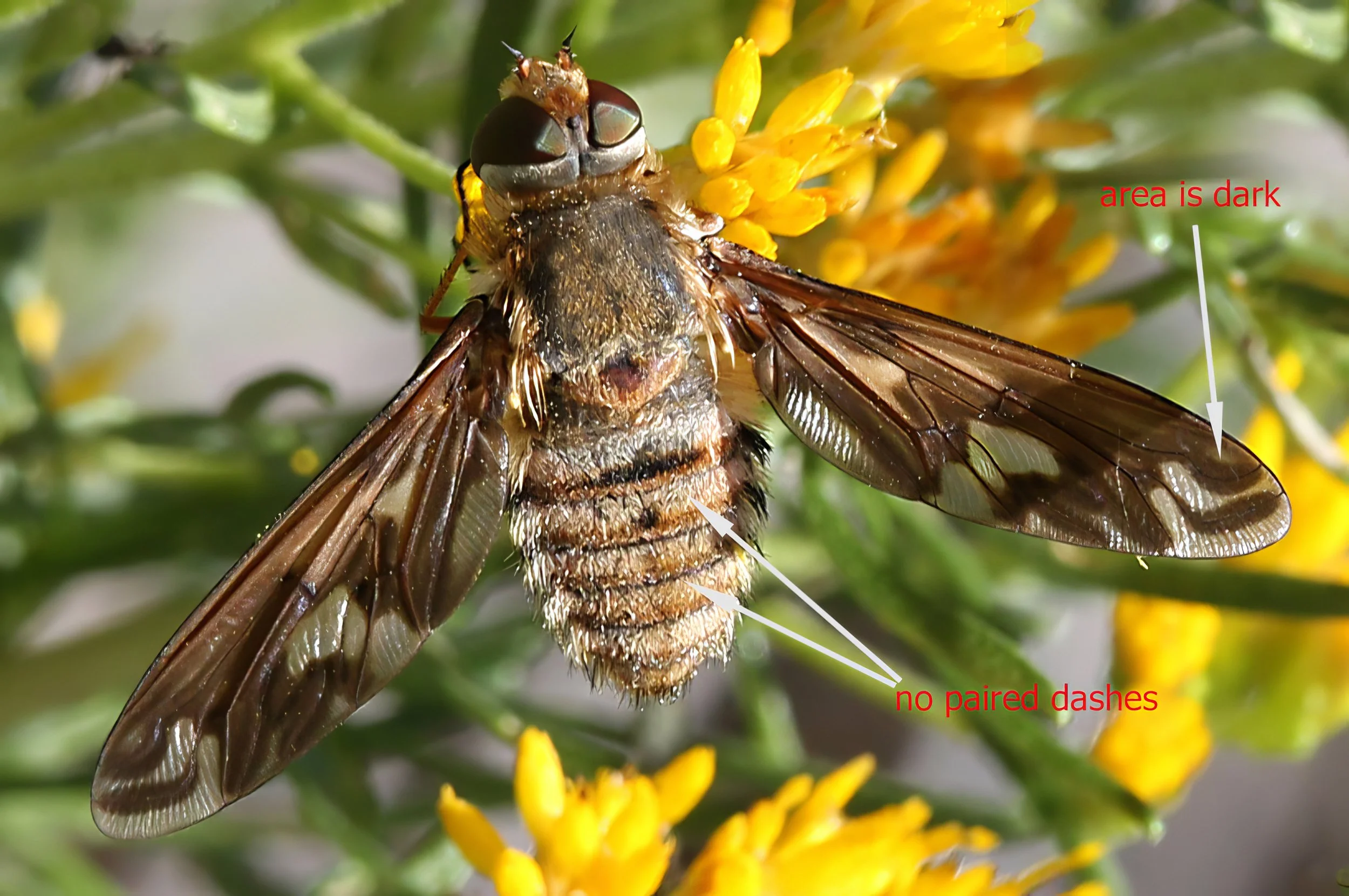
Predominantly a northern and western species often associated with sand dunes, this insect greatly resembles P. poecilogaster, but has a flight restricted to the fall. It is most easily separated from that species by the largely hyaline axillary cell and its habitat. Note that the penultimate tergite is lighter in color than the rest of the abdomen.
Range: GRAH, PIMA, PNAL
Occurs: Mid-September to Early November
Other Arizona species of Poecilanthrax without much supporting data from our region may include P. alcyon, P. alpha, P. arizonensis, P. autumnalis, P. eremicus, P. fuliginosus, P. litoralis, P. lucifer, P. marmoreus, P. sackenii, and P. vexativus.