
Genus Paravilla
Paravilla albicera

This mid- to large-sized species typically has a body length of 9-11 mm. The wings have a tan infuscation with a hint of dotted crossveins. The abdomen is also tan, both dorsally and ventrally, and the face and thoracic bristles are orange.
Range: COCH, GRAH, PIMA, PNAL
Occurs: Mid-April to Late May
Paravilla aridula
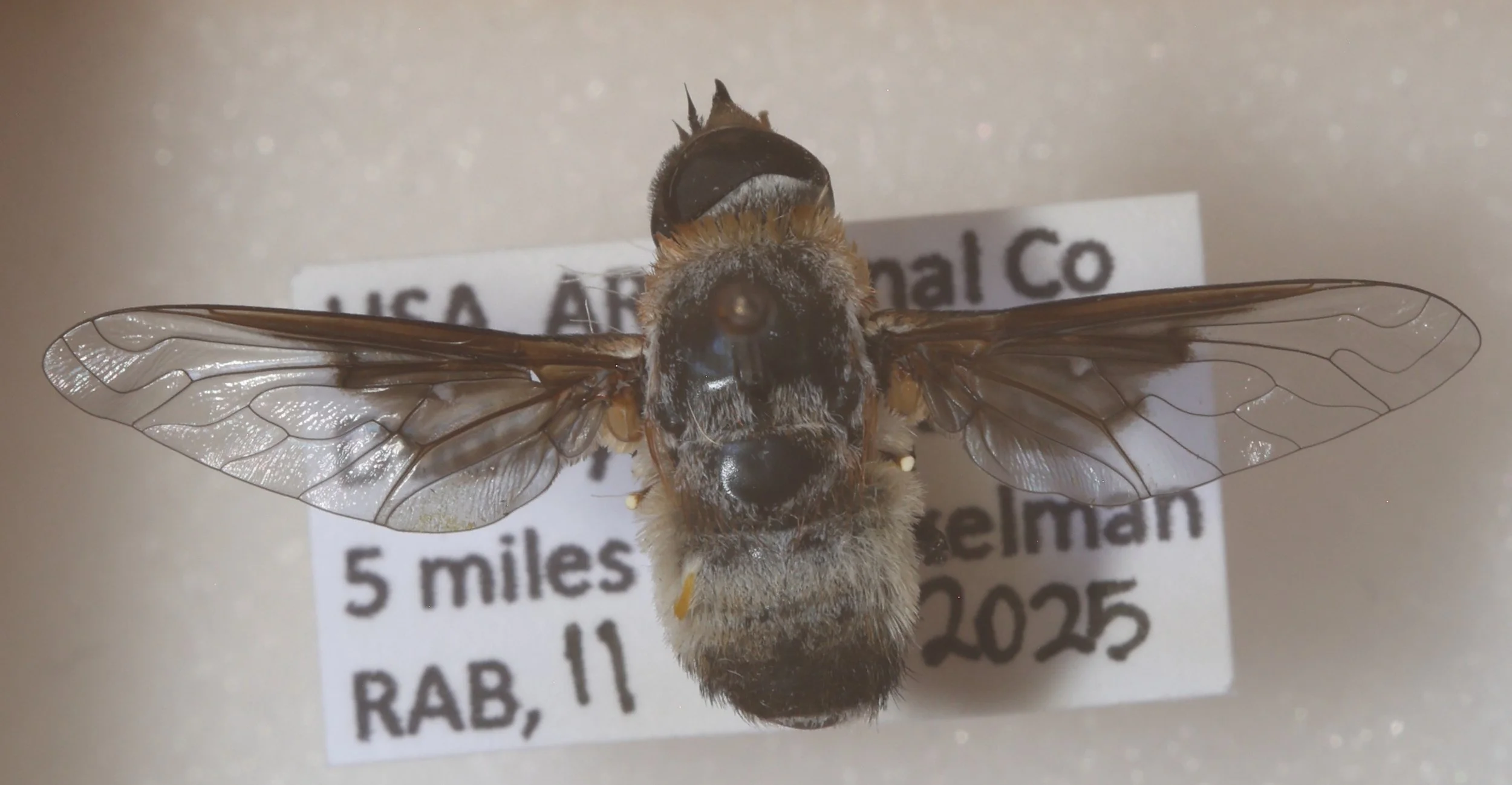
This is one of the larger species in the genus with a body length of 9-12 mm. Approximately 50% of the wing is darkly infuscated. But of special note is the abdominal pattern which consists of light T2 and 3, dark T4 and 5, and light T6 and 7. It is mostly a species of deserts and favors flowers of Bebbia.
Range: GREE, PIMA, PNAL
Occurs: Late August to Mid-September
Paravilla cinerea
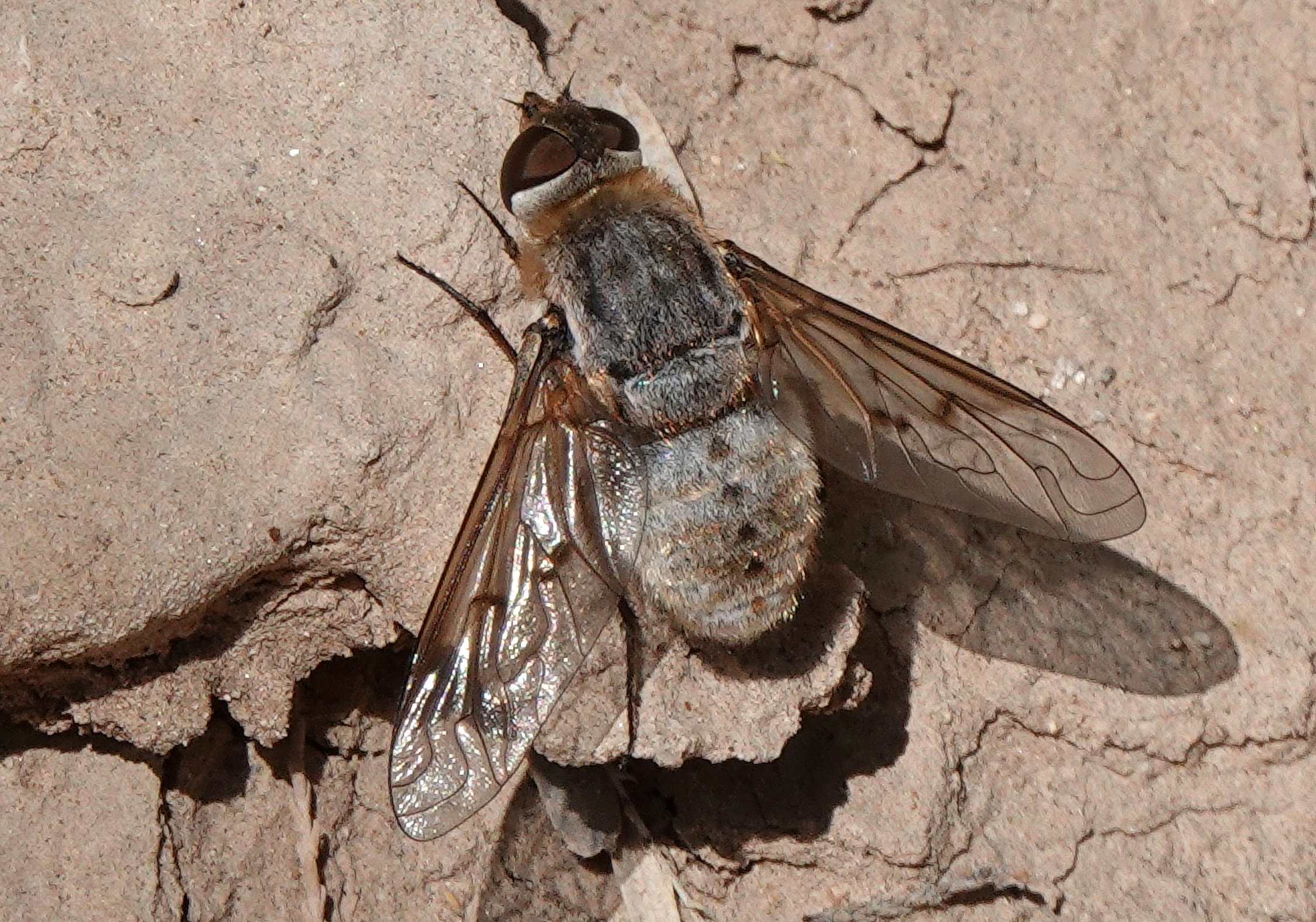
Another of the larger members of the genus is this species, having a body length of 11-13 mm. The abdomen is gray, and the wings display a pale infuscation but with darker spots on the crossveins within that infuscation. They have an affinity for canyons with vertical walls, mostly north and west in the region but have also been reported in gardens in Tucson.
Range: GRAH, GREE, PIMA, PNAL
Occurs: Mid-April to Late May
Paravilla consul

The genus Paravilla contains a number of mid-sized species including this one with a body length of 6-9 mm. The infuscation is pale brown with several darker spots on the crossveins within that infuscation. The abdominal and thoracic venter is black and the thoracic bristles are black. The dorsum of the abdomen is ringed with tan tomentum, most prominently on T2, T3, and T4.
Range: COCH, PIMA, STCR
Occurs: Mid-July to Early October
Paravilla cunicula

In the spring, this is a common inhabitant of the region. It is medium-sized with a body length of 6-8 mm. The infuscation is medium brown. There are two phenotypes. In one, the abdomen is edged with white pile and ringed with light tomentum except on T4, thus giving the impression of a black abdominal ring on T4. In the other, the posterior half of T2 appears black.
Range: COCH, GRAH, GREE, PIMA, PNAL, STCR
Occurs: Late April to Late May
Paravilla diagonalis
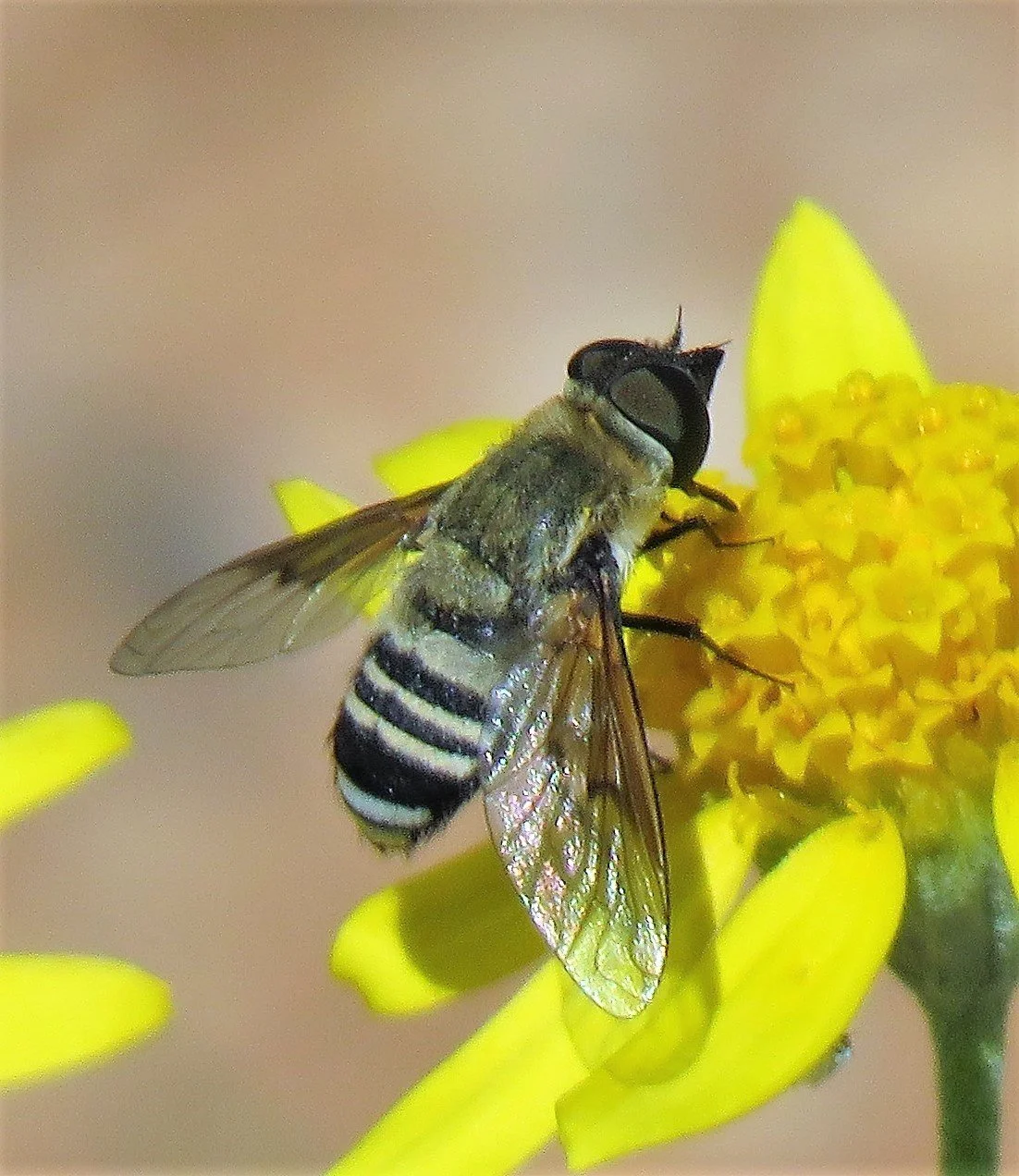
A medium to large-sized species with a 50/50 dark infuscation. The abdomen is strongly ringed, notedly with a black T5 and black hind edges to T2. The legs are black and the scutellar spines are strong and black as well.
Range: COCH, GRAH PIMA, PNAL, STCR
Occurs: Early August to Early October
Paravilla epheba

The Tropical influence in Paravilla is epitomized in the region by this species. It is large in size, covered in golden pile, and has wings which are 50% infuscated with brown. Two other characters are of note. The abdomen has its final segment white (almost as strongly as in mexicana) and the hyaline portion of the wings shows 2 orange spots, a feature quite unique in the genus. To date, all reports are from the middle of September in the Huachuca Mtns.
Range: COCH
Occurs: Mid-September
Paravilla flavipilosa

This species is medium to large in size, with a body length of 9-12 mm. The legs are light, including the femora, and the thorax and abdomen have unblemished golden tomentum and pile, on the dorsum and venter. There is a slight bit of color at the wing bases but otherwise the wings are hyaline. It's a widespread spring flier.
Range: COCH, GRAH, GREE, PIMA, PNAL
Occurs: Early March to MId-July
Paravilla fulvicoma
Easily confused with P. edititoides which flies later in the year, fulvicoma is predominantly a spring flier. The wings have pale brown infuscation, including the basal portion of the discal cell, and this infuscation darkens toward the distal edge. Also note the dull orange legs. The species is small to medium in size with body lengths from 5-8 mm.
Range: COCH, PIMA
Occurs: Mid-April to Late May
Paravilla mexicana
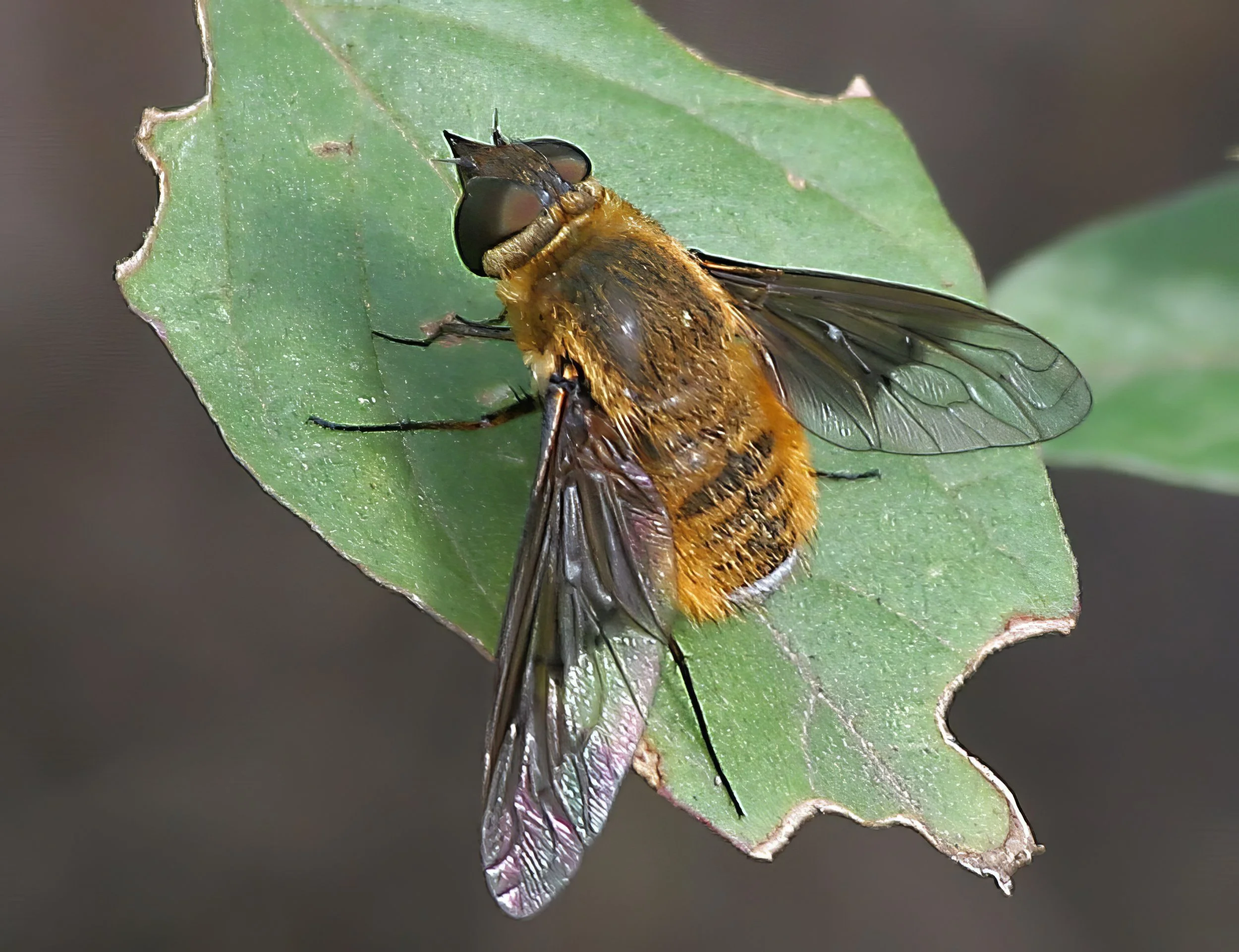
This is another of the larger species in the genus (10-12 mm), the abdominal venter is black. In the submargin, there is often a stub vein off R4 but most notable in the wings is the orange cast to the 50/50 dark infuscation. On the abdomen, the tomentum and pilous edging are rufous. There is usually a silvery white abdomen tip. Although reported by Hall (1981) as flying in the late spring, all known records have been later in the year.
Range: COCH, GRAH, PIMA, PNAL, STCR
Occurs: Early September to Mid-October
Paravilla nigrofemorata

A small to mid-sized species with cranberry eyes and golden pile throughout. The wings are almost totally hyaline and, as the name implies, the femora are black. The venter of the abdomen is covered in light pile.
Range: GRAH, GREE, PIMA, PNAL
Occurs: Mid-March to Early May
Paravilla parvula
No Photos Availables
This medium-sized Paravilla has a pale abdominal venter with mostly pale-yellow pile on the tergites. There are black tufts of pile laterally at the hind end of T2 and the 50% infuscation is medium brown. The legs are dark orange.
Range: COCH, GRAH, STCR
Occurs: Early September to Early October
Paravilla syrtis

Several mid-sized members of this genus look similar to this species. Half the wings are infuscated with pale brown, darkest at mid wing. The front femora are dark, the face is fulvous, and the abdomen lacks black pile laterally on T2. It appears to be more common in California.
Range: PIMA, PNAL
Occurs: Early May to Early June
Paravilla winburni
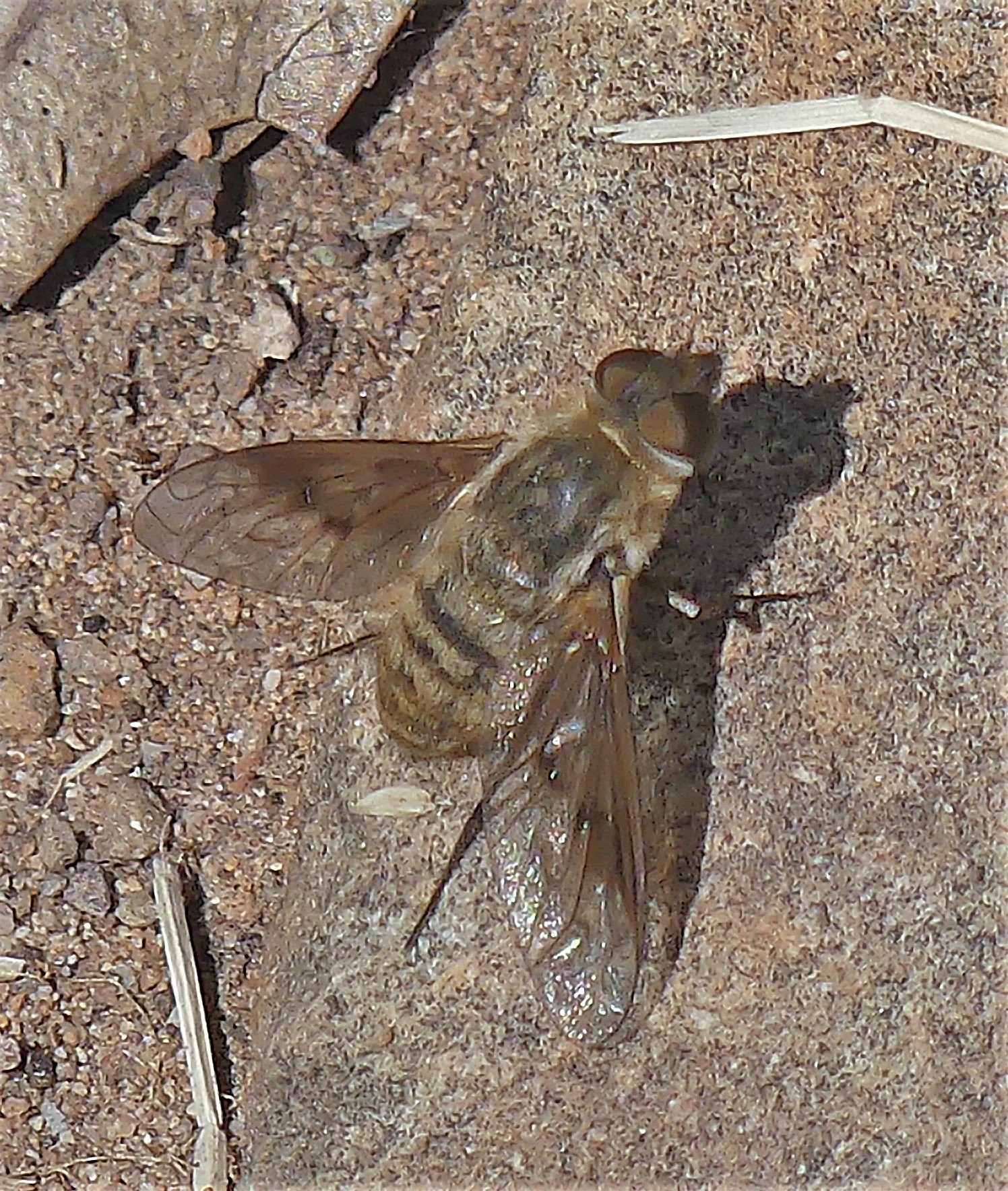
Only a few Paravilla species have 3 submarginal cells in the wings, this being one of them. It is a small to mid-sized species, 7-8 mm long, with black legs and dark gray wing infuscation. Also note that sometimes there are several slightly darker clouds on the r-m crossvein and at the bases of posterior cells 3 and 4. The venter of the abdomen is mixed light and dark while dorsally, T3-5 are tan and T7 is shiny white.
Range: COCH, PIMA, PNAL, STCR
Occurs: Early August to Mid-September
Other species reported from the region without specifics: acutula, borea, californica, deserta, edititoides, extremitis, hulli, inatra, macneilli, parasitica, texana, tricellula, vigilans, and xanthina.