
Genus Neodiplocampta
Neodiplocampta astrella

This species is mostly black with a short beak. The costa and subcosta are dark and there are smudged dots mid wing. The 2nd longitudinal vein is slightly S-curved with nowhere near the contortions of N. mira (see below). The abdomen is gray to dark gray and there is often a peaked black ring on T2. It is most often found perching on the ground in close proximity to shrubs.
Range: COCH, GRAH, PIMA, PNAL, STCR
Occurs: Early March to Late October
Neodiplocampta “laurellioides”
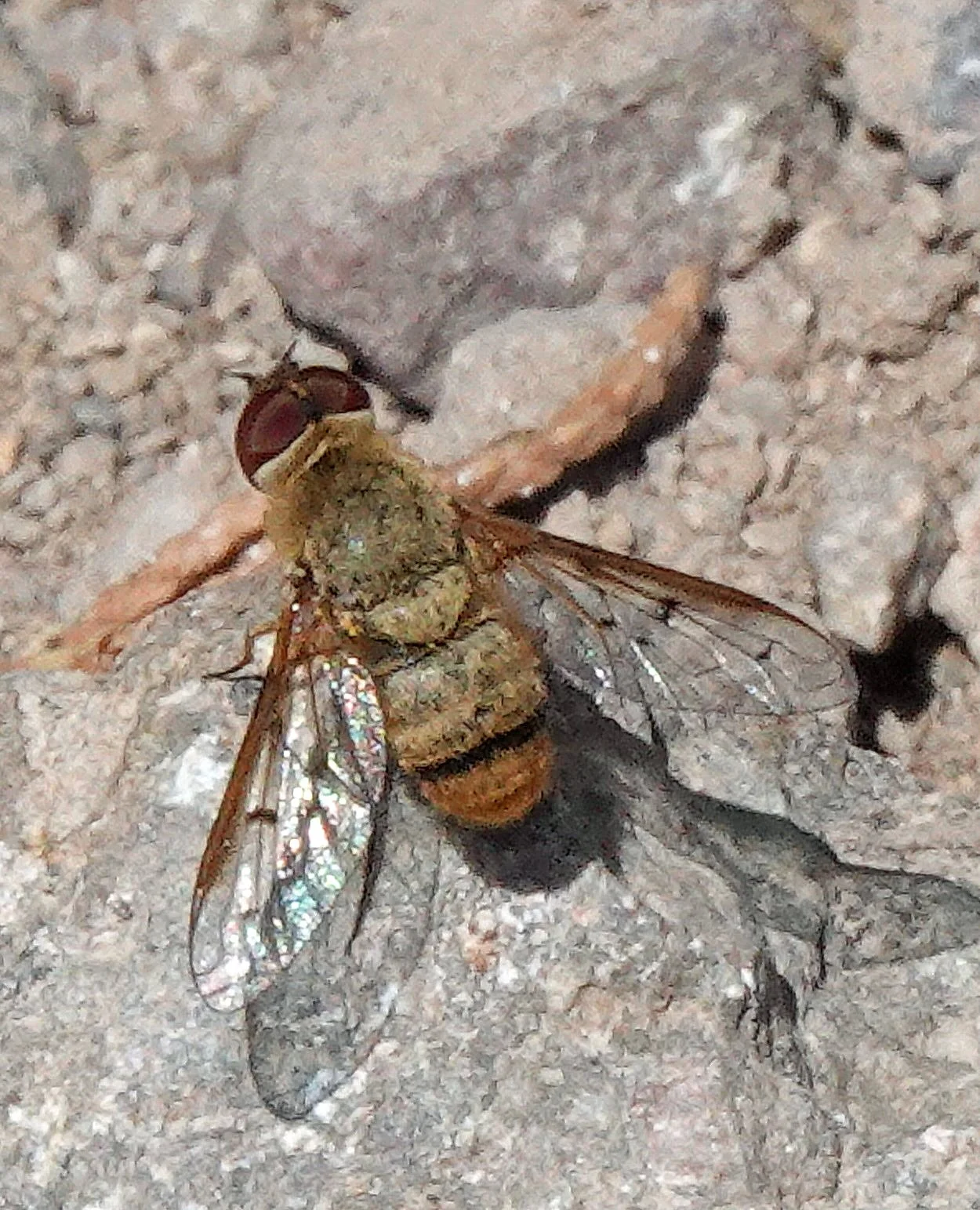
Although local and uncommon, this taxon (description in prep) is widespread, with populations from 2,700 ft to as high as 6,000 ft or more. The venation is similar to astrella's, lacking the elaborate R2+3 S-curve of mira. The dominant pile color varies from gray to tan, often with a black ring around T4 and without mira's pronounced orange coloration. There is a darkened costa but the remainder of the wing-spotting is reduced to a handful of small black, crisp dots. We temporarily place this insect in Neodiplocampta although it and astrella might be better placed elsewhere.
Range: COCH, GRAH, PIMA, STCR
Occurs: Late May to Mid-July
Neodiplocampta mira

This species, with a body length of 6-7 mm, has especially distinctive venation. In spite of Joel Kits' comments in BugGuide that the R2+3 venation was "barely distorted", the submarginal vein R2+3 typically is doubly bent; we suspect confusion between this species and “laurellioides.” Most of the abdomen is bright orange, often with a medial pattern of black chevrons or even a single black ring around T4. The wings are patterned with round, somewhat enlarged and smudged spotting and subtly overlain with orange. When flying, it gives a golden appearance.
Range: COCH, GRAH, GREE, PIMA, PNAL, STCR
Occurs: Mid-May to Mid-July
Other species include mirella and miranda, for which there are no specific Arizona data.