
Genus Lepidanthrax
Lepidanthrax angulus
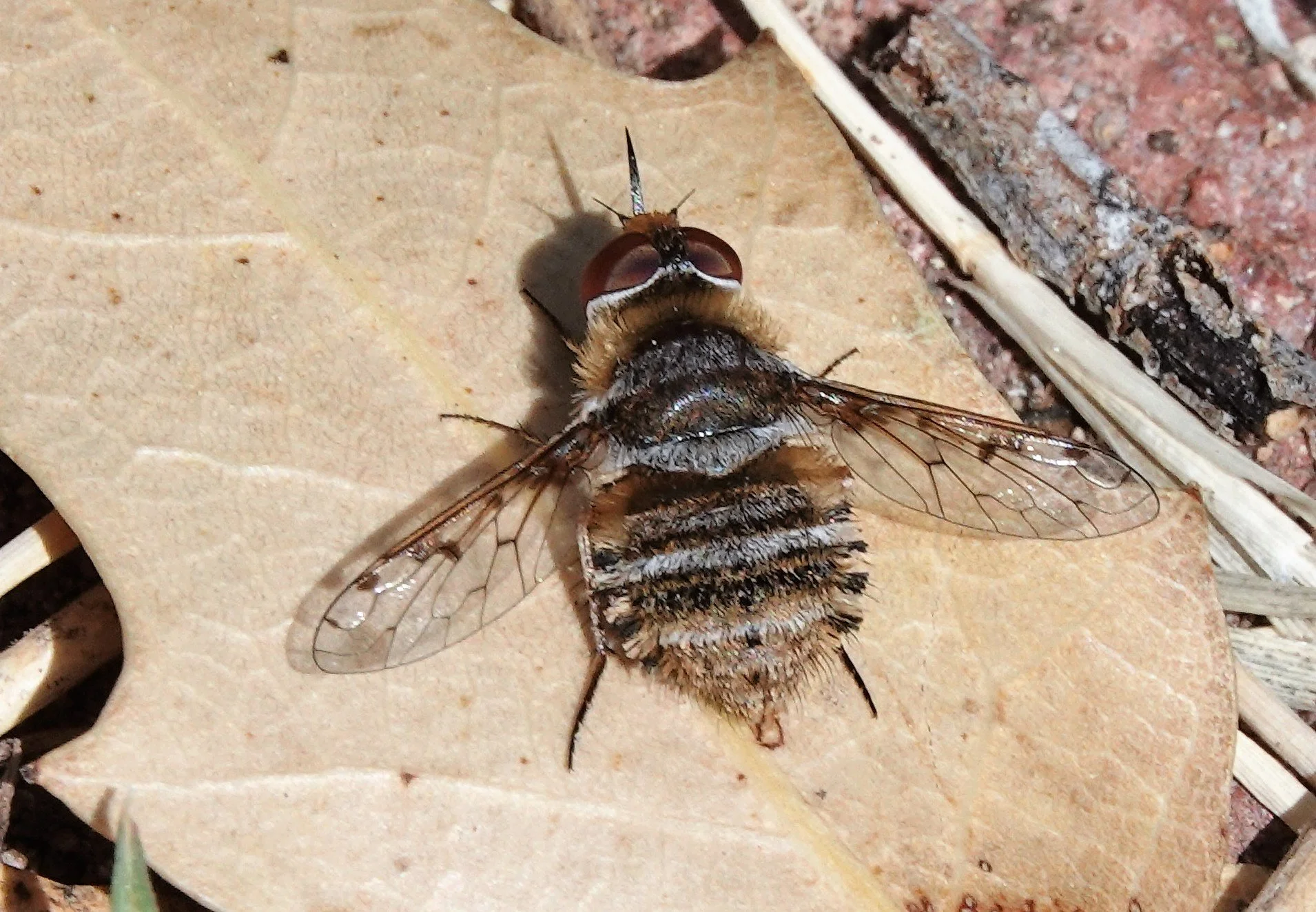
This species has no shining scales on the abdomen, along with a dark gray integument and patches of black pile laterally. Also, close examination of vein R2+3 in this species shows it is sharply angled upward near its midpoint. Its wings are lightly spotted, the legs are orange, and the scales on the front are shiny golden.
Range: COCH, GRAH, PIMA, PNAL, STCR
Occurs: Early April to Late May
Lepidanthrax arizonensis
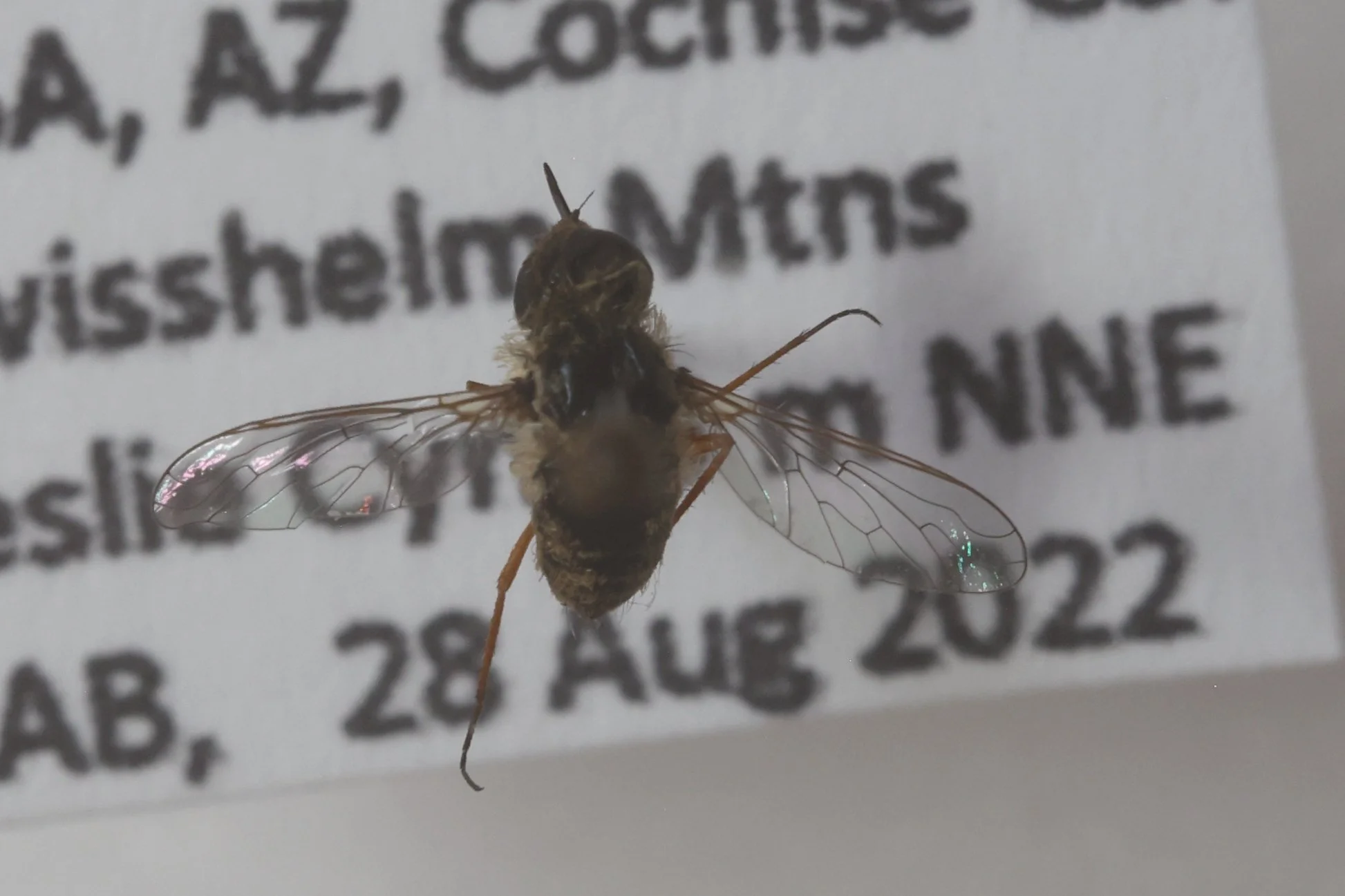
Although the antennae and beak are typical of Lepidanthrax, note that the wings are hyaline or very nearly so. Very occasionally there is pale spotting on the RM crossveins.
Range: COCH, PIMA, PNAL, STCR
Occurs: Early April to Early May
Lepidanthrax californicus

This is one of the species with an extra crossvein in the 1st posterior cell. It is similar to disjunctus but with a white ring across the thorax and a checkered edge to the abdomen. Males have reflective scales on T3-5.
Range: COCH, GRAH, PIMA, PNAL, STCR
Occurs: Mid-April to Early May, Mid-August to Early October
Lepidanthrax choristus
No Photos Available
The male of this species is similar to proboscideus but there is a medial gap in the reflective scales on T4-6. The face on the female is black.
Range: PIMA, STCR
Occurs: Mid-May, Late October, Few Records
Lepidanthrax disjunctus
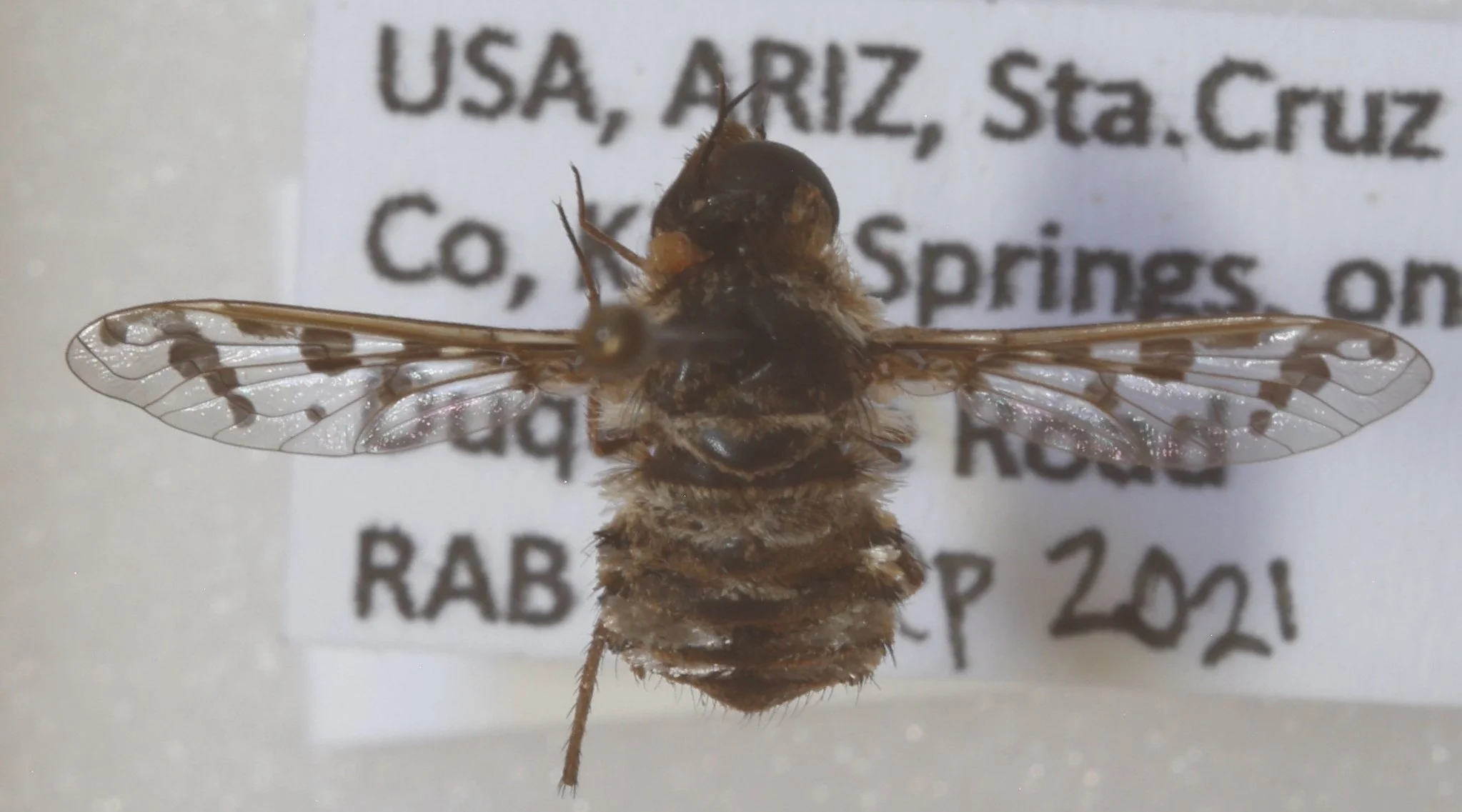
This is one of the larger species in the genus. It has black-patterned wings with an extra crossvein in the 1st posterior cell. The abdominal scales are brown, white, and black, framed by lateral waxy upright black scales. Note the males with reflective scales on T3-5, typically with a median gap.
Range: COCH, GRAH, PIMA, PNAL, STCR
Occurs: Early August to Mid-October, 2 Late Spring Records
Lepidanthrax euthemus
No Photos Available
This species is similar to angulus in that vein R2+3 is sharply angled upward near its midpoint. Also, as in that species, the wings are lightly spotted and the legs are orange. The absence of shiny golden scales on the front is a key character; these being replaced by a mix of brown and yellow matte scales.
Range: GRAH, PIMA, PNAL, STCR
Occurs: Late April to Early May
Lepidanthrax hesperus

This is a common member of the genus, identified by the orange body color of T3-T7. Males have golden reflective scales on those same segments. In hand, note the black coxae. Adults tend to fly within low-growing shrubs.
Range: COCH, GRAH, PIMA, PNAL, STCR
Occurs: Late March to Early June, rarely Late August to Mid-September
Lepidanthrax inauratus
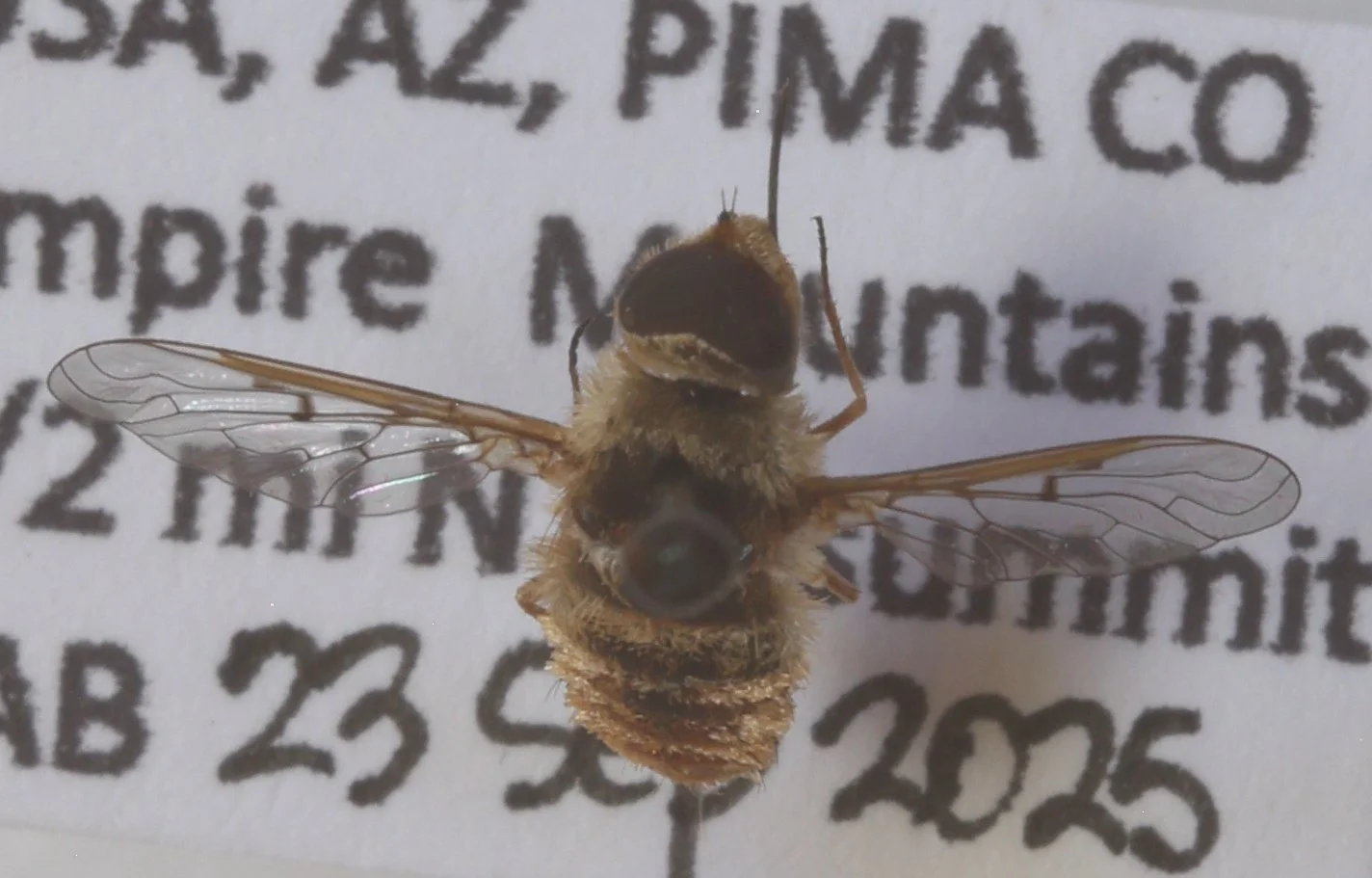
The wing venation is similar to that of other members of the genus. The legs are orange, and on the abdomen T1+2 are black. On T3-7 the ground color is orange except for a tapering midline of black. Males have complete rows of golden reflective scales on T3-6.
Range: COCH, GRAH, PIMA, PNAL, STCR
Occurs: Late March to Late May
Lepidanthrax lutzi
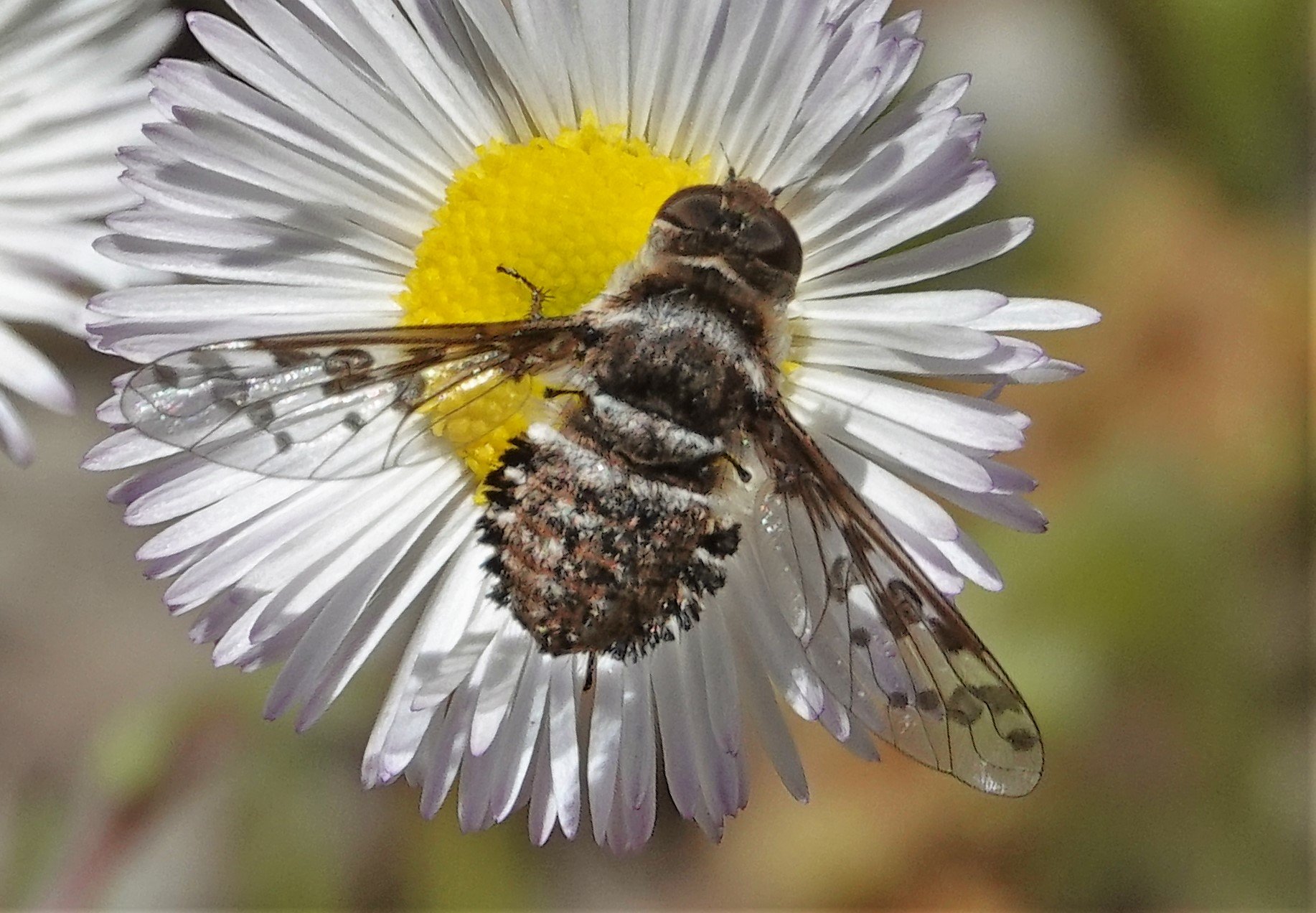
This is one of the Lepidanthrax species with an extra crossvein in the center of the 1st posterior cell, similar to disiunctus. There is typically a white crossband on the thorax and the halteres are black. It also lacks reflective scales on the abdomen and the allulae are undeveloped.
Range: COCH, GRAH, GREE, PIMA, PNAL, STCR
Occurs: Late July to Early September
Lepidanthrax morphnus
No Photos Available
Very close in appearance to proboscideus, it is separated by having the first two antennal segments dark and also having black pile at the wingbases.
Range: PIMA
Occurs: Late April to Late May
Lepidanthrax proboscideus

This is a familiar regional species. Adults are large and black, with well-maculated wings. There is no extra crossvein in the 1st posterior cell. On T2, there is a white dorsal ring and males show reflective scales on T4 to T7. On ♀s, there are white scales on T4, narrow alulae, dark-orange legs, and no black hair on the scutellum.
Range: COCH, GRAH, PIMA, PNAL, STCR
Occurs: Mid-April to Early June, Mid-August to Mid-November
Lepidanthrax rauchi
No Photos Available
This is yet another species with an extra crossvein through the 1st posterior cell. The abdomen lacks reflective scales and the allulae are undeveloped.
Range: COCH, GRAH, GREE, PIMA, PNAL, STCR
Occurs: Late July to Mid-September
Lepidanthrax stichus
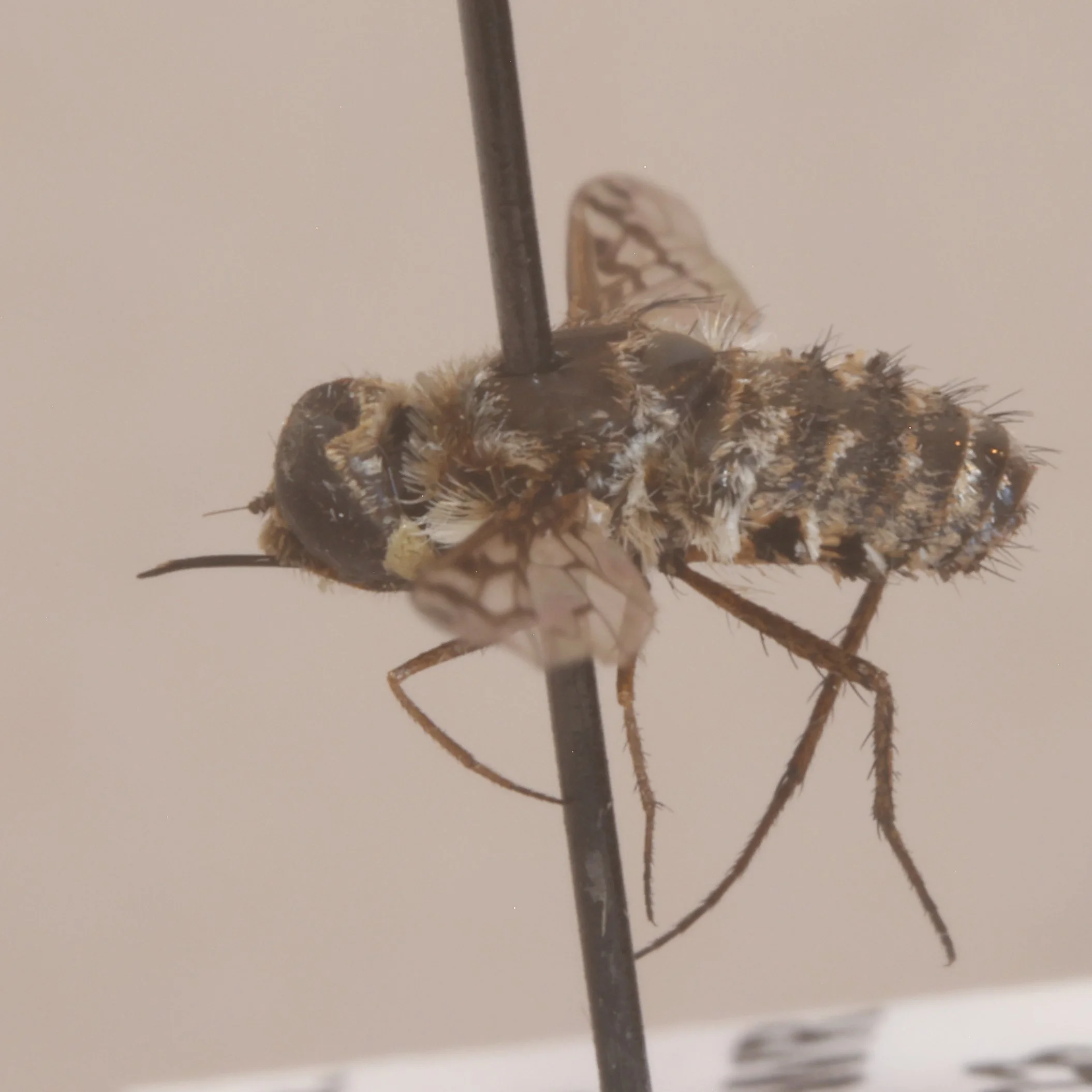
Somewhat similar to proboscideus, but with the extra crossvein in the 1st posterior cell that immediately separates the two. Also note that the male's reflective scales are limited to T3-5 and typically with a median gap.
Range: GRAH, PIMA, PNAL
Occurs: Late April to Early June, Early September to Late October
Also, these additional species have been recorded nonspecifically from the region: hypomelus, and sonorensis.