
Genus Hemipenthes
Hemipenthes albus
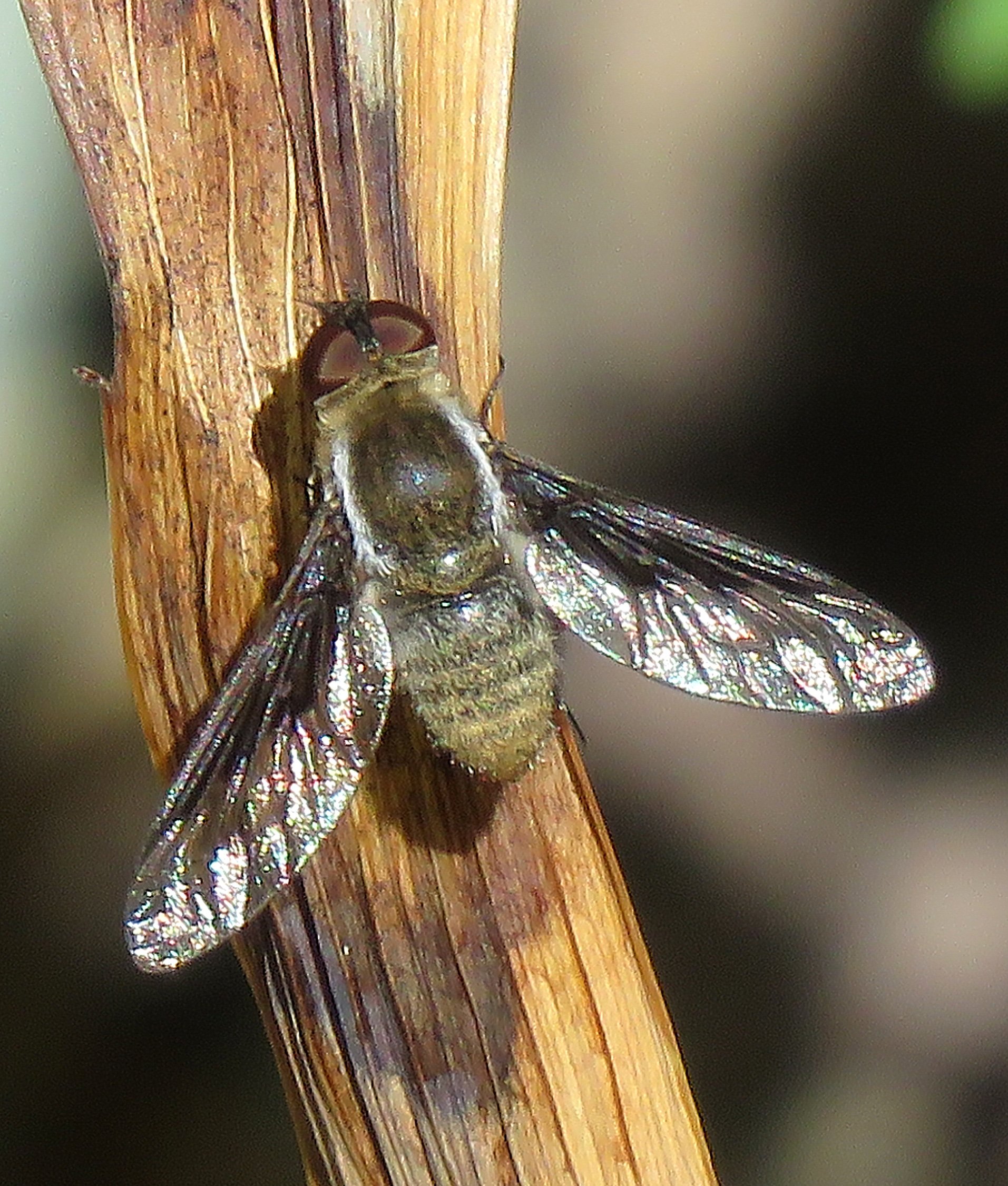
Primarily a Mexican species, albus has been recently confirmed (Bailowitz, et.al. 2025) along the border, the first known Arizona reports being in 2010. It has now been found primarily at higher altitudes, as far north as Stockton Pass. It is most similar to webberi, a species unknown in the state, and possesses the same type of wing infuscation as that species. But diagnostic for albus is the olive-tinged abdominal pile and pale edging to the thorax. The male genitalia are ultimately diagnostic.
Range: COCH, GRAH, STCR
Occurs: Mid-August to Late September
Hemipenthes blanchardiana
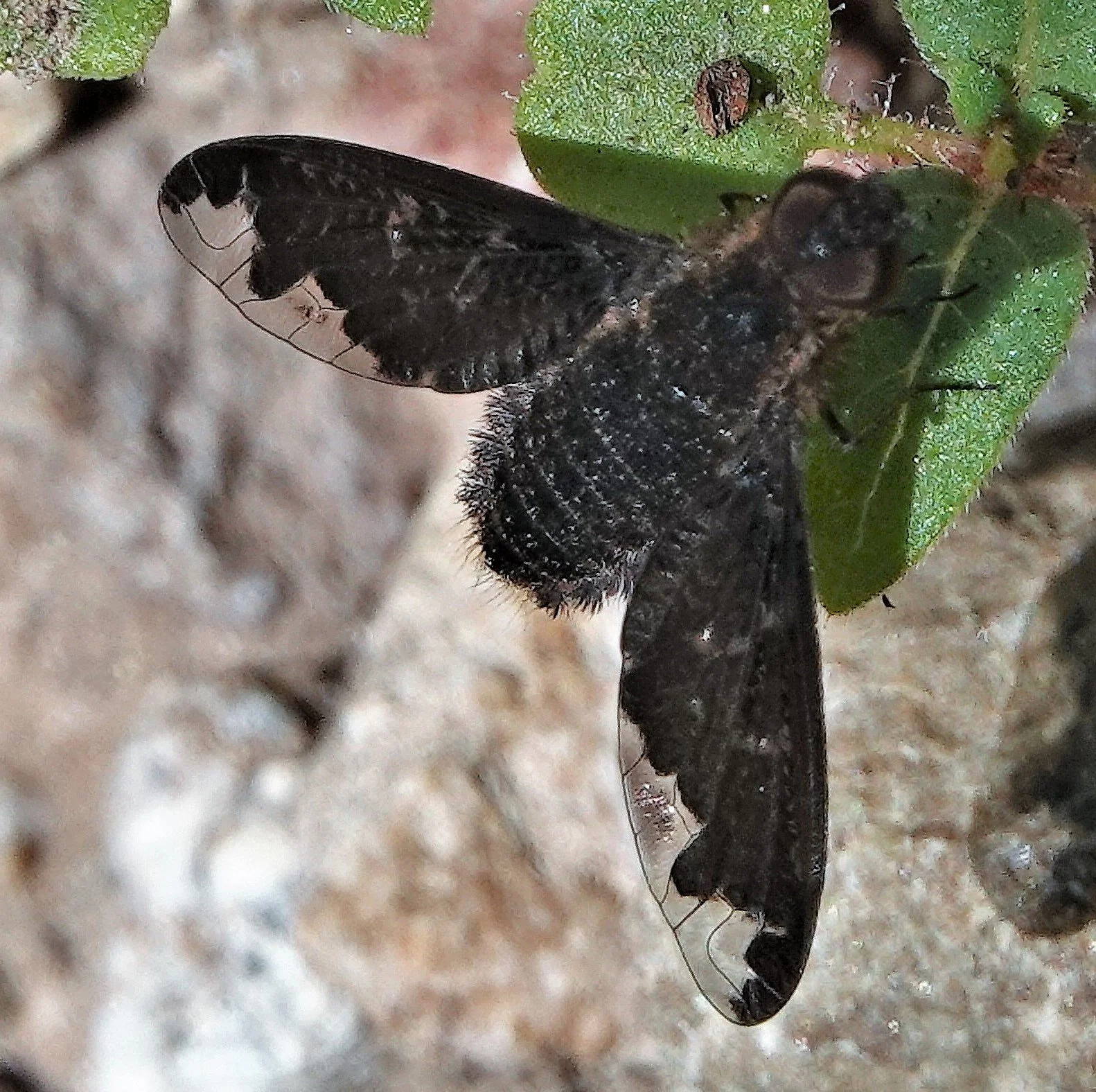
This species and H. jaennickeana consistently show 3 submarginal cells and both are extensively infuscated. Blanchardiana differs, however, in its more extensive infuscation in the 1st posterior cell. It tends to favor higher altitudes.
Range: COCH, GRAH, STCR
Occurs: Mid-April to Late October
Hemipenthes chimaera
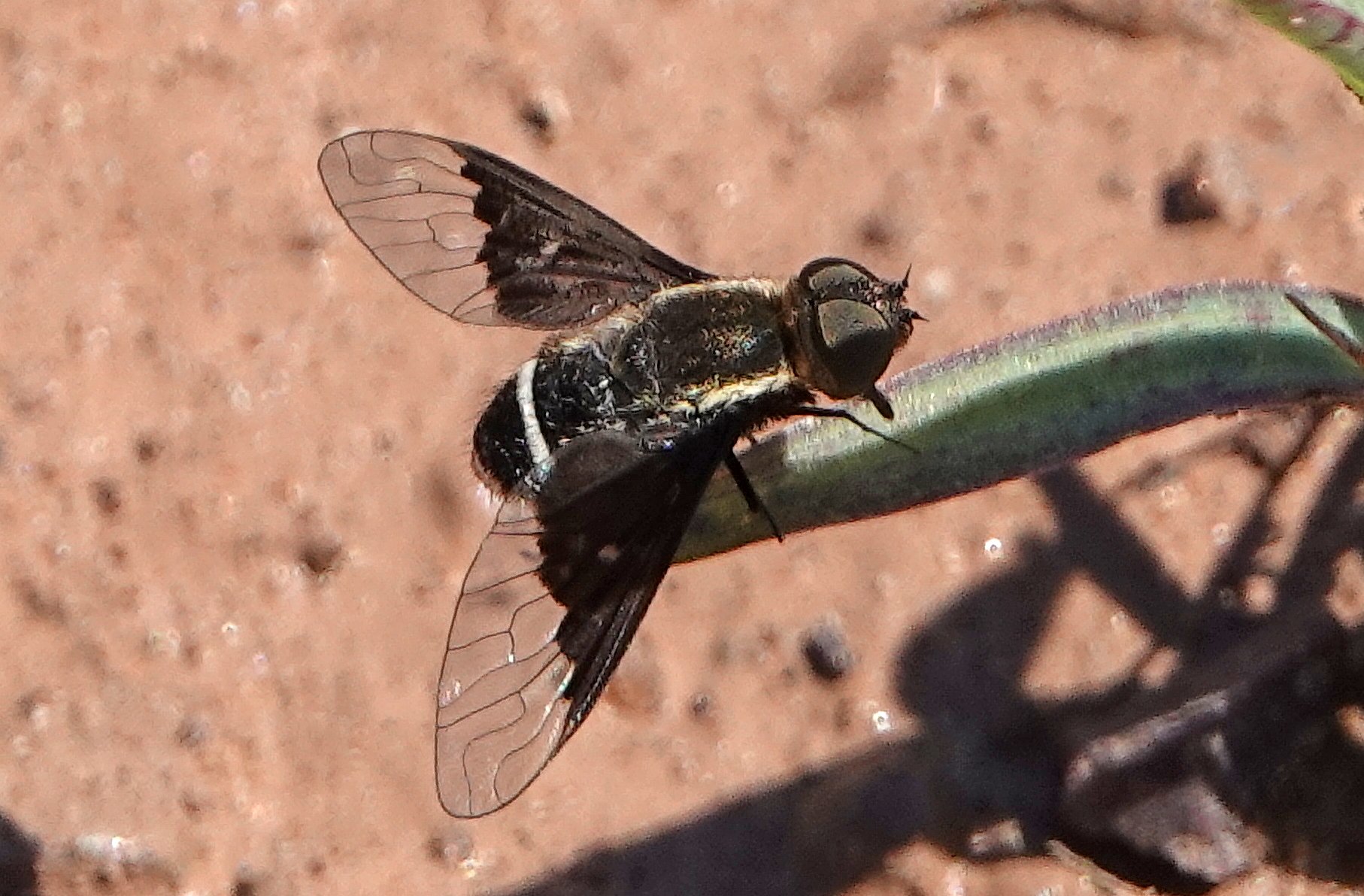
In the summer and fall, at middle elevations, this is an uncommon and local species. It has an abdominal pattern similar to that of H. lepidota with 2 white rings and has a 50/50 infuscated wing but lacks the extra infuscation along the wing margin. The few records to date have mostly been at puddles.
Range: COCH, PIMA, STCR
Occurs: Mid-August to Late September
Hemipenthes “doslados”
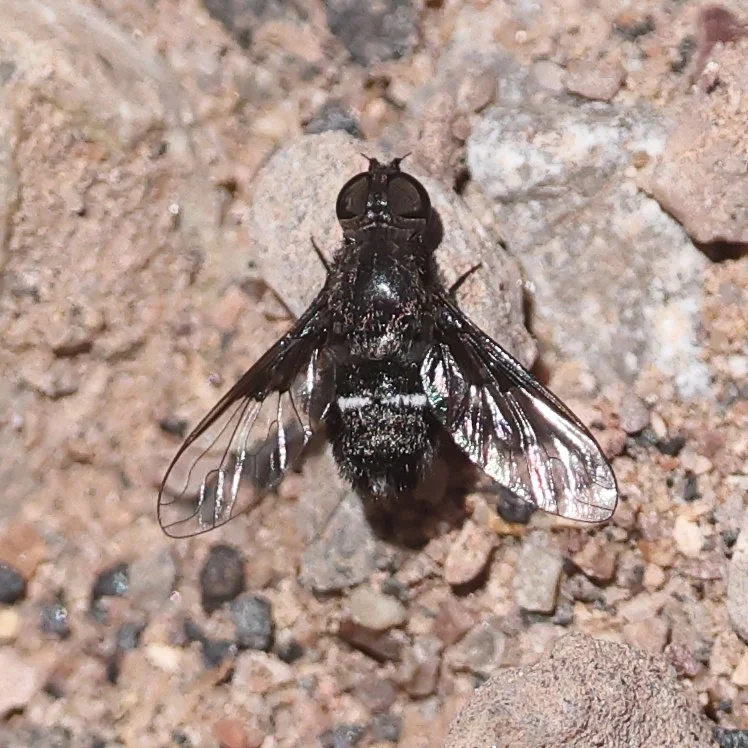
A fairly small undescribed species (description in prep), it is tentatively placed in this genus. It may be differentiated from other Hemipenthes by the placement of the RM crossvein which is firmly rooted at the basal third of the discal cell. Notice that the black infuscation terminates abruptly at the end of the two basal cells. In fresher specimens, also note the incomplete white ring (hence the name) around T3 on a mostly black abdomen.
Range: COCH, PIMA, PNAL, STCR
Occurs: Early March to Mid-May
Hemipenthes edwardsii

This is a northern species, being found as far south as southern Arizona. It is fairly small with somewhat restricted wing infuscation. The basal half of the anal and axillary cells show dark coloration. Note in the venation the extensive size of the 3rd posterior cell and also the lack of stub-veins. Also telling is the presence of scattered golden tomentum on the abdomen, a character unknown in the rest of the genus.
Range: STCR
Occurs: Early April to Mid-April
Hemipenthes inops
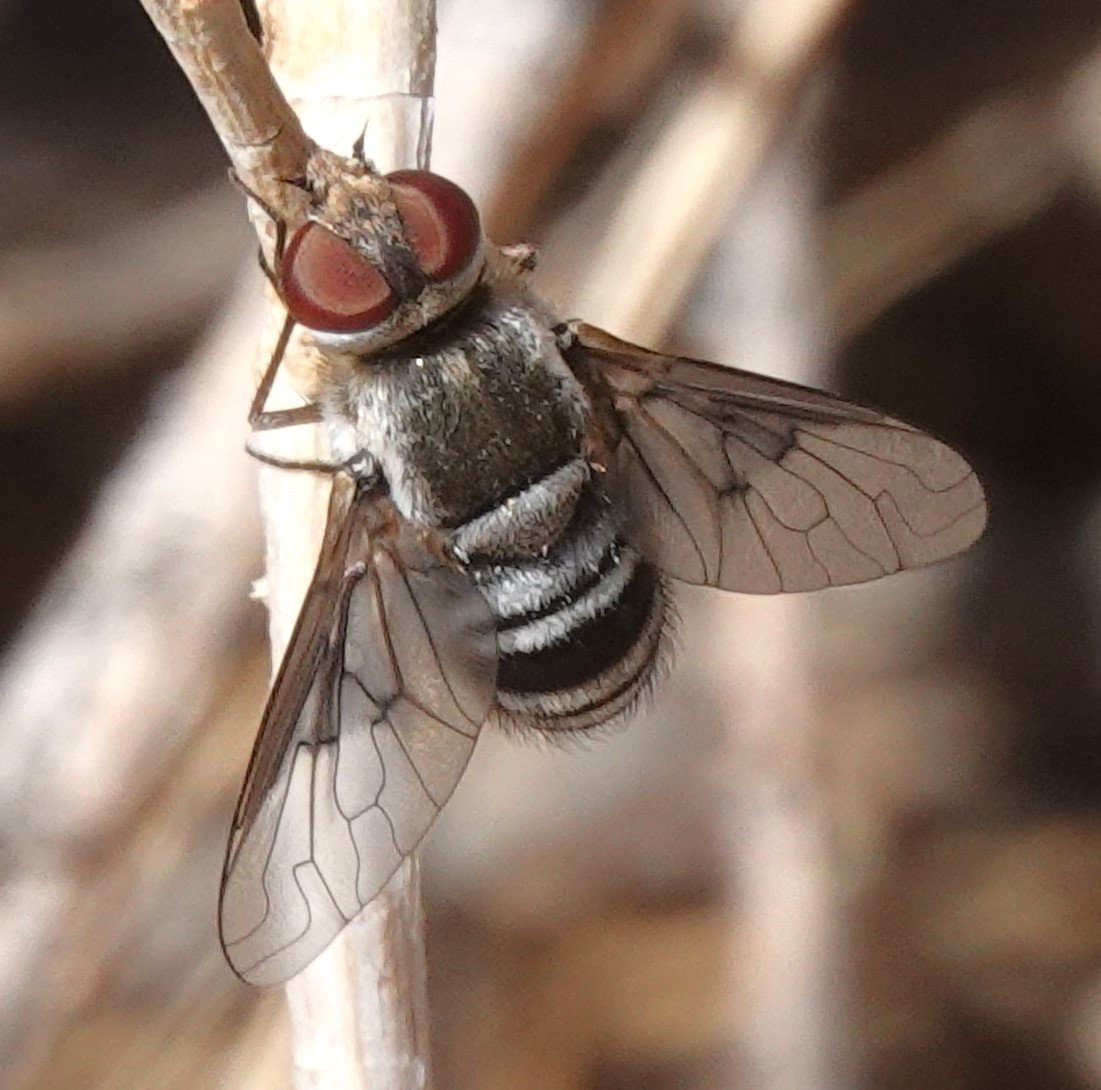
Although found regularly along the West Coast, especially in California, this is a rare species in Arizona. Most western records are from the early summer while in our region it has been found only in mid-spring. It is characterized by an abdomen with bands of several colors, two dark wing spots at crossveins at mid-wing, and H. lepidota-like infuscation but a hyaline 2nd basal cell.
Range: GRAH
Occurs: Early May
Hemipenthes jaennickeana
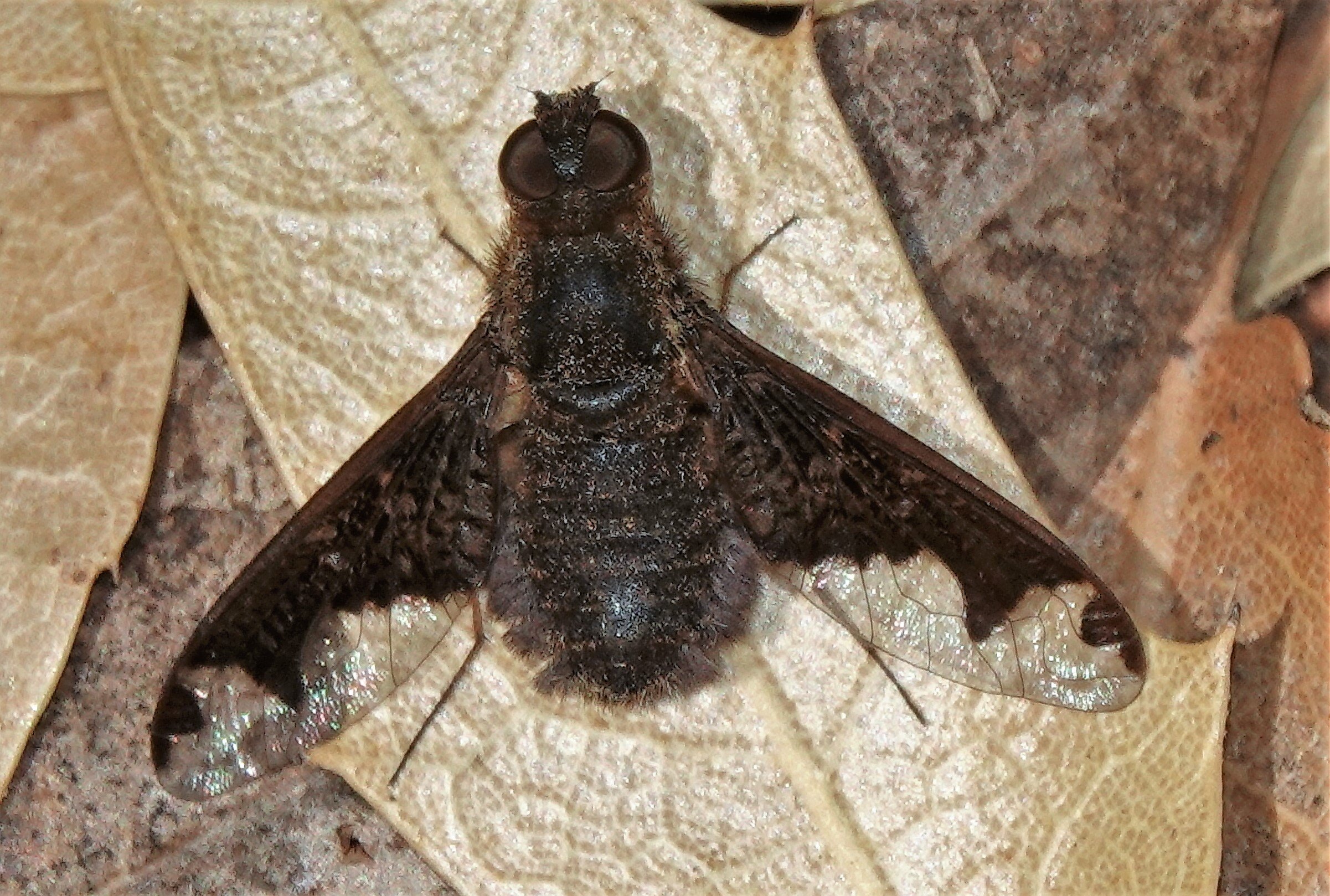
In this genus, H. jaennickeana and H. blanchardiana alone have the extra submarginal crossvein in the wings. Also, these two species are alike in that they are both mostly montane although H. jaennickeana is also less common but present at lower altitudes. It comes to nectar but is probably more often seen on low shrubs and at damp soil.
Range: COCH, PIMA, PNAL, STCR
Occurs: Early March to Mid-November, One Early January Record
Hemipenthes lepidota

Small to medium sized, this Hemipenthes is widespread. It often flies beneath the canopy and, oddly, is often is attracted to cars. The infuscation is restricted, encompassing some 30% of the wing. The abdomen has 2 white bands on T2 and T4, and there are white epaulets on the thorax.
Range: COCH, GRAH, GREE, PIMA, PNAL, STCR
Occurs: Late March to Early November
Hemipenthes scylla
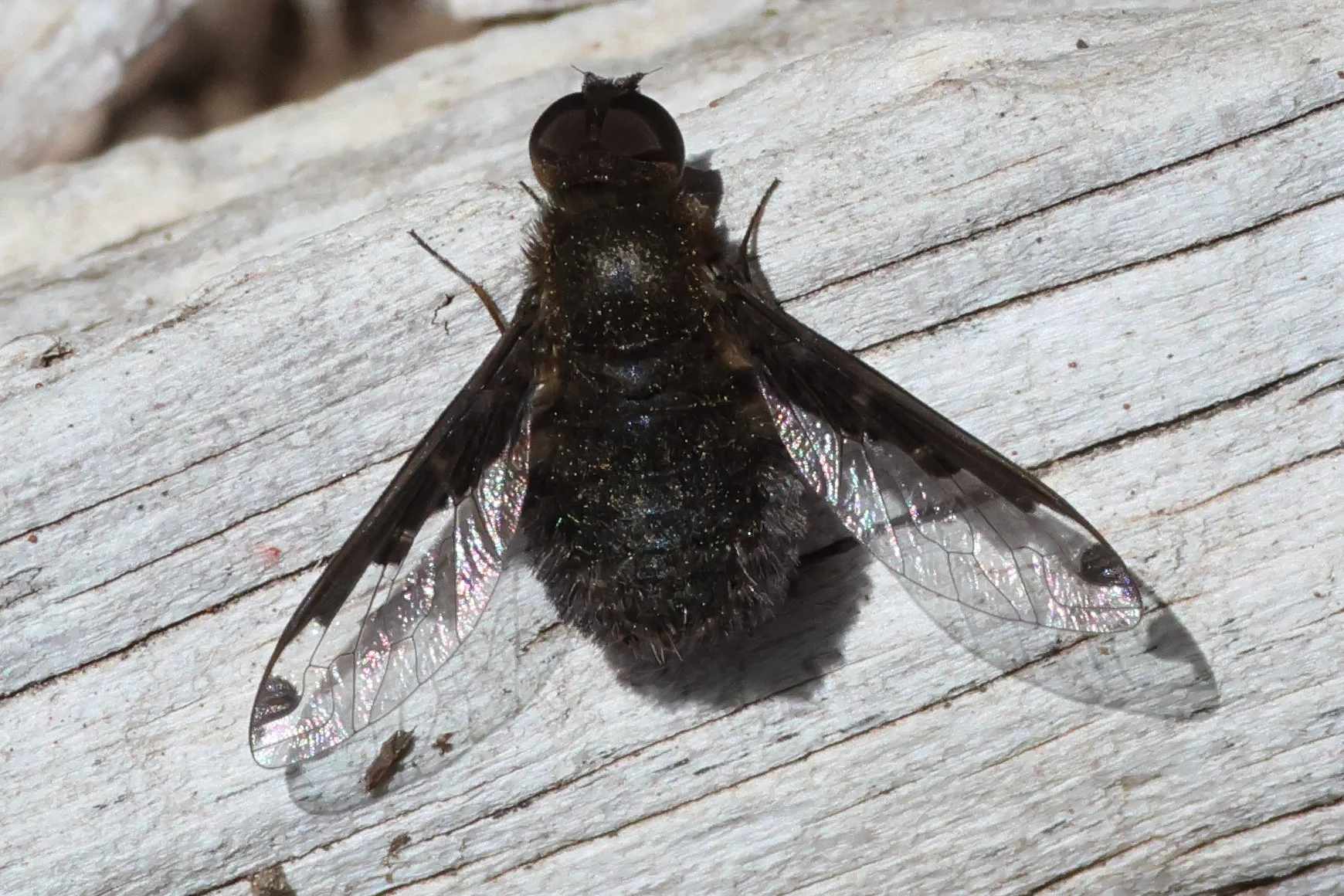
The basal wing infuscation on this species is restricted, perhaps to as little as 15%, but reappears toward the wingtip. Interestingly, the size of individuals is notably variable. Although it has been found at elevations as low as 820 m, it is most at home at middle and high elevations. It is often seen on damp soil.
Range: COCH, PIMA, PNAL, STCR
Occurs: Early January to Mid-November
Hemipenthes seminigra

The body of this spring species is almost entirely black but with white thoracic epaulets, as in H. lepidota. The wings are consistently about 50% infuscated. It is a species that comes to water and favors dappled sunlight. Among the Hemipenthes, this species is most at home in lowland riparian areas.
Range: COCH, GRAH, GREE, PIMA, PNAL, STCR
Occurs: Early March to Mid=May
Hemipenthes sinuosa
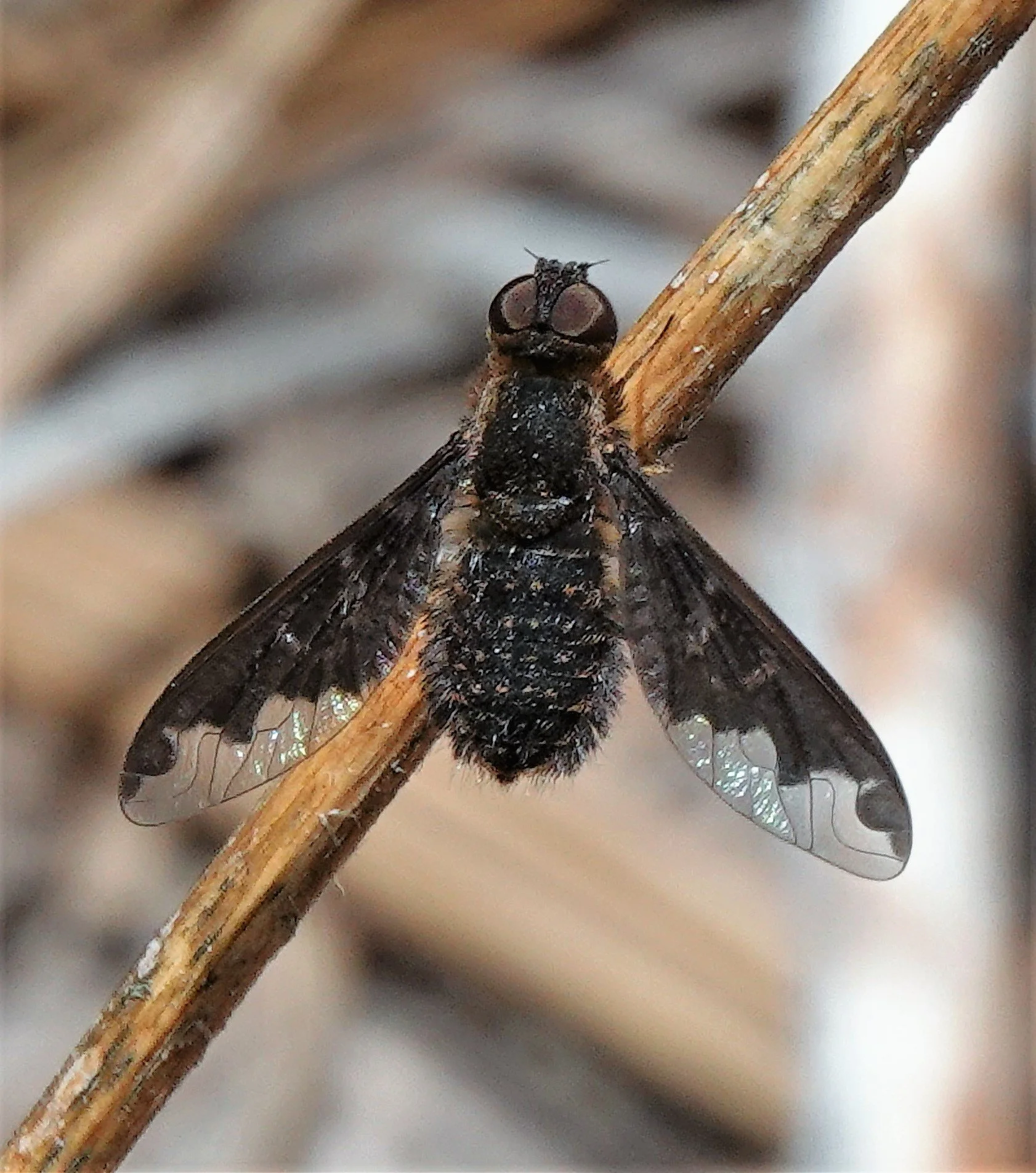
This is another species inhabiting the uplands. Individuals have slightly less than 50% wing infuscation but what truly separates this species from the other heavily pigmented species is the presence of only 2 submarginal cells (as opposed to 3 on H. jaennickeana and H. blanchardiana). Typically, its infuscation does not extend beyond the midpoint of the 1st posterior cell.
Range: COCH, GRAH, PIMA, PNAL, STCR
Occurs: Early April to Late August
Hemipenthes “vernalis”
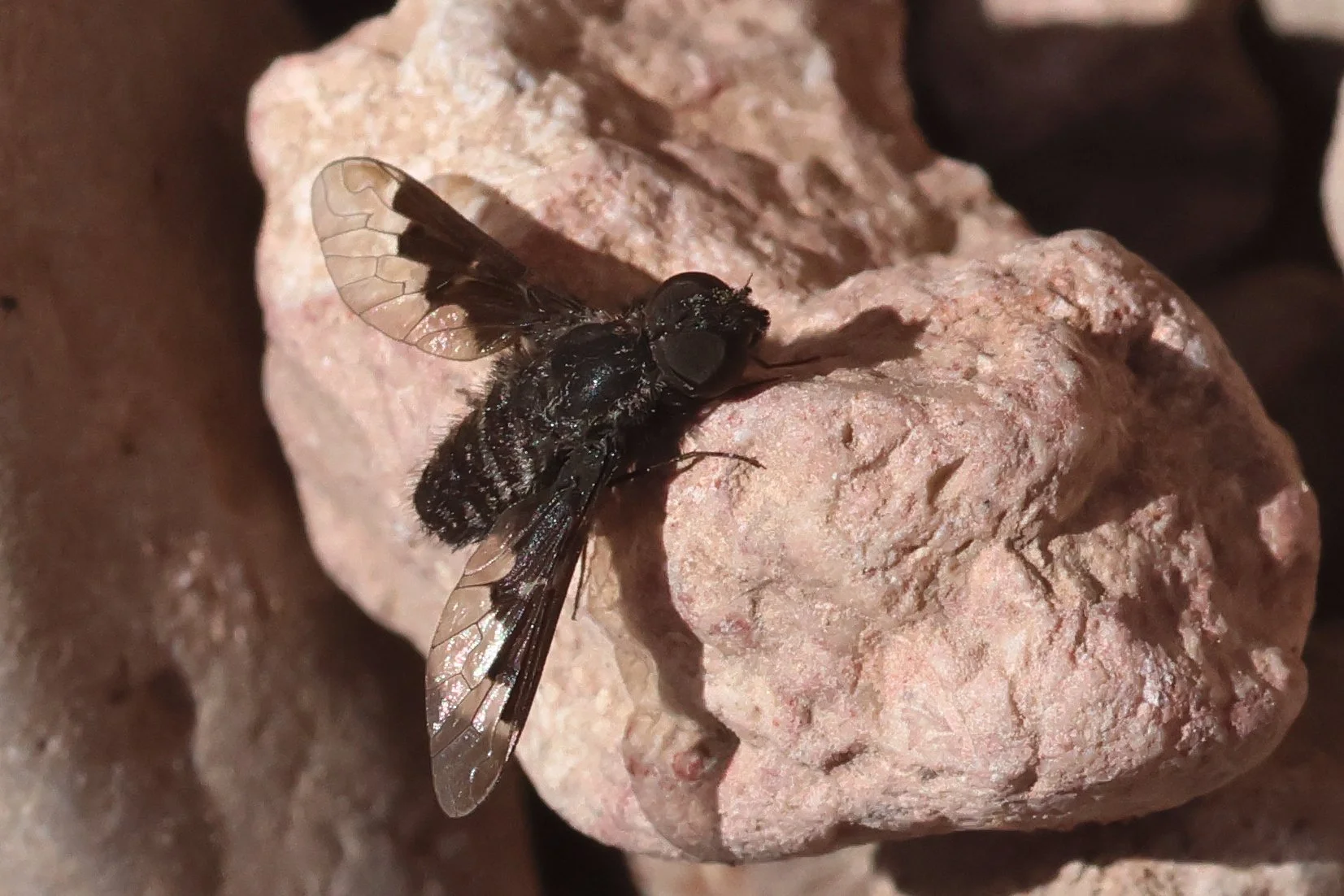
This is an undescribed taxon (description in prep), quite similar to H. edwardsii. It differs from that species by its strongly stair-stepped infuscation, somewhat pinched R2+3 vein, the incipient pattern near the wingtips, the presence of submarginal and discal stub-veins, and the smaller size of the 3rd posterior cell. It was especially prevalent during the very warm spring of 2026.
Range: COCH, GRAH, PIMA, PNAL, STCR
Occurs: Late February to Early April
Other species reported non-specifically from the area include bigradata.