
Genus Exoprosopa
Exoprosopa agassizii

This is a large and fasciated species with additional clouds on some of the crossveins. It is similar to, or perhaps even conspecific with, titubans, a notion first mentioned by Calderwood in 2010.
Range: COCH, GRAH, PIMA, PNAL, STCR
Occurs: Early August to Late October
Exoprosopa albifrons
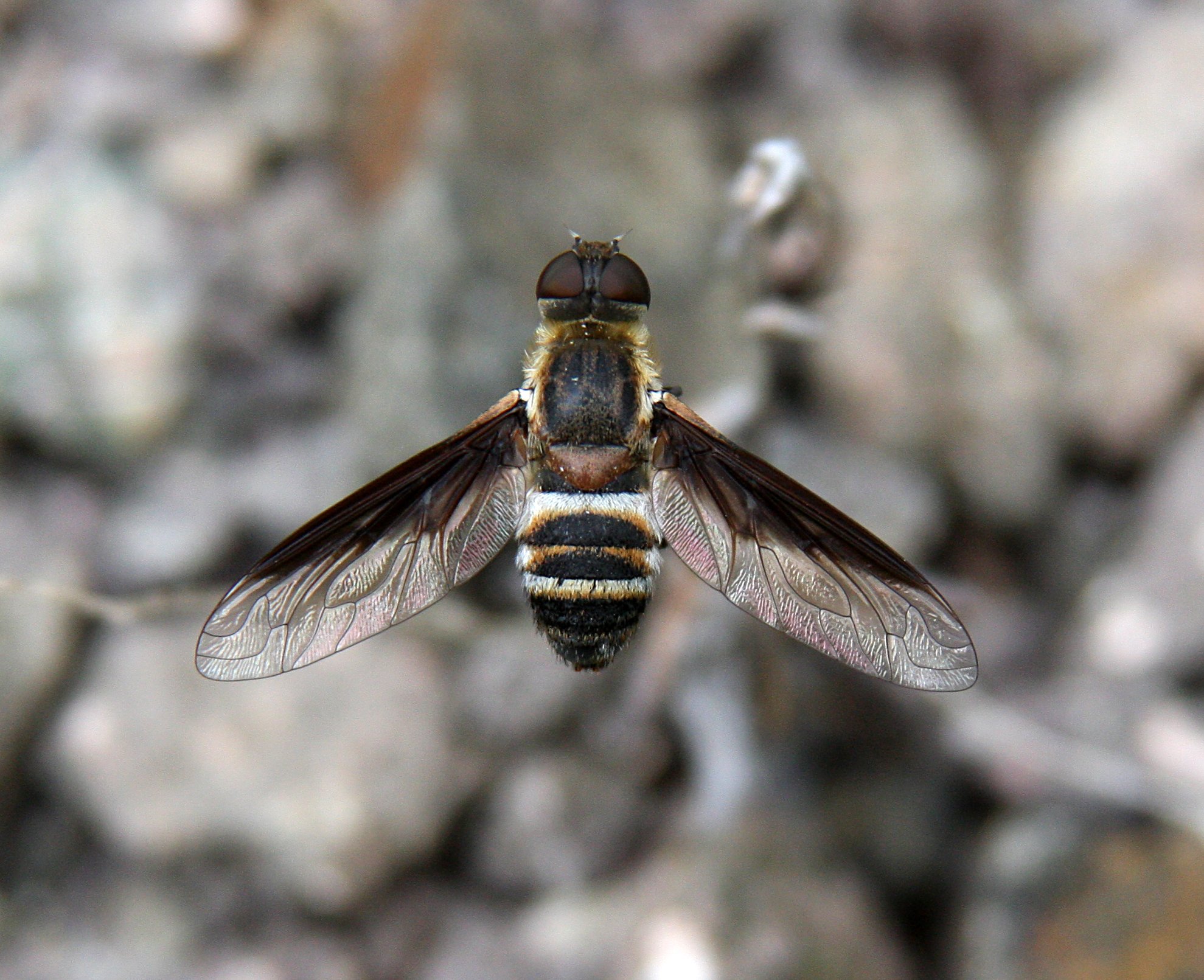
In this fasciated species, in the right light, the facial pile reflects silver, a unique character in the genus. Most records are from the Huachuca Mtns at middle altitudes.
Range: COCH, STCR
Occurs: Early July to Early August
Exoprosopa anomala

Known from just a single regional record, the pattern on this species is unique. Its wings have a mostly sharp-edged black infuscation with hyaline pin-holes and is therefore similar to some of the members of Thyridanthrax. Throughout its range, it has a patchy distribition, and has been verified both east and west of our region.
Range: COCH
Occurs: Late July
Exoprosopa argentifasciata
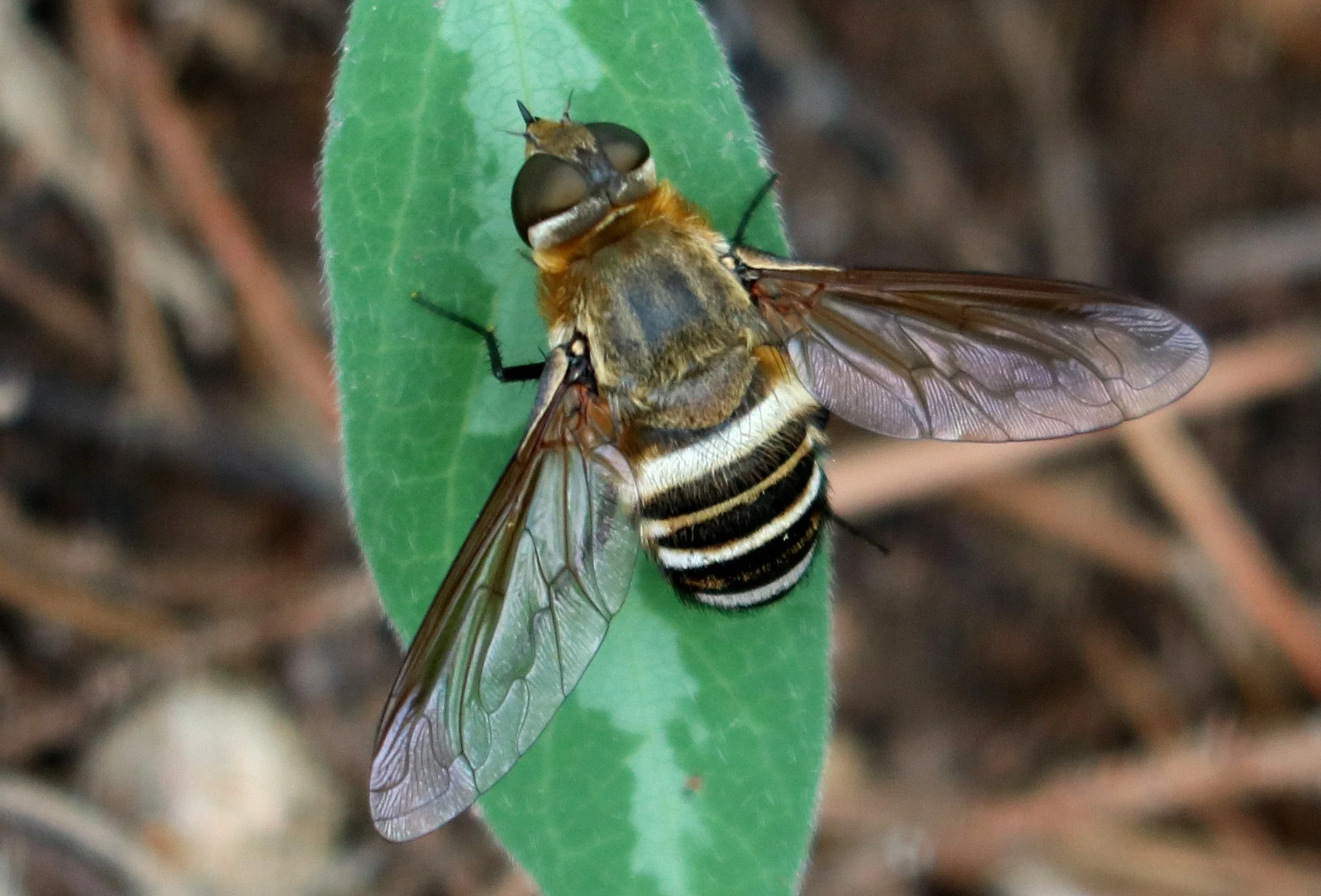
This uncommon, fasciated species has a character which is quite restricted within the genus; its 1st posterior cell is closed and stalked. Regionally only butleri (and its close relatives) also have this character. Also note the silvered 6th and 7th tergites. In addition, it has a long style, the same length as the 3rd antennal segment itself, and a mid-length beak.
Range: COCH, PIMA, STCR
Occurs: Mid-August to Mid-September
Exoprosopa bifurca

A small to mid-sized species with a weak, restricted wing infuscation. The style on the 3rd antennal segment, is longer than the width of that segment. Also note the short beak which barely leaves the oral cavity, and the clear 2nd basal cell.
Range: COCH, GRAH, PIMA, PNAL, STCR
Occurs: Late July to Mid-September
Exoprosopa brevirostris
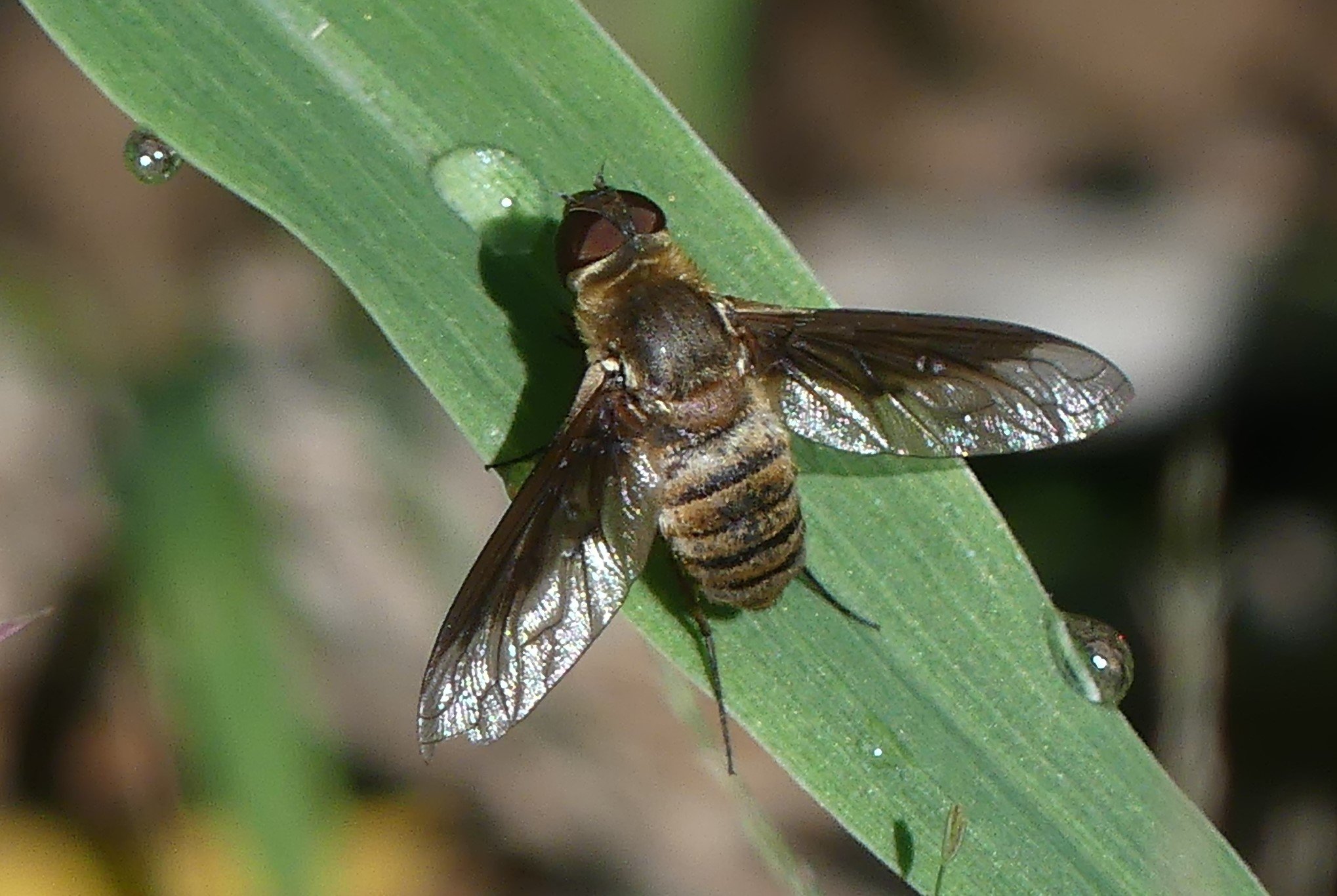
The infuscation on this species is crisply and darkly fasciated, similar to rostrifera. But of note is the medium length beak, shorter than that of rostrifera.
Range: COCH, PNAL, STCR
Occurs: Early July to Late August
Exoprosopa butleri
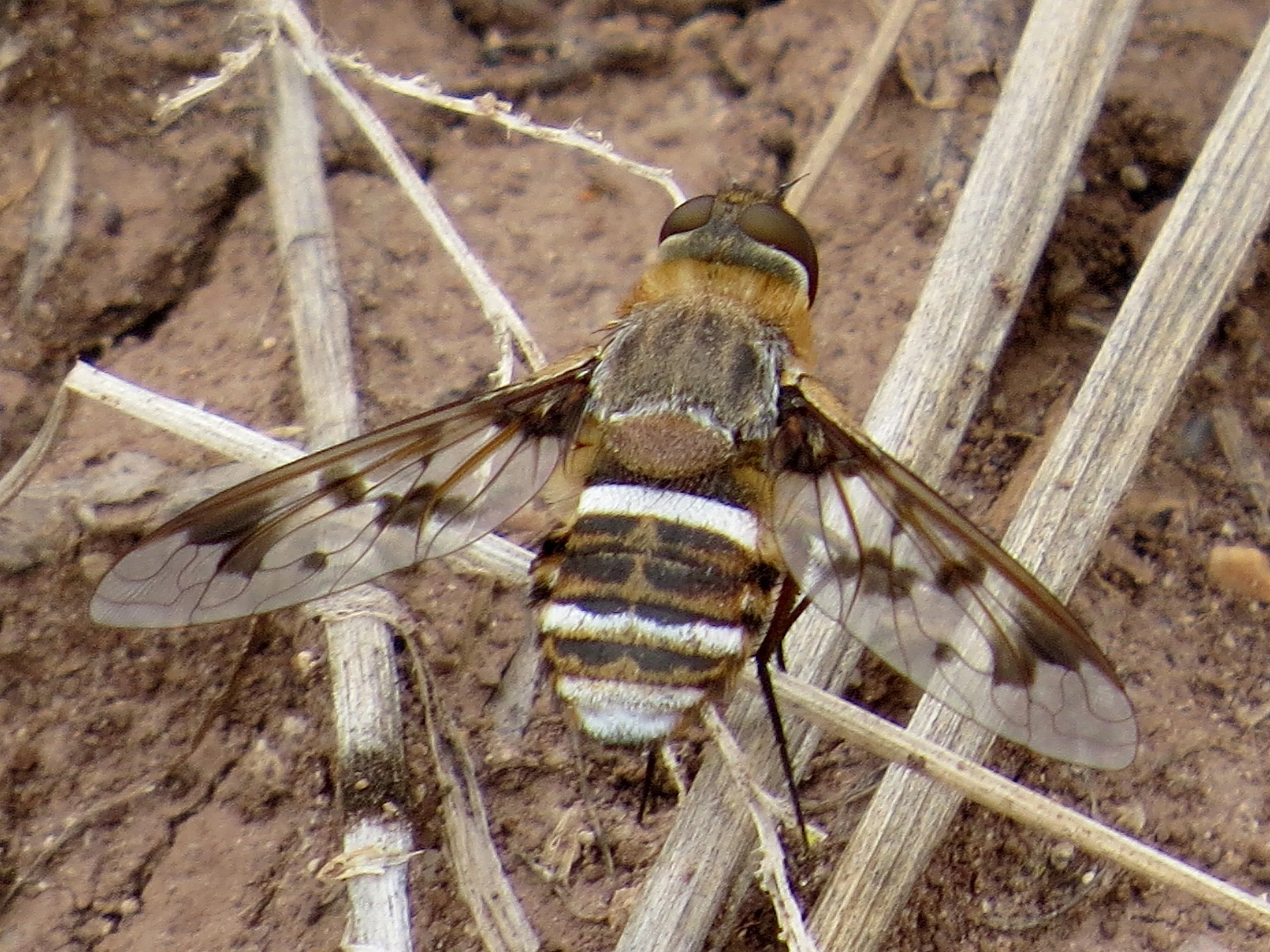
This is one (It appears that this may be more of a species complex than a single entity) of the most common species in the genus and is certainly the most familiar "patterned" member. Perhaps more so than any other regional Exoprosopa, it has an extended flight season. The size is highly variable, and also of note is the closed and stalked 1st posterior cell. The species also has an isolated dark spot at the proximal junction of the 2nd and 3rd posterior cells, and an extended flight season.
Range: COCH, GRAH, GREE, PIMA, PNAL, STCR
Occurs: Mid-April to Late October
Exoprosopa caliptera
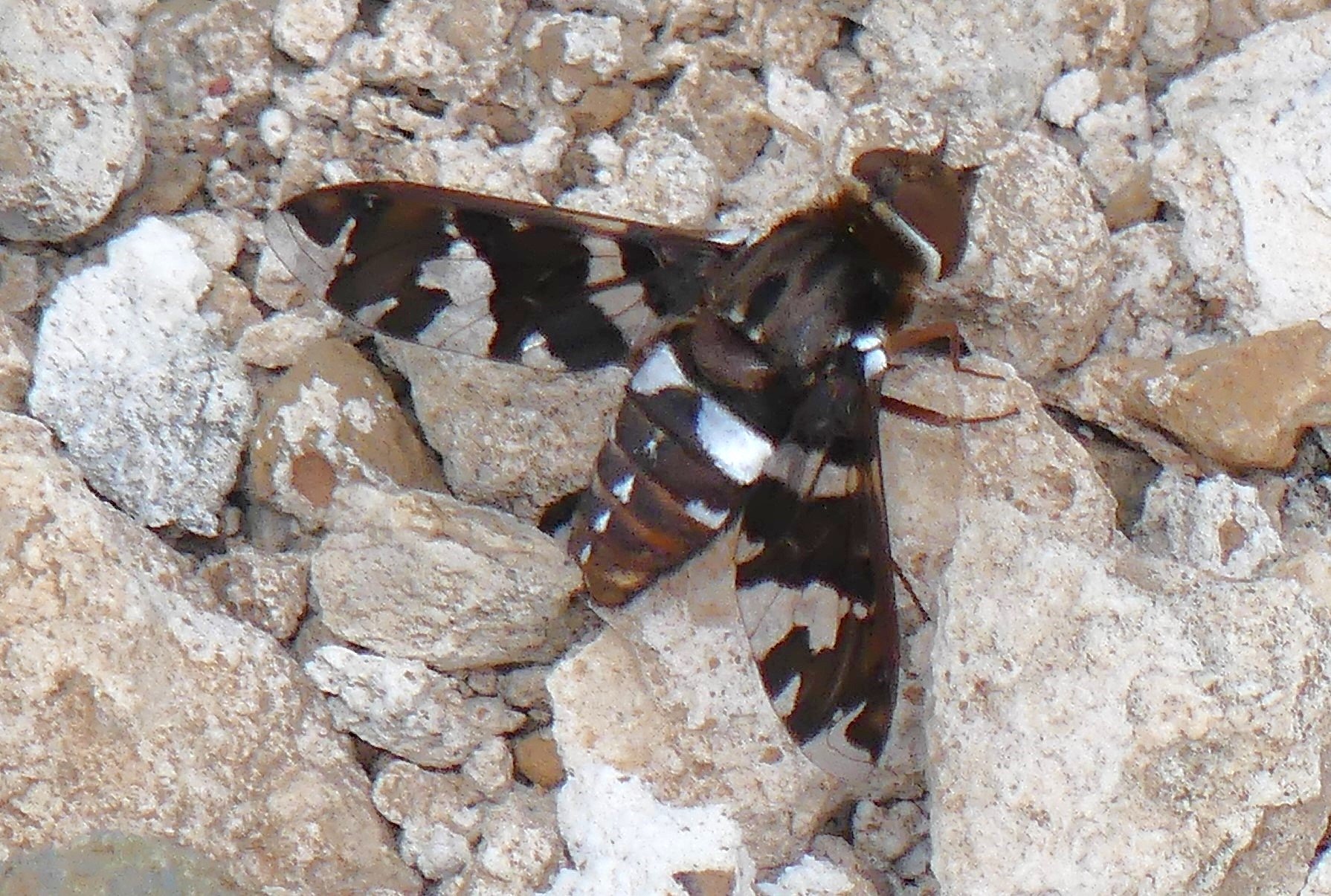
Patterned in black, this species is close to dorcadion but with the infuscation extending beyond the end of the 1st submarginal cell. It appears to have a major and minor flight period, the stronger being in the spring.
Range: COCH, GRAH, GREE, PIMA, PNAL, STCR
Occurs: Early April to Mid-May, Early September to Late October
Exoprosopa “Chihuahua 1”

This is a handsome species with deep golden facial pile and jet-black legs and a prominent white band crossing the front of the abdomen. Local individuals have three main black areas in the wing with clear tips. The remainder of the abdomen is chestnut with a thin black posterior margin on the segments. We are aware of a small number of records from the Dragoon and Swisshelm Mtns. These individuals took nectar from white flowers of a mustard (Lepidium?) and Crucifixion thorn (Koeberlinia). In BugGuide, there appears to be two taxa with very different abdominal patterns and wing maculation included in this category.
Range: COCH
Occurs: Late June
Exoprosopa clarki
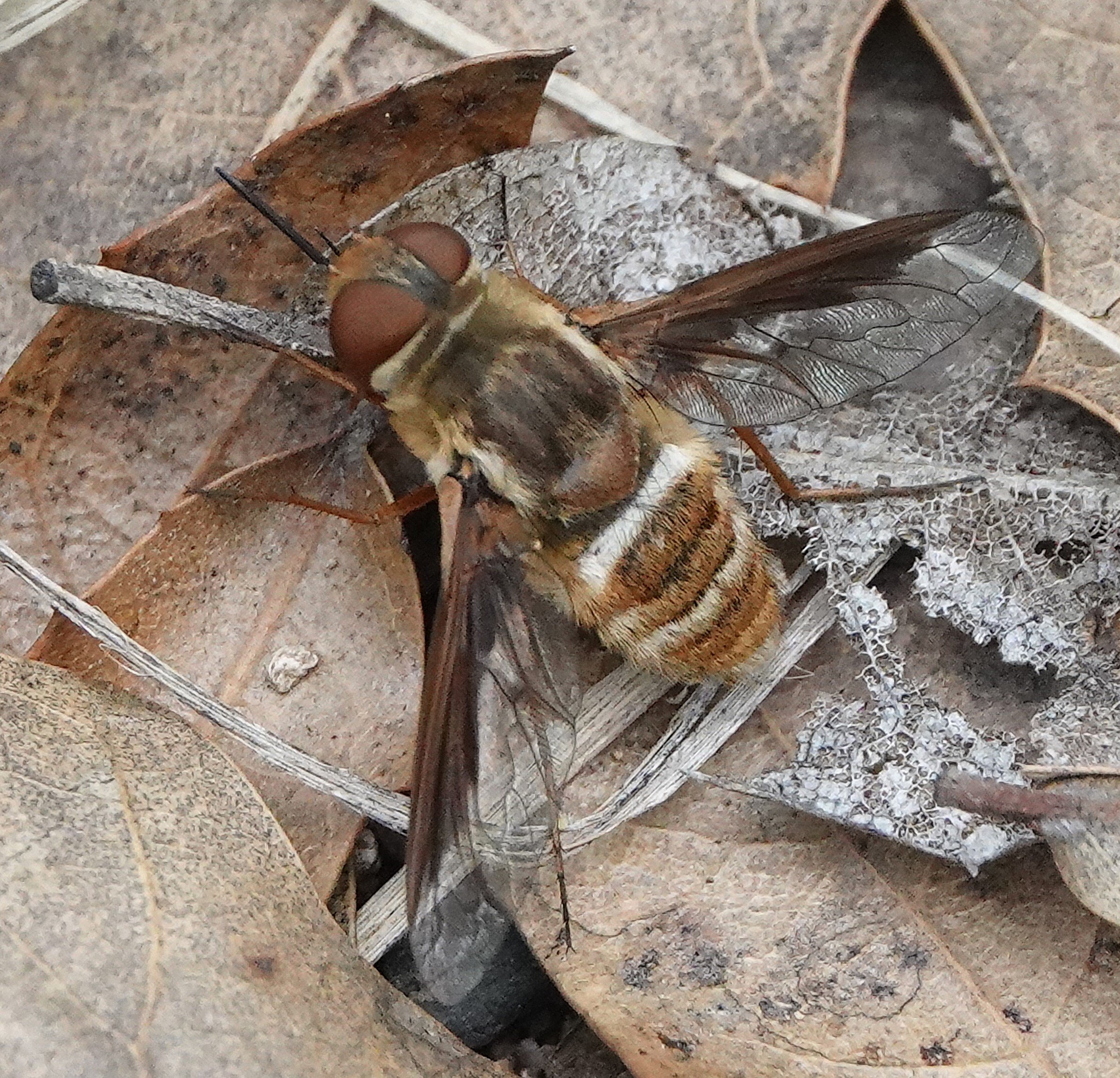
This uncommon species is fasciated, with a very long beak, a fairly long style on the antennae, and with or without a cloud at the base of the 4th posterior cell. There is considerable orange on the abdomen and the species appears to be restricted to mid-altitudes.
Range: COCH, GRAH, PIMA
Occurs: Late July to Late October
Exoprosopa dodrans
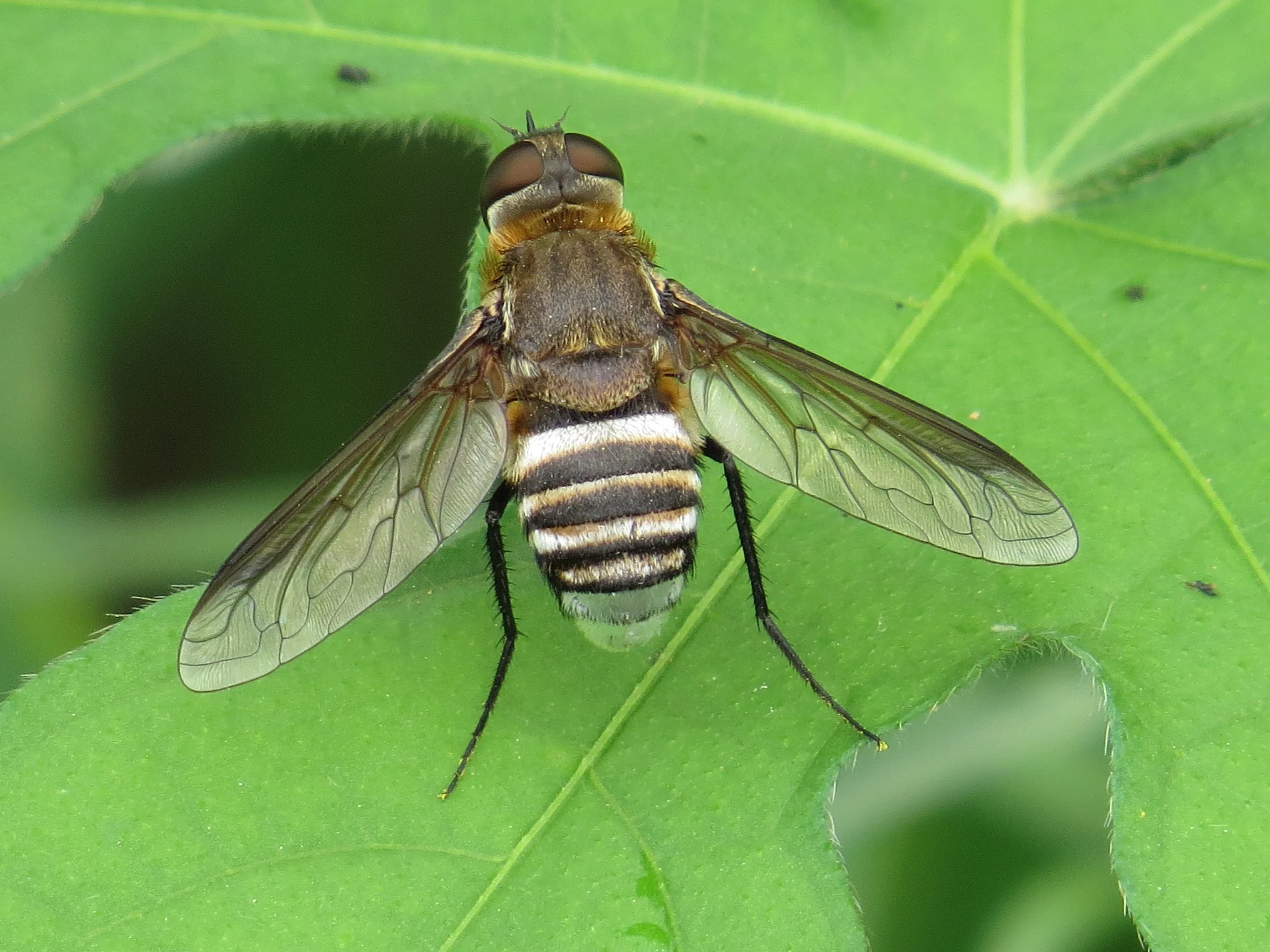
This fasciated species is medium-sized, having a body length of 9-11 mm and a beak that barely protrudes beyond the head. The wings show a cloud at the base of posterior cell 4. The legs and the thoracic bristles are black.
Range: COCH, PIMA, PNAL
Occurs: Mid-August to Late October
Exoprosopa dodrina

Very similar to dodrans, this medium-sized, fasciated species has a longer beak, usually protruding a full head-length. The legs and thoracic bristles are black and the style is about the same length as antennal segment 3.
Range: COCH, STCR
Occurs: Late July to Mid-September
Exoprosopa “dolichopteryx”
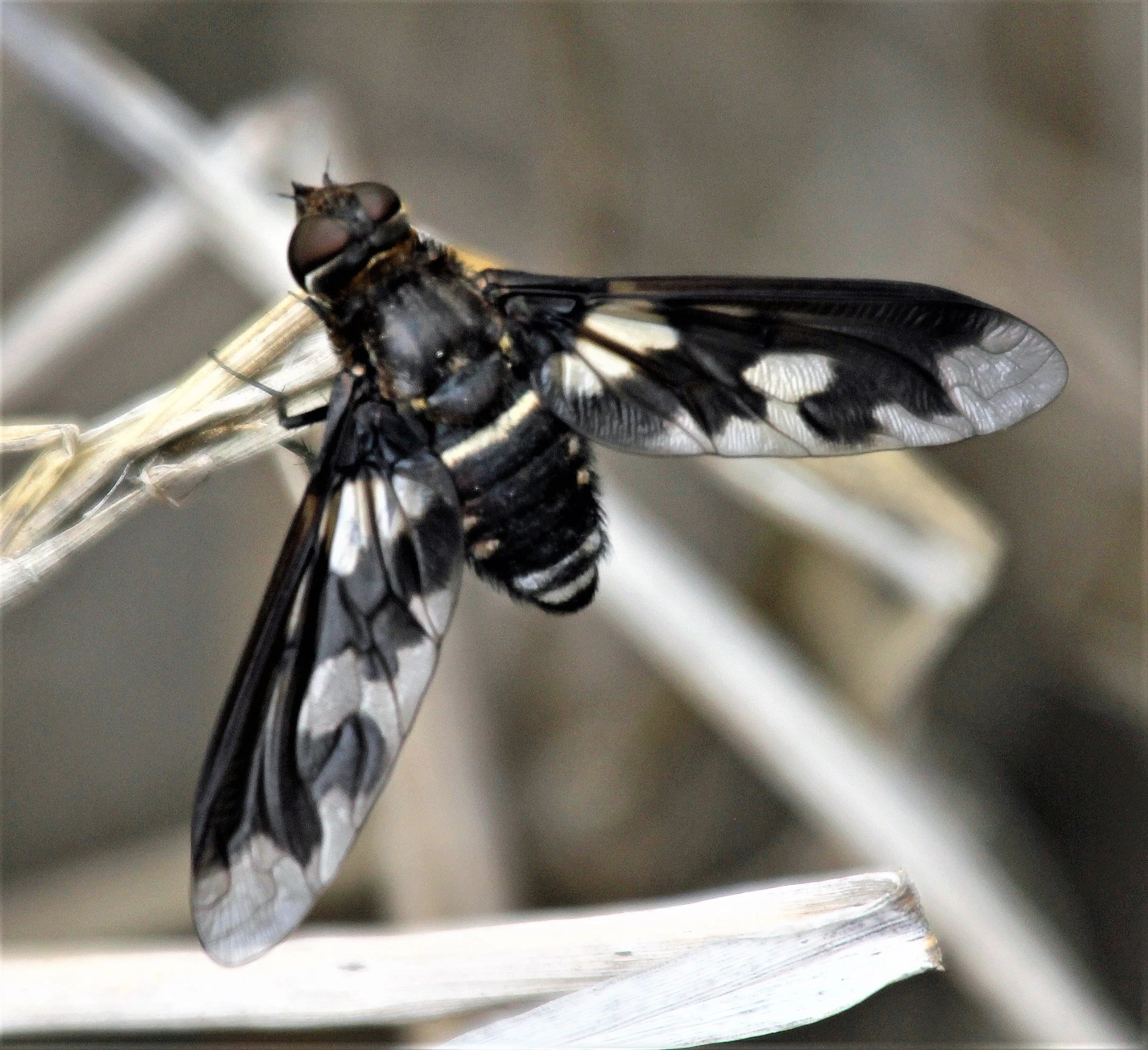
One of the largest Arizona species, this is a heavily patterned member of the genus. It goes to a variety of nectar sources and, on occasions, is locally common at mud puddles. Although presently undescribed, in some of the literature, it goes by the name "Chihuahua II".
Range: COCH, PIMA, PNAL
Occurs: Early July to Mid-August
Exoprosopa dorcadion

This species is crisply patterned in black, a pattern that is very similar to that of caliptera. From that species, it differs in that the infuscation in dorcadion fits perfectly against the distal end of the 1st submarginal cell. Also note that it does not appear to have an early flight as does caliptera.
Range: COCH, PIMA, STCR
Occurs: Early September to Late October
Exoprosopa fascipennis

In this large genus, this is one of the smallest species, with a body length of 7-10 mm. It is well-patterned but with clear wingtips. The femora and thoracic bristles are mostly orange, as are tergites 3-6, and the antennal styles are about 1/3 the length of the third segment. It is a widespread species, occurring across much of the country, but western populations seem distinct and may represent a separate taxon.
Range: COCH, GRAH, GREE, PIMA, PNAL, STCR
Occurs: Late August to Late September, 3 May Records
Exoprosopa fumosa
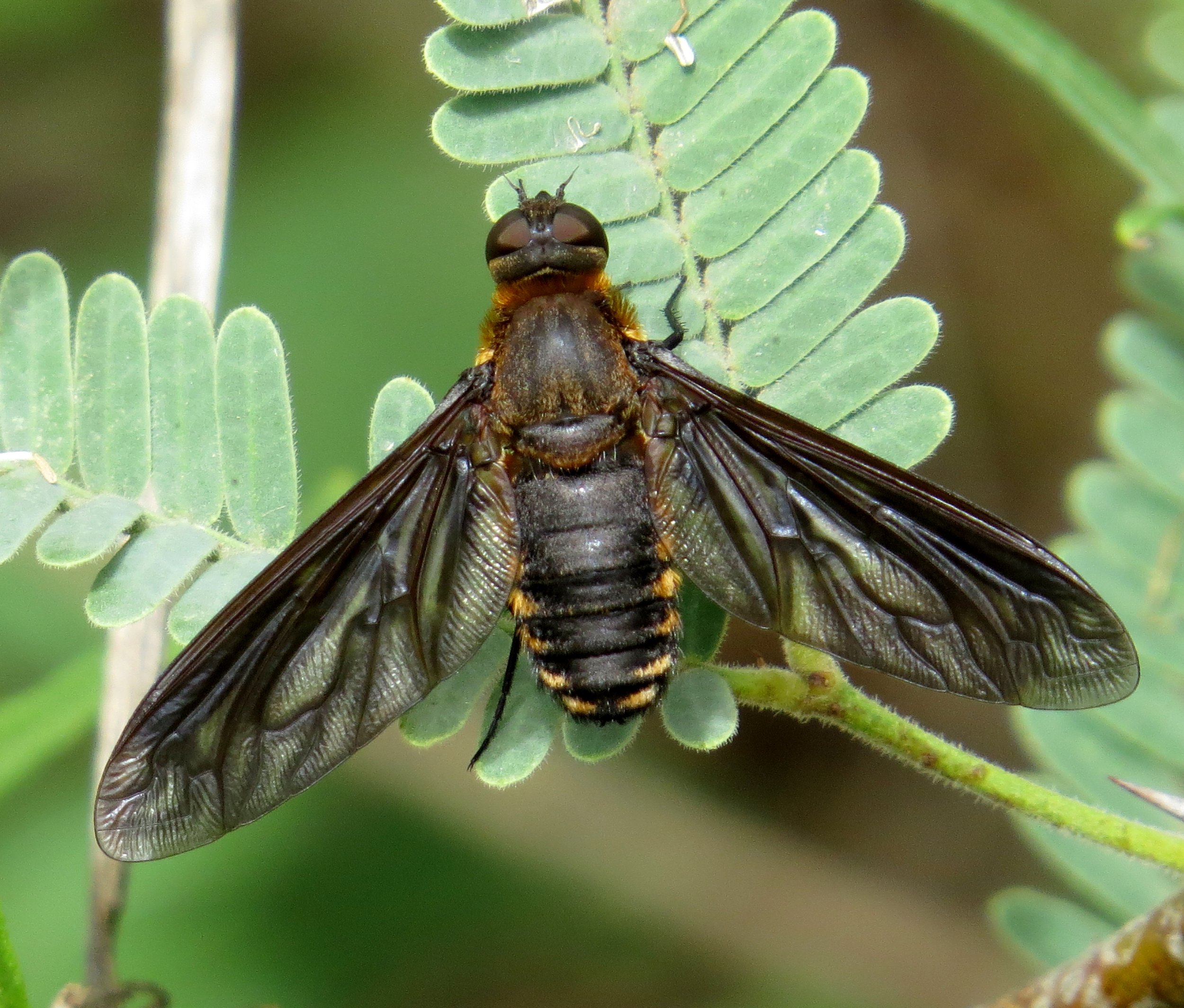
This is a very large species, having a body length of 12-14 mm. The wings are almost entirely dark, a unique regional feature. Both the thorax and the abdomen are black and are edged in bright orange pile. The species tends to have a short flight.
Range: COCH, PIMA, STCR
Occurs: Late July to Late August
Exoprosopa hyalipennis
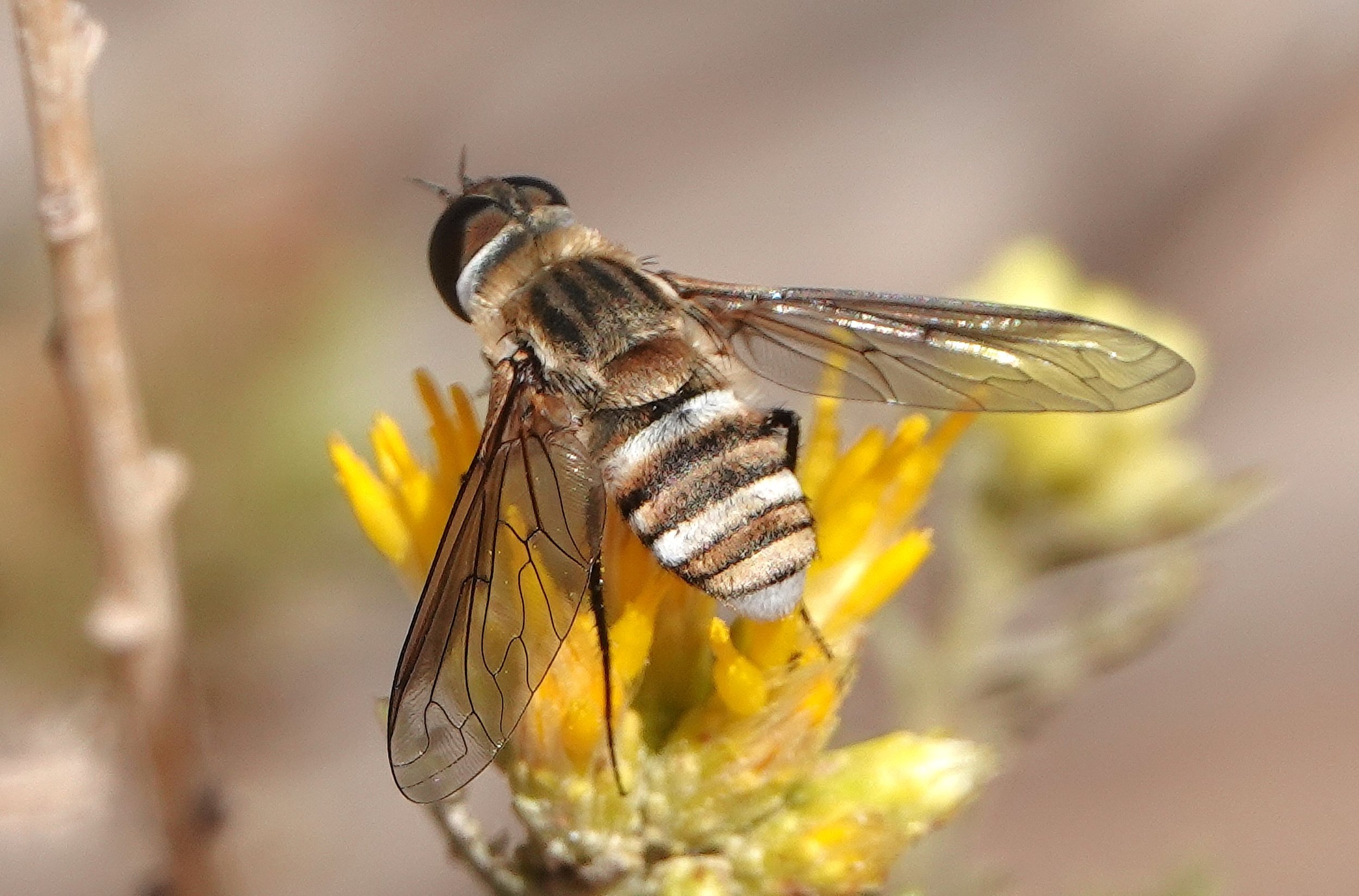
In the Exoprosopa key, one of the 3 members of Group I is a nearly hyaline species, previously known only from Mexico. A number of individuals of what appears to be this taxon, have been found at the edges of farmland in several places, 20-35 miles east of Willcox. The venter is mostly silvery-white as are the last two tergites. If the ID is correct, it is a new U.S. record.
Range: COCH
Occurs: Early September
Exoprosopa ingens
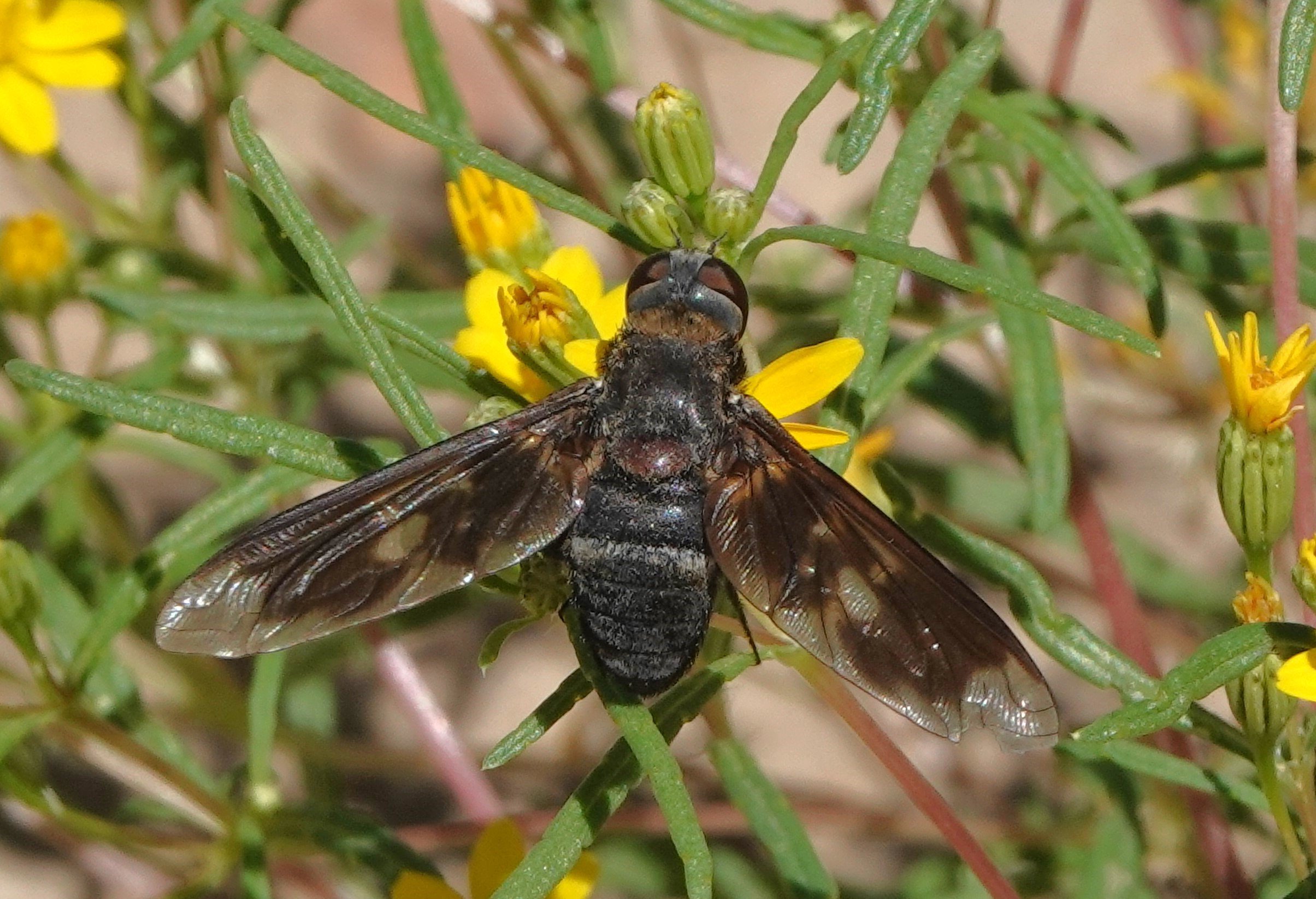
Even larger than fumosa, this very large species has a body length of 16-18 mm. It is strongly patterned and has very small antennal styles. The body is mostly black, offset by a bright tan collar, thoracic edge, and incomplete ring on tergite 3. While typically occurring as singletons, it is occasionally seen in considerable numbers, e.g. 17 at one cluster of flowers in the Peloncillos!
Range: COCH, GRAH, GREE, PIMA
Occurs: Late June to Mid-September, mostly July
Exoprosopa junta
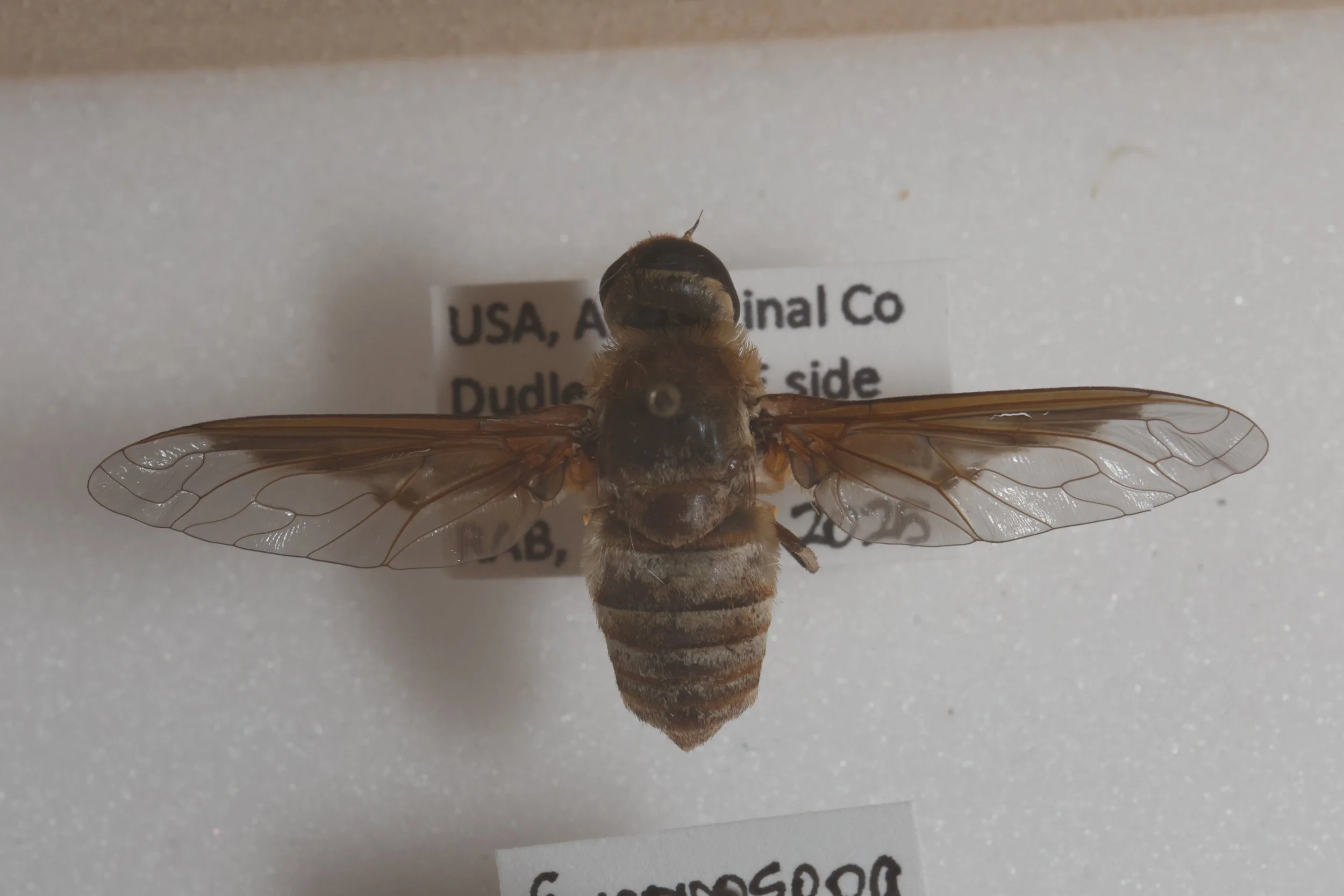
Uncommon and one of the larger species in the genus, it is characterized by the dark, wide infuscation which includes the 2nd basal cell. Also note the short beak and the lack of black chitin and tomentum on the face and front.
Range: COCH, GRAH, PIMA. PNAL, STCR
Occurs: Late July to Mid-September
Exoprosopa lutzi
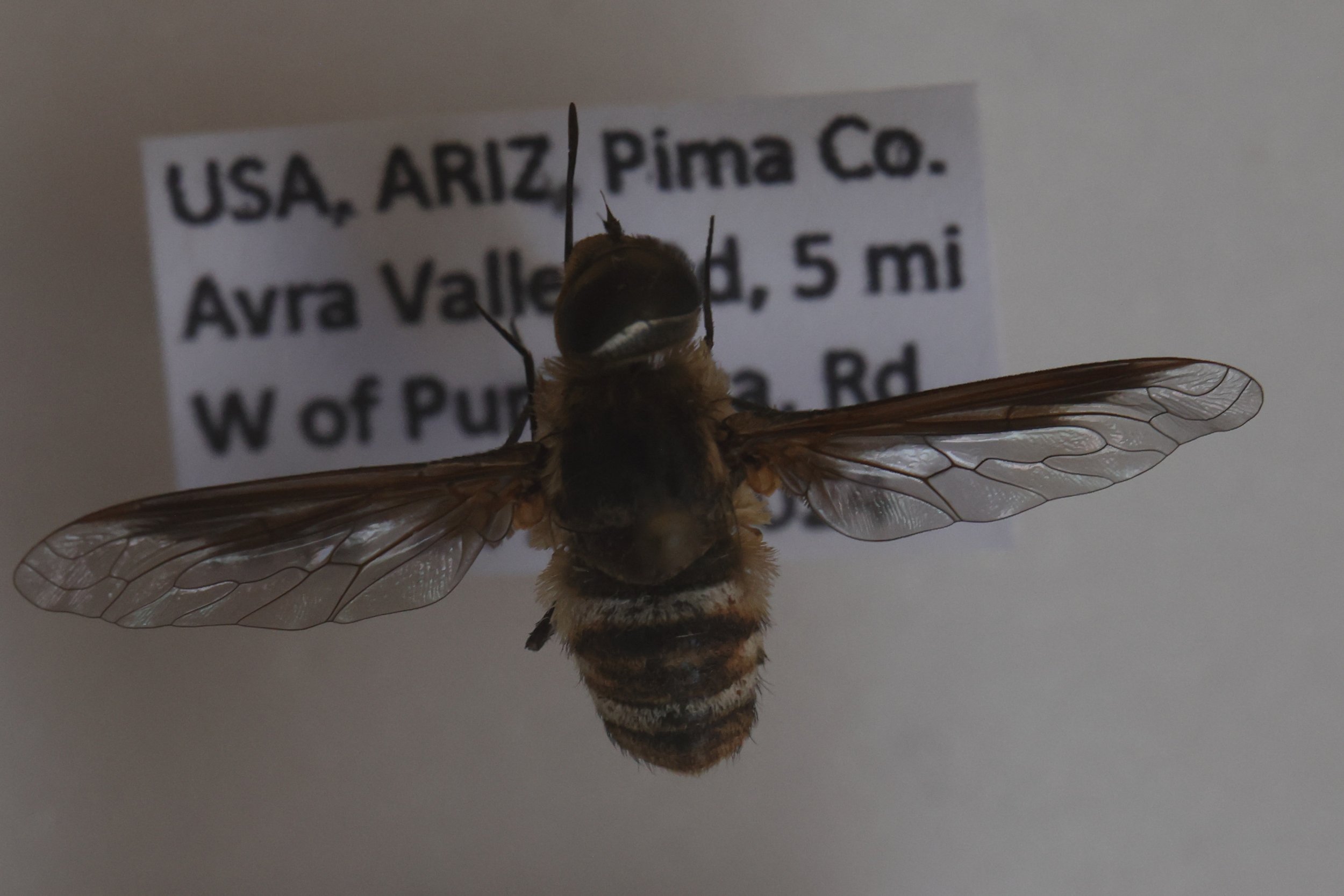
The long beak and single white abdominal ring limited to T2 are reminiscent of E. rostrifera. But note the lack of wing clouds and the slightly narrower infuscation, leaving the 2nd basal cell partly hyaline. It is not common.
Range: COCH, PIMA, PNAL
Occurs: Late July to Late August
Exoprosopa “near butleri”
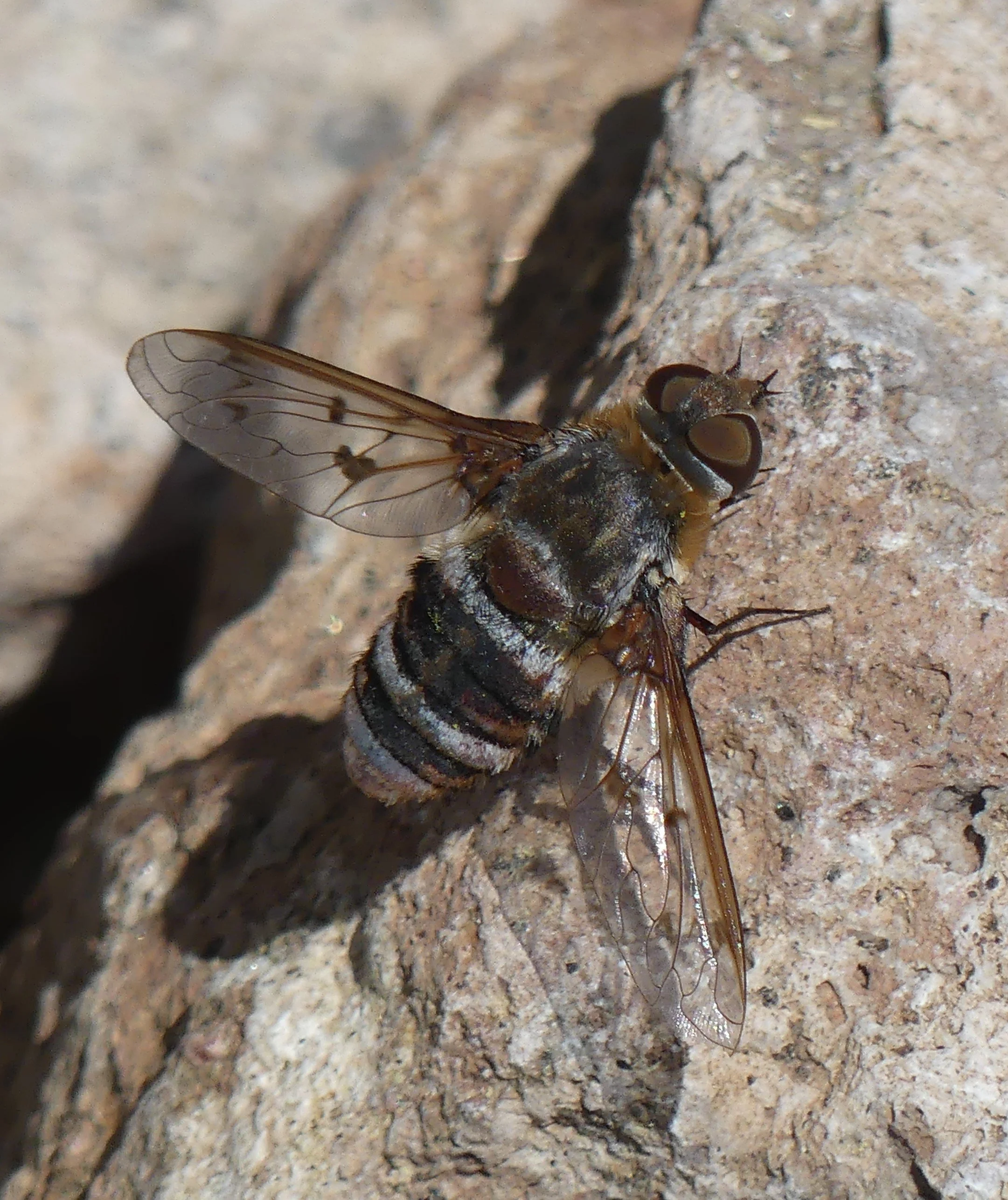
This species exhibits an abdomen with two prominent white stripes and a pale tip. The wing base and costal area have a very pale brown infuscation, and there are about five cloudy spots on crossveins and the junction of several veins. BugGuide includes an Oct record from further north in the state.
Range: PIMA
Occurs: Late September
Exoprosopa parda

The abdomen is banded in black, white, and cinnamon with a silvery tip. The wings have a pale to dark infuscation on the leading edge. Posteriorly, several veins may be darkened.
Range: COCH
Occurs: Late July to Late August
Exoprosopa pueblensis
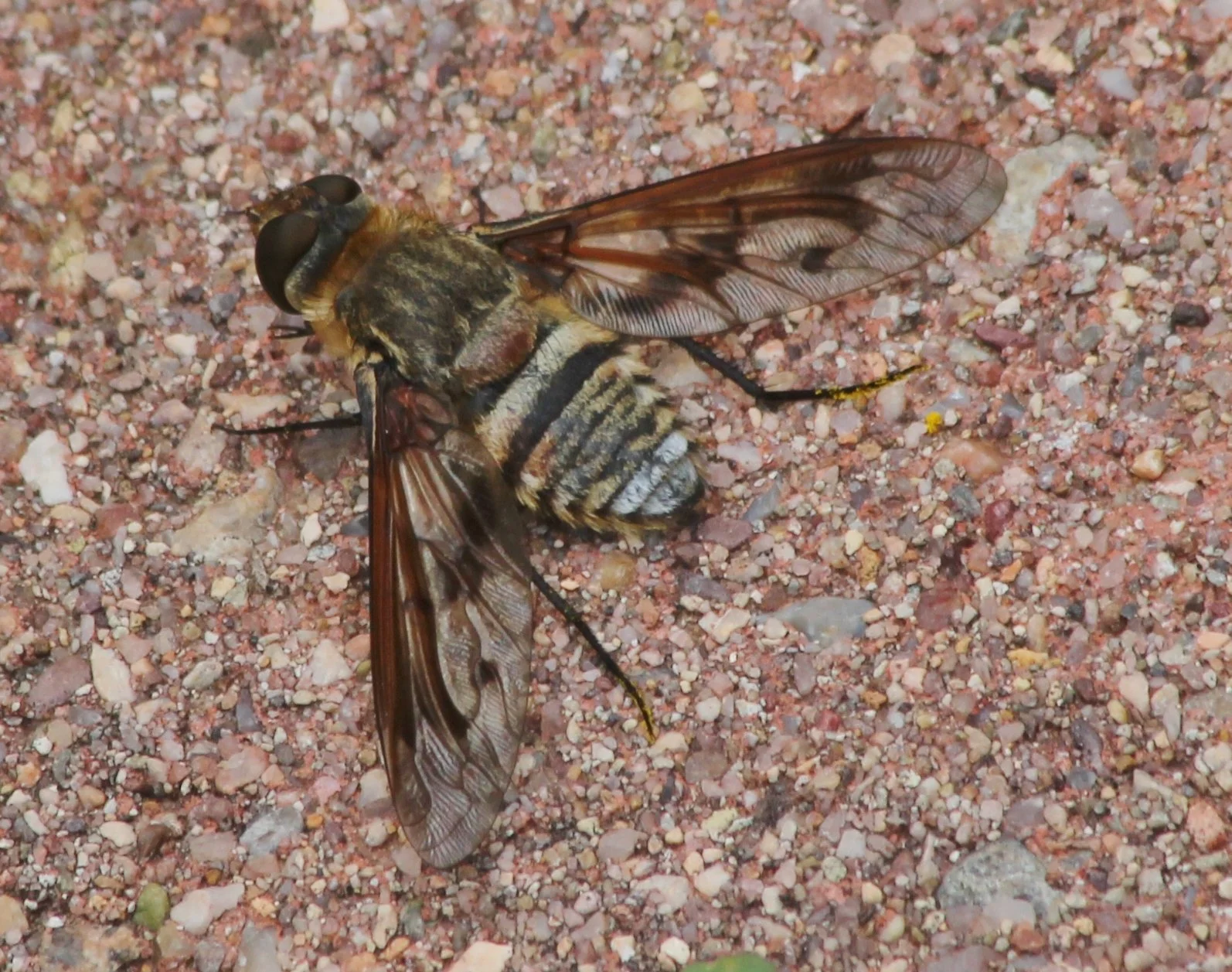
This is a widespread species in the region but not usually common. It is fairly large in size with a body length of 10-13 mm. It is quite similar to butleri but the costal area shows more infuscation. Most importantly, however, is the open 1st posterior cell, immediately differentiating it from butleri.
Range: COCH, GRAH, PIMA, PNAL, STCR
Occurs: Late June to Early October
Exoprosopa “Ramsey Canyon”
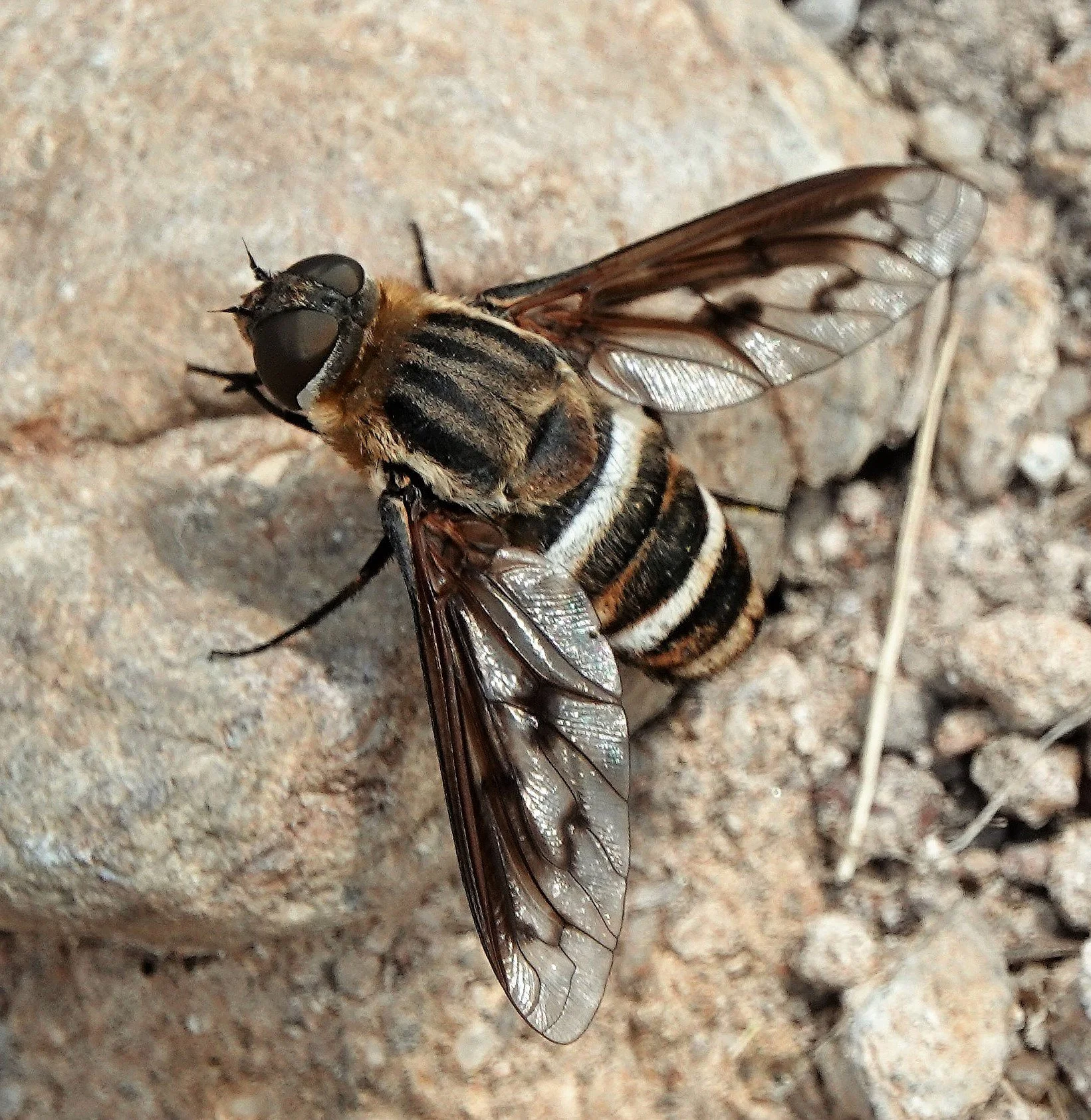
Except for a pale tip, the anterior portion of the wing is darkly infuscated. Posterior to that dark infuscation are several spots that float or barely connect. The abdomen is banded with white, black, and chestnut, and has a pale tip. There is a collar of chestnut pile. Four photographed individuals exhibited four black longitudinal stripes on the dorsum of the thorax. A number of records are from canyons around 5,000’ elevation.
Range: COCH
Occurs: Late August to Late September
Exoprosopa rhea
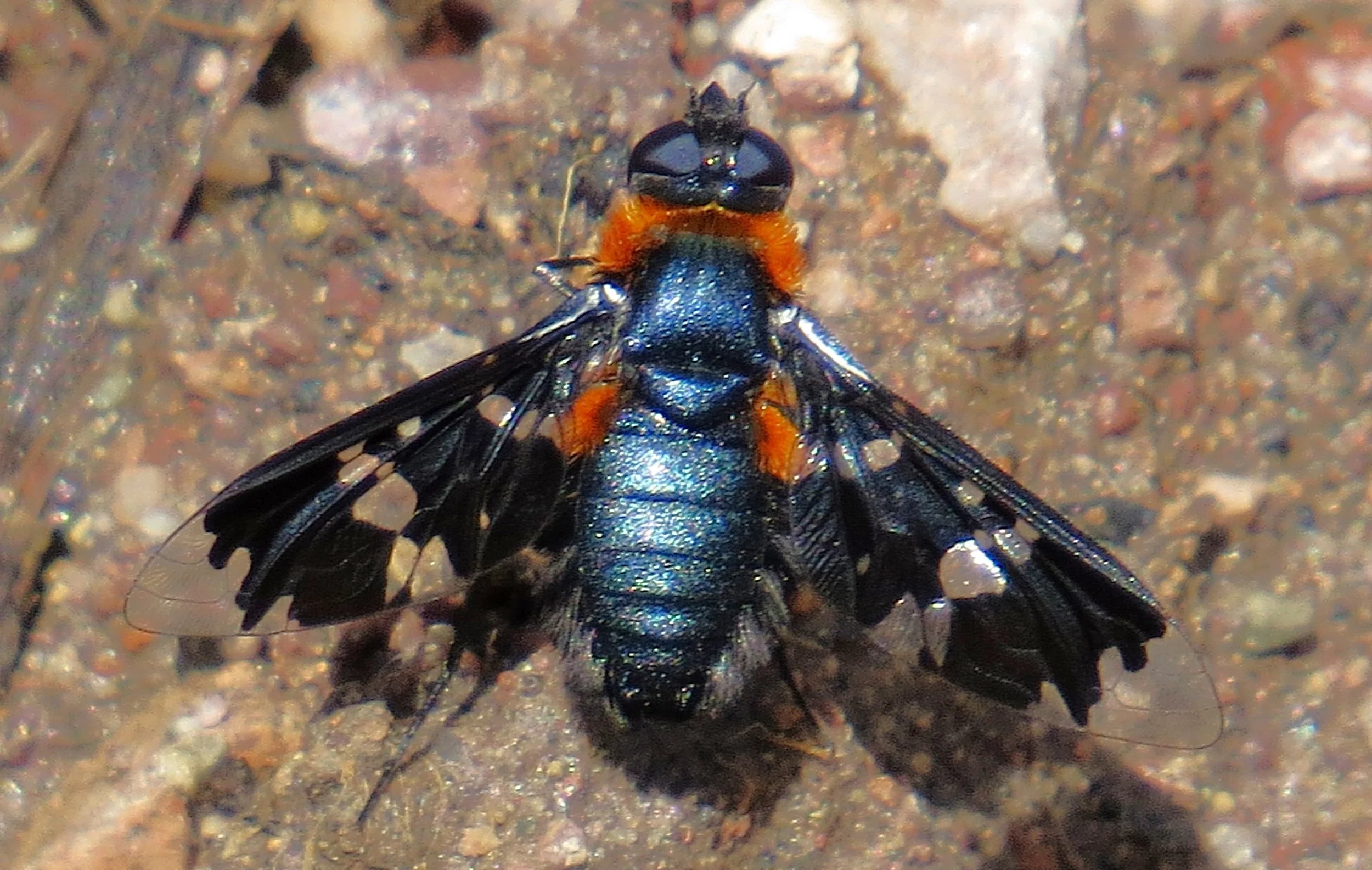
This species is unique in our region, having a more rounded, squatter wing shape, especially in relation to its 14 mm long body. Also unique is its distinctive blue and orange coloration. It has a restricted range at mid to high elevations, mostly in the upper San Rafael Valley.
Range: COCH, PIMA, STCR
Occurs: Mid-September to Mid-October
Exoprosopa rostrifera
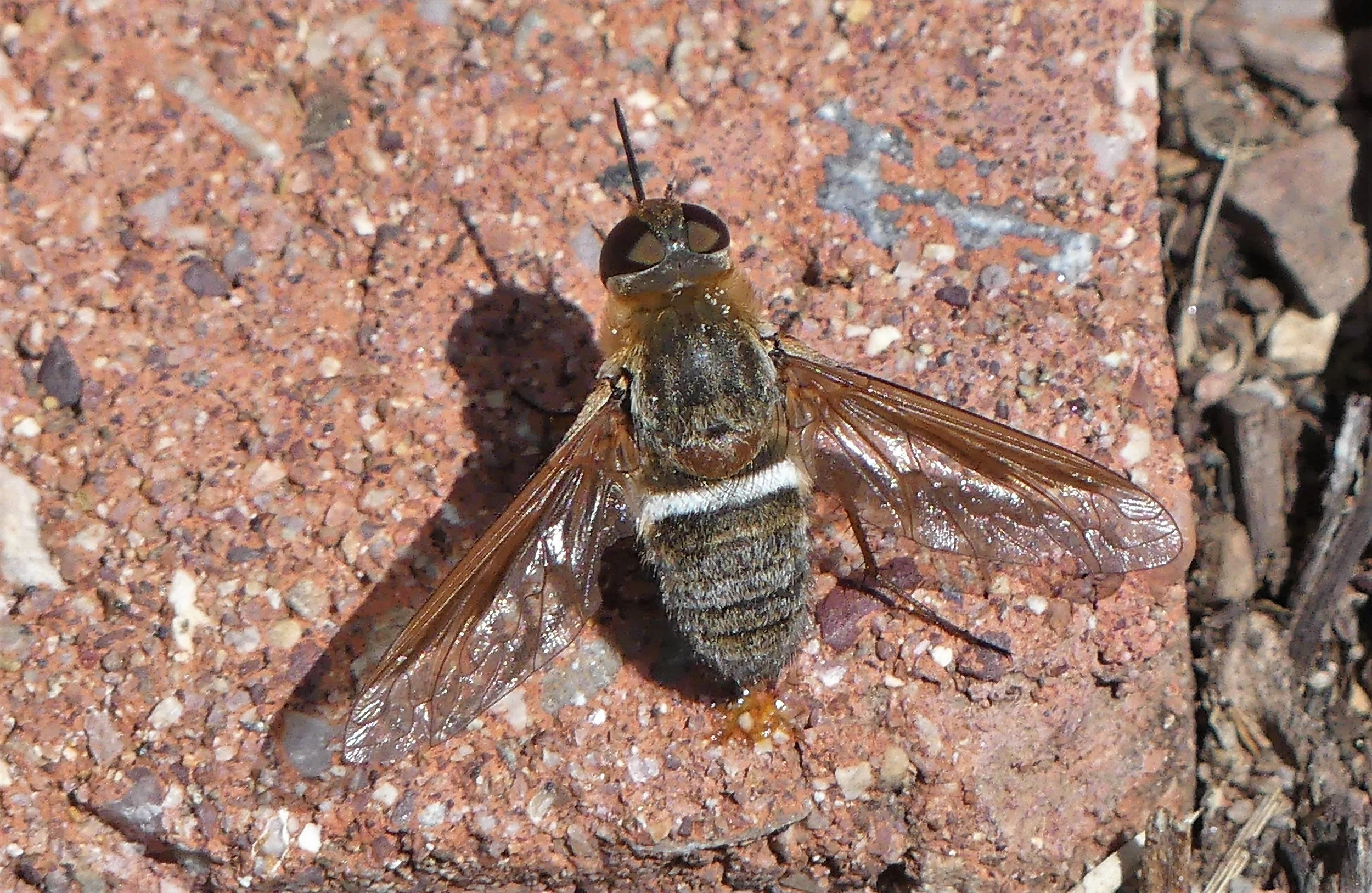
A crisply fasciated, mid-sized (11-14 mm) species, sometimes with a single cloud at the base of the 4th posterior cell and always with a long antennal style. On the abdomen there is a lone white ring around T2 and perhaps most noteworthy, the beak is among the longest in the genus, a character that separates this species from brevirostris.
Range: COCH, GREE, PIMA, STCR
Occurs: Mid-July to Early September
Exoprosopa socia
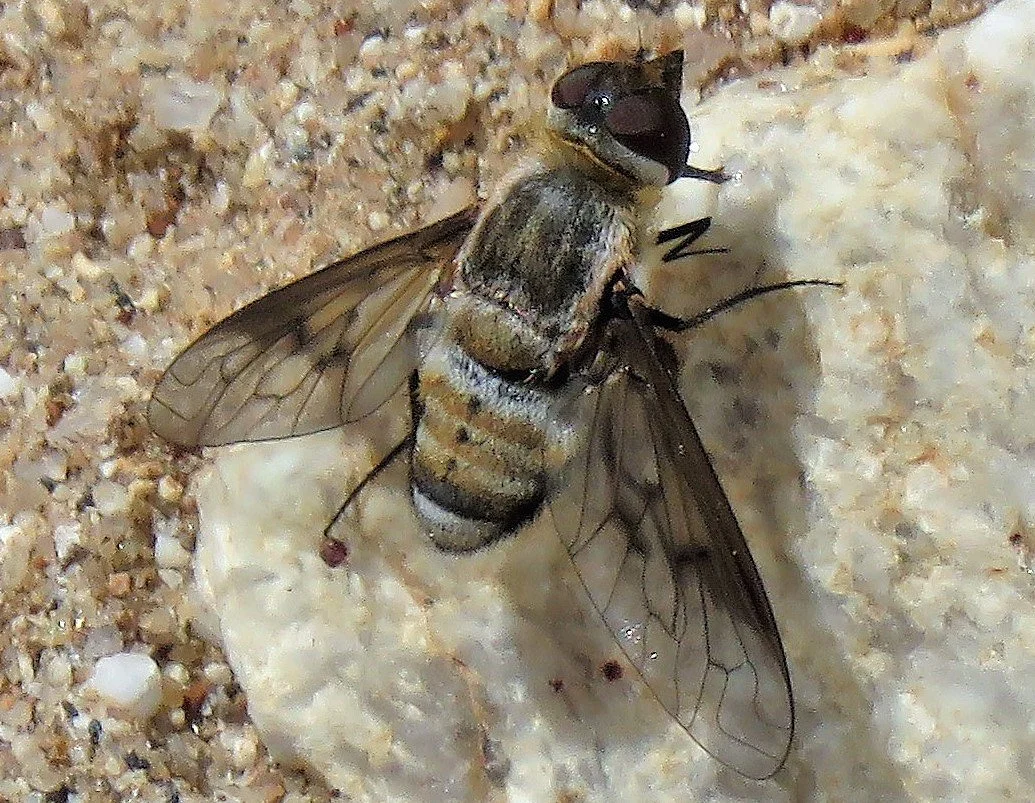
This species is fasciated. It possesses a long beak, very long styles, and has a white ring on T2. The lone record was from the Chiricahua Mtns in late summer in the 1950s.
Range: COCH one record
Occurs: Early September
Exoprosopa “Sonora”

The abdomen is pale tan and smooth-sided with a E. pueblensis-type wing pattern. Calderwood (in BugGuide) suggests it may be an undescribed species.
Range: PIMA
Occurs: Mid-August
Exoprosopa texana
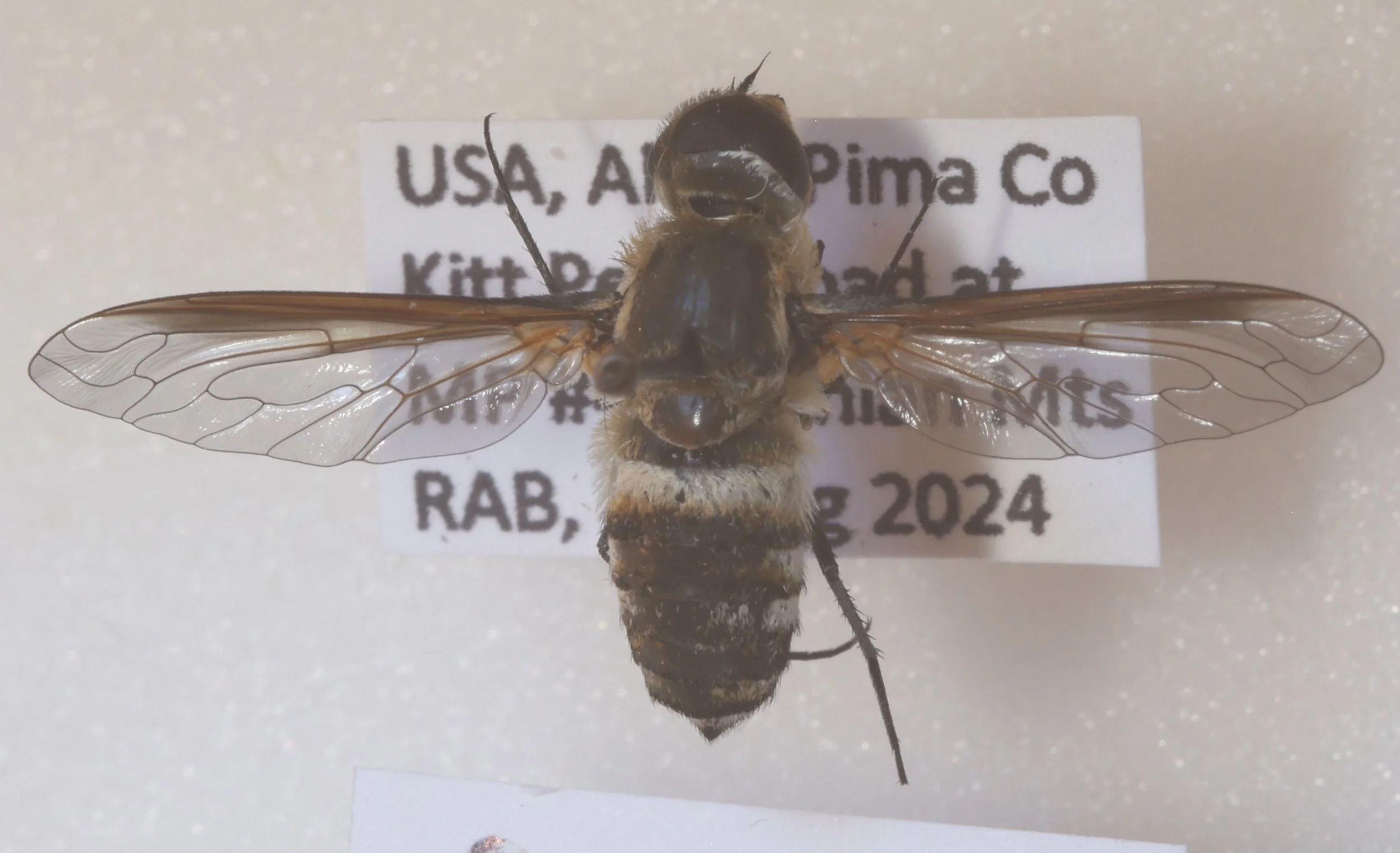
This fasciated member of the genus is of medium size. It can be identified by the restricted infuscation without crisp edges, clouds at the base of the 1st and 4th posterior cells, short styles, and white rings on T2 & T4.
Range: COCH, GREE, PIMA, PNAL
Occurs: Early August to Late September
Exoprosopa titubans

A common bombyliid of our region, this species is large, as long as 15 mm. The wings are infuscated on the leading edge, and there is a cloud on the base of the 4th posterior cell. It may be conspecific with agassizii.
Range: COCH, GREE, PIMA, PNAL, STCR
Occurs: Late July to Late September
Several other species have been regionally reported but lack conclusive identifying fieldmarks. They include doris and eremita. We await extensive, up-to-date treatment on the genus, perhaps by expert A. Calderwood and others, to help clear up many of the identification mysteries still existing.