
Genus Epacmus
Epacmus “elenae”

This new species (description in prep) is large, has a ringed and concave-sided abdomen, hyaline wings, and an R4 vein with a strong spur. In Melander's 1950 paper, it keys out to E. litus. However, most diagnostic and unique in this population is the closed and stalked 1st posterior cell. No other Epacmus is known to have this character. Recent DNA barcoding reaffirms this species' presence in Epacmus rather than Aphoebantus.
Range: COCH, STCR
Occurs: Late September to Late October
Epacmus cirratus
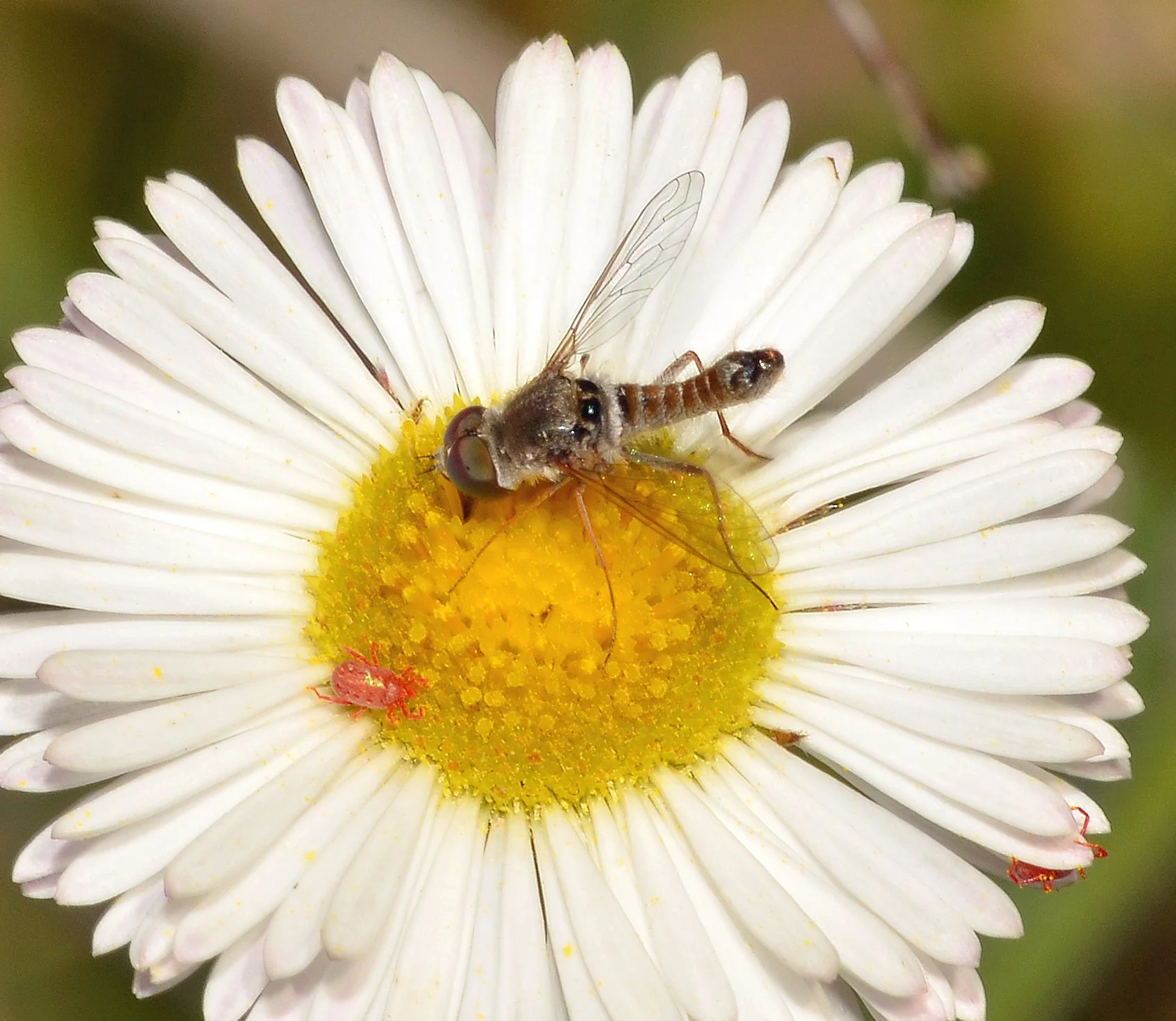
This species may well be the only spring-flying species of Epacmus within the region. Note the slightly bilobed scutellum, the orange tibiae, and the dark-tipped halteres. Males have a concave-sided abdomen and are unique in having an orange, claw-shaped appendage at the abdomen tip.
Range: STCR
Occurs: Early April to Early May
Epacmus litus

Although the proboscis is short, the concave-sided abdomen and protruding pygidium strongly suggest this taxon belongs in Epacmus. Note that this uncommon regional species has been recorded from middle elevations in the Huachuca, Chiricahua, Patagonia and Santa Rita Mtns. as well as from near Benson. In certain light, the eyes appear turquoise.
Range: COCH, STCR
Occurs: Mid-September to Early October
Epacmus morsicans

Similar to the following species. Note the bare shiny black face with, at most, only a tuft of stiff black hairs in the center. The abdomen is more noticeably ringed in this species, concave-sided, and the middle segments are covered in red-orange tomentum. The proboscis in E. morsicans is long. It also differs in the leg color, which is mostly orange in E. morsicans and black in E. ponderosus.
Range: COCH, PIMA, STCR
Occurs: Mid-September to Late October
Epacmus ponderosus
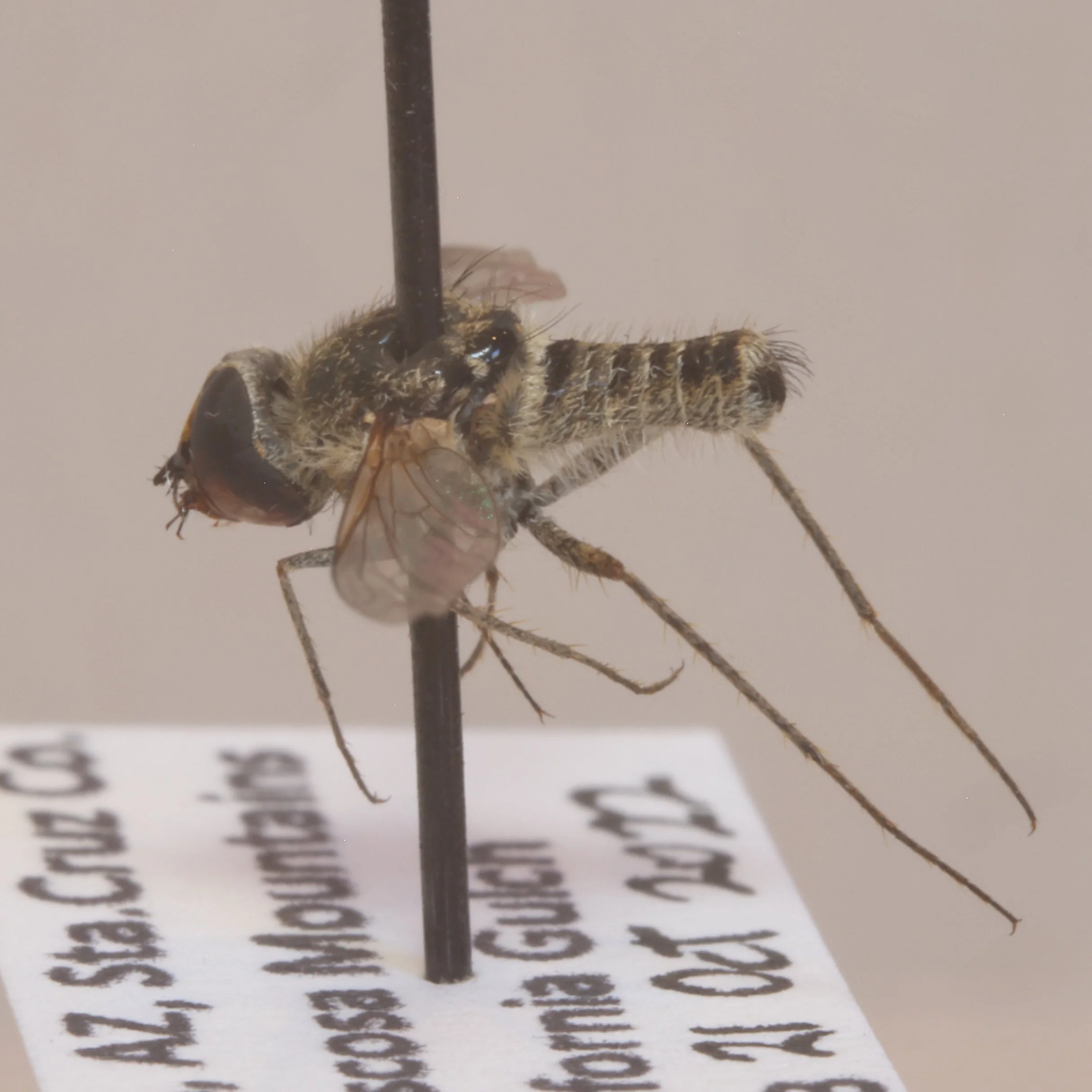
This is a medium size species with a body length of 7-8 mm. the proboscis barely protrudes, and the face has a stiff tuft of black hairs in the center. There is a submarginal spur vein, and the abdomen shows a white ring around T1.
Range: COCH, STCR
Occurs: Early October to Late October
Epacmus “veranae”
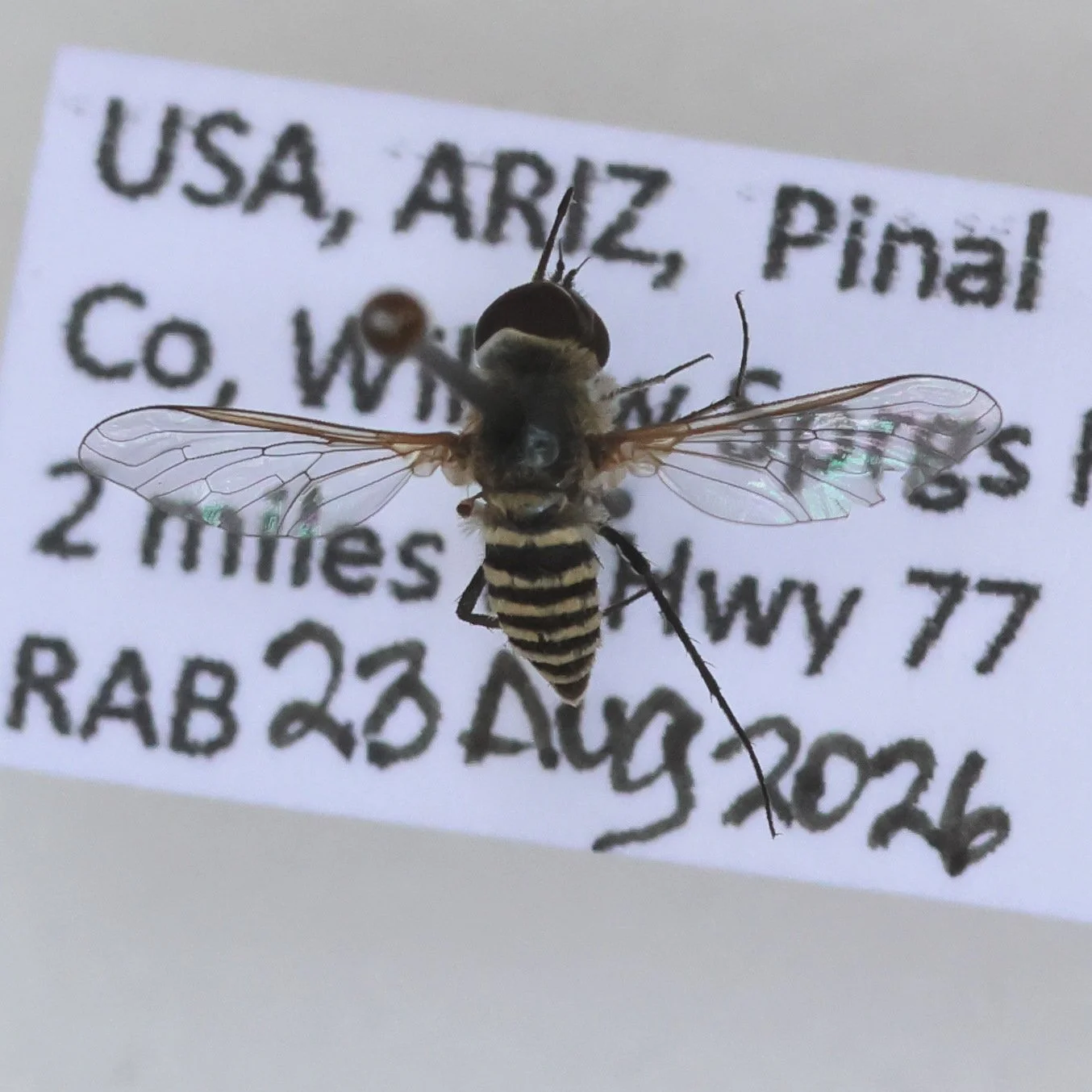
Odd for this genus, the flight of this new high desert species (description in prep) seems confined to late summer. Both sexes have strong, white abdominal rings (reminiscent of ringed Aphoebantus, e.g. scalaris) and shiny black faces. And both almost totally lack pile on the head. However, the sexes differ in that the males have upright black facial spines, just above the oral opening, and a whitish puffy front while the females lack the facial spines and have a mostly shiny black front. The femora are black while the other leg segments are dark fuscous. Both sexes frequent flowers, especially Amaranth blossoms.
Range: PIMA, PNAL
Occurs: Mid-August to Mid-September
Additional taxa with few records or without recent supportive vouchers include connectens, and tomentosus.