
Genus Apolysis
Apolysis “azuleus”
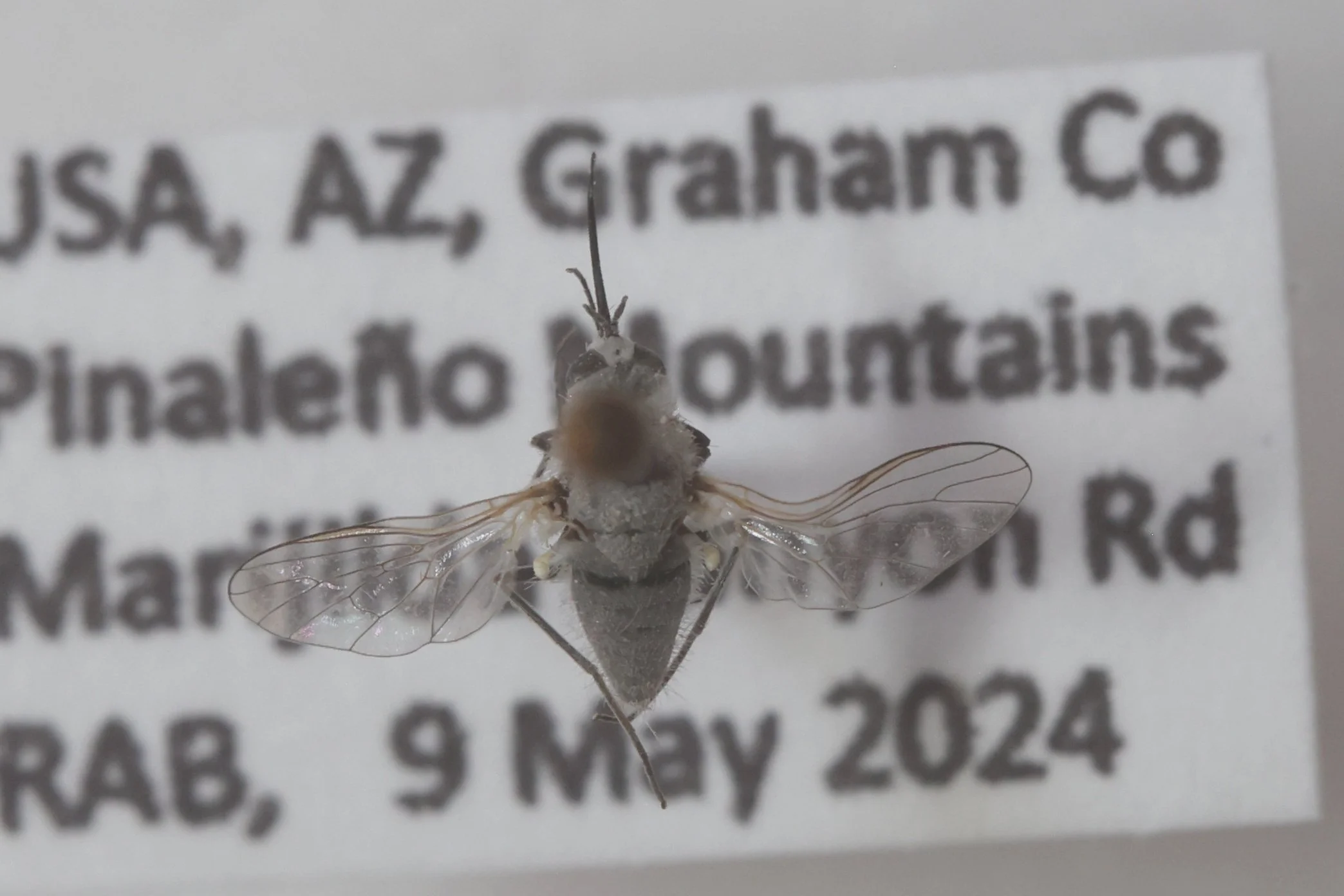
This is a tiny species with a length of 2-3 mm. It is mostly dark gray, has a black and white ringed abdomen and a hint of thoracic striping. The halteres are entirely white, and the proboscis is long and decurved. It visits blossoms of yellow composites; e.g., Camphorweed (Heterotheca subaxillaris).
Range: PIMA
Occurs: Mid-April, Late August to Mid-October
Apolysis “perpendicularis”

A distinctive, small species, 2-4 mm, with longitudinal striping on the thorax and a series of broken dark rings around the gray abdomen. The proboscis is long and decurved. Most reports are from the spring. Another spring taxon, here dubbed A. “cinereus” may actually be a form of “perpendicularis”. In "cinereus", the abdomen lacks the dark rings.
Range: COCH, GRAH, PIMA, PNAL, STCR
Occurs: Early April to Late May, Mid-August to Late September
Apolysis “yescutus”
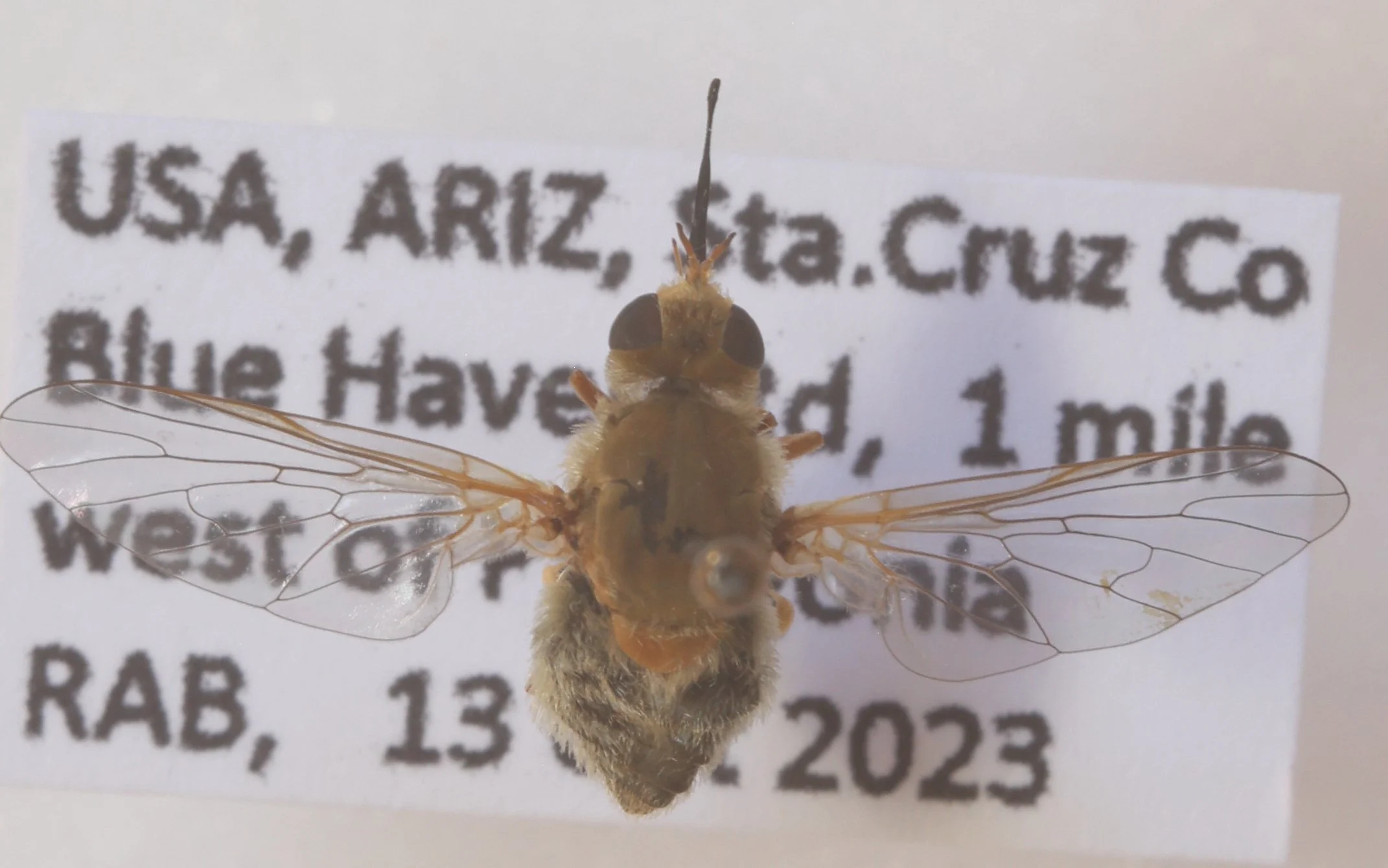
One of the larger members of the genus, this sexually dimorphic species is usually 4-6 mm in body length. Females have the head and thorax dull yellow, the scutellum brighter yellow, the abdomen gray-green and have sparse pile. Males are black, including the scutellum, with mostly orange legs, and the third antennal segment is orange. The species strongly favors yellow composites and tends to be active in the early morning.
Range: COCH, PIMA, STCR
Occurs: Early October to Early November
The species name A. crisis has been suggested for southern Arizona taxa although this seems unconfirmed.