
Genus Aphoebantus
Aphoebantus arenicola
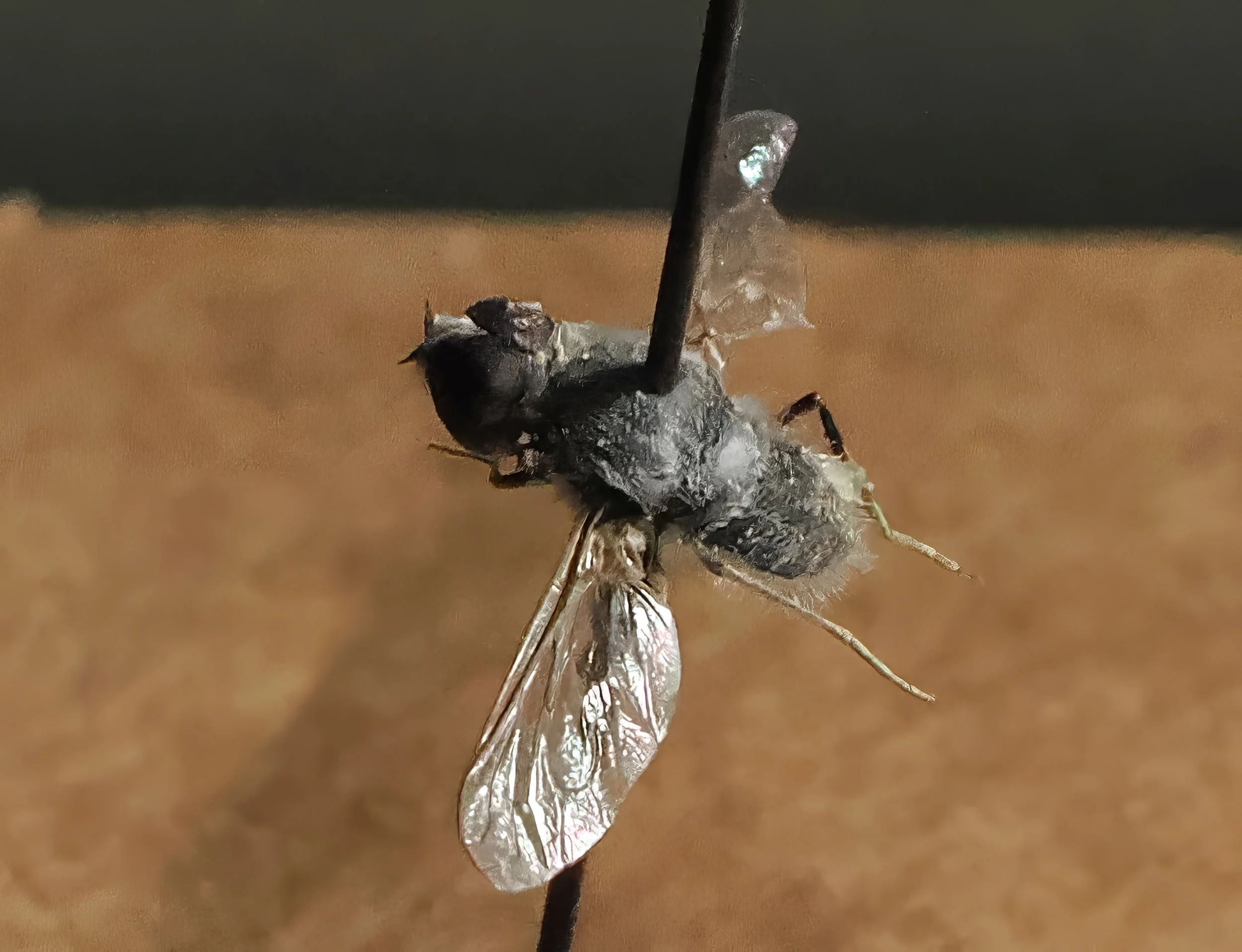
This common spring flier, usually about 5 -9 mm long, usually perches on the ground. Facial pile (and in ♂s, frontal pile) is mostly off-white. Rarely, there is a submarginal spur vein. The scutellar bristles are long, robust, and dark orange. The abdomen is short and covered with tan tomentum and the 3rd antennal segment is conical.
Range: COCH, GRAH, GREE, PIMA, PNAL, STCR
Occurs: Mid-March to Late May
Aphoebantus balteatus

This is a common species, flying in late spring. Note the white band across the front half of T2. The pile on the face and front is white; there is usually long white lateral pile on the abdomen, and the legs are dark. There are no scutellar bristles; occasionally, there is a short submarginal spur vein.
Range: COCH, PIMA, PNAL, STCR
Occurs: Late April to Late May
Aphoebantus bisulcus
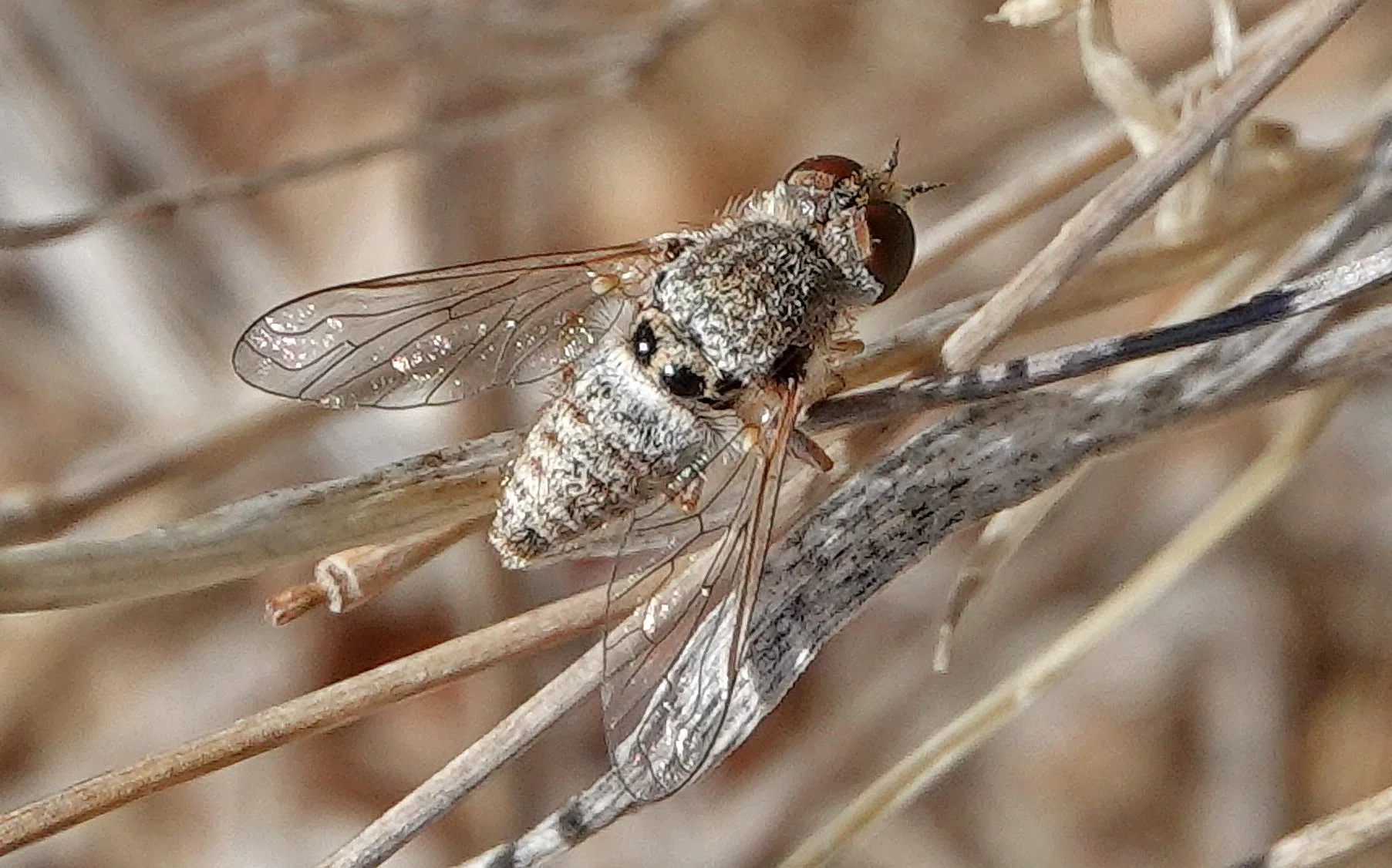
This is one of a small number of Aphoebantus with a bilobed scutellum. It is a small species, averaging about 6 mm. The face is white; there is sparse black pile on the front, and the halteres are yellow. The sparse scutellar bristles are also black. There is a tiny submarginal stub vein. There are weak spines on the hind tibiae and abdomen. Note the short, white pile and the tricolored tomentum.
Range: COCH, PIMA, PNAL, STCR
Occurs: Early April to Late May & Mid-September to Early October
Aphoebantus brevistylus

This is a mid-sized species that persists into the fall. The body length is 7-9 mm. The face is white pilose and the front is black. There are no spurs on the wing veins. The scutellar bristles are orange and weak. There are pale abdominal rings separating wide rings of black scales. It is possible that more than one species are lumped here since some populations have stronger, black scutellar spines and wing spurs.
Range: COCH, GRAH, PIMA, PNAL, STCR
Occurs: Late August to Late October
Aphoebantus cervinus/conurus
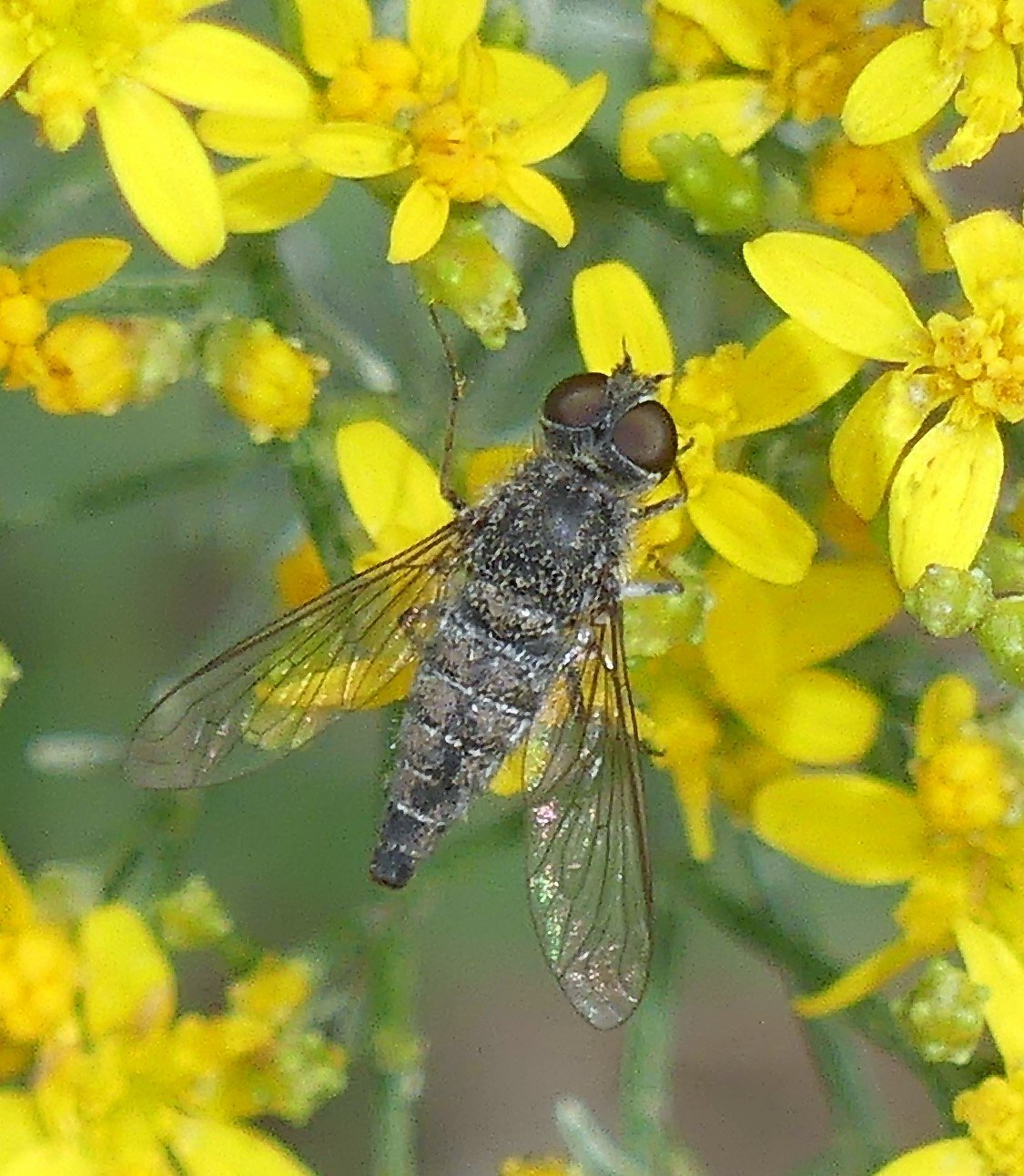
These are two very similar species; both are on the wing during late spring and again in the late summer. Invariably, there is a wing spur and a narrowed 1st posterior cell. The scutellum is largely covered in orange tomentum and the scutellar bristles are black and strong. The face is white, and the front is black. Note also the black tibiae, the orange abdominal tomentum, and the white lateral pile on the tergites.
Range: COCH, GREE, PIMA, PNAL, STCR
Occurs: Mid-May to Late June & Late August to Late September
Aphoebantus cyclops
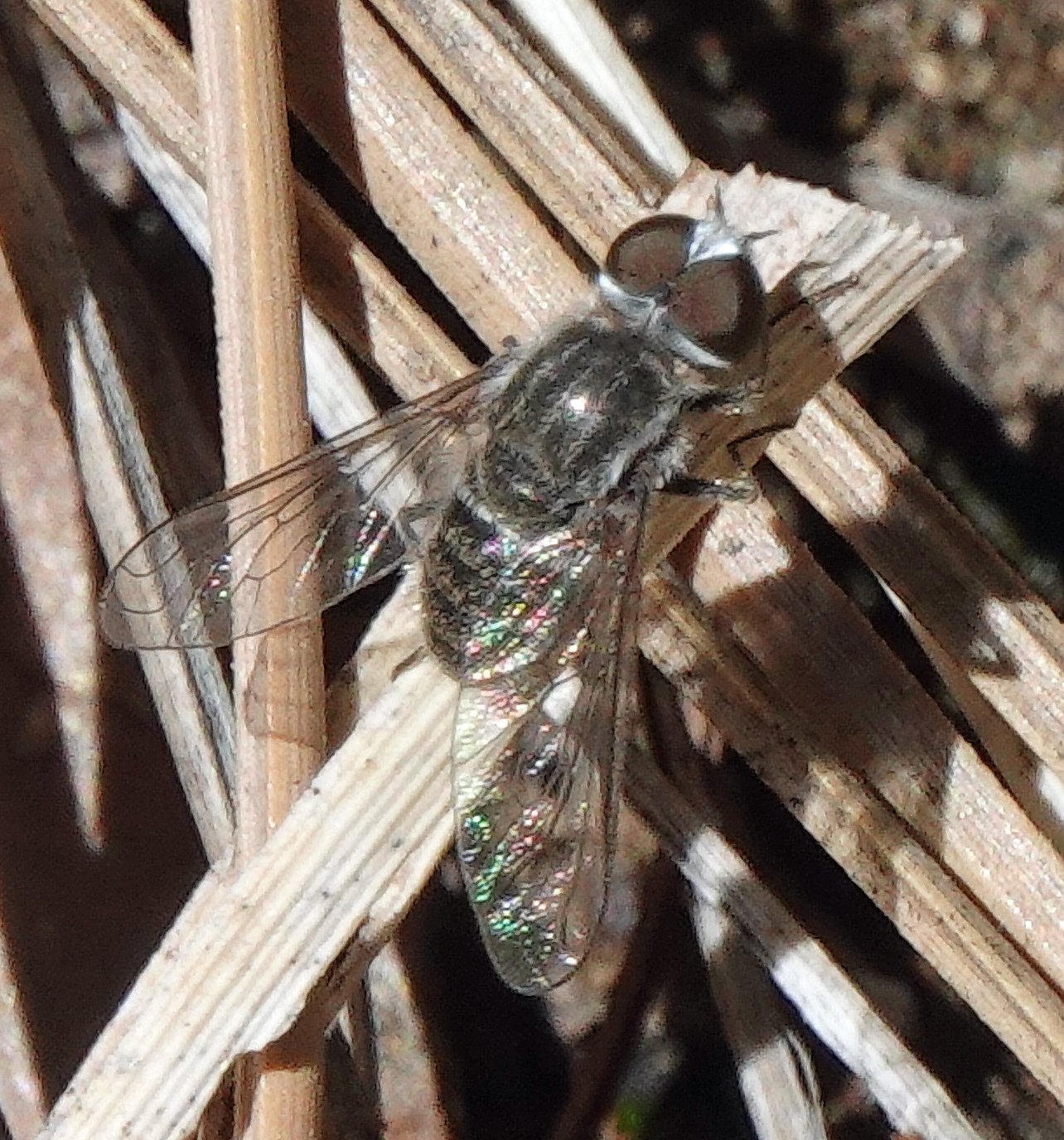
The body integument lacks shine and the scutellum lacks bristles. Fresh individuals usually have several incipient pale linear stripes on the thorax. Note the white face and the mostly gray abdomen with an obvious white ring on T1. This species may be seen air-lekking during mid-day. It can be confused with balteatus but in addition to the thoracic striping, it typically has a dark costal fringe.
Range: COCH, PIMA, PNAL, STCR
Occurs: Late April to Late May
Aphoebantus denudatus
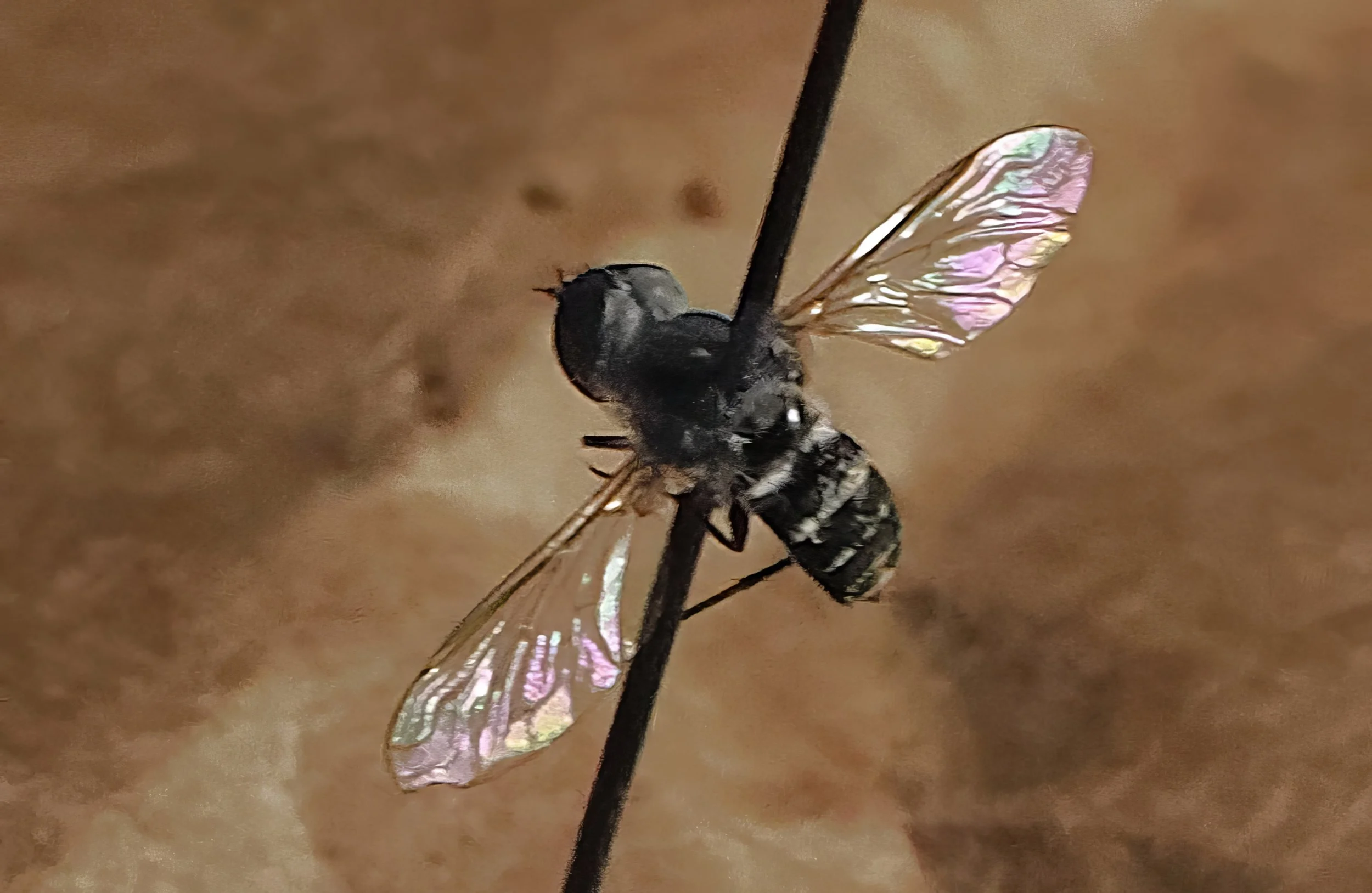
The very small body with a length of only 3-6 mm is noteworthy. The integument is shiny black, lacking tomentum, and there are white rings around the abdomen.
Range: PNAL, STCR
Occurs: Early May, Late August
Aphoebantus desertus
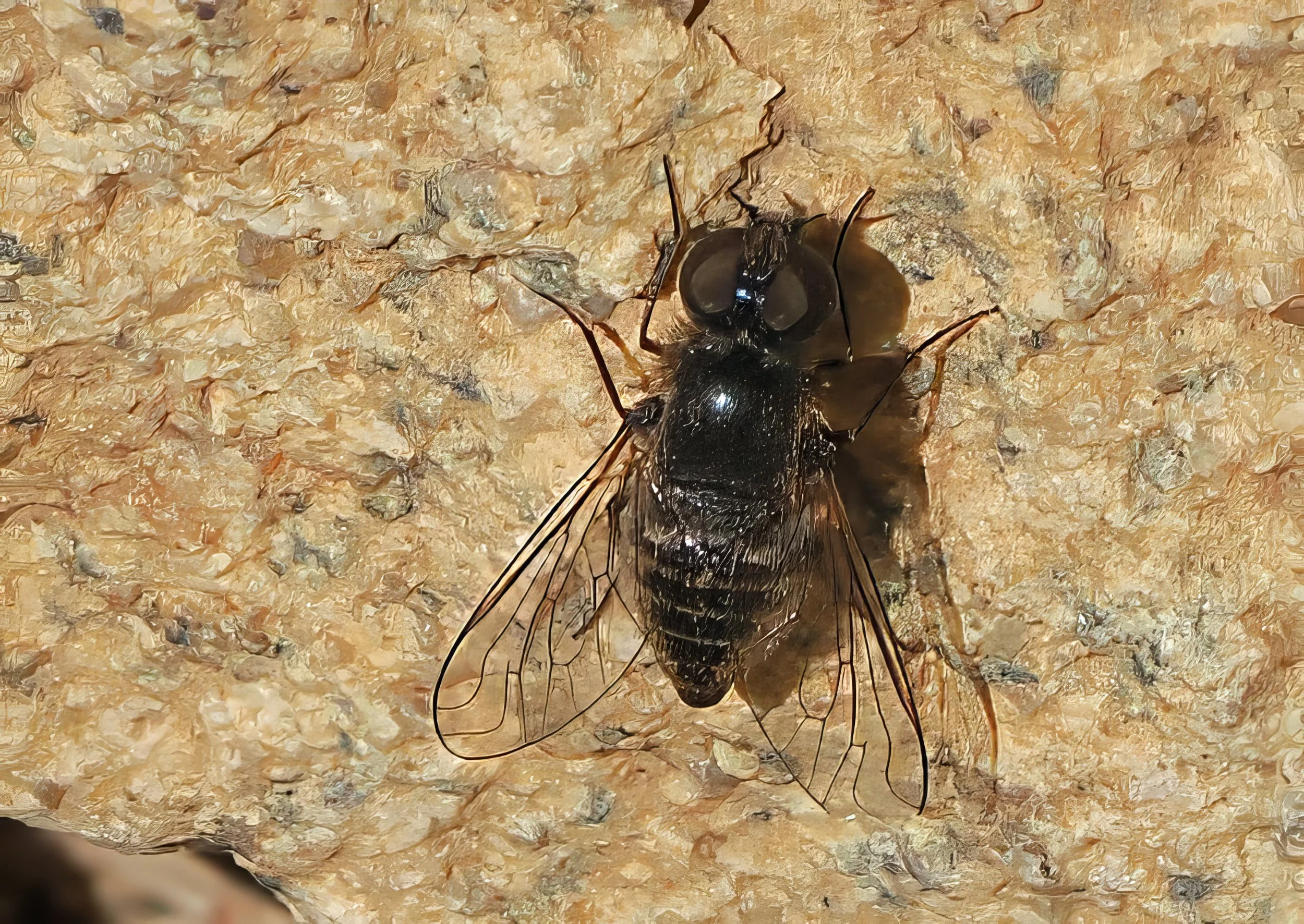
Size typically large with little tomentum on the thorax, black legs, a hint of pale abdominal rings, yellow halteres, both sexes with black facial and frontal pile, short stub vein usually present, long hair and bristles on hind femora. Previously only known from California deserts, additional photos and specimens needed.
Range: GRAH, PIMA, PNAL, STCR
Occurs: Early February to Mid-April
Aphoebantus fumosus

A small spring species, about 4 mm long, at times, it can be common. The coloring at the wing bases is a good field mark. The pile on the face is orange and, in males, white on the front. The scutellum is covered in tan tomentum with wispy orange bristles. The tergites lack black scales and have some lateral white pile.
Range: COCH, GRAH, GREE, PIMA, PNAL
Occurs: Late January to Late April
Aphoebantus gluteatus
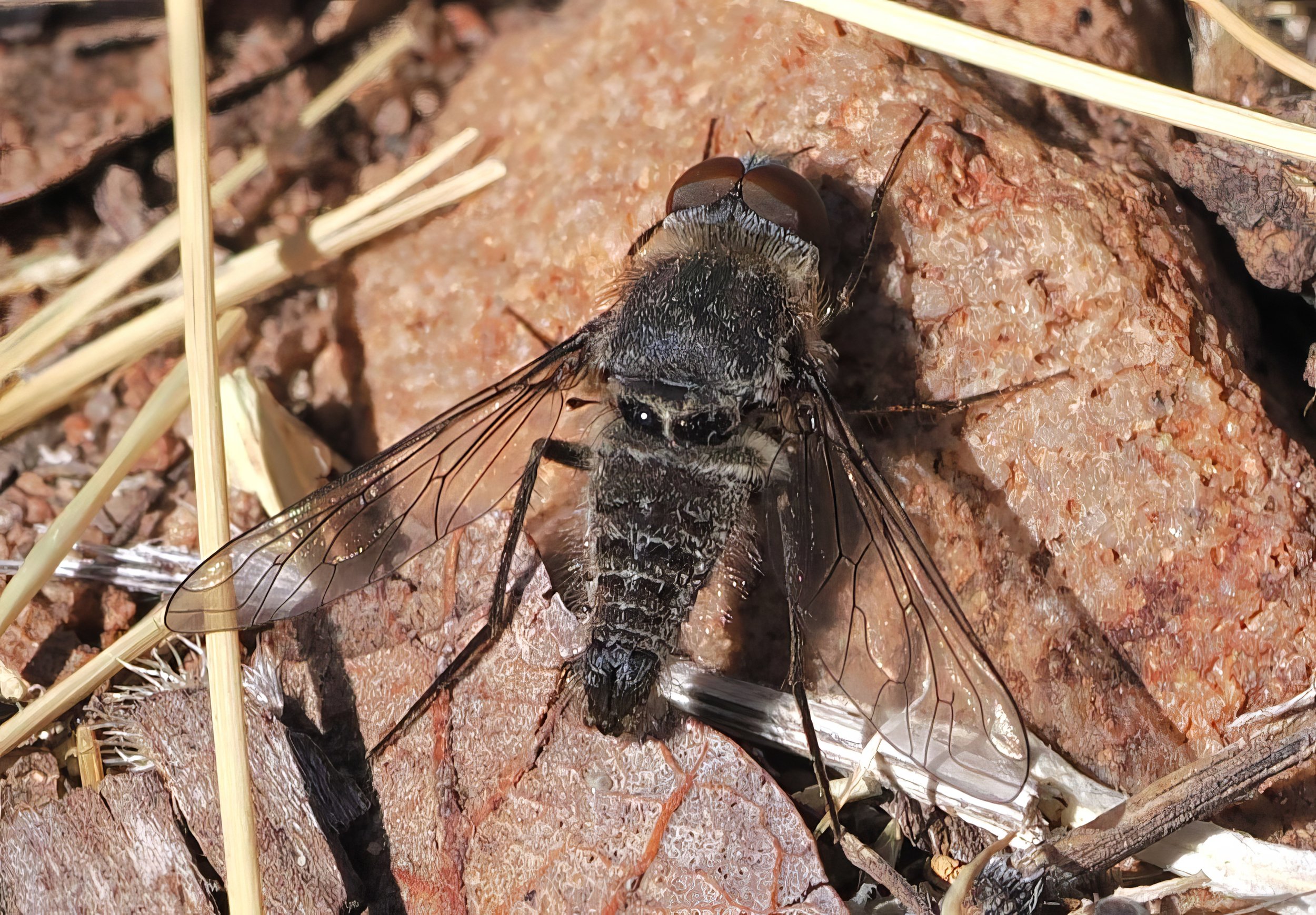
One of just 2 regional Aphoebantus with a bilobed scutellum, this species is rather large (8-10 mm). At least locally, there appears to be a single spring flight. It is similar to bisulcus, differing in its dark halteres and strong bristles on the rear femora.
Range: COCH, GRAH, PIMA, PNAL
Occurs: Early March to Late May
Aphoebantus “grandios”
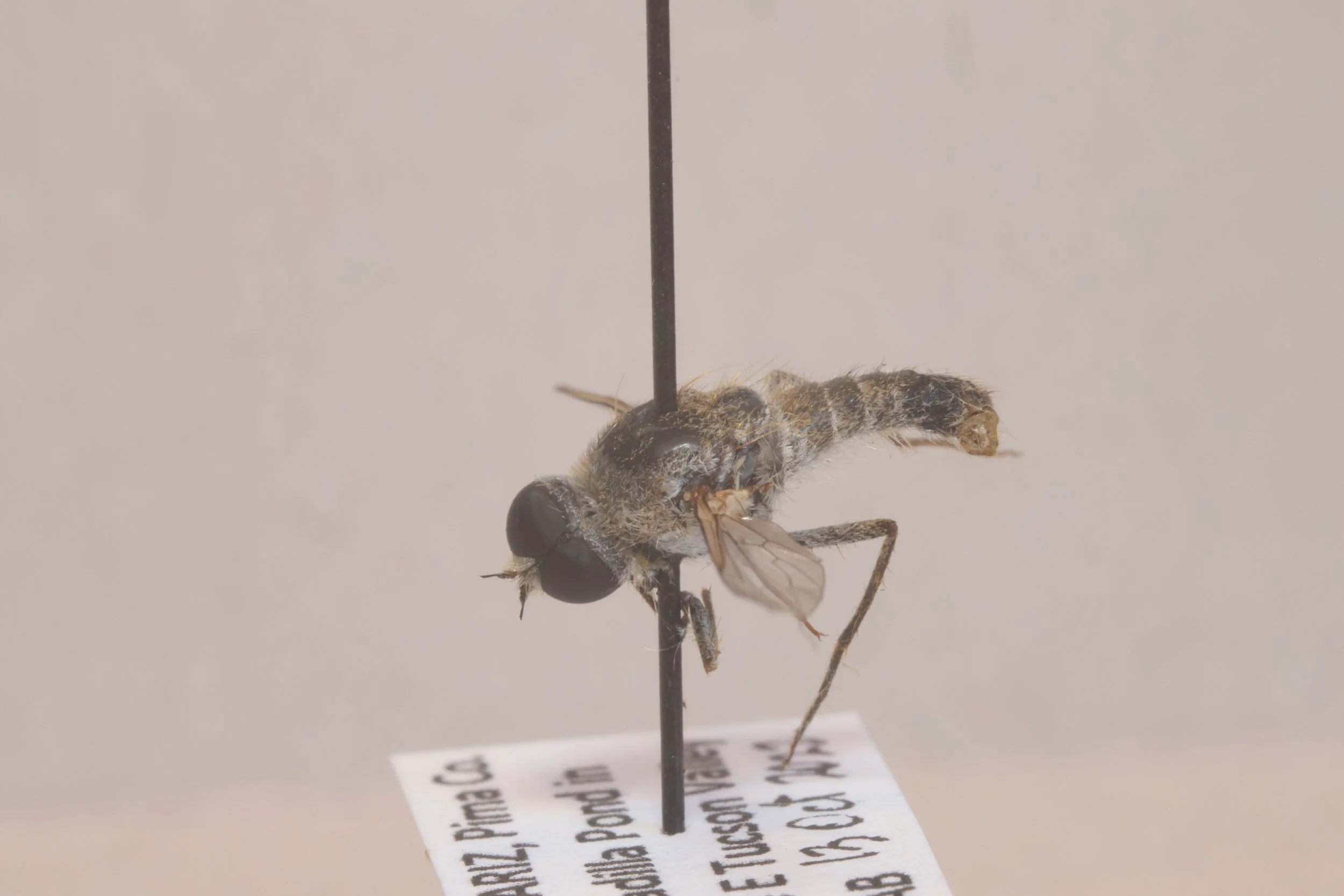
Perhaps the largest species in the genus and likely undescribed (description in prep). Known from a single location at the east side of the Tucson Valley from 1♂ and 1♀. Both sexes measure 10-11 mm long and are heavily clothed in tan tomentum. Several were seen on the benches above a desert wash at close to 900 m elevation.
Range: PIMA
Occurs: Mid-October
Aphoebantus interruptus
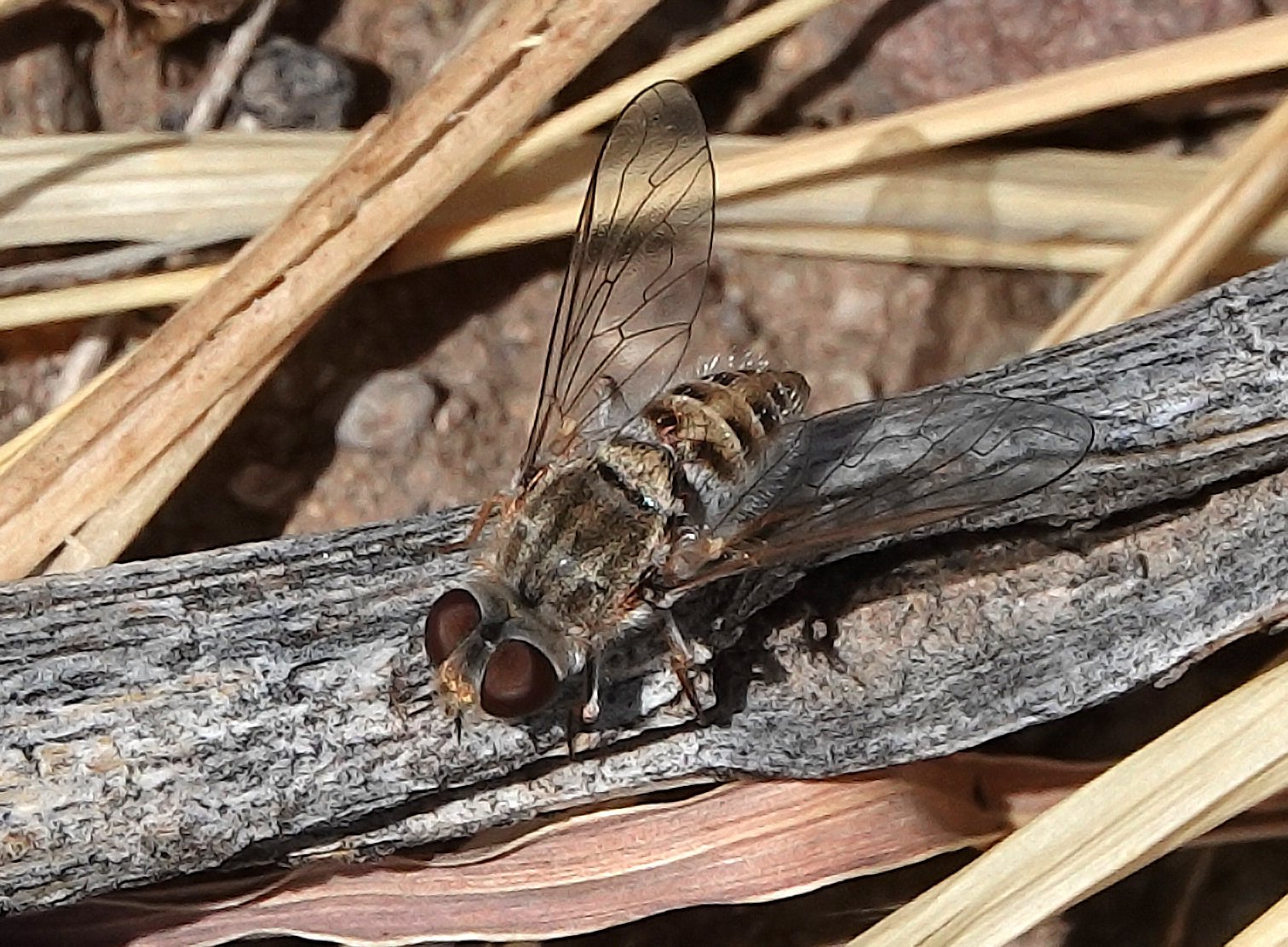
The frontal pile is black, as are the scutellar bristles and the long hairs on the abdomen. This species greatly resembles A. vulpecula, having a brown abdomen with dorsally "interrupted" black rings on most segments. See that species for additional comments.
Range: COCH, GRAH, PIMA, PNAL, STCR
Occurs: Mid-March to Early June
Aphoebantus marcidus
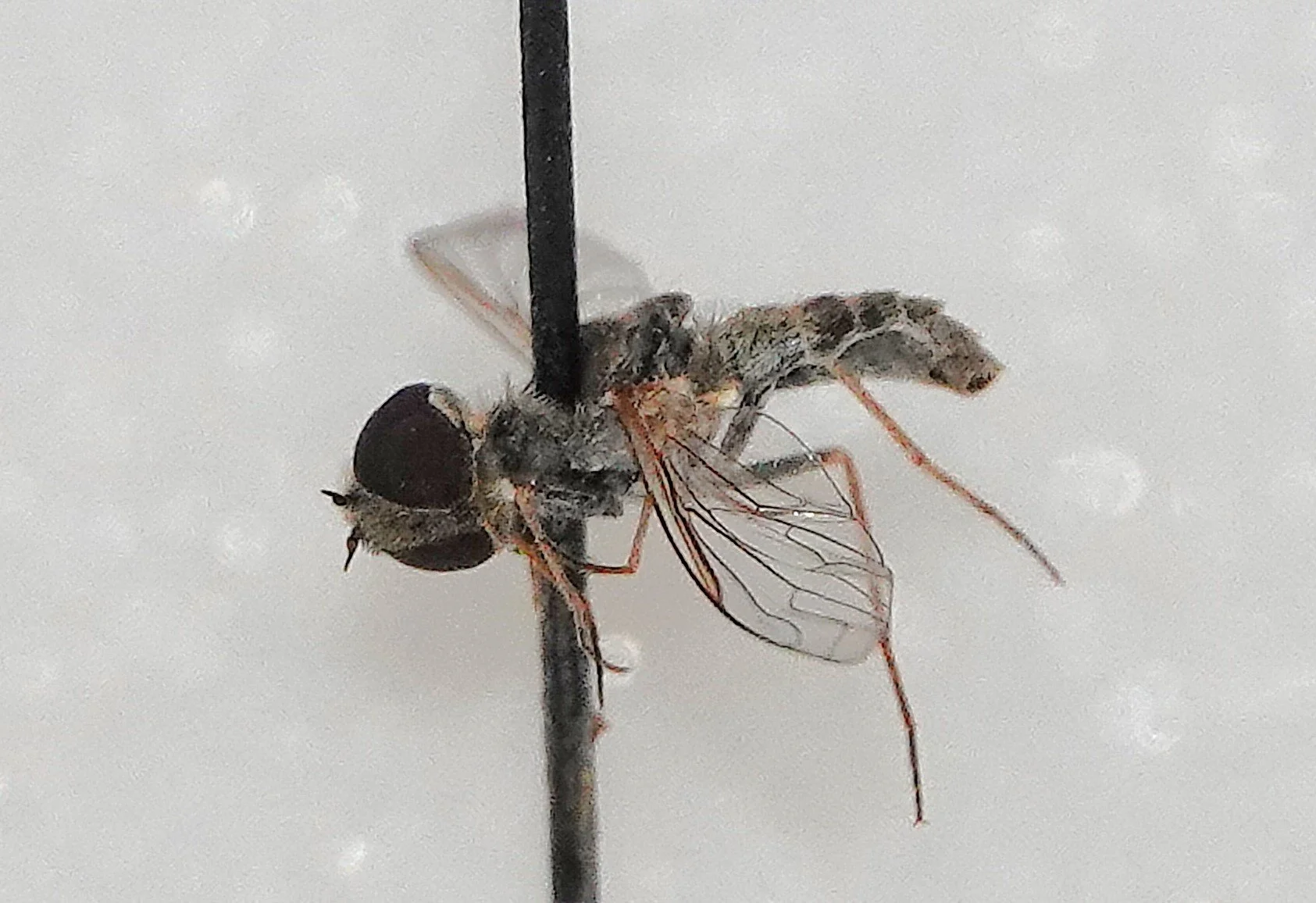
Medium-sized species lacking a stub vein. The pile on the face is pale orange and on the front is black, the tarsi and tibiae are bright orange, and the abdominal tomentum is heavily yellow and lacks any black.
Range: PNAL
Occurs: Early April to Early May
Aphoebantus marginatus
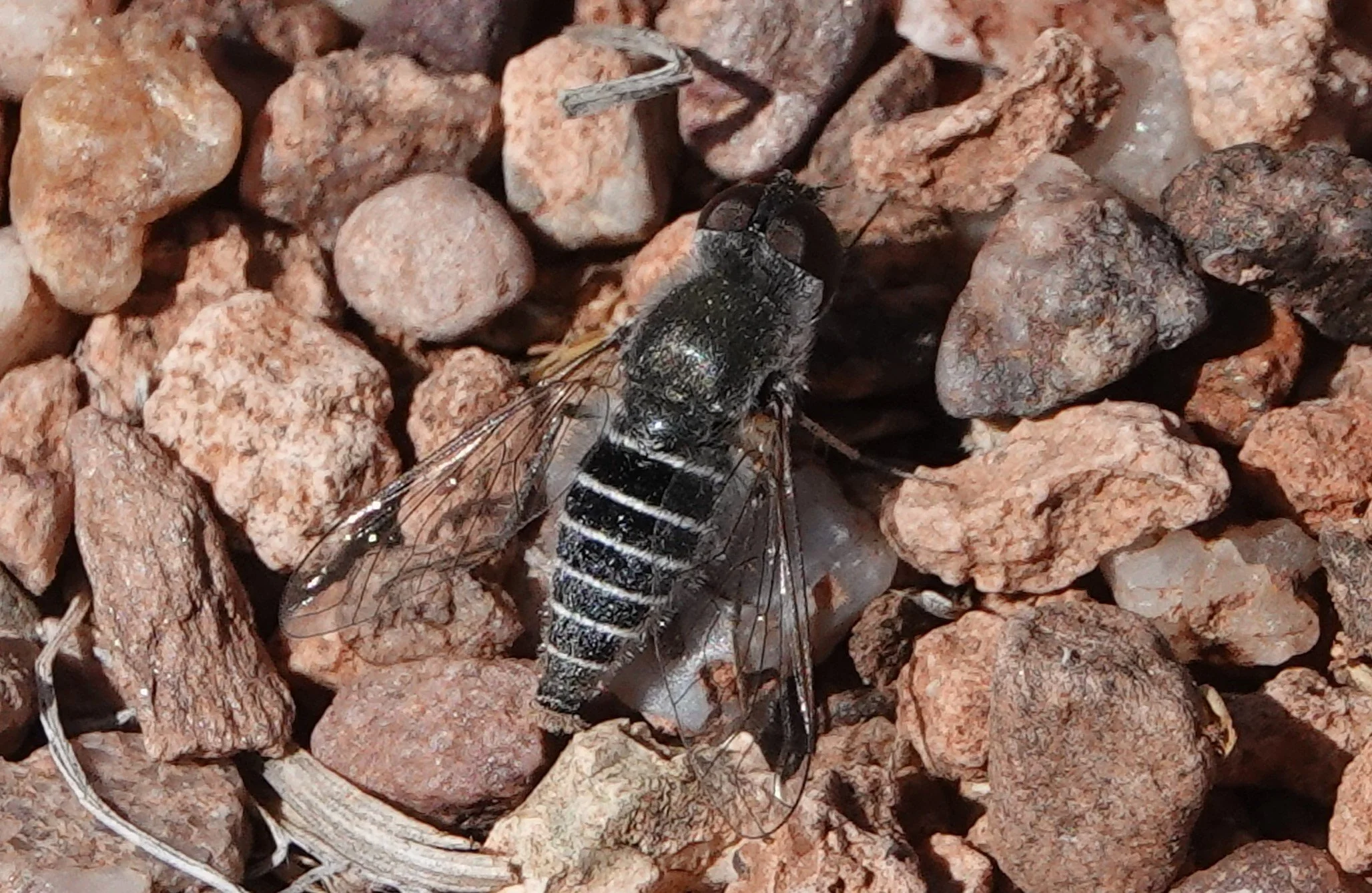
This is a medium-sized species, 6-8 mm, with a black abdomen banded with white tomentum. There is no wing spur. The facial pile is white, and the front is dark. It is similar to scalaris but scalaris has darker pile on the front and darker legs.
Range: COCH, GRAH, GREE, PIMA, PNAL, STCR
Occurs: Late March to Late June, 2 Fall Records
Aphoebantus mus
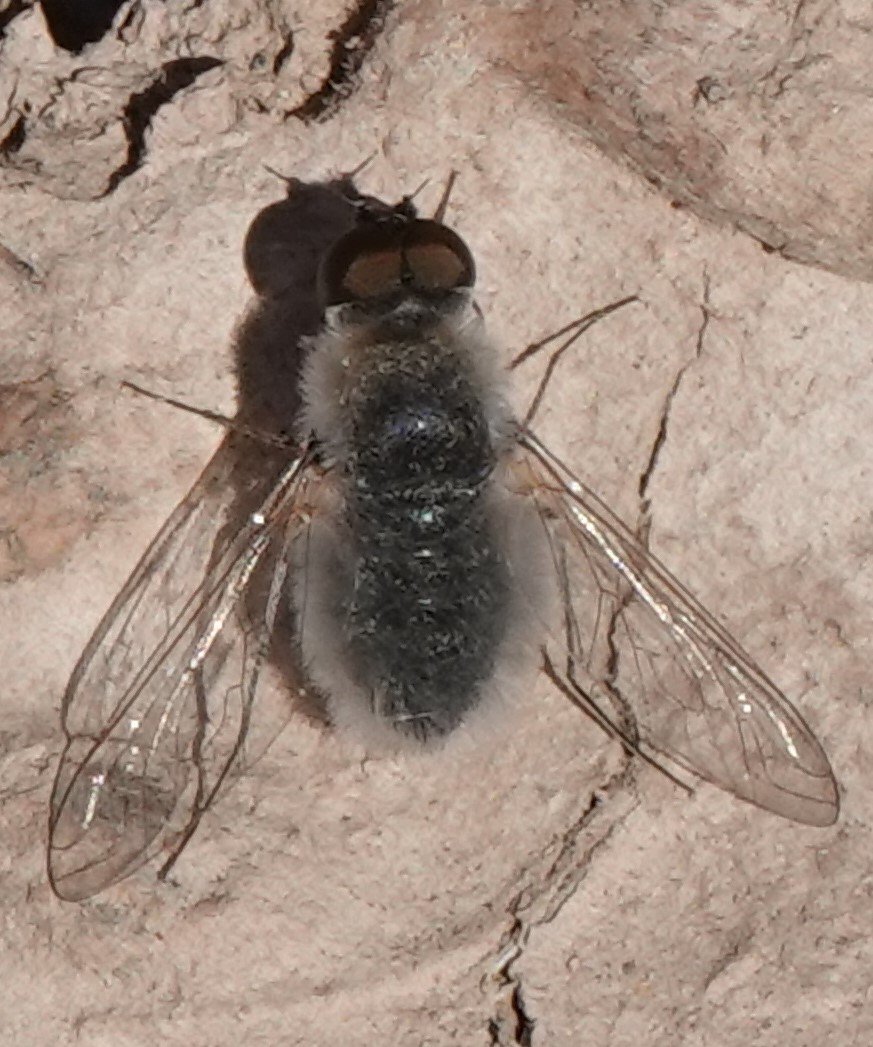
This attractive species is easier to identify than most members of the genus, as it can be distinguished by the uniquely long and thick white pile on the abdomen. Additionally, it has white pile on the face, black pile on the front, and orange scutellar bristles. There is no wing-spur. The legs are dark, even black on the femora, and there may be lines of tan tomentum visible on the abdomen.
Range: COCH, STCR
Occurs: Late April, Early September to Late October
Aphoebantus parkeri
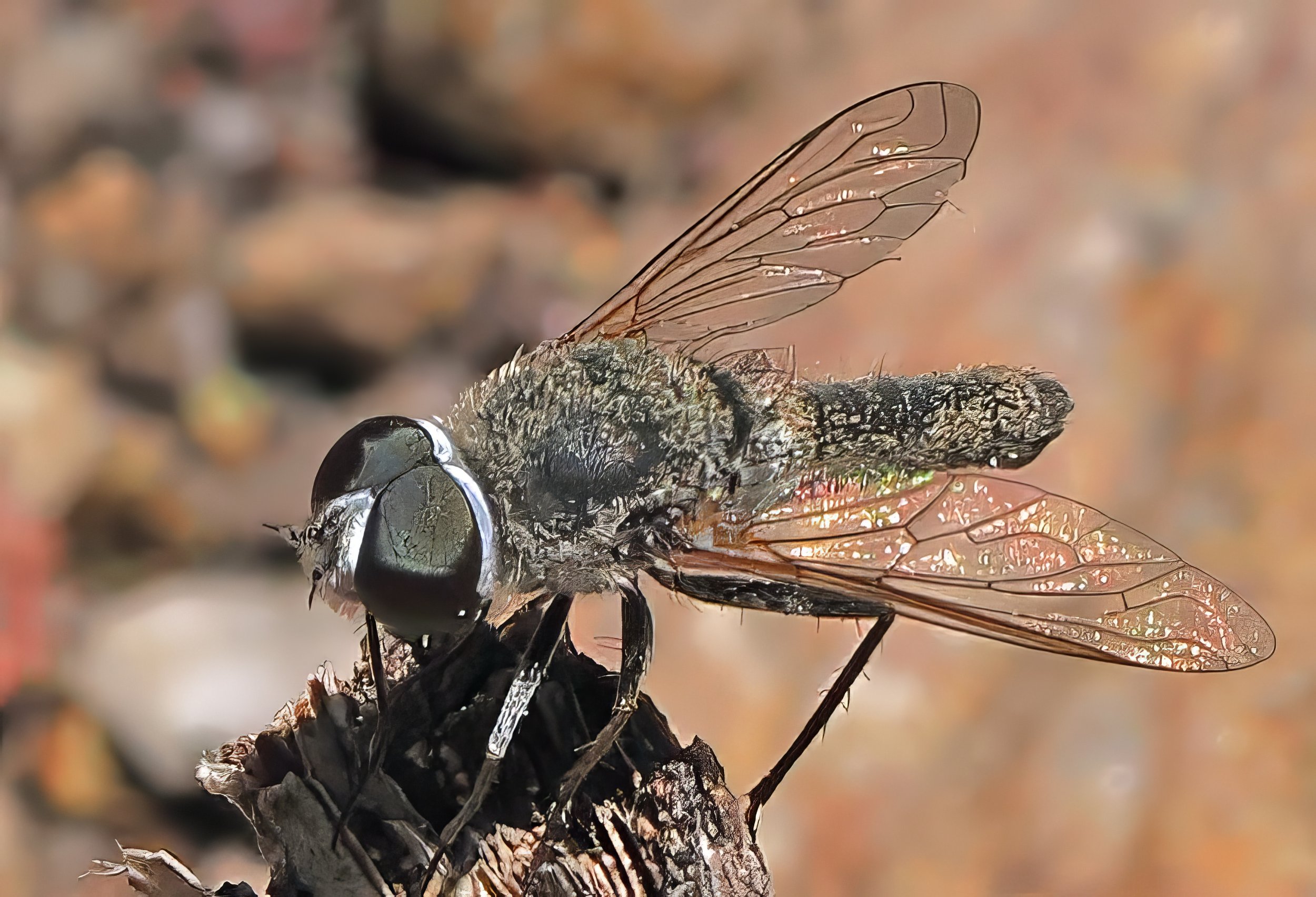
This is a mid-sized species, about 7-9 mm, with the scutellum and abdomen heavily covered with tan tomentum. The pile on the face is white, but black on the center of the front. Note the long wing spur, strong black scutellar and thoracic bristles, and a bit of white lateral abdominal pile.
Range: COCH, GRAH, PIMA
Occurs: Mid-May to Mid-August
Aphoebantus pellucidus
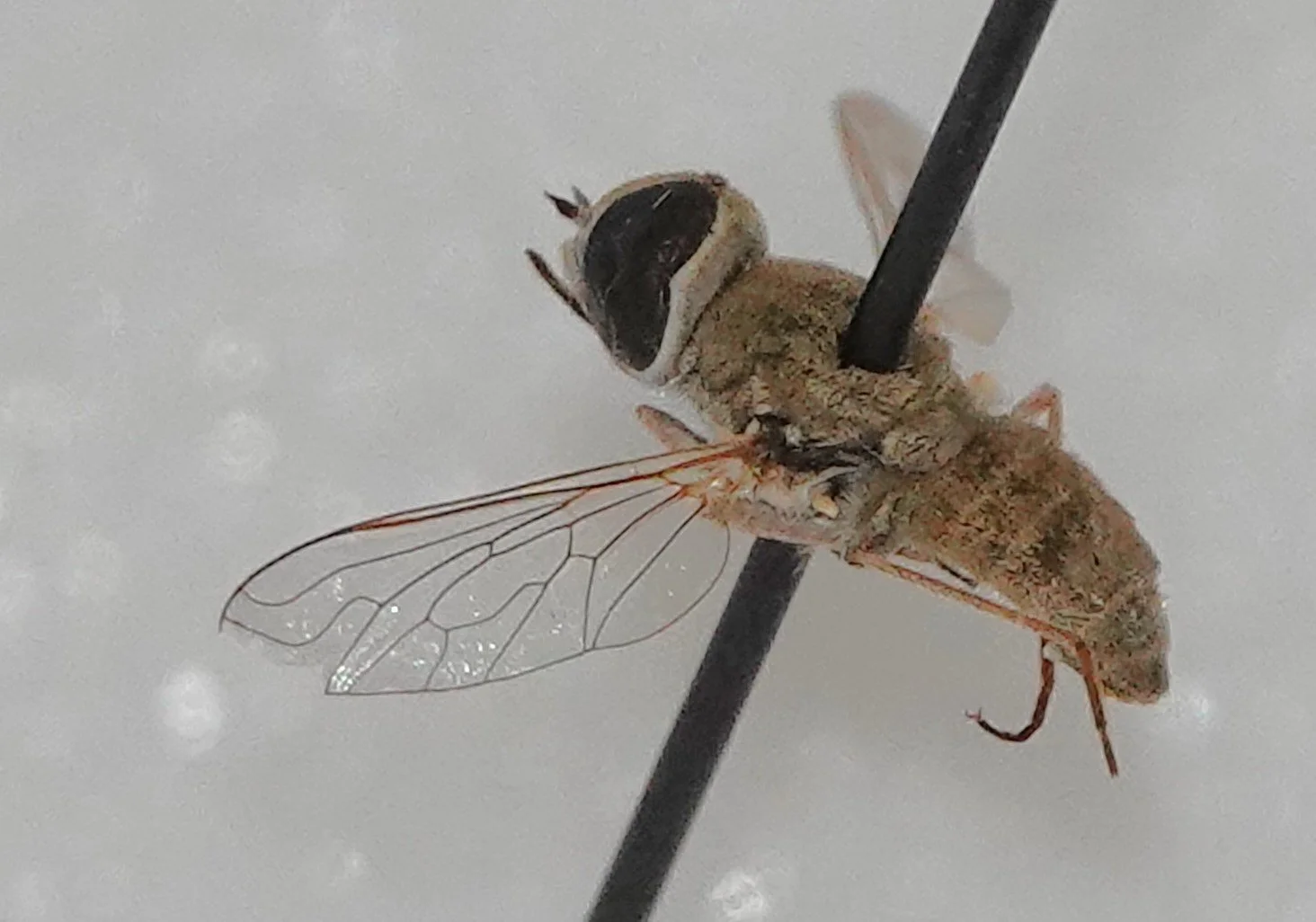
The dominant feature of this species is the body being almost entirely covered in golden, flattened tomentum. The legs of the ♀ are completely orange; those of the ♂ have dark femora. Females lack abdominal pile; males have some laterally. In both sexes, the 3rd antennal segment is triangular, the scutellum is without bristles, and the wings lack submarginal spurs.
Range: COCH, GRAH, GREE, PNAL
Occurs: Late July to Early September, One April Record
Aphoebantus peodes

A small (3-5 mm) early spring flier, it favors desert washes. The legs and facial pile are black; the frontal pile is white. The integument is shiny black; the abdominal pile is sparse, long and white, especially distally and, in ♂s, on the genitalia. Occasionally, there is a short submarginal stump vein.
Range: GRAH, PIMA, PNAL
Occurs: Mid-February to Early April
Aphoebantus rattus
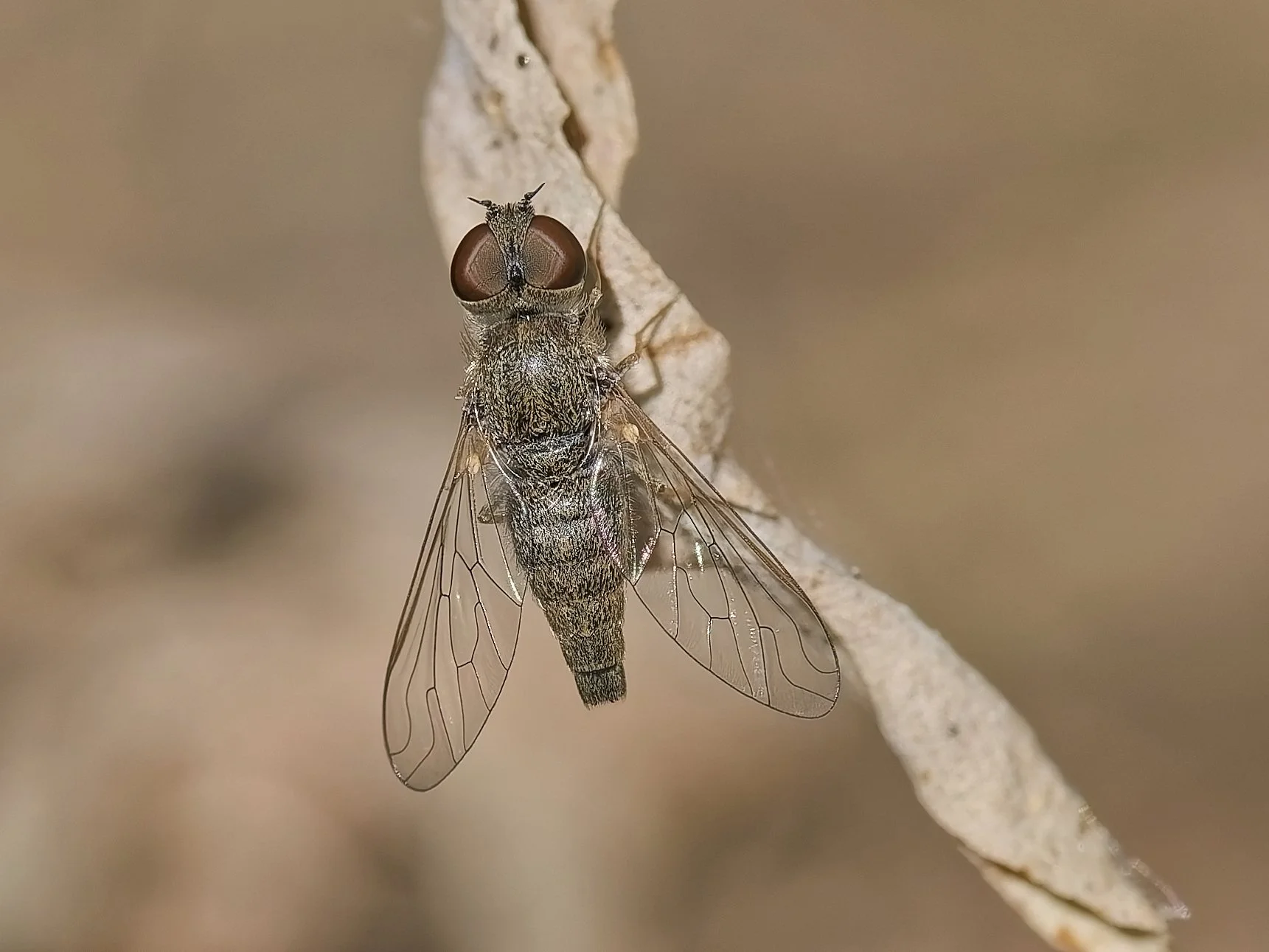
Photo courtesy of Pierre Deviche
This is a fairly unique, mid-sized, mostly-spring-flying species. The legs are dark and the body is almost entirely covered with yellowish tomentum. It also lacks spur veins, bristles, and most pile. The face and front are white and the 3rd segments of the antennae are triangular, lacking a style.
Range: COCH, GRAH, GREE, PIMA
Occurs: Early April to Mid-May, One Record
Aphoebantus “riparia”
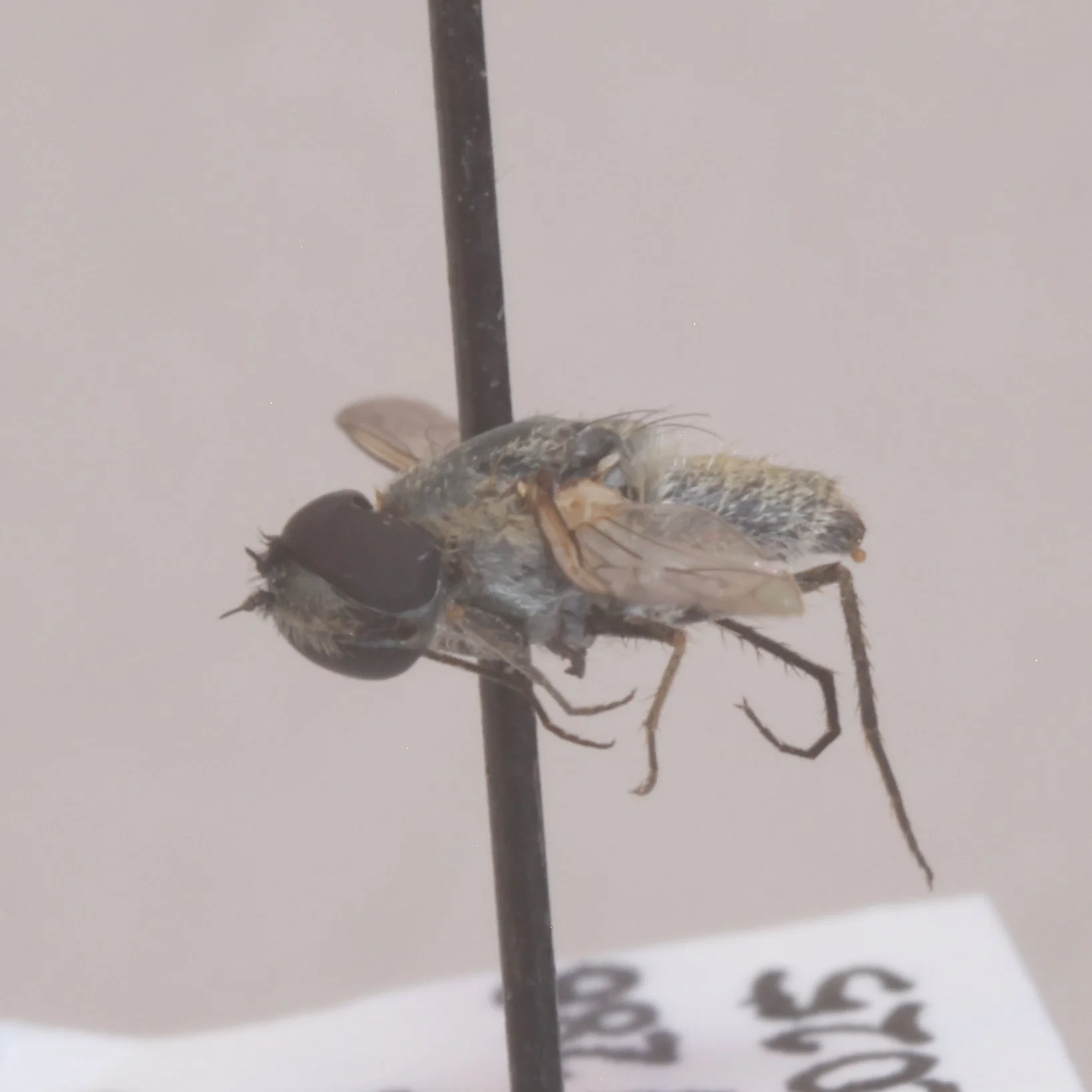
An unknown taxon (description in prep), found in some numbers a few miles NW of Sasabe. All specimens were taken within the remnant vegetation of a wet area. Adults have black facial and frontal pile, are heavily covered in tan tomentum, bristles are strong and black, there are submarginal stub veins, and in some cases, a stub vein entering the cell. Body lengths are 6-8 mm.
Range: PIMA
Occurs: Late August
Aphoebantus scalaris
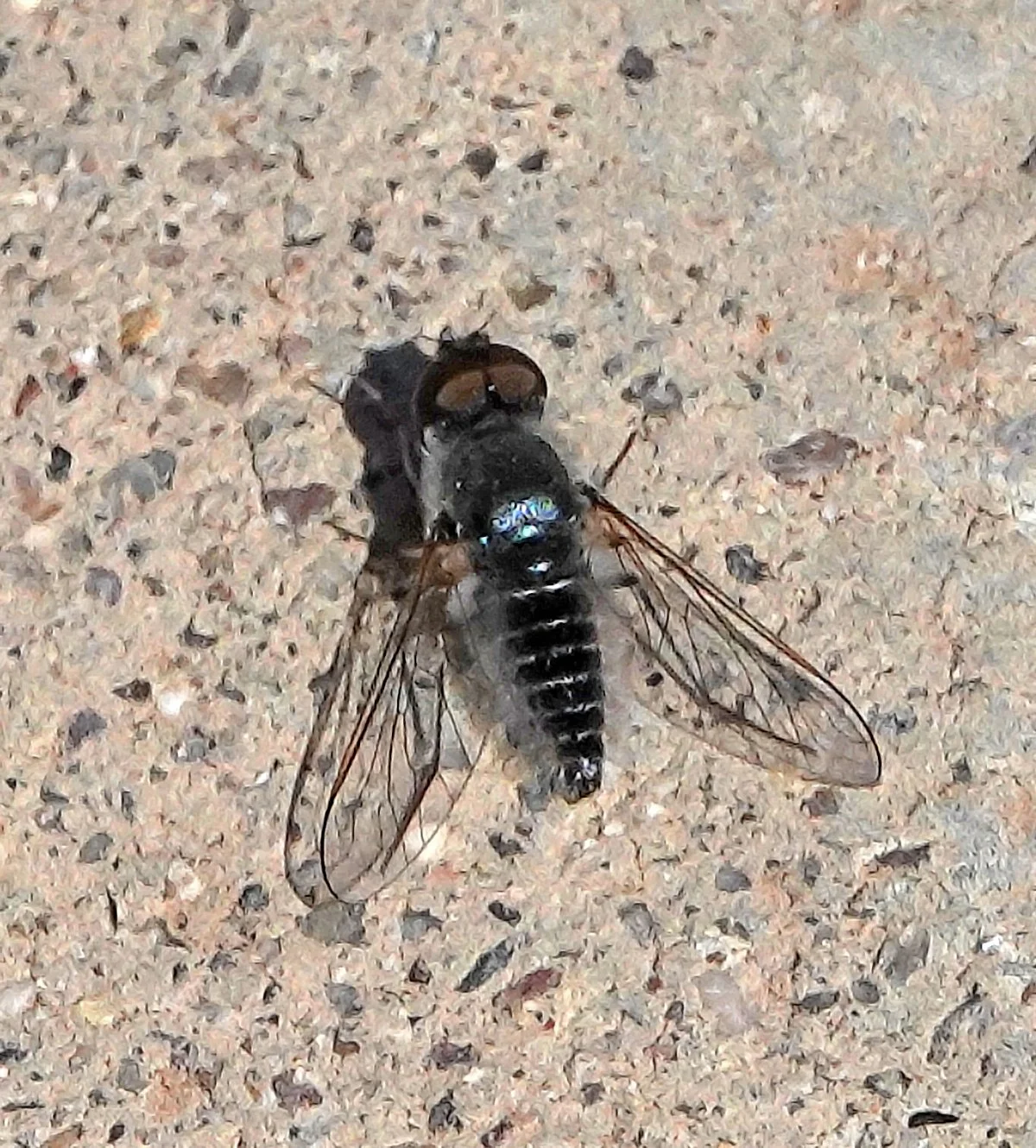
This is a mid-sized species with a body length of 5-8 mm. The pile on the face is white; the pile on the front is black. The wings lack a submarginal spur. Most diagnostic is the black abdomen with bands of pale yellow tomentum on the interstices.
Range: COCH, GRAH, PIMA, PNAL
Occurs: Mid-February to Mid-October
Aphoebantus tardus
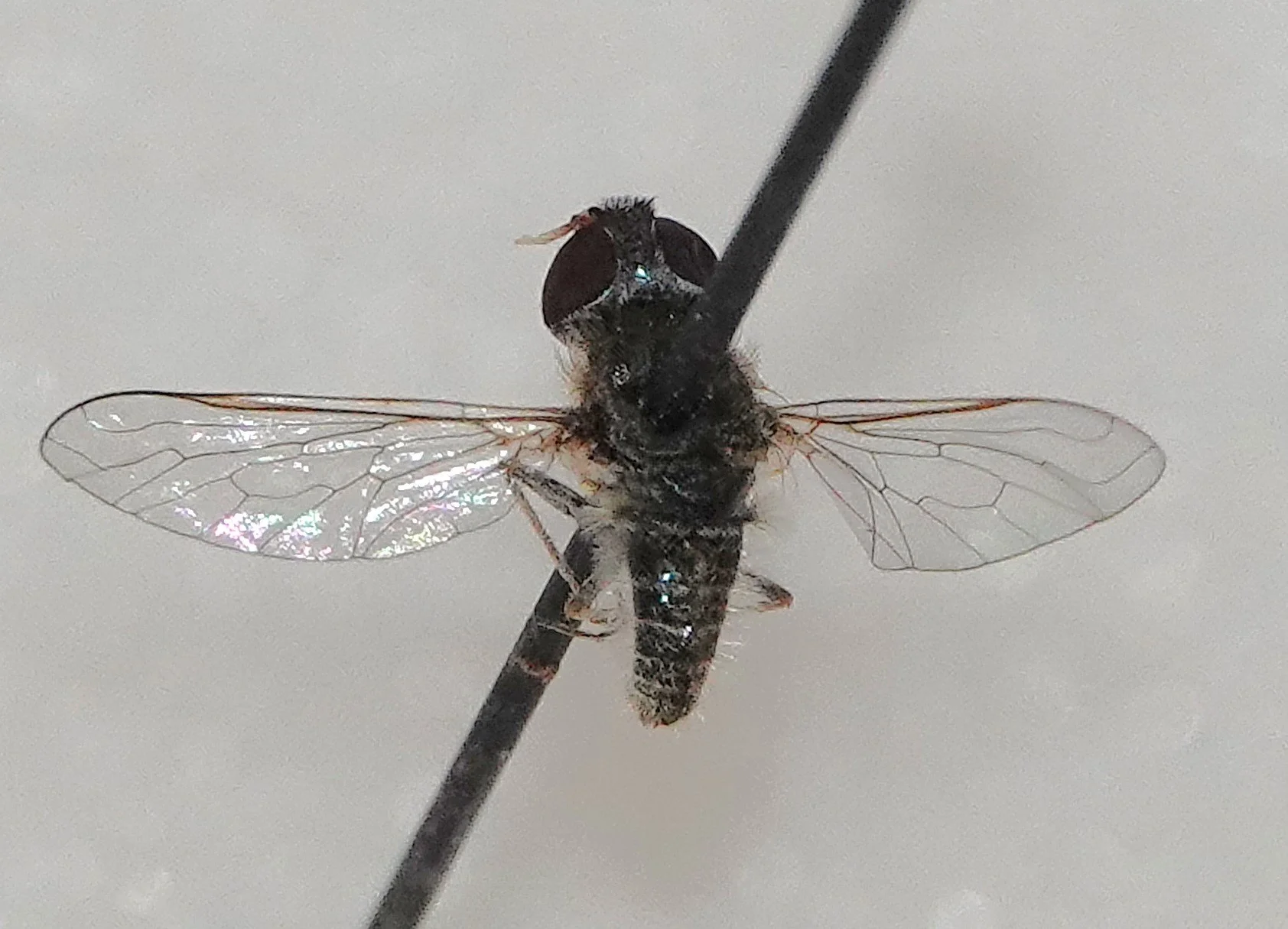
This is a small (5-6 mm), fairly common lowland species. In both sexes, the pile on the face and front is black. The scutellar bristles are orange, black, and wispy. The wings lack a spur vein. On the abdomen, the bands of tomentum are only weakly present, and the white pile is long and sparse.
Range: COCH, PIMA, PNAL, STCR
Occurs: Late March to Early June, Early September
Aphoebantus transitus
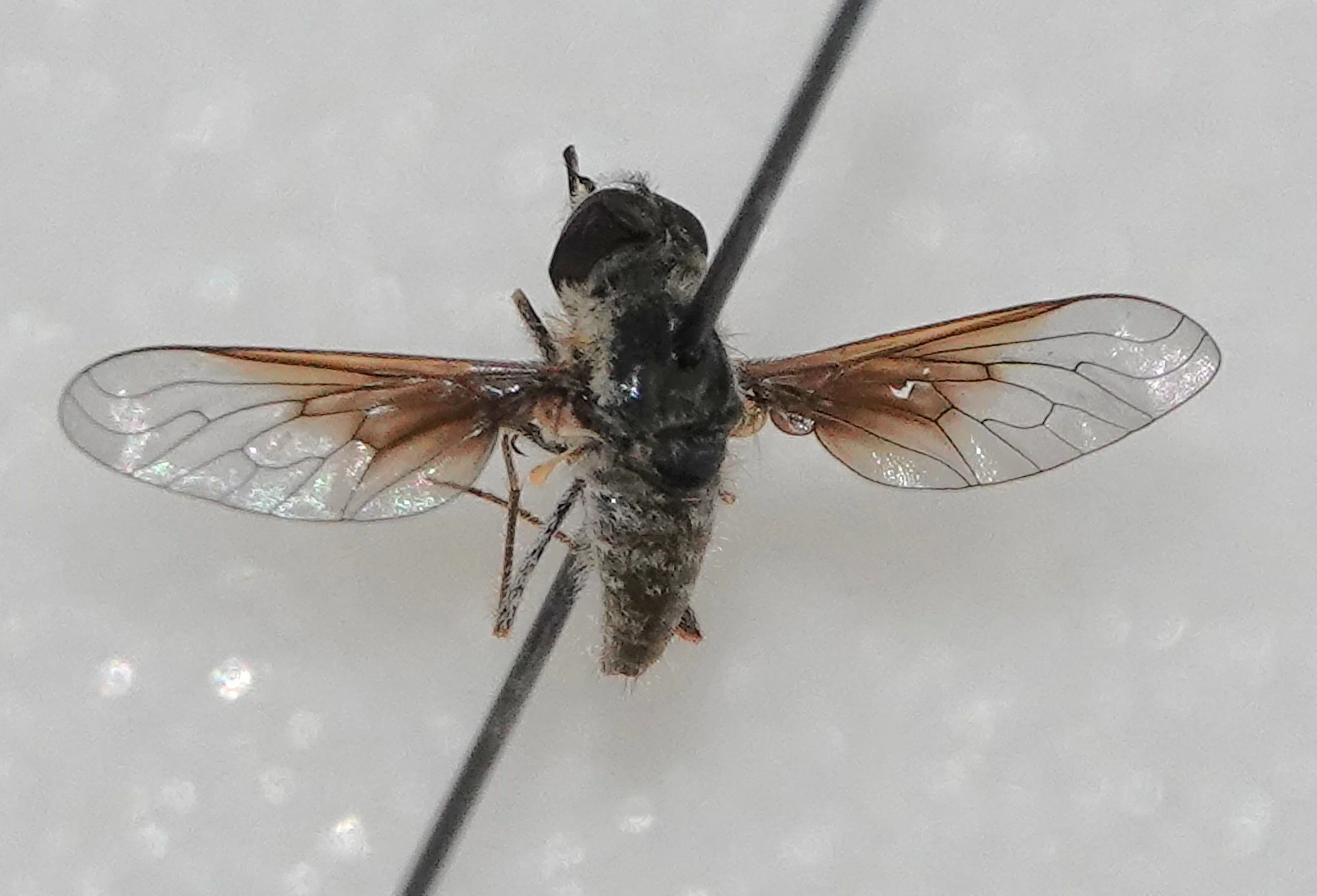
A distinctive species, somewhat similar to fumosus but with even more wing infuscation, including both basal cells. It is also larger, typically 6-7 mm long, with a proboscis that may protrude beyond the oral opening. Note also, the black pile on the front and the black femora.
Range: GRAH, PNAL
Occurs: Mid-March to Mid-April
Aphoebantus vittatus
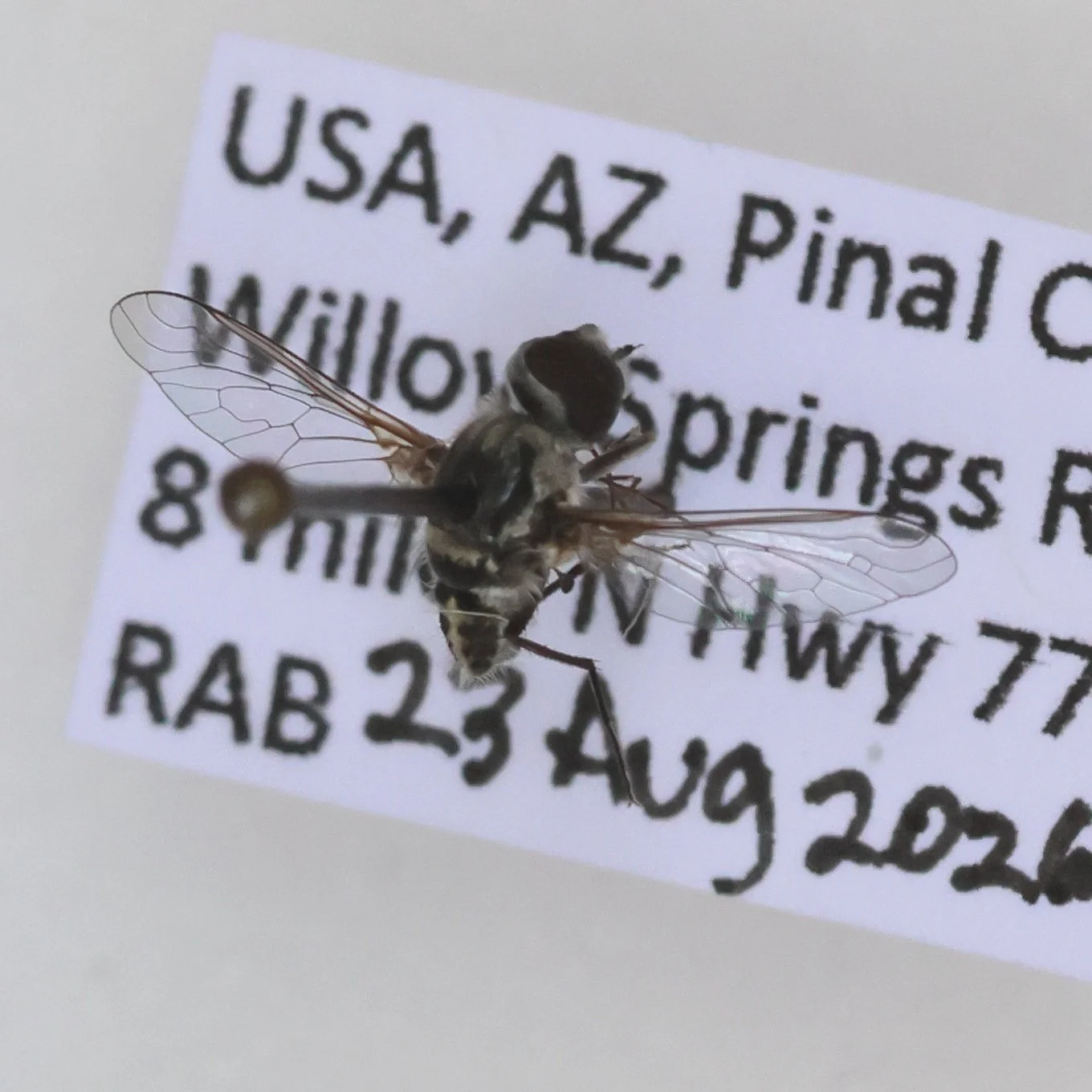
A scarce and local species, most easily identified by the yellow irregular median abdominal pattern. Also note the somewhat hidden thoracic stripes and the prevalent white pile on T1.
Range: PNAL
Occurs: Late August
Aphoebantus vulpecula

Most notable in this species are the interrupted dark bands on the abdomen, similar to the abdominal pattern in interruptus. The pile on the front is mostly white while in interruptus it is dark; the halteres are usually pure yellow.
Range: COCH, GREE, PIMA, PNAL
Occurs: Mid-March to Late July
Other species reported from the region, either rarely, from older data, or without specifics and/or images, include A. eremicola and A. hians.