
Genus Anthrax
Anthrax artemisia

Known locally from a single record when multiple individuals were reared from a native bee nest along the San Pedro River. Predominantly an eastern species, it may be overlooked due to its similarity to A. larrea. The two can be separated by the presence of tufts of orange pile laterally on the first 3 or 4 tergites in A. artemisia; on A. larrea, these tufts are limited to the first segment.
Range: COCH
Occurs: Mid-July
Anthrax atriplex

Individuals of this species are especially large for the genus. Their wings are heavily marked anteriorly, with sparse irregularly-shaped spots at the wingtips and toward the rear of the wings. There are two submarginal cells and can therefore be confused with seriepunctatus, a species with even fewer wing-markings. Often, they are seen on vertical objects, even humans.
Range: COCH, GRAH, PIMA, PNAL, STCR
Occurs: Early April to Early November
Anthrax daphne
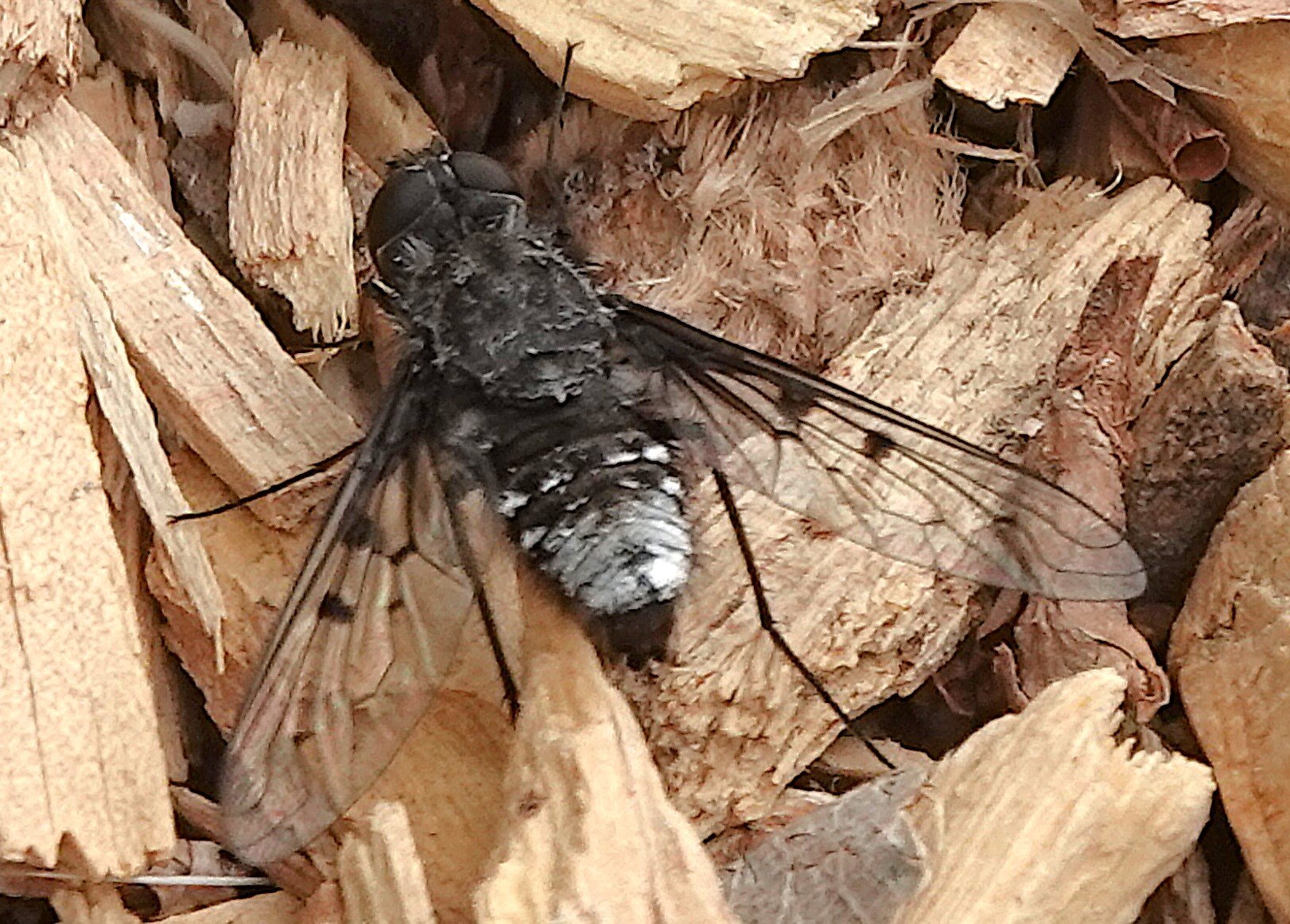
Identification of this common species is based on the four or five spots in the anterior portion of the wing. Individuals may have either 2 or 3 submarginal cells along with varying degrees of infuscation between the costa and subcosta. Locally, it shares its small size with A. irroratus. It can resemble larrea but lacks the orange lateral tufts of pile on T1 and has brown rather than black tibiae.
Range: COCH, GRAH, PIMA, PNAL, STCR
Occurs: Late February to Mid-May
Anthrax irroratus

Recorded throughout the year and the region. Along with the very similar A. cintalpa, also a smaller species, note the mostly black body, abundant spotting on the wings, and ladder-like pattern of alternating black and clear spots immediately behind the costal vein. Within this species group that includes more easterly representatives, identification via microscopic examination of antennal segments and genitalic configurations are vital. This species and its near relatives typically do not visit flowers; nectaring is only occasional, especially late in the season. Watch for it on vertical surfaces including rock faces, walls, automobiles, and humans.
Range: COCH, GRAH, GREE, PIMA, PNAL, STCR
Occurs: All Year
Anthrax larrea
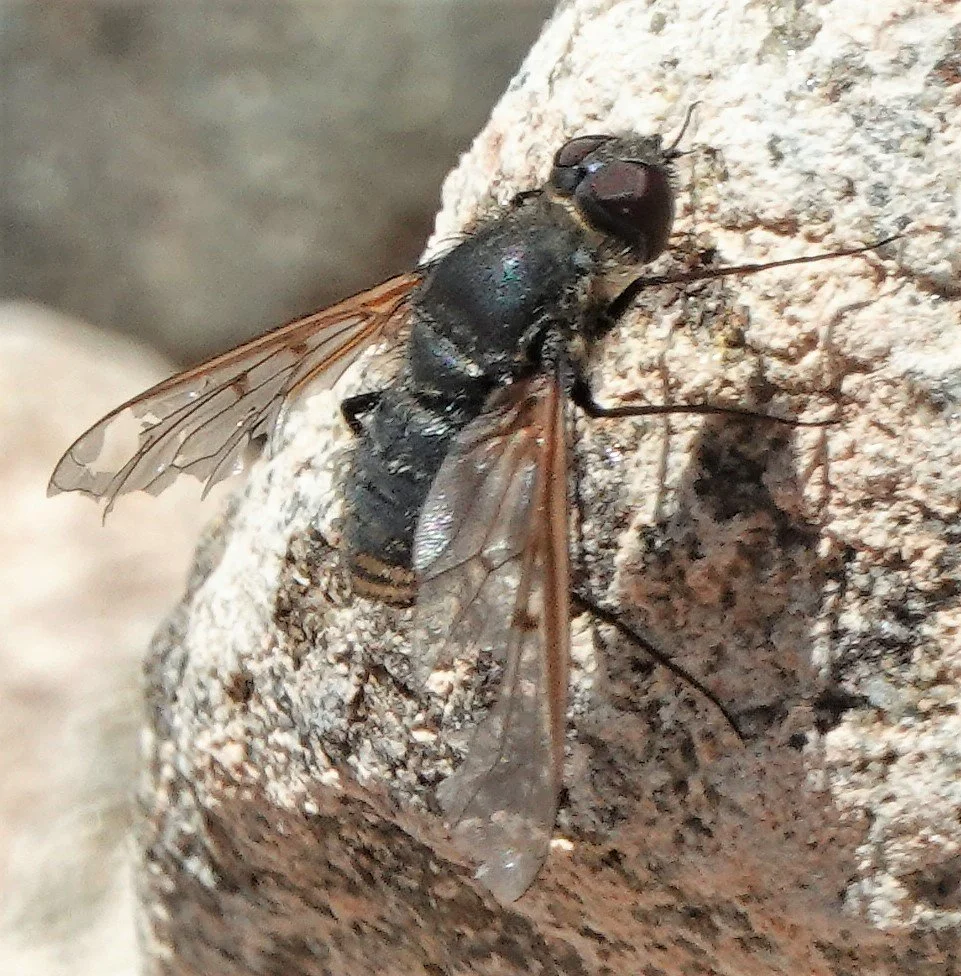
This is a large Anthrax, with wings tinted light brown along the anterior veins. There is a stump vein on R2+3. The wings are smoky brown in the costal area and sparsely spotted at the front and base. There are approx. 3-6 bold spots, mostly on crossveins; the remainder of the wing is clear. Note the lateral patches of long orange pile on the first thoracic segment, and the black tibiae.
Range: COCH, PIMA, PNAL, STCR
Occurs: Late March to Mid-May
Anthrax painteri
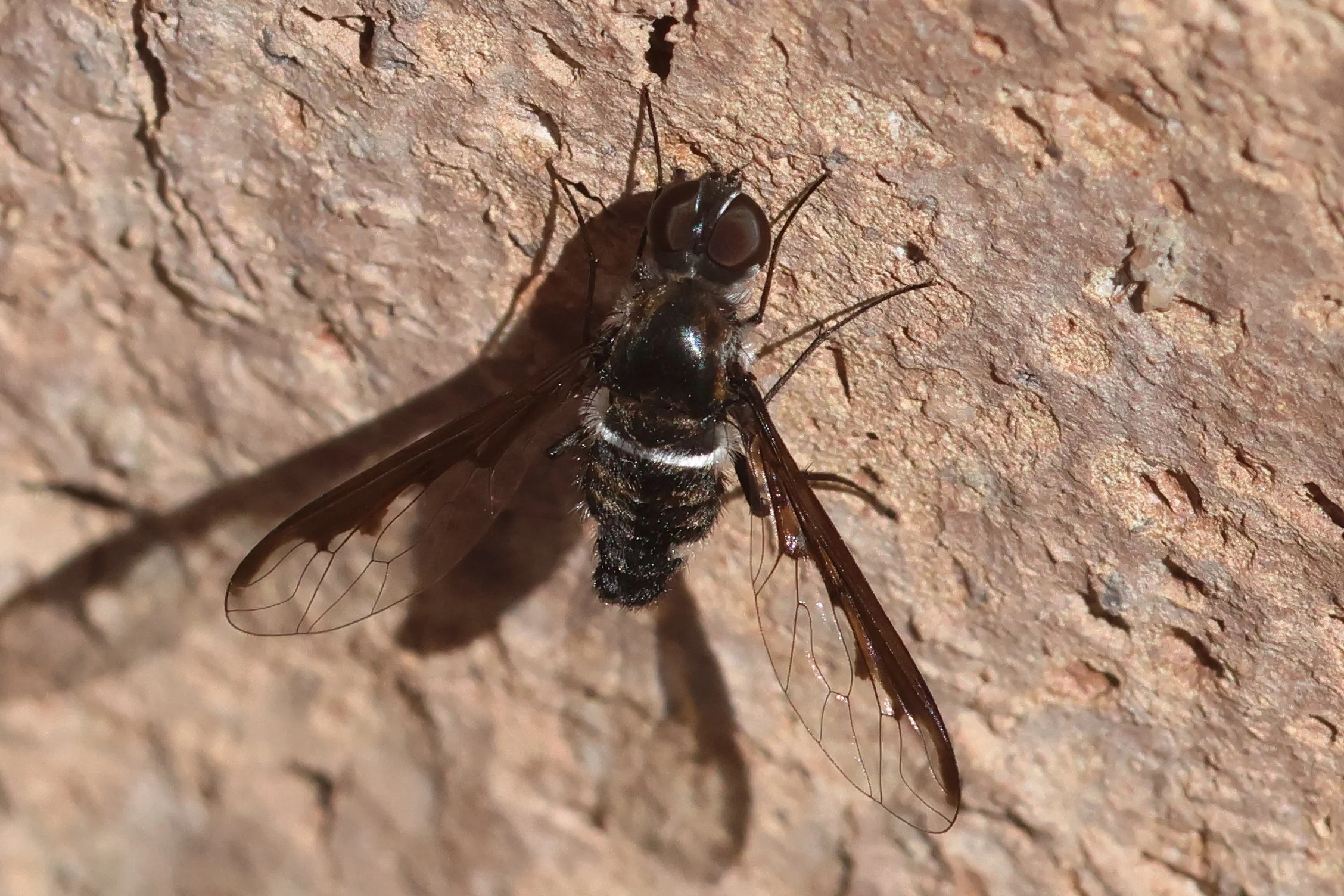
Formerly considered a subspecies of the eastern taxon, A. argyropygus, now best given specific rank. Very uncommon at middle elevations in the region, it is a patterned but mostly unspotted species. Note the black leading wing-edge and often a pure white T6-7.
Range: COCH, PIMA, STCR
Occurs: Late June to Early September
Anthrax seriepunctatus
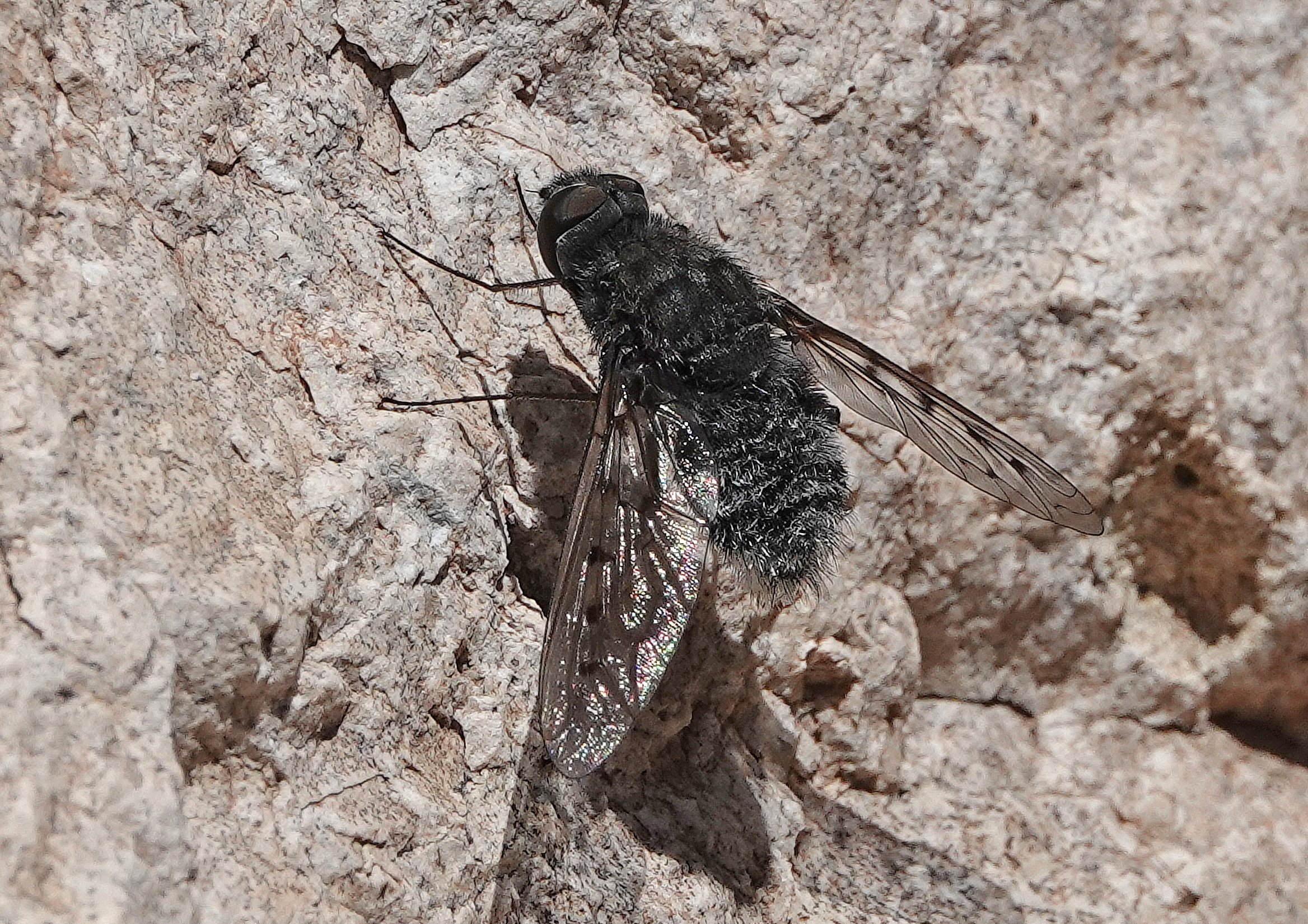
A medium to large species easily confused with A.vierecki and A.varicolor. In all three, there are few if any spots toward the wingtips and posteriorly. Importantly, in seriepunctatus there are 2, not 3 submarginal cells.
Range: COCH, PIMA, PNAL, STCR
Occurs: Mid-March to Late May (2 August & 2 October Records)
Anthrax varicolor

This is another mid to large-sized species, quite similar to both A. seriepunctatus and A. vierecki in dimensions. Generally, the spotting is heavier in A. varicolor, and there is a dark spot at the bases of the 2nd, 3rd, and 4th posterior cells, lacking in A.vierecki. Additionally, the presence of 3 submarginal cells eliminates A. seriepunctatus.
Range: COCH, PIMA, PNAL
Occurs: MId-March to Mid-April
Anthrax vierecki
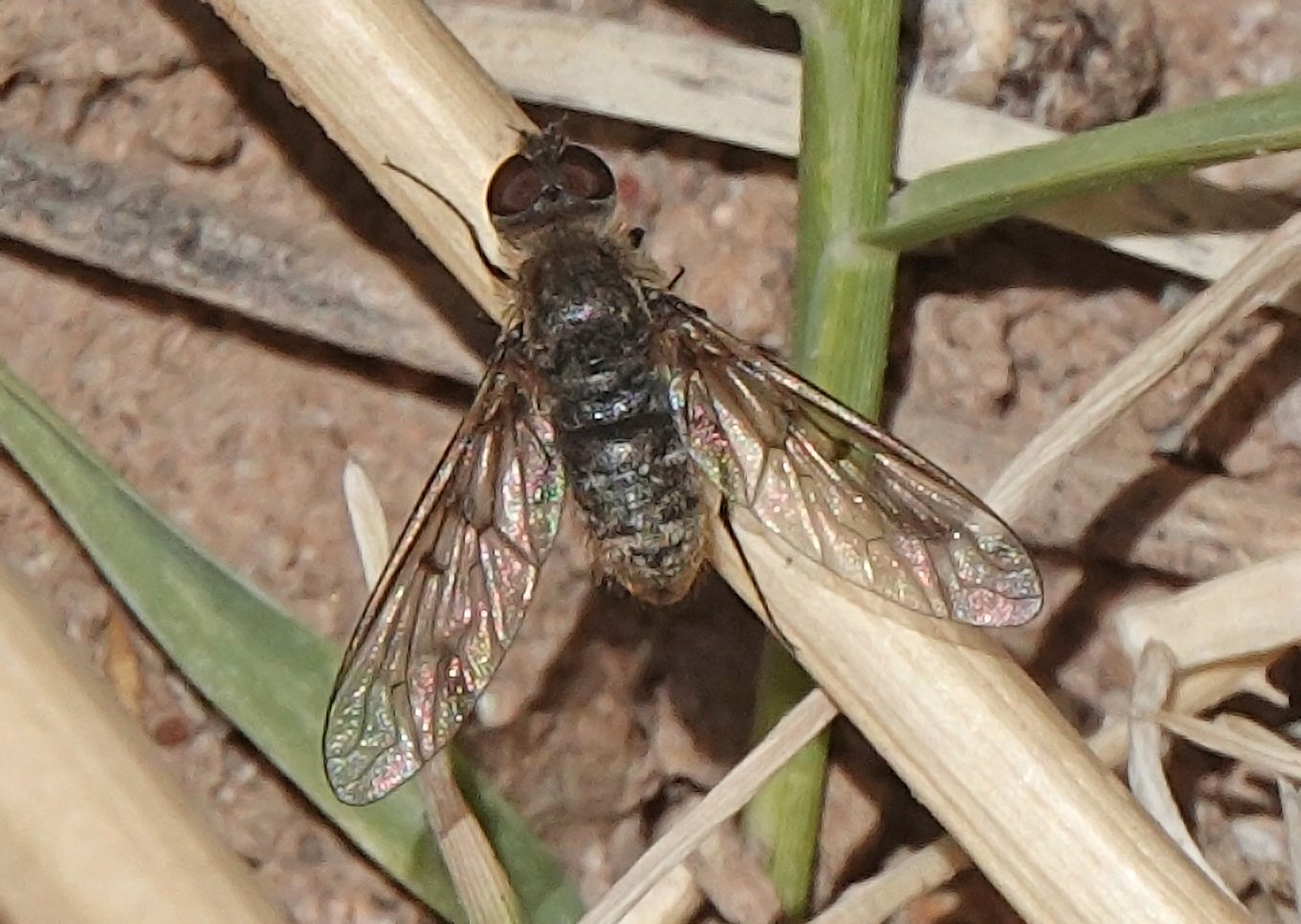
This is the third regional member of a species group of larger Anthrax that includes A. seriepunctatus and A. varicolor. It's of medium size with 3 submarginal cells, akin to A. varicolor, but is more weakly maculated than that species. The 3 submarginal cells will differentiate it from A. seriepunctatus..
Range: COCH, PIMA, PNAL
Occurs: Early March to Early May
Others reported from the region but without specific data and/or images - cintalpa, cybele, and stellans