
Genus Pantarbes
Pantarbes capito
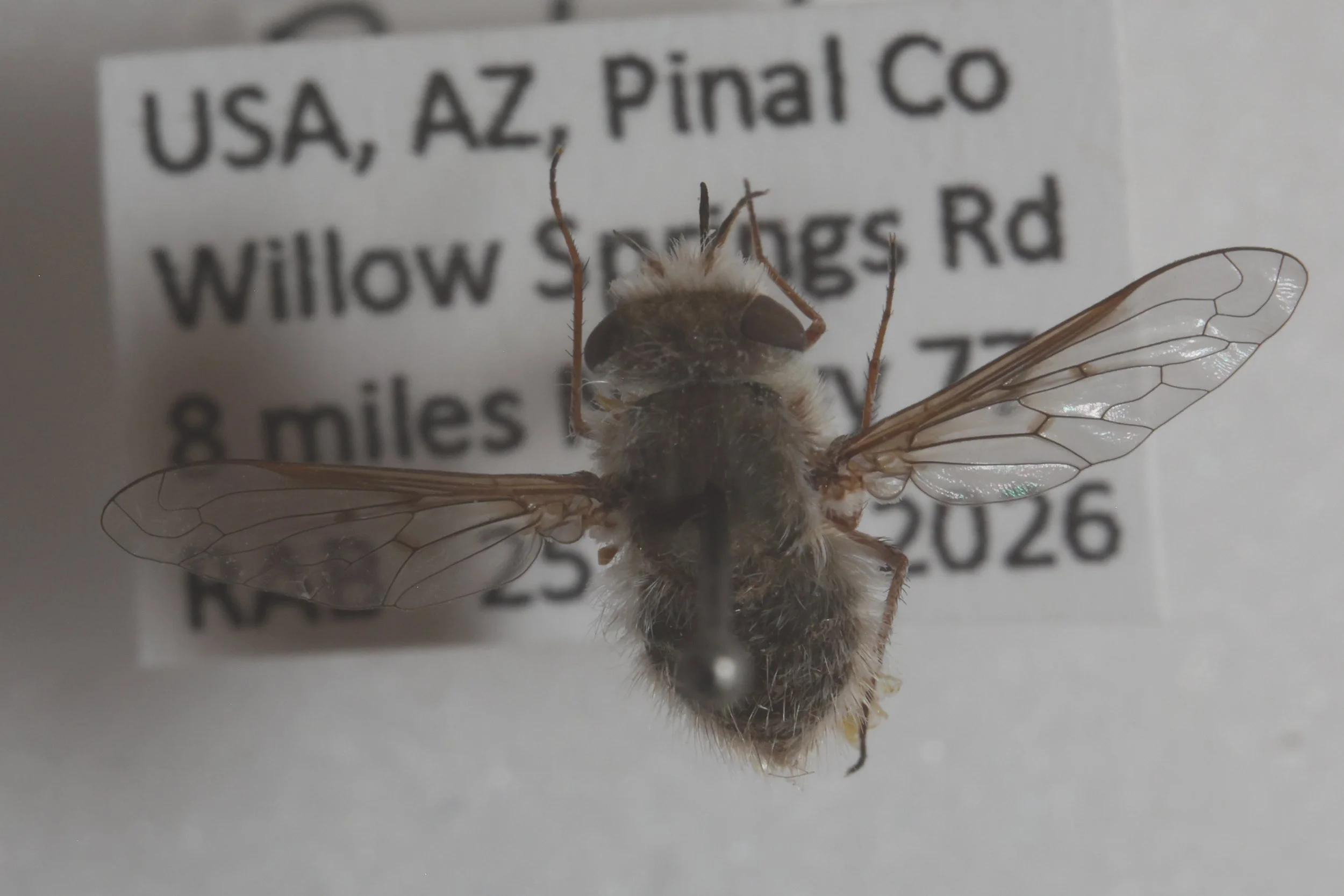
Previously known only from west and north of Arizona, the single record from north of Tucson was a great surprise. Capito is quite large, (9 mm), has widely-spaced antennae, and a short proboscis. But most glaring in this scarce species is the infuscation toward the wingfront and the obvious spotting on the crossveins.
Range: PNAL
Occurs: Late March
Pantarbes earinus

This species is similar to the following species, pusio, in that the antennae are close to one another. But earinus is considerably less common and is readily identified by the long, pure white pile on the abdomen, making it appear more like a small white Lordotus. It is a desert species, widespread in the lowlands west of our region, and just barely ekes into the region covered in this project.
Range: PIMA
Occurs: Late March to Late April
Pantarbes pusio

Easily the most common Pantarbes in the region, this small fly has a fuzzy appearance with gray pile interspersed with occasional abdominal black pile. The eyes are black or various shades of brown, and there is little distance between the antennae. The femora are black.
Range: COCH, GRAH, GREE, PIMA, PNAL, STCR
Occurs: Mid-March to Late May
Pantarbes scinax
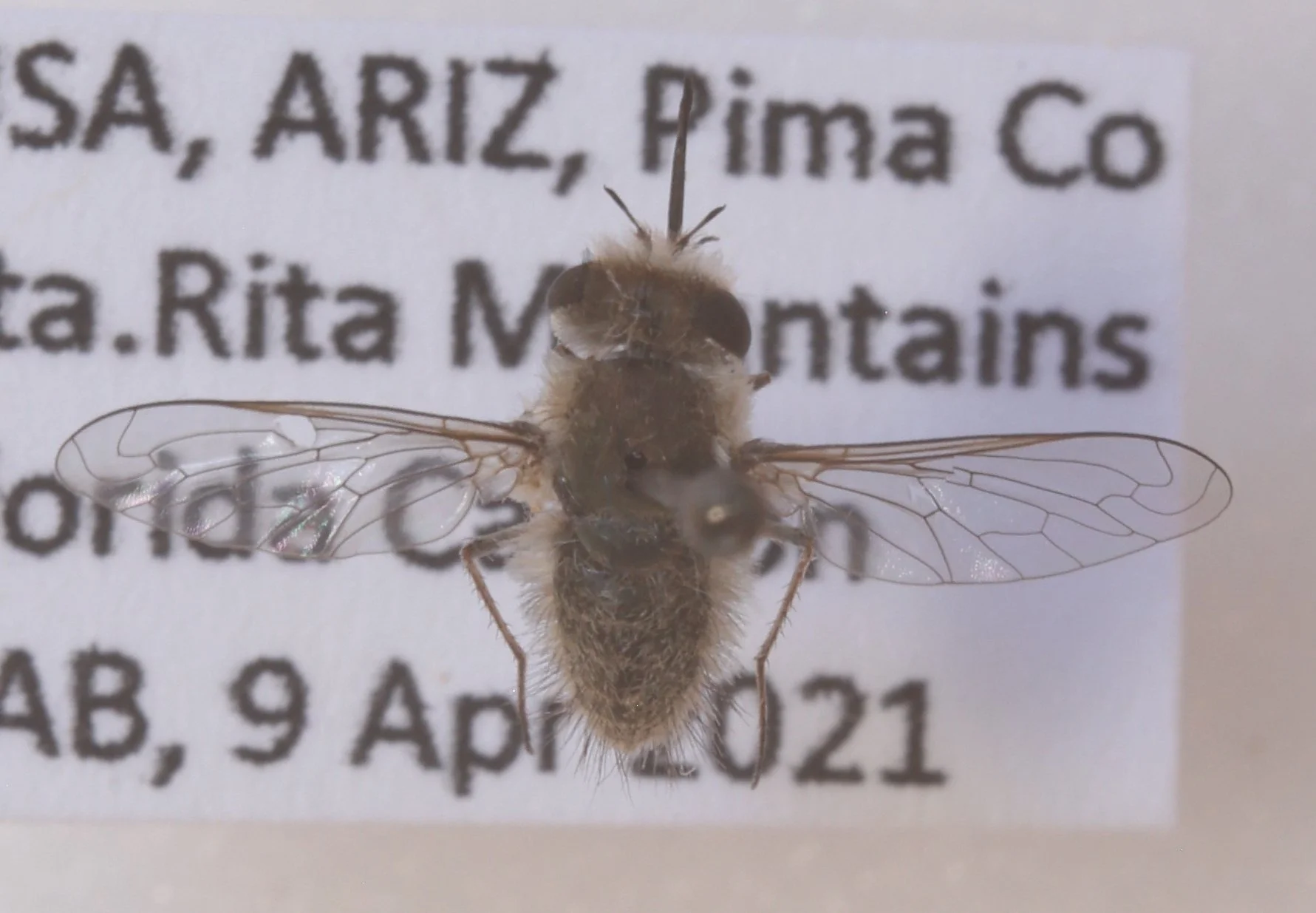
The lightly-infuscated wings are the first clue that this is not the common species, P. pusio. More telling is the longer beak and the wider distance between the antennae in P. scinax. Additionally, females tend to have pale legs. Although it is uncommon, this species regularly visits blossoms of Encelia (Brittlebush).
Range: COCH, GRAH, GREE, PIMA
Occurs: Early April to Mid-May
Pantarbes willistoni

The most distinctive of the Pantarbes is P. willistoni. Note the black abdomen covered with profuse black pile, and the long orange pile on the front and face. Although not commonly seen, it is likely more local than rare.
Range: COCH, GRAH, GREE, PIMA, PNAL, STCR
Occurs: Early March to Mid-May